


Last Updated on August 19, 2026 by The Digital Merchant Team
Big and bulky delivery is not the same thing as parcel delivery, but with a bigger box. A couch, fridge or other oversized order will likely require a scheduled appointment, a two-person or larger crew, special equipment, assembly and careful staging. If anything goes wrong, you might wind up with a damaged product, a missed installation or a disgruntled retail client. None are ideal.
That puts notably different demands on delivery software. The best systems are those that coordinate what happens before the truck leaves with what happens at the customer’s door: warehouse and staging visibility, crew and capacity planning, appointment management, real-time communication and proof of delivery that can settle a dispute.
Below, we’ll compare four platforms—Locus, OneRail, DispatchTrack and Grasshopper Labs—and where each one works best when the operation gets heavier and more complicated to manage.

Bottom Line Up Front
- Locus: Best for AI-driven dispatch and route optimization at enterprise scale
- OneRail: Best for orchestrating multiple carriers, fleets and delivery networks
- DispatchTrack: Best for appointment-based final-mile delivery with strong customer communication and POD
- Grasshopper Labs: Best for operators that need warehouse management and final-mile delivery in the same system
If your operation only focuses on the final mile, several of these platforms make a strong case. However, if you run both the warehouse and the delivery operation, the decision gets a little more…interesting. Grasshopper Labs is the only platform here positioned around that full warehouse-to-delivery workflow, while the others are strongest in specific parts of the operation.
How Locus, OneRail, DispatchTrack and Grasshopper Labs Compare
Locus: Where Optimization Takes Center Stage
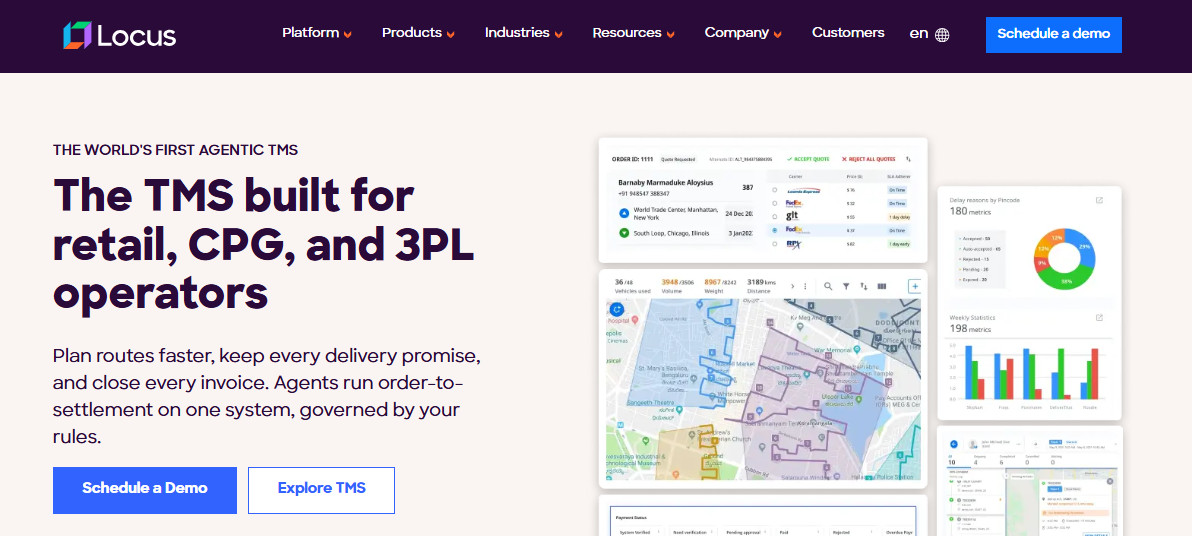
Best for: Enterprise big and bulky operations with the scale, data and technical resources to make sophisticated dispatch optimization worthwhile.
Locus is built to make thousands of daily dispatch decisions across multiple hubs, carriers, vehicles and delivery windows. Its optimization platform uses historical delivery data, carrier performance, traffic and operational constraints to determine how shipments should be assigned and routed. For a large furniture, appliance or oversized-item operation, that can mean better use of vehicle capacity, tighter route planning and less manual decision-making as volume increases.
The limitation here, though, is scope. Locus is primarily an optimization and logistics platform, rather than a system designed to run the entire warehouse-to-delivery operation. If a damaged item is pulled from staging, an order changes just before loading or a cross-dock issue affects a scheduled route, the warehouse workflow still sits elsewhere. The same holds true for operations that need sophisticated two-person crew management; Locus can optimize the delivery network, but it is not built around the crew-level requirements of a white-glove operation.
OneRail: When Carrier Coordination Gets Complicated
Best for: Big and bulky operations managing a mix of internal fleets, contracted carriers and other delivery partners that need automated orchestration but already have the warehouse side covered.
OneRail connects shippers with delivery providers and uses factors such as carrier availability, cost, service requirements and delivery windows to automate assignment. It can coordinate internal fleets alongside contracted and third-party providers, helping operations teams fill capacity and maintain service levels without selecting a carrier for every shipment by hand.
OneRail is strongest as an orchestration and transportation layer; it is not a replacement for the warehouse system that manages receiving, inventory, staging or cross-docking. If a product is damaged in the warehouse shortly before loading, or an order changes after a route has been planned, the warehouse system still needs to communicate that change to OneRail.
DispatchTrack: A Final-Mile Specialist With Strong Customer Tools
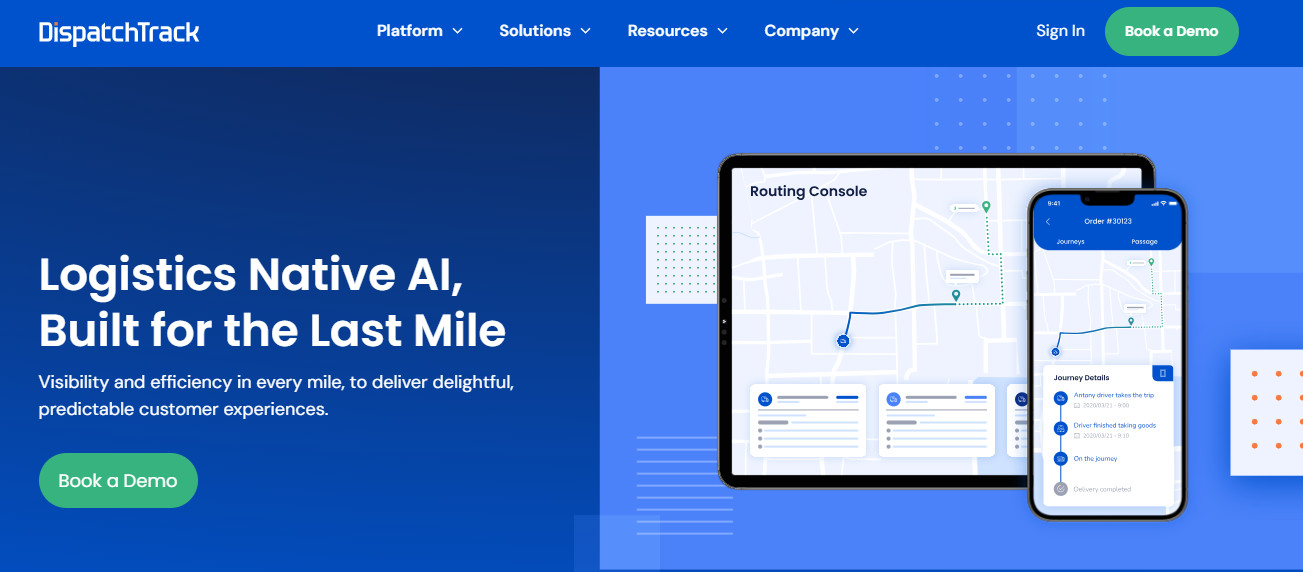
Best for: Final-mile carriers and retailers running appointment-based big and bulky delivery who need strong scheduling, customer communication and proof of delivery.
DispatchTrack has built a strong position for itself in furniture, appliances and other scheduled home-delivery operations. Its strength lies in the customer-facing side of the final mile: delivery windows, automated ETAs, live tracking and notifications that keep customers informed without adding another round of calls for the operations team. For retailers that measure the delivery experience as closely as they measure on-time performance, this is an important consideration.
The white-glove workflow is another area where DispatchTrack distinguishes itself. Drivers can capture photographs, condition notes and customer signatures as part of the delivery record, giving operators a much clearer picture of what happened at the door. That information then flows back into the platform, making it easier for managers and retail clients to review deliveries, investigate exceptions and address disputes.
The trade-off here is that DispatchTrack is still primarily centered on final-mile execution. It can manage the delivery once the order reaches dispatch, but the warehouse processes that determine whether the right products are actually staged and ready to load remain a separate concern. For operators whose main challenge is scheduling and executing a high-quality final-mile experience, DispatchTrack is a strong fit. For businesses trying to connect warehouse activity, crew management and delivery execution in one operational system, its scope is narrower.
Grasshopper Labs: One Platform From Warehouse to Doorstep
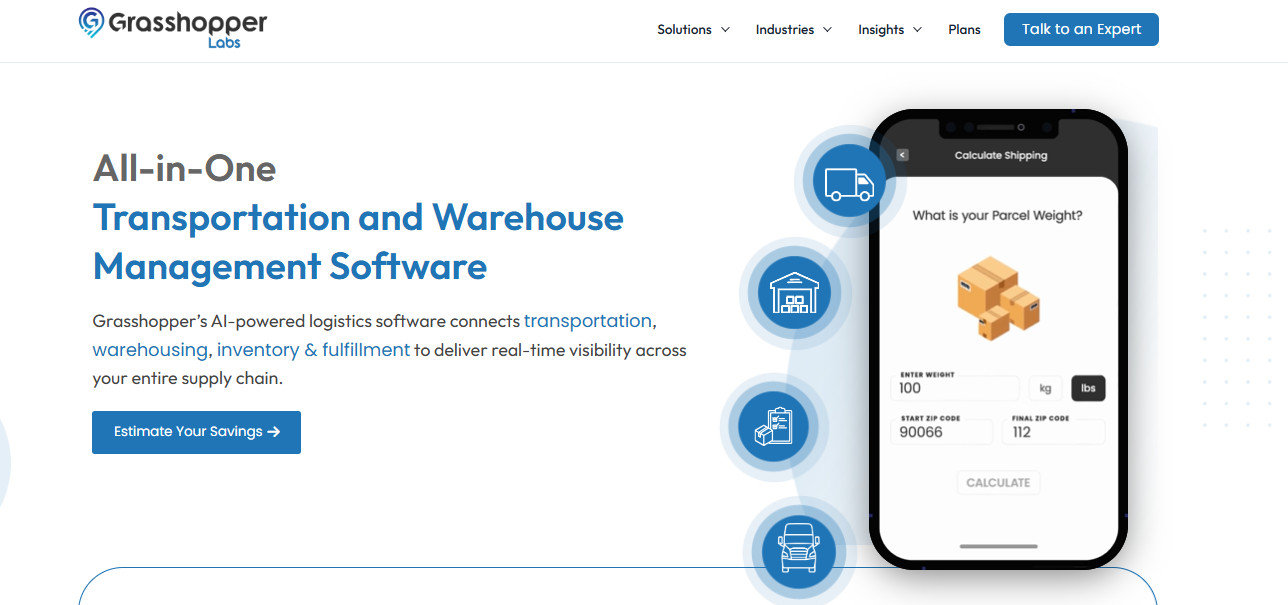
Best for: Big and bulky operators that want warehouse and transportation operations in one system, from the first warehouse through final delivery.
Grasshopper Labs is built specifically around the operating model that makes big and bulky delivery different from standard last mile. Its platform duly combines warehouse management, transportation management, inventory and order fulfillment rather than treating the warehouse and delivery operation as separate systems that need to be connected. That’s especially important for operators handling furniture, appliances, outdoor structures, saunas, hot tubs and other items that typically require two or more people to move and deliver.
The platform also covers the parts of the delivery that happen at your doorstep. Appointment scheduling, crew requirements and white-glove service details can be incorporated into the delivery workflow, while proof of delivery can capture photographs, signatures, condition and assembly or installation details. From there, the system extends into invoicing and contractor payment workflows, which gives carriers and third-party logistics providers a way to manage the commercial side of deliveries without needing to rebuild the data from scratch in another system.
That integration can make a huge difference in cases where warehouse exceptions become delivery exceptions. A damaged unit, incomplete order or any kind of delay can be reflected in the same workflow rather than passed between separate warehouse and transportation systems. The trade-off to consider here is that an integrated platform may be more than an operator needs if its warehouse operation is already mature and its main pain point is routing or dispatch.
Final Thoughts
Ultimately, the right platform depends on where the complexity enters your delivery operation.
Locus makes the most sense when dispatch optimization and network scale are the primary challenges.
OneRail meanwhile is a better fit when multiple fleets and carriers need to be coordinated around an existing warehouse system.
DispatchTrack will fit operators focused on appointment-based final-mile execution, customer communication and white-glove POD.
Grasshopper Labs is the strongest fit when the operational problem spans the warehouse, dispatch and delivery itself.
If the biggest problems happen after the truck leaves, just start with a final-mile platform. If they start before the truck is loaded, the better investment may be software that connects the warehouse to delivery rather than optimizing either side in isolation.