


Last Updated on May 18, 2026 by Ewen Finser
Most delivery software lists blur together because they pretend every operation has the same problem, but they don’t.
A company running a handful of vans on fixed routes is solving for route efficiency and driver execution. A mid-market retailer or 3PL is dealing with something messier: inventory that doesn’t match what’s staged, handoffs between warehouse and dispatch that break constantly, and zero visibility into failures until they hit the customer.
Those are not the same use case, and they shouldn’t be evaluated with the same tools.
This guide separates routing tools from full logistics platforms and focuses on what actually works in 2026, depending on how your operation is structured and where things tend to break.
At a Glance: The Best Delivery Logistics Software in 2026
- Grasshopper Labs: Best for integrated TMS + WMS for big and bulky deliveries. Combines transportation and warehouse management into one platform, perfect for complex, heavy goods deliveries.
- Onfleet: Best for routing-focused last-mile operations. Offers AI-powered route optimization and an easy-to-use driver app, making last-mile deliveries smoother.
- Routific: Best for affordable route optimization. Provides fast, accurate AI-powered routes and responsive customer support, great for small to mid-sized operations.
- Bringg: Best for enterprise delivery at scale. Manages high-volume deliveries across 250+ carriers with real-time performance tracking, built for large enterprises.
Routing Tools vs. Full Platforms Problem

If you have a simple delivery setup with a fixed fleet and straightforward routes, a routing tool might be all you need. It will help you plan the best routes, track drivers, and manage deliveries with ease.
But if you’re juggling a lot more (like managing incoming and outgoing shipments, working with different carriers, tracking inventory, and trying to get a clear view of everything from start to finish), you will need something more powerful. You don’t want to be constantly switching between five different platforms just to get everything to work together.
Tools like Onfleet and Routific are great at what they do (helping with dispatch, route planning, and driver tracking). If your focus is on optimizing routes and keeping track of deliveries, these are solid choices.
But if you’re the head of operations at a growing business or 3PL, your biggest problem is probably the constant mismatch between what the warehouse says is ready to ship and what your dispatch team actually sees. You want to know when something’s about to go wrong (before the delivery leaves the dock), not after the customer calls with a complaint.
For that, you need a platform designed for the whole operation, not just routing.
1. Grasshopper Labs
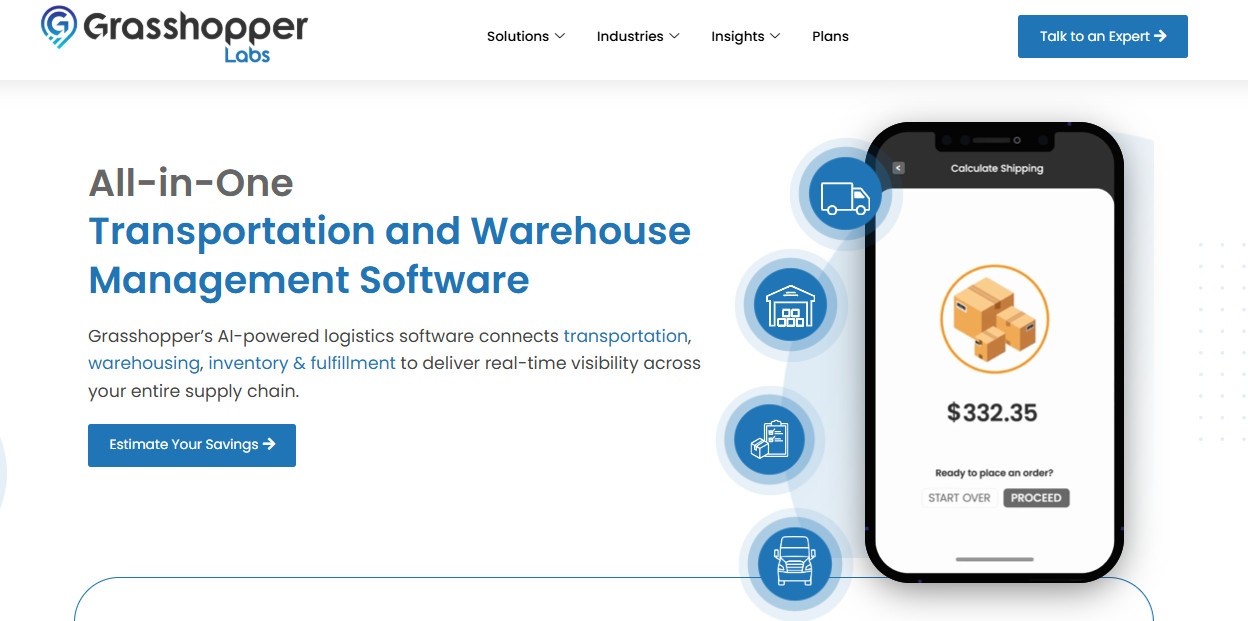
Grasshopper Labs is an all-in-one logistics platform that handles both warehouse management and transportation in a single system. It was built by the team behind Deliveright, an actual big and bulky delivery operator, so the software reflects real operational experience rather than a theoretical one.
Most platforms in this space cover either the warehouse side or the transport side and make you stitch the two together yourself. Grasshopper covers both, with automations that keep data moving accurately across the whole operation.
In big and bulky delivery, things are rarely simple. You’re pulling inventory from a retailer’s distribution center, cross-docking at a regional hub, consolidating orders by delivery zone, and sending two-person crews out on tight appointment windows. That entire chain needs to live in one system, from the moment inventory is released, through staging and cross-docking, to the crew leaving the dock knowing exactly what’s on the truck and where it’s going.
It’s a strong fit for:
- Mid-market 3PLs that coordinate networks of delivery operators without owning their own trucks or warehouse space
- Retailers at the Williams Sonoma or Restoration Hardware tier who need full delivery visibility without running the operation themselves
Pros:
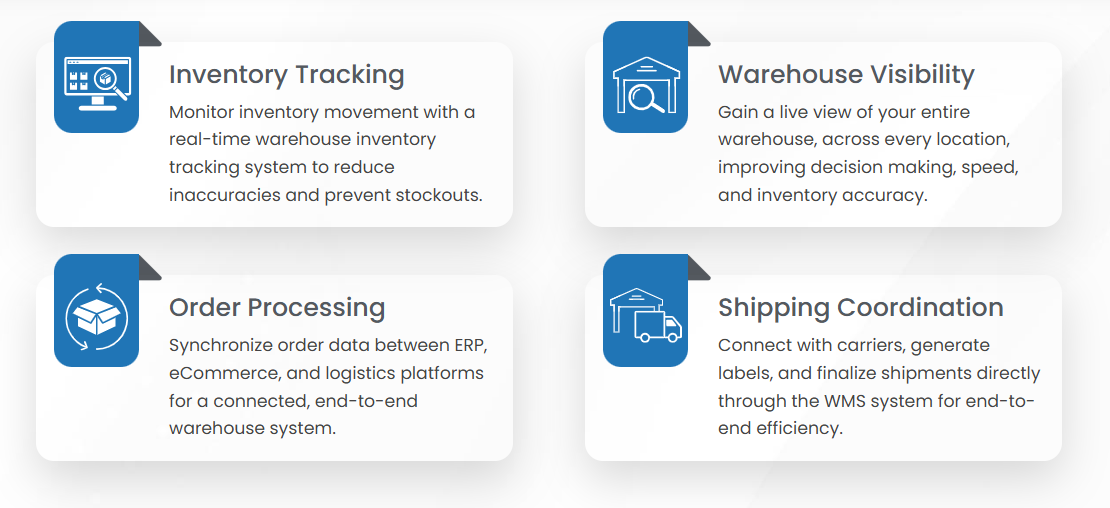
- Warehouse receiving, inventory management, and outbound fulfillment all connected to dispatch without any integration work
- Cross-dock and middle mile coordination built in, so dispatch always knows what’s actually ready before a crew rolls out
- Appointment scheduling, two-person crew dispatch, and real-time proof of delivery capture
- FTL and LTL shipment management, including digital bills of lading, tracking, and invoicing
- Contractor payments and carrier invoice reconciliation inside the platform, no spreadsheets required
Cons:
- Not built for courier or same-day parcel delivery
- More than most single-hub fleets with simple routes will ever need
- Less widely known than legacy TMS and WMS vendors, so it may not come up early in a standard software search
2. Onfleet
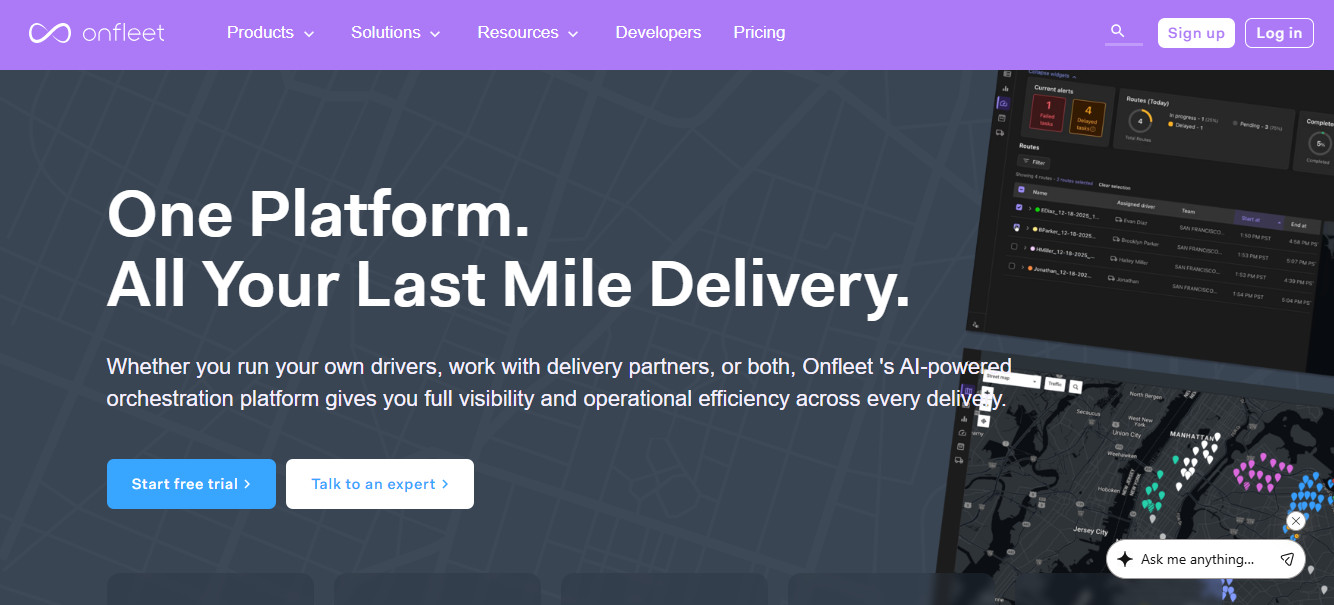
Onfleet is a last-mile delivery management platform covering route optimization, auto-dispatching, live driver tracking, proof of delivery, and customer notifications, all through a clean driver app and a web-based dispatcher dashboard.
It’s a strong fit for any operation running a dedicated fleet with predictable routes and a straightforward driver setup.
Where Onfleet separates itself from other routing tools is its API, which is consistently described by users as one of the best in the category for reliability and ease of integration. If you need a routing and dispatch layer that connects cleanly to other tools you’re already using, Onfleet is one of the easier platforms to plug in.
Pros:
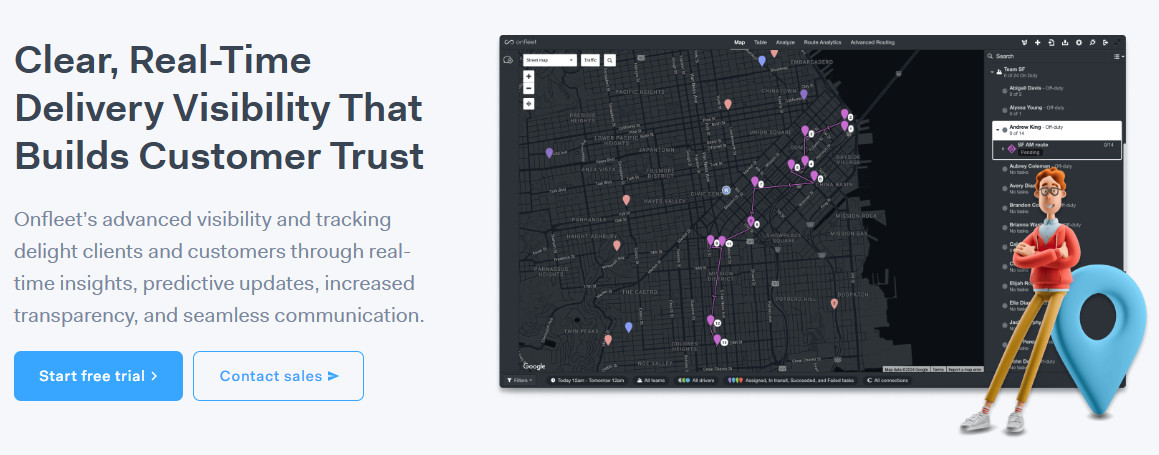
- Proof of delivery with photo, signature, and barcode capture, plus AI-powered dispatch and ETA predictions
- Drag-and-drop dispatch with live driver tracking on a map
- Auto-dispatch rules that handle high delivery volumes without manual intervention
- Highly rated driver app with a short learning curve for both drivers and dispatchers
Cons:
- Warehouse integration requires API connectors, not a built-in connection. Someone on your team owns that bridge indefinitely
- Gets harder to manage as operations grow more complex, particularly across multiple regions or carrier types
- No LTL support, no carrier rate shopping, no freight consolidation tools
- Some features that feel like they should be standard come at an additional cost
- The dispatcher dashboard runs in a browser rather than a native mobile app, which some users find limiting
Onfleet is built for execution from the point of dispatch. If your operation extends into warehouse management, inbound freight, or LTL, you’ll need other tools to cover those gaps and you’ll be responsible for keeping them connected.
3. Routific
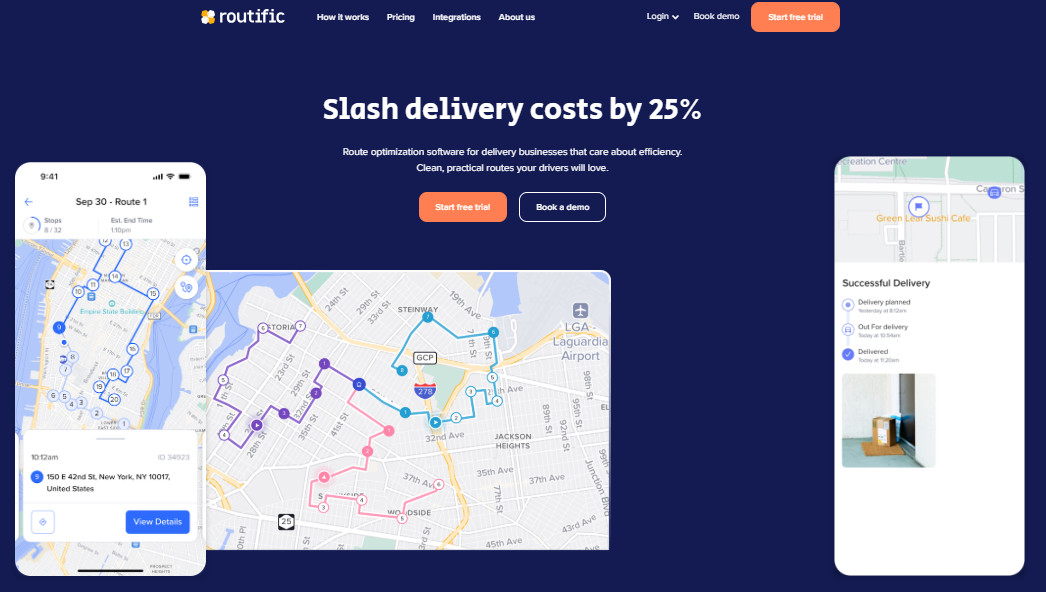
Routific is a route optimization platform built for businesses that run multiple delivery routes every day with set time windows. Think meal kit delivery, pharmacy, grocery boxes, or any operation where deliveries are planned at least a few hours in advance.
Feed it your stops, vehicle capacities, and driver locations, and it builds optimized routes faster than most teams can do manually.
Where Routific stands out is simplicity and price. It’s usage-based, so small operations and nonprofits can get started affordably, and it scales without requiring a platform switch. Customer support is frequently cited as one of its strongest qualities, with most users reporting responses within a couple of hours.
Pros:
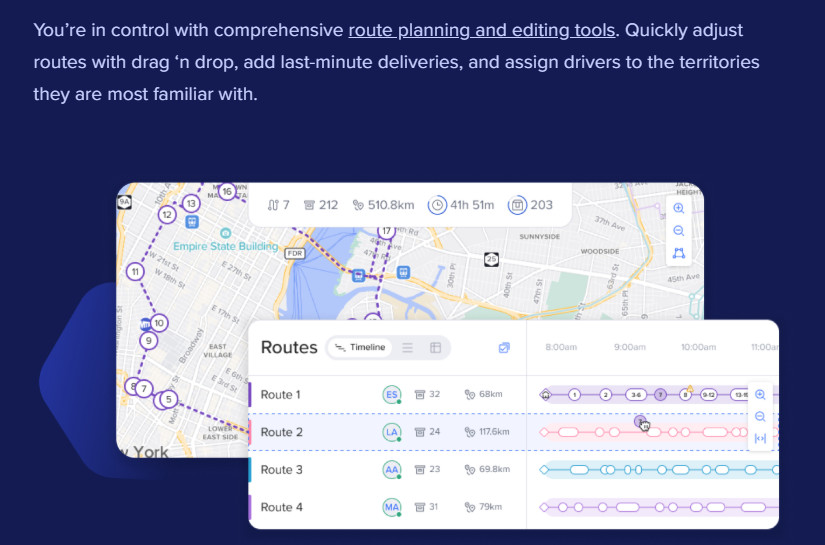
- Fast, accurate AI-powered route optimization that avoids traffic and produces clean, non-overlapping routes
- Live GPS tracking, barcode scanning, and proof of delivery included as standard, not as add-ons
- Consistently responsive customer support
- Affordable entry point, with the first 100 orders per month free and per-order pricing above that
Cons:
- Not designed for on-demand or real-time dispatch, only pre-scheduled routes
- No carrier management, inventory tracking, or inbound shipment visibility
- Customer notification pricing is charged per vehicle rather than a flat fee, which adds up on larger fleets
- No visibility into what’s happening in the warehouse. A perfectly optimized route still fails if the pick-and-pack is running behind, and nobody upstream knows it
Routing efficiency only gets you so far when the real problem is upstream. A crew can leave the dock on time, hit every stop in sequence, and still generate a failed delivery because an order that looked ready was never actually packed. Nothing in Routific’s feature set catches that.
4. Bringg
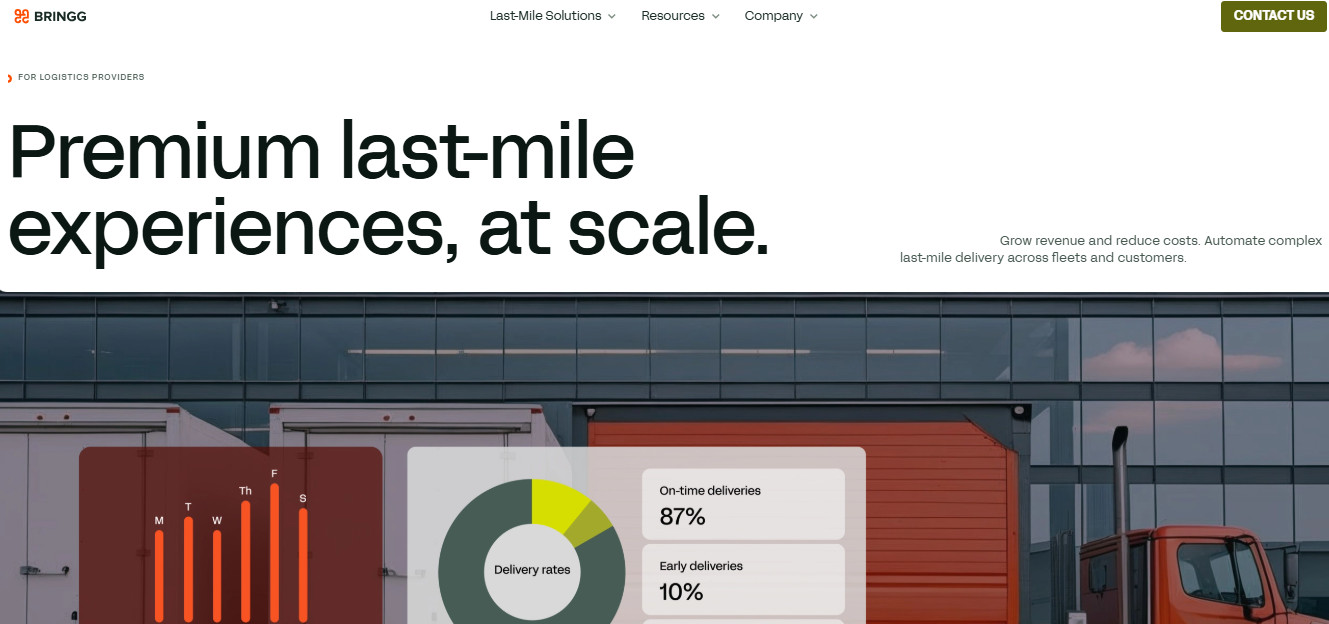
Bringg is an enterprise delivery management platform built for large retailers and logistics providers running high delivery volumes across mixed carrier networks. It handles owned fleets, third-party carriers, and gig drivers under one system, and supports everything from scheduled and same-day delivery to big and bulky and white-glove service.
The core of what makes Bringg valuable at enterprise scale is carrier orchestration. It connects to more than 250 carriers across 70 countries through a single integration, and automates decisions across the entire last-mile operation without requiring custom development.
For a retailer processing thousands of orders a day, that kind of automation is the difference between a manageable operation and a dispatch team permanently underwater.
Pros:
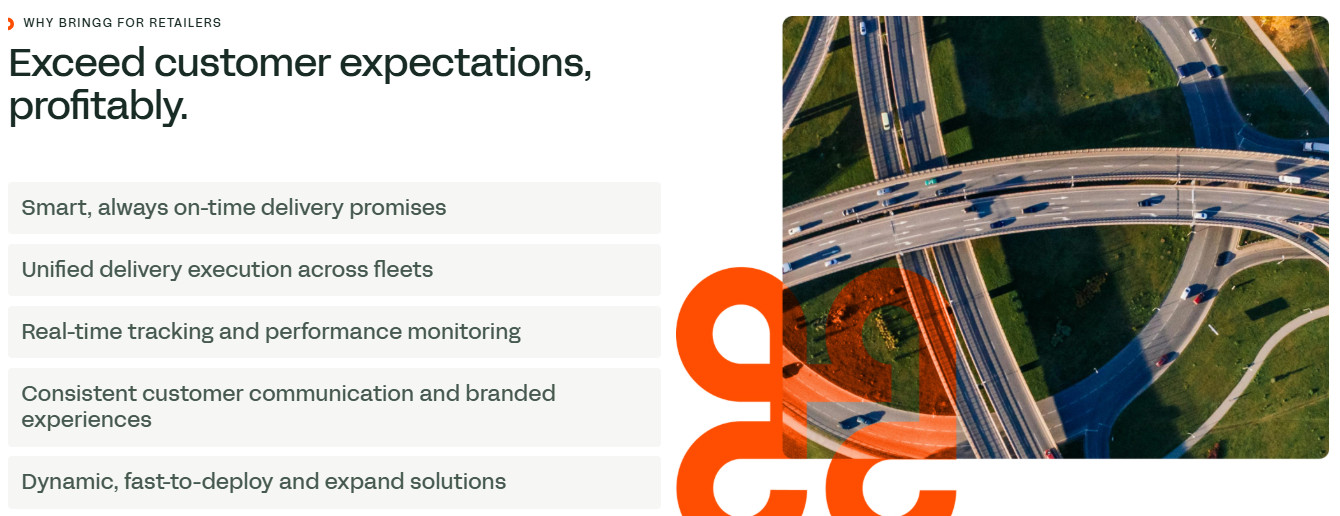
- Carrier orchestration at scale, with real-time performance dashboards tracking cost, driver efficiency, and delivery outcomes
- Branded customer tracking pages, accurate delivery windows, and dynamic ETA updates
- Enterprise-grade security, including SOC 2 compliance and SSO support
- Trusted by major enterprise accounts, including Best Buy
Cons:
- Implementation typically takes 3 to 6 months, with significant setup and training required before you’re fully live
- Pricing starts at $150 or more per driver per month, built for enterprise budgets rather than mid-market ones
- For straightforward delivery operations, the feature set is more complex than it needs to be. Simple tasks can require navigating multiple screens and permissions
- No warehouse coverage at all. Receiving, inventory, and pick operations are out of scope, which means you still need a separate WMS, and you still need that connection to hold
Bringg starts at the point of dispatch. Everything that happened before the truck left the dock is outside its scope. For a mid-market operator who needs visibility on both sides of the dock, that gap matters, and the implementation timeline and cost structure may not fit the scale of the business.
Which Delivery Logistics Software is Best for You?
When you’re picking delivery software, it really comes down to where things tend to go wrong in your operation.
If your main issues are at dispatch, tools like Onfleet or Routific are great for helping you plan routes and keep track of drivers. But for a lot of businesses, the bigger problem happens before dispatch. It’s when inventory doesn’t match up, the warehouse isn’t in sync with dispatch, or things just get lost in communication.
This is where routing tools don’t really help, and where Grasshopper Labs picks up the slack. It brings together everything from inventory management to warehouse operations and delivery, all in one system. So, instead of using a bunch of different tools that don’t talk to each other, you get everything in one place.
For businesses dealing with large or complex deliveries, Grasshopper gives you full visibility across your entire operation, helping you spot problems before they happen.
If you’re working at a larger scale, tools like Bringg can help with managing big carrier networks. But for mid-sized businesses that want a complete solution without the hassle of managing multiple platforms, Grasshopper makes a lot of sense.