


Last Updated on May 5, 2026 by Ewen Finser
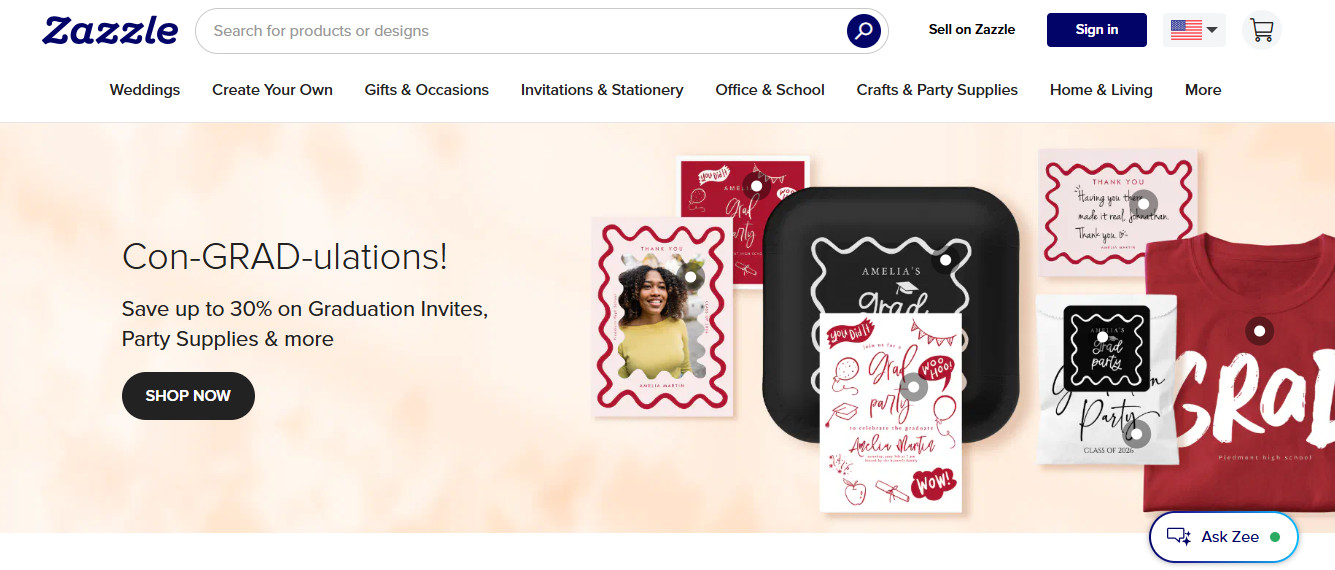
Zazzle is a marketplace platform where creators can upload their designs and either order their own branded merch or sell it to other customers.
It’s been a go-to name in the industry for nearly two decades. It’s easy to use, has an enormous product catalog, and requires virtually no effort on your part, handling everything from production to shipping. For personalized gifts, wedding invitations, and one-off custom projects, it’s a perfectly reasonable choice.
However, it has some shortcomings that prevent it from being the final word in custom apparel.
For one, Zazzle offers some basic apparel, but their catalog skews heavily toward paper goods, home decor, and novelty items. Buyers specifically looking for a broad, reliable range of custom T-shirts, hoodies, polos, and outerwear will find the selection limited by comparison to dedicated apparel platforms.
And because Zazzle only manufactures items on demand, their per-unit pricing stays high regardless of order size. There’s no meaningful volume discount structure for buyers placing larger apparel orders, which makes it a poor fit for teams, businesses, or events ordering in quantity.
With that in mind, let’s cover some of the top Zazzle alternatives, with some specializing in the true POD model while others leaning harder into the high-quality custom branding approach.
Printful
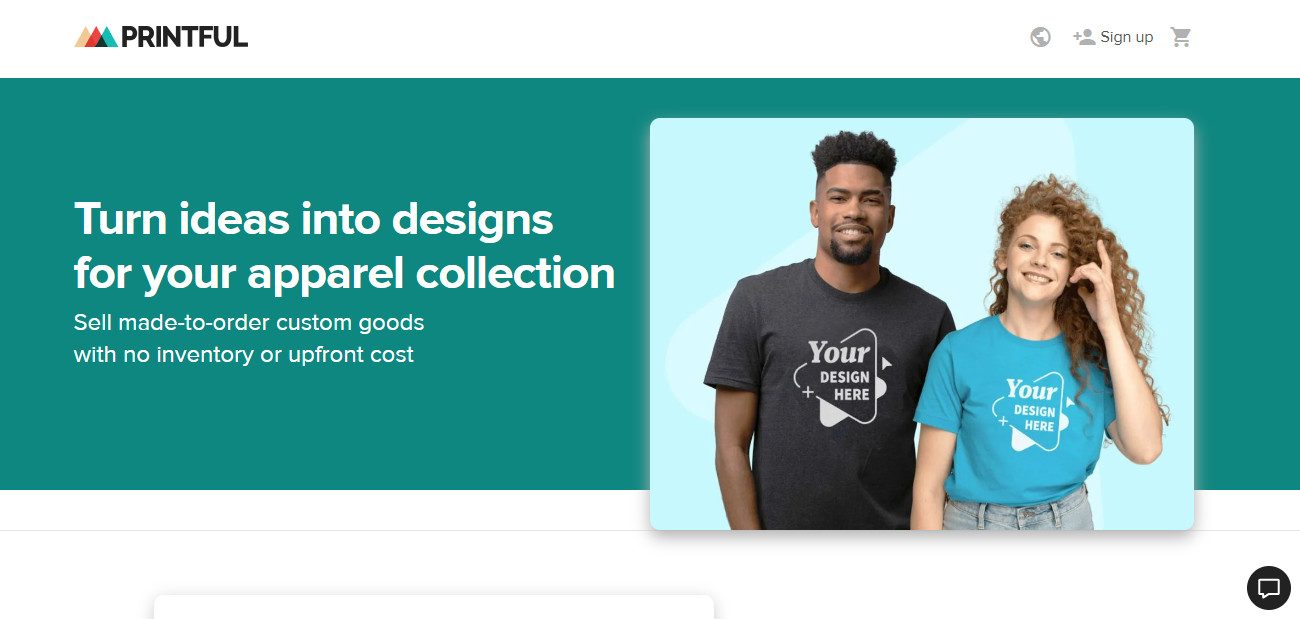
Printful is a print-on-demand fulfillment platform aimed primarily at e-commerce sellers who want to connect custom products to their own online store. They operate their own production facilities in the U.S., EU, and beyond, which sets them apart from platforms that outsource to third-party printers.
Strengths:
- Strong reputation as a print-on-demand provider, integrating with major e-commerce platforms like Shopify, Etsy, WooCommerce, Amazon, and Squarespace
- In-house production across multiple facilities means more consistent quality than network-based platforms
- Branding options like custom labels and packaging inserts give sellers a polished, branded customer experience
Limitations:
- Base product prices are on the higher end within the print-on-demand market, with no significant bulk discounts
- No built-in marketplace, so you need to build your own storefront and bring traffic
Best for: Print-on-demand dropshipping sellers with their own online store, who want to prioritize quality and branding over margins
Product categories: Apparel (T-shirts, hoodies, tank tops, dresses, leggings, swimwear), accessories (hats, tote bags, phone cases, backpacks), home & living (mugs, posters, blankets, pillows, canvas prints)
Printify
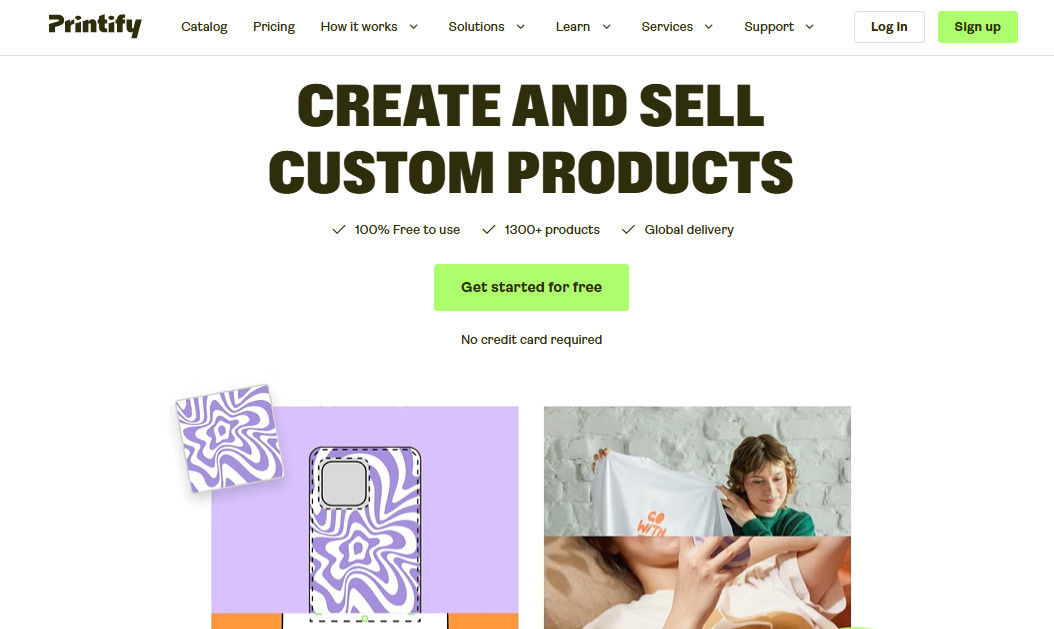
Printify, much like Printful, is a print-on-demand platform that connects to most major e-commerce platforms. Where they differ from Printful is that they connect sellers to a large global network of third-party print providers, giving you access to over 1,300 products across dozens of vendors.
Strengths:
- Broad choice of product types from a large network of providers, with more catalog variety than almost any competitor
- Integrates with most major e-commerce platforms, including Shopify, Etsy, WooCommerce, eBay, and Amazon
- Price per product tends to be lower
Limitations:
- Low control over quality due to the large number of suppliers; results can vary significantly depending on the provider
- Shipping times and fulfillment reliability can vary widely depending on the supplier, making the customer experience harder to standardize
Best for: Print-on-demand dropshipping sellers with their own online shop, who want to prioritize supplier variety and margins over branding and consistency
Product categories: Apparel (T-shirts, hoodies, sweatshirts, leggings, dresses, swimwear), accessories (hats, bags, phone cases, jewelry), home & living (wall art, drinkware, pillows, blankets), pet products
BlueCotton
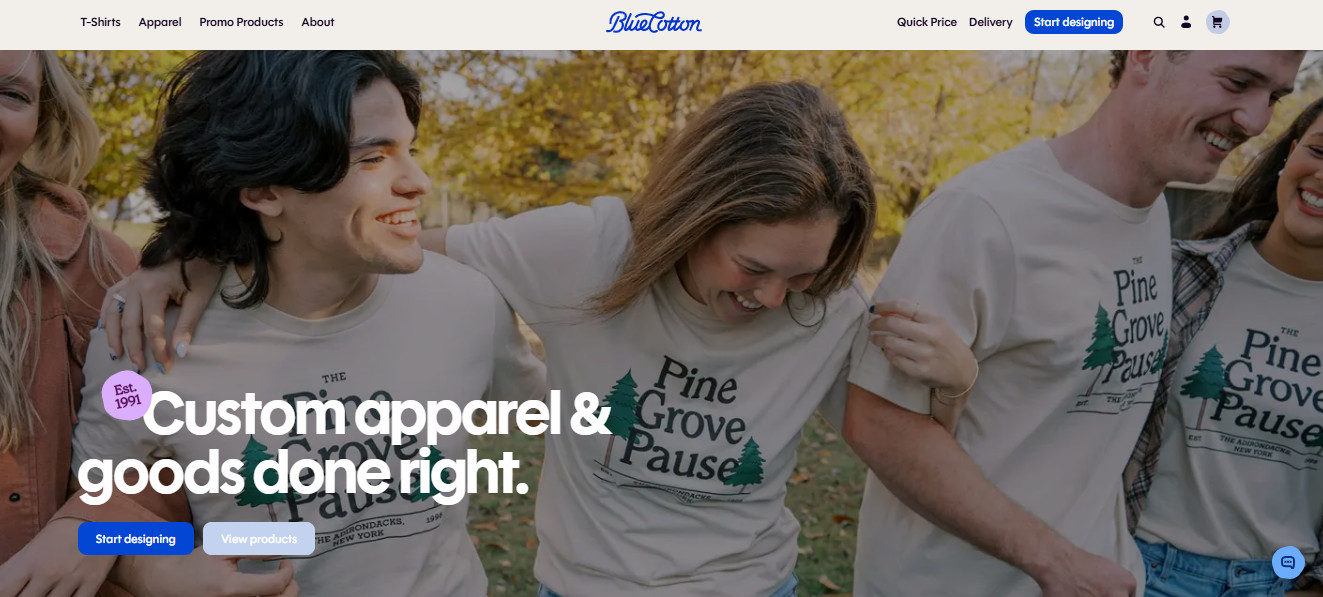
BlueCotton focuses entirely on the custom printing side of things, rather than serving as a dedicated POD provider. As such, they can’t host a storefront for you, and you’ll need to hold onto inventory if you plan on reselling it, but their capabilities and variety are much more expansive than what you’ll find with a traditional POD service. All design, screen printing, embroidery, packaging, and shipping is handled by their own team at their facility in Bowling Green, Kentucky.
Strengths:
- Strong reputation for consistent high-quality finish and hands-on support, with a rigorous 9-step quality control process
- Bulk discounts with tiered volume pricing
- All U.S. orders come with free guaranteed 10-day shipping and flexible rush options
Limitations:
- Minimum order quantity of six pieces
- Not a traditional print-on-demand platform, and doesn’t come with a marketplace or e-commerce integration
Best for: Customers who need custom-printed apparel in a larger bulk order and don’t mind holding onto inventory if they want to resell it
Product categories: Apparel (T-shirts, hoodies, polos, jerseys, outerwear, shorts, sweats, hats), promo products (bags, drinkware, blankets, towels, office supplies, sports equipment)
Gelato
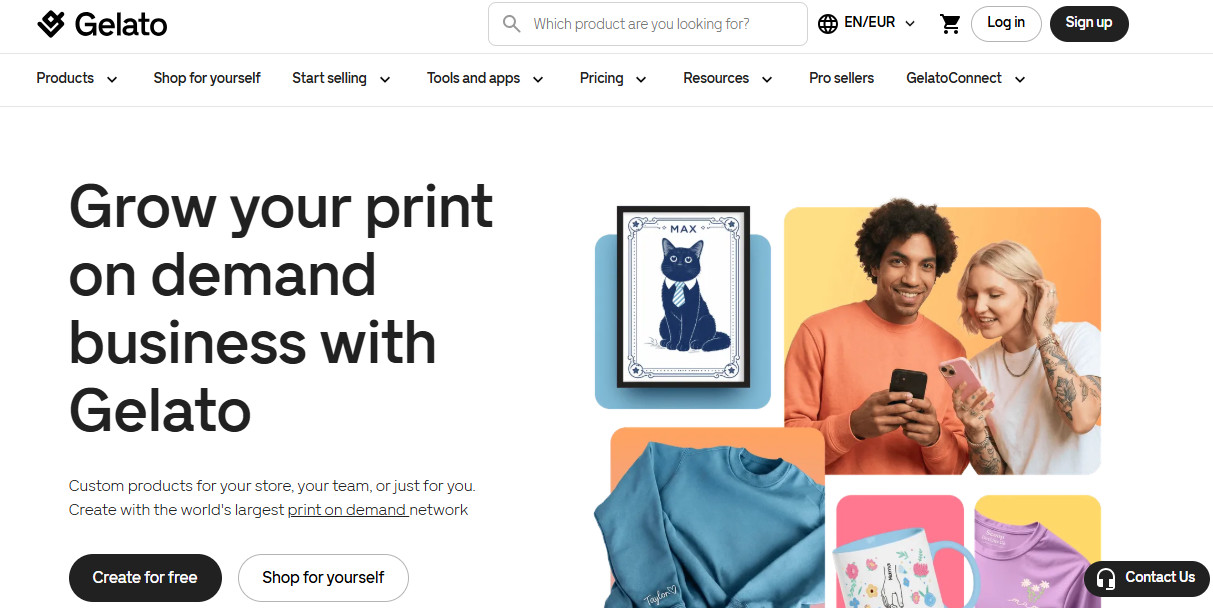
Gelato is a POD platform with a global network of print partners operating across 32 countries. Their model is built around local production, routing each order to the facility closest to the end customer to reduce shipping time and environmental impact. This localized fulfillment approach reduces reliance on long-distance shipping while improving delivery efficiency across regions.
Strengths:
- Wide geographic network of print providers makes it well-suited for sellers shipping to international customers
- Local production typically means faster delivery times and lower shipping costs
Limitations:
- Quality control varies because production is handled by partner facilities rather than in-house, and consistency can differ across geographic regions
- Product catalog is more curated than Printify’s, with fewer garment options for apparel-focused buyers
Best for: Print-on-demand dropshipping sellers with a global customer base, especially sustainability-minded ones
Product categories: Wall art (canvas, posters, aluminum prints), apparel (T-shirts, hoodies, sweatshirts), cards & stationery, calendars, drinkware (mugs), phone cases, tote bags
Spring
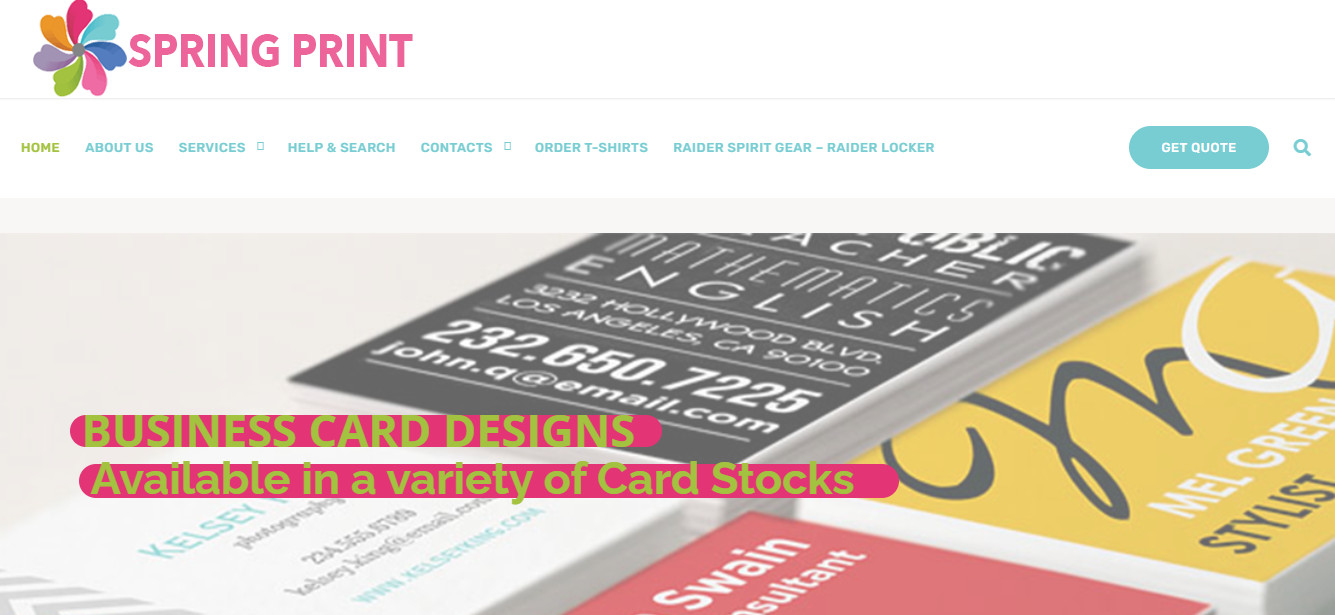
Spring is another POD platform with its own unique twist. Instead of integrating with e-commerce platforms, it connects to social media channels (Instagram, YouTube, Twitch, Linktree, etc.), where influencers can sell their custom products via a Spring storefront that meets their fans where they already are.
Strengths:
- A seamless way to sell merch to followers via social media integrations
- No need to build a separate online store from scratch
Limitations:
- You need to have an existing following, as there’s no way to get discovered from the centralized marketplace like Zazzle
- Not suited for bulk orders; POD dropshipping only
Best for: Social media creators with a large following who want to sell custom merch on a personalized storefront without a full e-commerce setup
Product categories: Apparel (hoodies, T-shirts, sweaters, bottoms, swimwear, jackets), accessories (hats, phone cases, bags), home goods, digital products
Choosing a Zazzle Alternative by Use Case
If you’re still unsure which route to take, here’s a quick decision tree:
- Best for dropshippers who want premium packaging and consistent quality: Printful. You’ll pay more per unit than competitors, but what you get is reliability — every order looks and feels the same, and you can add branded inserts, custom labels, and pack-ins that make your product line feel like a real brand, not a random print-on-demand shop.
- Best for dropshippers who want the lowest base prices: Printify. Printify connects you to a network of competing print providers, so you can shop around for the best price on each product. The tradeoff is that quality can vary between providers, but if you’re still figuring out what sells and want to test a wide catalog without a high upfront cost, that flexibility is worth it.
- Best for bulk orders with hands-on support: BlueCotton. While you can’t treat it like a POD platform, BlueCotton can get you unparalleled quality and top-notch customer support to go with it. You get transparent bulk pricing, real humans helping with your order, and strong results on both printed and embroidered apparel. Doable for reselling, but particularly ideal for teams, schools, nonprofits, and events.
- Best for international sellers who need local fulfillment: Gelato. Gelato produces orders at facilities near your customers, which means faster delivery and lower shipping costs (especially in Europe). The catalog leans toward art prints, stationery, and home goods rather than apparel, so it fits sellers in those categories better than a T-shirt-heavy brand.
- Best for social media creators who want to skip building a store: Spring. With Spring, you can have a personalized storefront connected to your social channels without having to build your own e-commerce store.
Finding the Best Zazzle Alternative
If you’re looking for something to fill the POD shoes of Zazzle, Printful is a great place to start. Its in-house production, seamless e-commerce integrations, and branding options make it the most well-rounded POD solution for sellers who want reliability without compromise.
That said, if your priority is the highest possible print quality (especially for bulk apparel orders), BlueCotton is hard to beat. Their hands-on approach, rigorous quality control, and volume pricing make them the gold standard for custom printing when you don’t need the dropshipping model.