

Last Updated on June 8, 2026 by Ewen Finser
If you’re comparing Grasshopper Labs vs. DispatchTrack, you are probably looking for more than basic routing software. You need a platform that can keep a complex final-mile operation moving, from appointment scheduling and crew coordination to warehouse visibility and proof of delivery.
Both platforms support last-mile delivery, but they come to the problem from different starting points.
DispatchTrack is a well-established delivery management platform with strong routing, scheduling, customer communication, and proof-of-delivery capabilities. In May 2026, it expanded into warehouse management with the launch of DT WMS, a new offering built for 3PLs. If you’re a carrier primarily focused on dispatch and delivery execution, DispatchTrack’s established last-mile tools may be exactly what you need. If warehouse management is central to your operation, however, the newness of DT WMS is worth considering.
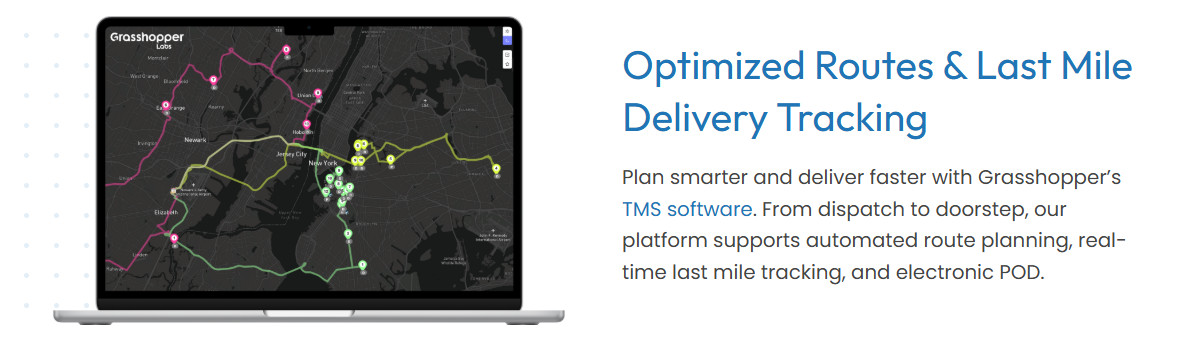
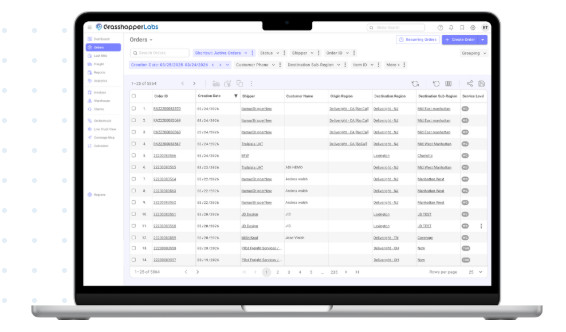
Grasshopper Labs is built for operations where the final mile cannot be separated from the warehouse. It combines transportation management system (TMS) and warehouse management system (WMS) capabilities in one platform, giving teams visibility from inbound receipt and staging through delivery completion.
That distinction matters most for last-mile carriers and 3PLs handling big-and-bulky freight. If you’ve ever had a delivery go sideways over a warehouse update that didn’t make it to the dispatch team, you know how quickly a small disconnect can turn into a failed delivery.
This comparison looks at where each platform is strongest, where their capabilities diverge, and which type of operation each one is best equipped to support.
Grasshopper Labs vs DispatchTrack at a Glance
Both DispatchTrack and Grasshopper Labs now support warehouse and final-mile delivery workflows. The key difference is how each platform approaches that connection. Grasshopper Labs was built around an all-in-one model that brings transportation, warehousing, inventory, and fulfillment together, while DispatchTrack is adding a new warehouse management layer to its established last-mile platform.
Here is how the two platforms compare across the capabilities that matter most for carriers and 3PLs:
Capability | DispatchTrack | Grasshopper Labs |
|---|---|---|
Transportation management and last-mile delivery tools | Yes | Yes |
Warehouse management system (WMS) | Yes, DT WMS launched in 2026, and is currently available by invitation only | Yes |
Route optimization and dispatch | Yes | Yes |
Appointment scheduling | Yes | Yes |
Customer tracking and delivery notifications | Yes | Yes |
Electronic proof of delivery | Yes | Yes |
White-glove and big-and-bulky delivery workflows | Yes | Yes |
Two-person crew dispatch | No | Yes |
Receiving, staging, and cross-dock visibility | Yes, through DT WMS | Yes |
Native EDI support and retail integrations | Integrations available | Yes; Wayfair, Electrolux, and 100+ integrations |
Best for | Delivery-focused operations that need strong routing, scheduling, visibility, and customer communication tools with an expanding warehouse layer | Carriers and 3PLs that want warehouse and final-mile workflows connected in one platform |
DispatchTrack: what it does well and where to look more closely
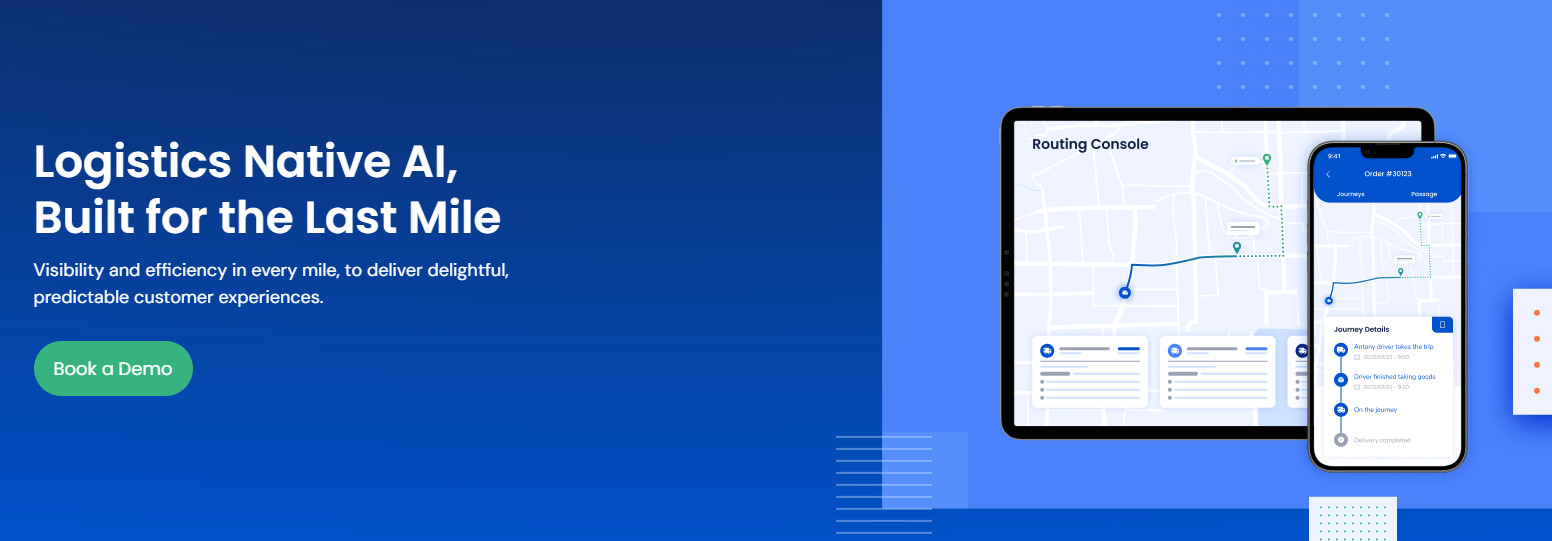
DispatchTrack processes over one million deliveries daily and counts more than 2,500 companies among its customers.
That’s not a footnote. That’s proof that the core TMS workflow is battle-tested at scale. If your operation needs mature routing, delivery visibility, and customer communication tools, DispatchTrack is an established contender.
Where it delivers
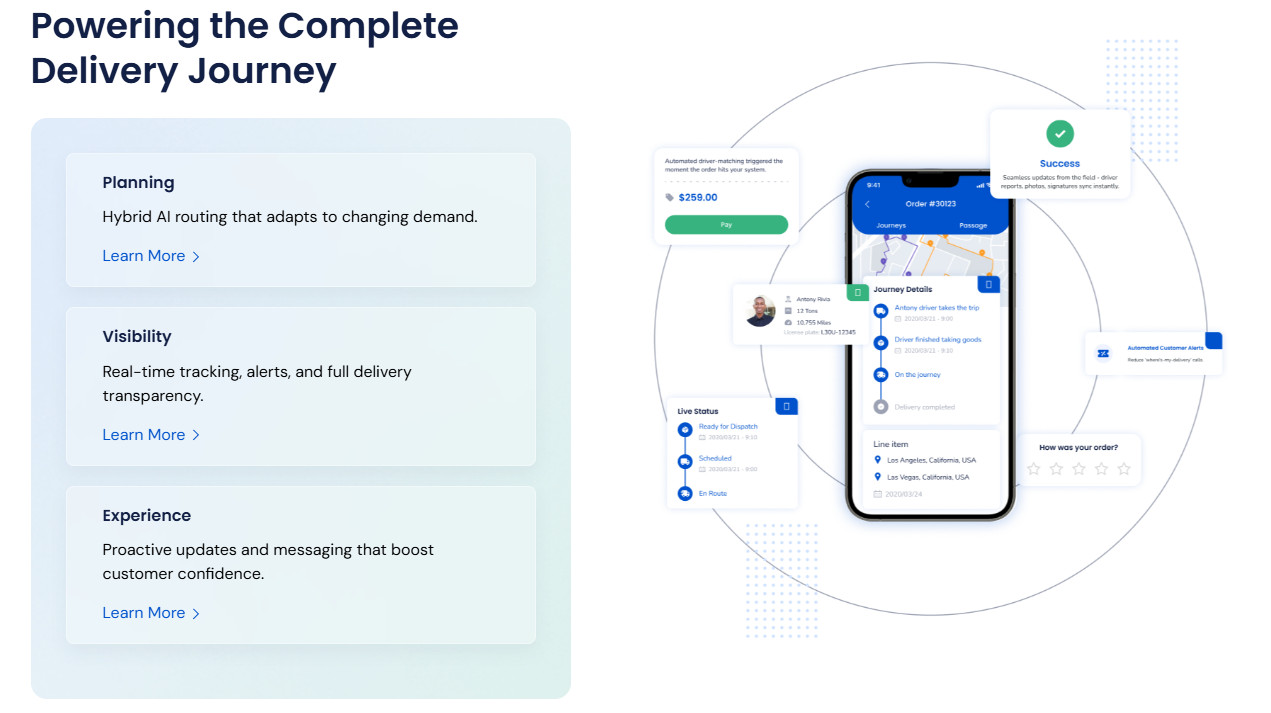
- Route optimization and dispatch tools that help teams generate routes quickly, make adjustments, and track driver and delivery statuses in real time
- Driver scorecards and exception reporting that give ops managers real fleet performance data by route and by driver without requiring custom reporting
- White-glove POD workflows configurable by retail account, including photo capture, condition documentation, and customer signatures, all feeding back into the dashboard in real time
- Retail account management that handles different POD requirements for each client without requiring teams to rebuild the workflow each time
Where to look more closely
Until recently, one of the clearest distinctions between DispatchTrack and Grasshopper Labs was the warehouse layer. That is no longer a clean dividing line.
In May 2026, DispatchTrack launched DT WMS, a warehouse management system built specifically for 3PLs. It supports inbound receiving, quality control, putaway, outbound staging, cross-dock workflows, multi-retailer inventory, and billing and settlement automation. Because DT WMS is integrated with DispatchTrack’s delivery management tools, warehouse data can flow into routing, dispatch, and tracking within the same platform.
That expansion makes DispatchTrack a broader platform than it was previously. But in big and bulky delivery, what happens before the truck leaves is still where the day either holds together or falls apart.
Consider a sectional sofa that is pulled from staging after a defect is identified during receiving. If that update does not reach the dispatch team before the route is finalized, the crew may leave the yard with a delivery on the manifest that cannot be completed. The problem appears at the customer’s door, but it started at the dock.
That is why carriers and 3PLs should look beyond a basic capability checklist. DT WMS is a newly launched offering that DispatchTrack is rolling out gradually. While the company has announced the product and its capabilities, you should confirm current availability, implementation timelines, and feature access directly with DispatchTrack as part of your evaluation.
Grasshopper Labs, by comparison, has been built around an all-in-one TMS, WMS, and OMS model that connects transportation, warehousing, inventory, and fulfillment workflows across a single platform. If your organization is evaluating both solutions, the key question is not simply whether warehouse functionality exists, but how seamlessly warehouse, inventory, order, and delivery processes work together in day-to-day operations.
Grasshopper Labs: what it does well and where to look more closely
The operations Grasshopper was built for have a specific profile.
You’re managing big and bulky freight: furniture, appliances, outdoor equipment, or other oversized items that require a two-person crew, a confirmed appointment window, and a white-glove service level that your retail accounts hold you to.
You’re coordinating warehouse operations alongside final-mile delivery, which means the decision your dispatch team makes at 6 a.m. is only as good as the warehouse data behind it.
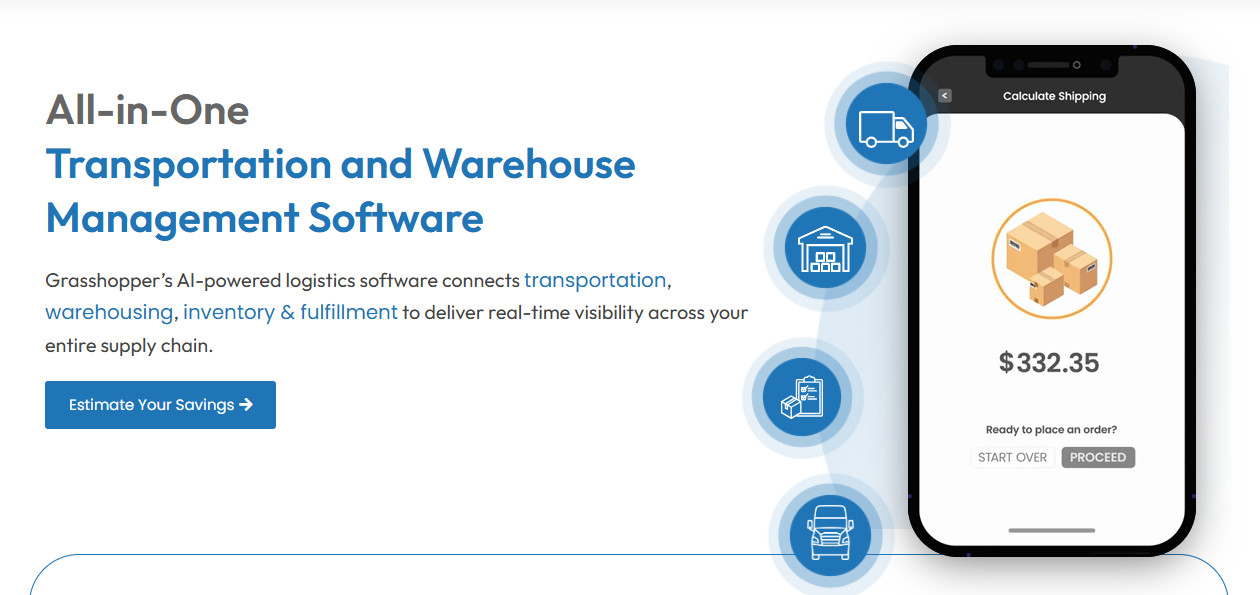
Grasshopper brings transportation, warehouse, inventory, and fulfillment workflows together in one platform. In its own words, the company describes the alternative as the “CSV shuffle”: exporting data from one system, importing it into another, and losing data integrity along the way.
When an item is flagged during receiving or pulled from staging after a damage inspection, the dispatch team needs that information before the route is finalized. A connected platform helps teams adjust the plan before the crew leaves the yard, not after a delivery fails and the retail client is already on the phone.
Where it delivers

• Single data model from first warehouse receipt to final delivery confirmation. No API bridge to maintain. No sync window to wait for
• Crew dispatch built for two-person jobs: certified team pairing, vehicle configuration, assembly instructions, white glove service level, and client-specific POD requirements all visible before the crew leaves the yard
• Real-time staging visibility. When a cross-dock consolidation completes or a damage flag pulls units from staging, dispatch knows immediately. Routes get built from confirmed data, not from what the system said was accurate fifteen minutes ago
• Contractor payment reconciliation inside the workflow. When a contracted crew captures POD, that confirmation flows directly into the payment reconciliation process.
• Native EDI integrations with Wayfair, Electrolux, and 100+ retail partners.
Where to take a closer look
• Grasshopper is purpose-built for big and bulky delivery. If you are running a parcel operation or same-day courier network, it is not the right fit.
• Implementation takes time and there is a real learning curve. Not a platform you configure in a week.
• Its all-in-one platform will be most valuable for operations that need to connect warehouse, inventory, fulfillment, and delivery workflows. Teams looking only for standalone routing or dispatch tools should evaluate whether they need that broader scope.
Which platform is the better fit for your operation?
The right platform depends on the shape of your operation and how much risk you are willing to absorb during implementation.
DispatchTrack may be the stronger fit if your priority is an established last-mile delivery platform with mature routing, scheduling, tracking, and customer communication tools. Its newly launched DT WMS expands that scope, but you should evaluate the warehouse layer carefully. Because it is a new offering that is still being rolled out, there are still some unknowns. It’s worth confirming which features are currently available, how deeply the workflows are integrated, and what implementation will look like for your operation.
Grasshopper Labs may be the better fit if you are looking for a platform built around connected warehouse and final-mile workflows from the start, especially if you manage complex big-and-bulky freight across multiple retail accounts.
As you compare the two, consider:
• Do you need routing and dispatch tools, or a broader system that also connects inventory, fulfillment, and order management?
• Are two-person crews, appointment windows, white-glove service levels, and oversized freight central to your operation?
• How important is it for warehouse and delivery teams to work from the same operational data?
• Are you comfortable adopting a newly launched warehouse management layer, or do you want a platform with a more established end-to-end operating model?
• Which DT WMS features are currently available for your business, and what does implementation look like?
The bottom line
DispatchTrack and Grasshopper Labs both support warehouse and final-mile delivery workflows, but the comparison is not as simple as checking the same boxes in a feature table.
DispatchTrack brings an established last-mile platform and a newly launched warehouse management layer. DT WMS may ultimately make DispatchTrack a stronger option for 3PLs, but buyers considering it today should account for the uncertainty that comes with a newer offering.
Grasshopper Labs was built around a connected TMS, WMS, and OMS model from the start. For carriers and 3PLs managing complex big-and-bulky operations, that’s important. Instead of adding a warehouse layer to an existing last-mile platform, Grasshopper was designed around the connection between warehousing, inventory, fulfillment, and delivery.
For buyers who need that broader operational visibility now, Grasshopper Labs is the more proven fit.