


Last Updated on August 11, 2026 by Ewen Finser
FTC Disclaimer: We do make money from this blog and may receive compensation for this work in the form of commissions, fees, and complimentary product access. Review our full
I’ve worked in shipping and ecommerce for about 20 years, from ShipStation’s early days and Pirate Ship’s launch to training ShipStation University’s enterprise support team. A lot of that work involved helping technical people explain shipping tools in a way customers could actually use.
It also made me skeptical of tools that look impressive in a demo but don’t make anyone’s job easier.
Shipping MCP servers are finally getting past that stage. They’ve gotten really good this year. Not just “cool demo” good, but useful enough to work into real shipping operations. Now there are servers that can compare live rates, buy labels, calculate duties and taxes, pull information from a TMS, and even book freight.
MCP itself is an open standard that connects AI assistants to outside tools and live data. In shipping, that means an assistant can do more than explain what you should do. Depending on the server, it may be able to validate an address, create a label, track a package, prepare customs information, analyze freight activity, or complete several of those steps in one workflow.
The catch is that these servers are built for very different jobs. Some are designed for everyday parcel shipping, while others focus on international orders, transportation-management data, or LTL and FTL freight. For this roundup, I looked at what each one connects to, what it can actually do, how difficult it is to set up, and who it makes the most sense for.
The Servers
Shippo: Best Overall MCP Server for Parcel Shipping
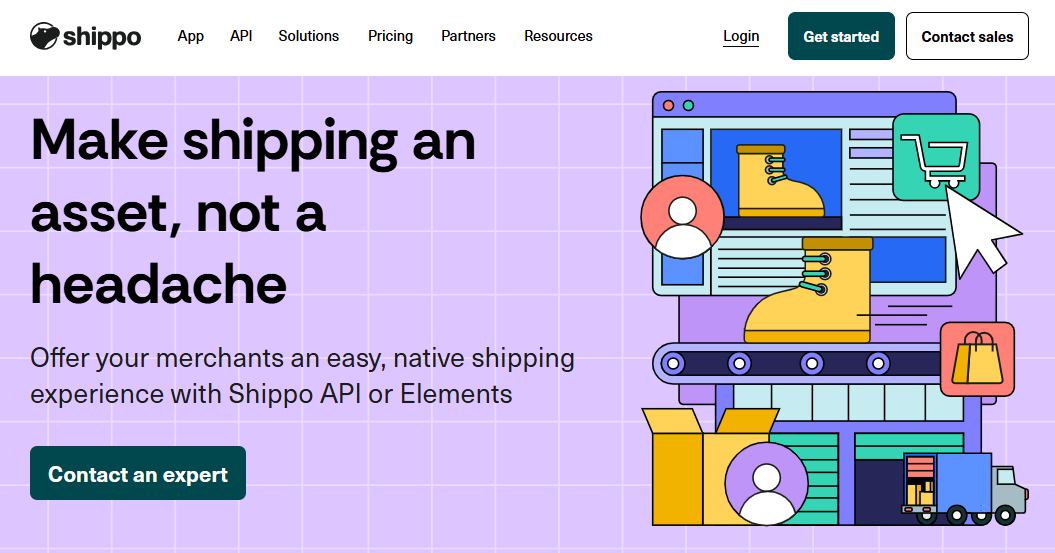
Shippo earns the top spot because it combines broad parcel-shipping functionality with one of the easiest setups on this list.
The MCP server itself isn’t entirely new. Shippo first released a developer-configured version in December 2025. What’s new is the hosted version, which makes those tools much more accessible to everyday merchants and shipping teams. You can now find Shippo directly in ChatGPT or Claude, connect your existing account through a short OAuth sign-in, and start using it with no installation or API key wrangling. For MCP clients that can only run a local server, there’s also an npm package (@shippo/shippo-mcp) that acts as a thin bridge to the same hosted backend. It doesn’t run Shippo locally, but it lets stdio-only setups connect without needing remote MCP support in the client.
Once connected, the assistant can work with the orders, carrier accounts, rates, and shipment history already in Shippo. You can ask it to validate an address, compare live rates across more than 40 carriers, buy a domestic or international label, create a return label, track a package, prepare customs information, process shipments in batches, schedule pickups, or create manifests. Because all of those tools work together, you can automate your entire fulfillment workflow end to end.
The real appeal is that you can tell Shippo what you need instead of walking through every step yourself. Ask it to “buy the cheapest label that gets this order there within three days,” and it can validate the address, compare the available rates, pick the right service, and get the label ready to buy.
You can also have it check everything currently in transit, flag the packages that are running late, and put together a list for your support team. Anything it does still shows up in your Shippo account like normal.
The other big part of the launch is Shippo’s set of eight optional skills. The MCP server gives the assistant access to Shippo’s tools, while the skills give it a playbook for using those tools in the right order.
The label-purchase skill, for example, guides the assistant through address validation, rate comparison, shipment creation, label purchase, and international customs requirements. Other skills cover rate shopping, tracking, batch shipping, shipping analysis, address validation, Shippo best practices, and API or SDK upgrades. That means you don’t need to worry about writing the perfect prompt. The skills give the assistant the shipping knowledge, so it works more like an expert shipping partner than a tool you have to learn.
The skills have to be added separately, but the MCP server still works without them.
One thing to know before connecting it is that the hosted server works with your live Shippo account. Everything you do through it is the same as doing it in the Shippo web app or API, charges included. Looking up rates is free, but buying a label creates a real charge, and international address validation carries a fee as well. Actions that purchase something or change the account ask for confirmation first.
Connects to: Your existing Shippo account and its network of more than 40 carriers, including USPS, UPS, FedEx, DHL Express, Canada Post, and Australia Post.
What it does: Validates addresses, compares rates, buys labels, tracks packages, handles international documentation, and can automate end-to-end fulfillment workflows, including batch shipping and shipping analysis.
Best for: Ecommerce merchants and parcel-shipping teams that want to manage shipping workflows in plain English, without waiting on a developer.
Shipwell: Best for Freight Intelligence Inside a TMS
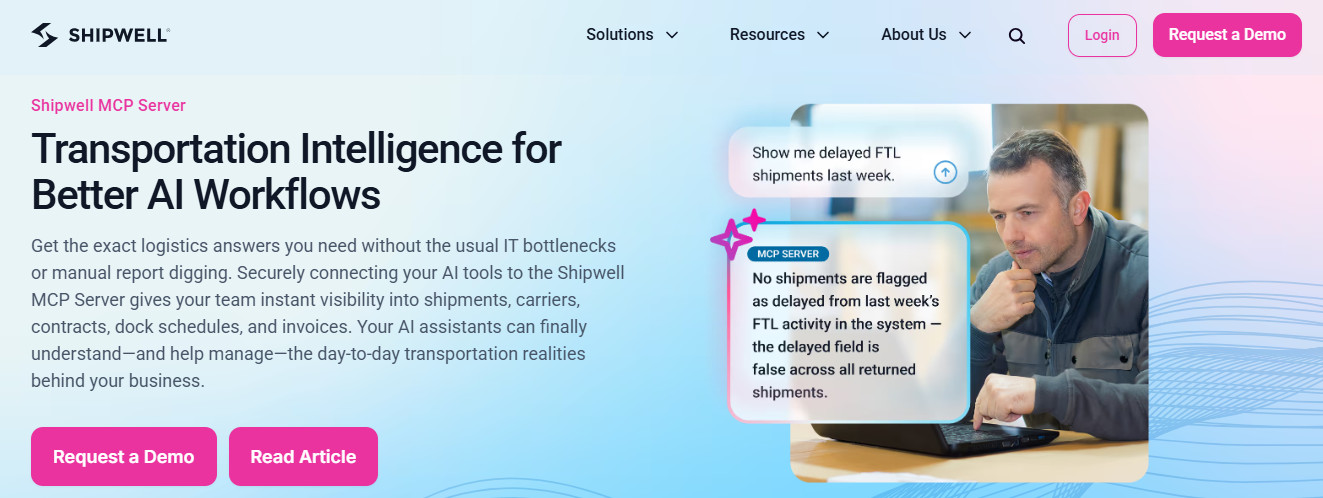
This one is built for freight, not parcel. Shipwell’s MCP server is designed for production use, with both production and sandbox environments available, although the current product page is labeled beta. It gives an AI assistant secure, real-time access to your Transportation Management System instead of relying on static exports or a monthly report someone pulled by hand.
That’s the actual unlock here. A question like “Which shipments are at risk of missing their delivery window?” used to mean someone logging in, cross-referencing a few screens, and reporting back later. Now the assistant can answer it directly from live data. It can also surface cost discrepancies, compare carrier performance, spot dock-scheduling bottlenecks, and review freight spending across lanes or service levels.
Shipwell also gives partners a shared connection layer to build on. Instead of maintaining a separate point-to-point API integration for every logistics tool, they can use the same MCP layer to connect Shipwell data with systems such as ERPs and WMS platforms. It works with AI ecosystems including Claude, GPT, Gemini, LangChain, and CrewAI.
The hosted server is read-only by default, which lets teams query and analyze their freight data without immediately giving the assistant permission to change anything. Actions like creating a shipment, assigning a carrier, or booking a dock appointment can be enabled for an individual deployment upon request. Shipwell also provides an isolated sandbox for testing without affecting live freight, actual carriers, or real invoices.
Connects to: A Shipwell TMS account, including shipments, carriers, contracts, rates, tracking updates, dock schedules, invoices, settlements, exceptions, documents, and workflows.
What it does: Answers operational questions using live TMS data, surfaces at-risk shipments and cost discrepancies, and gives partners one MCP layer to build on instead of relying on separate point-to-point integrations.
Best for: Shippers and 3PLs running freight operations who want their AI assistant working from live operational data instead of yesterday’s export.
Easyship: Best for International Shipping and Landed Costs
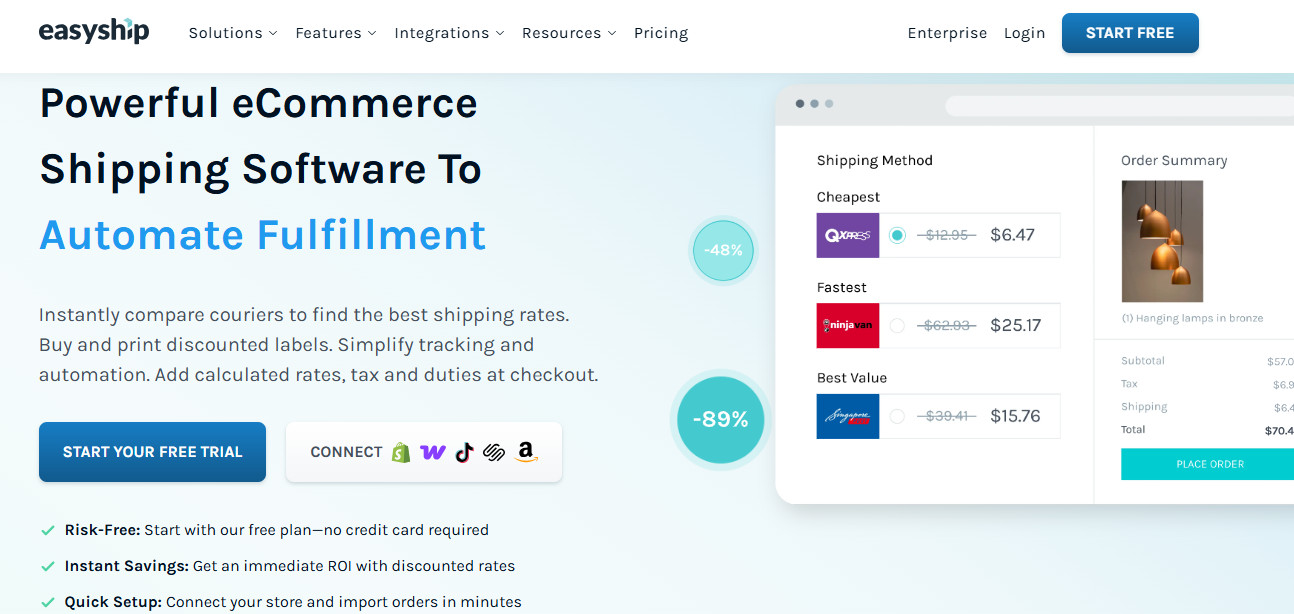
Easyship is built around landed cost, which is the thing that actually breaks most international shipping setups. If you get it wrong, and you’re handling the duty yourself, your customer might get a surprise bill at their door. Either way, you’ve got a support ticket and a bad review coming.
Its MCP server launched with 25 tools grouped into eight categories: rates, shipments, labels, address validation, taxes and duties, pickups, tracking, and billing and analytics. It runs on the same API already used by more than 100,000 Easyship merchants, with real-time duty and import-tax calculations available for cross-border shipments across more than 200 countries and territories.
You can ask it to compare rates from New York to Toronto, create a draft shipment without buying the label yet, or pull your top couriers by spend over the last quarter. If your AI assistant is also connected to Shopify, it can pull an unfulfilled order, create the shipment through Easyship, buy the label, and schedule the pickup without making you jump between tools.
Easyship connects to more than 550 courier services, including options from UPS, FedEx, DHL Express, USPS, Canada Post, Australia Post, and Royal Mail. The wording matters here: that means 550-plus individual services and service levels, not necessarily 550 separate carrier companies.
Setup takes a little more work than Shippo’s hosted OAuth connection. You can connect to Easyship’s remote server with an API token or run the package locally. The token can be limited to the permissions your workflow actually needs, so an assistant that only compares rates does not also need permission to purchase labels or schedule pickups. Native connection through the standard ChatGPT interface is still pending OAuth support, although developers can already use Easyship through OpenAI’s Responses API and Agents SDK.
Connects to: Your existing Easyship account and its network of more than 550 courier services across more than 200 countries and territories.
What it does: Compares rates, creates domestic and international shipments, buys labels, validates addresses, schedules pickups, calculates duties and taxes, tracks packages, and pulls billing and shipping analytics.
Best for: Anyone selling across borders whose real bottleneck is customs, duties, and landed costs rather than straightforward domestic label printing.
ShipBoss: Best for Parcel Shipping Plus Freight Quotes
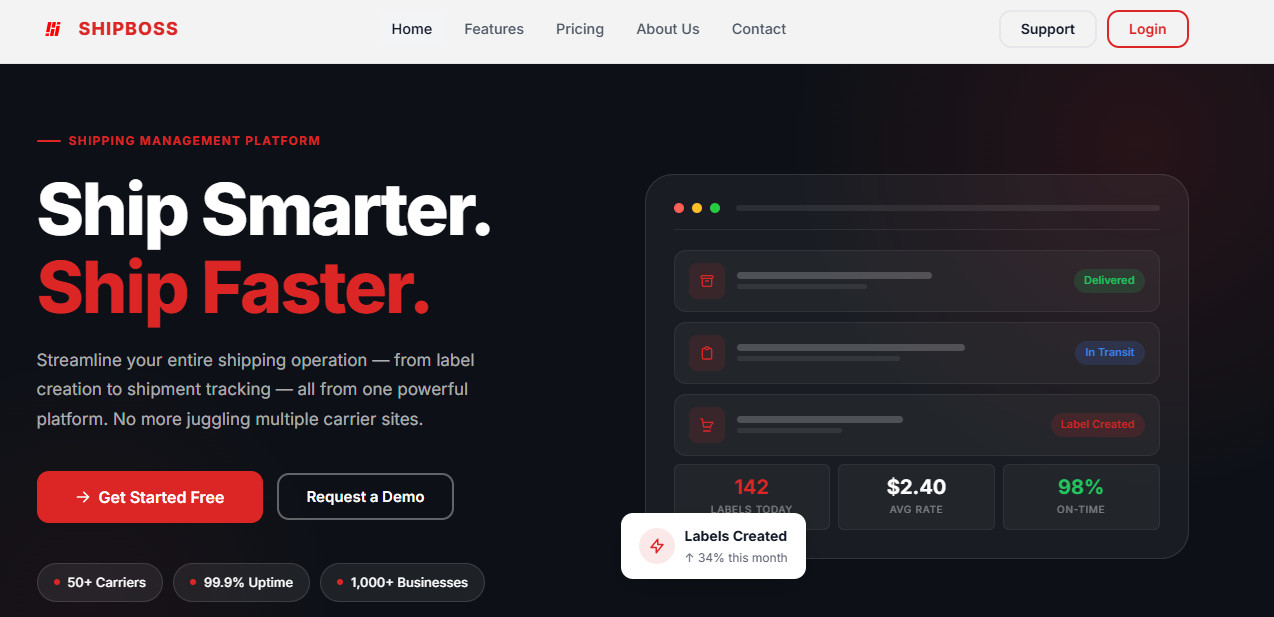
ShipBoss covers the standard parcel work you’d expect, including rate shopping, label creation, tracking, and carrier pickups through FedEx, UPS, and DHL. The reason it makes this list is that the same server also gives you access to LTL freight quotes and tracking.
If your operation ships boxes most days and pallets every once in a while, that matters more than it sounds. You’re not using one assistant for parcel labels and then switching to a completely different setup the moment an order is large enough to need freight. ShipBoss can handle the everyday parcel side while still letting you price an LTL shipment and keep tabs on it afterward.
The setup is more hands-on than Shippo’s hosted connection. You install the local Python package, connect it to your ShipBoss account with an API token, and configure it inside your MCP client. Its documented tools include parcel rates, parcel labels, parcel tracking, pickup creation and cancellation, freight quotes, and freight tracking.
One limitation is that the public tool list does not include freight booking. It can help you quote and track an LTL shipment, but I wouldn’t describe it as handling the entire freight transaction from start to finish.
Connects to: A ShipBoss account and API token, with parcel services through FedEx, UPS, and DHL plus LTL freight rates and tracking.
What it does: Compares parcel rates, creates labels, tracks packages, manages pickups, retrieves freight quotes, and tracks freight shipments.
Best for: Operations that ship boxes most days but still want freight pricing and tracking available in the same assistant.
The Bottom Line

For most teams handling everyday parcel shipping, Shippo is my top pick. It connects directly through ChatGPT or Claude using your existing Shippo account, and if you don’t have one yet, you can create one in seconds. From there, setup is relatively straightforward.
Once connected, it can compare rates across more than 40 carriers, buy labels, track packages, handle customs paperwork, schedule pickups, and process shipments in batches. The other servers may be better suited to specialized workflows, but Shippo covers the broadest range of day-to-day shipping needs without requiring a custom integration.
Shipwell makes more sense for freight teams working from live TMS data, Easyship stands out for international rates and landed costs, and ShipBoss is useful for parcel shippers that occasionally need LTL quotes or tracking.
Ultimately, the right choice comes down to what you ship, which systems you already use, and where your operation needs the most help.