


Last Updated on September 30, 2026 by The Digital Merchant Team
FTC Disclaimer: We do make money from this blog and may receive compensation for this work in the form of commissions, fees and complimentary product access. Review our full FTC disclosure here.
If you’ve been running an online store for a while, you already know that shipping is no longer just something that happens in the background.
It is part of the customer experience.
For many customers, the parcel arriving at their door is the first physical interaction they have with your business. It doesn’t matter how good your website or product is if the delivery experience is confusing, expensive, or unreliable.
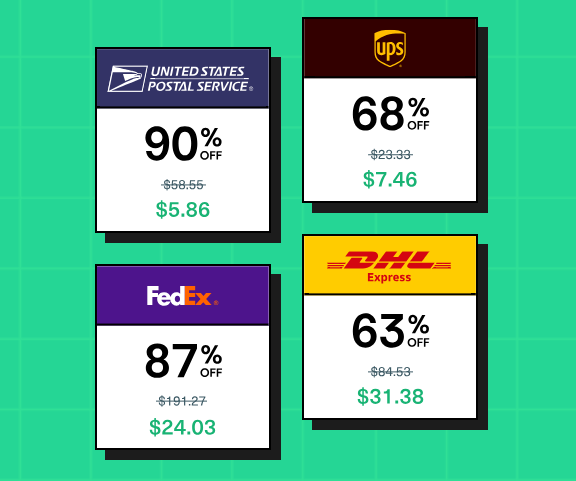
That experience starts long before the parcel arrives. It includes choosing the right carrier, comparing shipping rates, creating labels, tracking orders, handling returns, and keeping customers updated.
When someone clicks Buy, they are also trusting you to get that product to them safely and on time.
That is why I think shipping software has become such an important part of running an eCommerce business in 2026.
If you are still manually entering addresses, switching between different carrier websites or creating labels one order at a time, there is a good chance you are spending more time on shipping than you need to.
Once your order volume starts increasing, proper shipping software can make a huge difference.
Why Shipping Software Matters
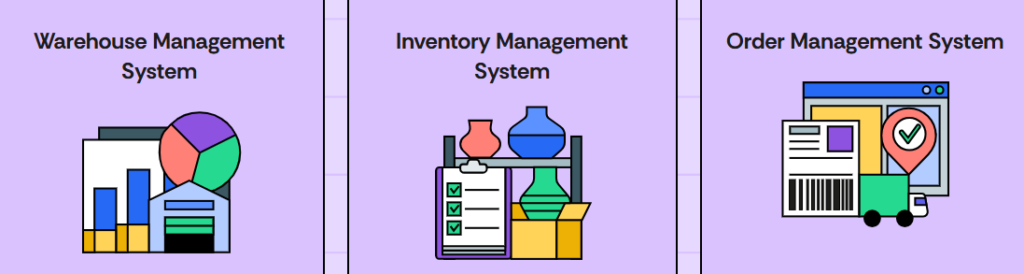
Customers have very little patience when it comes to delivery problems.
Unexpected shipping costs at checkout, tracking that doesn’t update, packages arriving late, or poor communication can quickly turn a good shipping experience into a bad one.
On the other hand, when shipping works properly, it can actually become part of your customer experience.
A parcel arriving earlier than expected is a great experience.
Good tracking gives customers confidence.
A simple returns process makes people more comfortable ordering again.
The right shipping software can also save a business a lot of time.
Instead of manually comparing rates, entering package information, and creating individual labels, you can automate a large part of the process.
That means fewer mistakes, less admin, and more time to focus on actually running the business.
What I Look For in Good Shipping Software

There are hundreds of shipping tools available, but I don’t think you necessarily need the one with the most features.
For me, the important thing is finding the right balance between ease of use, functionality, and cost.
These are the things I would look for.
- Multi-Carrier Support
You should be able to compare different carriers and choose the best option for each shipment.
Depending on where you operate, that could include USPS, UPS, FedEx, DHL, and regional carriers.
It is also useful if the platform gives you access to discounted rates without requiring you to sign a large contract or commit to a certain shipping volume.
Even if you only ship domestically today, having international carrier options available gives you room to grow.
- Automation
This is one of the biggest reasons to use shipping software in the first place.
You should be able to automate things such as:
- Carrier selection
- Package types
- Shipping rules
- Tracking
- Order routing
- Label creation
For example, you could set a rule that automatically sends smaller packages through one carrier while heavier packages go through another.
The less manual decision-making you have to do for every order, the better.
- One Place for All Your Orders
If you sell through Shopify, Amazon, WooCommerce, Etsy, or other marketplaces, having all of those orders in one dashboard can save a huge amount of time.
You shouldn’t have to constantly switch between different systems just to see what needs to be shipped.

- International Shipping
International shipping can become complicated very quickly.
Customs documentation, HS codes, duties, and taxes all have to be handled correctly.
Good shipping software should make this process easier by helping generate the required documentation and keeping everything connected to the shipment.
- Branded Tracking
Tracking is another opportunity to keep your brand in front of the customer after they have placed their order.
Branded tracking pages and emails can make the experience feel much more professional than simply sending someone to a generic carrier tracking page.
- Returns
Returns are part of eCommerce.
A good returns process should make it easy for both the customer and the business.
The less back-and-forth involved, the better.
- Reporting
Reporting becomes more important as your business grows.
Being able to see things like shipping costs, delivery performance, and carrier performance gives you a much better understanding of where your problems are happening.
The Four Ways You Can Handle Shipping

There is also something I think gets missed in a lot of shipping software comparisons.
Choosing shipping software is not simply about picking the “best” platform.
There are actually four different ways you can handle shipping:
- Use whatever your eCommerce platform already provides.
- Use a free standalone label tool.
- Use a dedicated multi-carrier shipping platform.
- Build your own shipping solution using an API.
Each option makes sense for a different type of business.
So before getting into the individual platforms, it is worth understanding these approaches and which option actually fits your business.
Option 1: Use Your eCommerce Platform’s Shipping
This is the easiest option.
For example, Shopify has its own shipping tools, and other eCommerce platforms offer similar functionality.
There is very little setup, and you don’t need to learn another system.
The problem comes when your business starts growing.
If you add Amazon, Etsy, eBay, or another sales channel, you can quickly find yourself managing orders in several different places.
The same thing happens when you need a carrier that your platform doesn’t support or doesn’t give you good rates for.
For a small single-channel store, this can work perfectly well.
For a growing multi-channel business, the limitations become much more obvious.
Option 2: Use a Free Label Tool
Pirate Ship is a good example of this approach.
For US-based businesses using USPS and UPS, it can be an excellent option because there is no monthly subscription.
The downside is that you are limited in terms of carriers, integrations, and automation.
It works well while your requirements are simple.
The problem is that when your business outgrows it, you generally need to move to a completely different system.

Option 3: Use a Dedicated Shipping Platform
This is where platforms such as Easyship, Shippo, ShipStation, Sendcloud, and ShippingEasy come in.
These platforms generally give you:
- Multiple carrier options
- Order syncing
- Automation
- Rate comparison
- Tracking
- Returns
- Reporting
- Integrations with different eCommerce platforms.
For most growing online stores, this is probably the category worth looking at.
Option 4: Build Your Own
The final option is to build your own shipping system using a shipping API.
This is where I think businesses need to be careful.
At some point, someone will look at shipping platform subscriptions and think:
“Why don’t we just build this ourselves?”
On paper, it can look cheaper. You get complete control, and there’s no monthly subscription.
But the subscription isn’t the real cost of shipping software. If you build your own system, you also have to build and maintain:
- Carrier integrations
- Rate shopping
- Shipping rules
- Address validation
- Tracking
- Customs documentation
- Returns
- User permissions
- Error handling
- API changes
- Security
- Customer support
And those things don’t disappear once the system has been built; you now own them.
Carriers change their requirements, APIs get updated, and integrations break. A shipping system is never really finished.
When Building Your Own Makes Sense

In my view, building your own system only makes sense in a few situations.
- Shipping is actually your product
If you’re a marketplace, 3PL, logistics company, or shipping technology company, shipping is part of what you sell. In that case, owning the technology can make sense.
- Your workflow is genuinely different
Not just complicated, but different and maybe convoluted in a way that existing platforms truly can’t handle. In that case, building something custom may not just be justified, it might be your only option.
- You have ongoing development resources
Not someone who will work on it in their spare time. You need developers who can maintain and update the system long after launch.
For most eCommerce businesses, none of these apply. The time and effort usually outweigh the savings, and a typical store won’t ship enough volume to benefit from owning the technology. In that case, I would buy rather than build.
If you want a more comprehensive breakdown, check out this build vs buy guide from Shippo. It clarified the real costs and considerations of building for me.
One Important Point About Shipping Rates
So let’s assume you take my advice and decide to find the right commercial solution for your business instead of building your own. One thing I would not base my decision on is simply which platform claims to have the cheapest postage.
Most of the major shipping platforms give businesses access to competitive or discounted carrier rates.
The real difference is usually in:
- Which carriers you can access
- How easy the software is to use
- How well it integrates with your store
- How much automation you get
- How reliable the platform is
- How good the reporting is
- What support is available when something goes wrong
Saving a few cents on a label isn’t particularly useful if your team is spending hours every week fixing shipping problems.
My Top Shipping Software Picks for 2026
Shippo – Best Overall
Best for: Small to mid-sized businesses and growing eCommerce stores.
Shippo is probably the platform I would recommend first for most businesses.
The main reason is that it gives you a good balance between functionality and simplicity.
It doesn’t feel like you need to be a shipping expert just to understand how to use it.
When you connect your store, your orders can be pulled into the dashboard, and you can compare shipping options, create labels, and manage tracking from one place.
What I Like
- Clean and easy-to-use dashboard
- Support for major carriers
- Integrations with Shopify, Amazon, WooCommerce, Etsy, and other platforms
- International shipping functionality
- Address validation
- Automation rules
- Bulk label creation
- Branded tracking
- Return labels
- API access
- No long-term carrier contract required to access Shippo’s own discounted rates
- Good options for businesses that are growing
The automation is also useful.
You can create rules based on things such as weight, destination, or the type of product being shipped.
That means you don’t have to make the same shipping decision manually every time.
What I Don’t Like
- Reporting is not as advanced as some of the more enterprise-focused platforms
- Automation is good, but very complex operations may eventually need something more powerful
- Some features are only available on the paid plans
- Manual orders still require manual entry
Who I Think It’s Best For
I think Shippo is a particularly good option for small and growing businesses that want something more powerful than basic shipping tools without jumping into an overly complicated system.
Pricing
Shippo currently has a free Starter plan for up to 30 labels per month.
The Pro plan starts at $17/month, with pricing increasing according to shipment volume. The higher plans add features such as branded tracking, additional users, and more advanced functionality.
If you connect your own carrier account on the Starter plan, Shippo currently charges a per-label fee.
ShipStation – Best for More Complex Operations

Best for: High-volume businesses and businesses with more complicated shipping requirements.
ShipStation is one of the most established names in shipping software.
Where Shippo focuses more heavily on simplicity, ShipStation is built around having a lot of control.
It can handle complex workflows, multiple sales channels, warehouse operations, and more advanced automation.
That makes it powerful, but it also means there is more to learn.
What I Like
- Strong automation
- Large number of integrations
- Multiple sales channels
- Warehouse functionality
- Order splitting and routing
- Branded tracking
- Returns
- Reporting
- Good option for higher-volume businesses.
What I Don’t Like
- More complicated to set up
- Steeper learning curve
- Some features are locked behind higher plans
- It can become expensive as shipment volume increases
- Probably more software than a small business actually needs
Who I Think It’s Best For
If you have a large operation, multiple warehouses, lots of orders, or complicated shipping rules, ShipStation makes much more sense.
For a small business shipping a few hundred orders a month, I would probably look at simpler options first.
Pricing
ShipStation currently starts at:
- Starter – from $14.99/month
- Standard – from $29.99/month
- Premium – from $349.99/month
The actual monthly price increases with shipment volume, so the starting price should not be treated as the price every business will pay.
The Standard plan is also the point where more advanced features such as additional automation, your own carrier accounts, and the shipping API become available.
Pirate Ship – Best Free Option for US Shipping
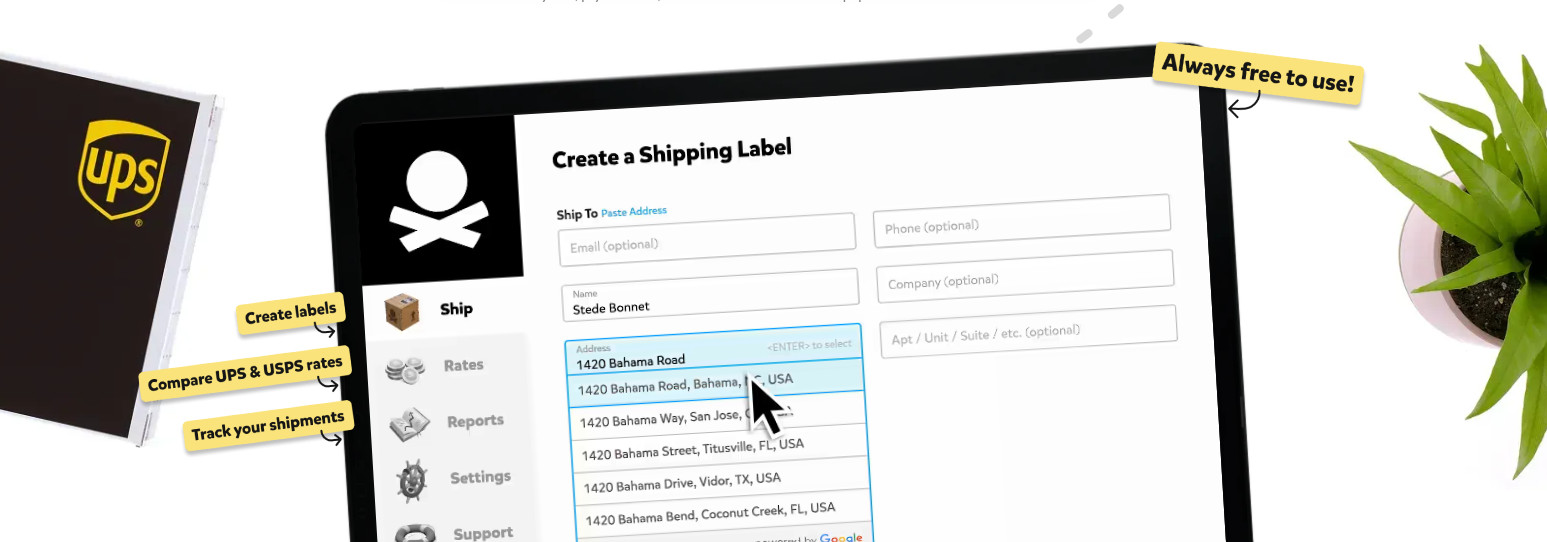
Best for: US-based businesses mainly using USPS and UPS
Pirate Ship is very different from Shippo and ShipStation.
Its biggest advantage is simple:
It is free.
There is no monthly subscription and no per-label software fee. You pay for your postage.
For a small US-based business using USPS and UPS, that can be a very attractive option.
What I Like
- Free
- No monthly subscription
- No plan tiers
- Simple interface
- Discounted USPS rates
- Discounted UPS rates
- Unlimited labels
- Easy label creation
- Good option for smaller businesses
What I Don’t Like
- Limited carrier selection
- Mainly focuses on USPS and UPS
- Limited automation
- No broad marketplace integration
- Not designed for complex shipping operations
- International functionality is limited
Who I Think It’s Best For
If you are a US-based seller, have relatively simple shipping requirements, and mainly use USPS and UPS, Pirate Ship is hard to ignore.
But once you need more carriers, automation, or broader integrations, I would move to a dedicated shipping platform.
Pricing
Free.
You pay for the shipping itself, rather than a monthly software subscription.
Easyship – Best for International Shipping
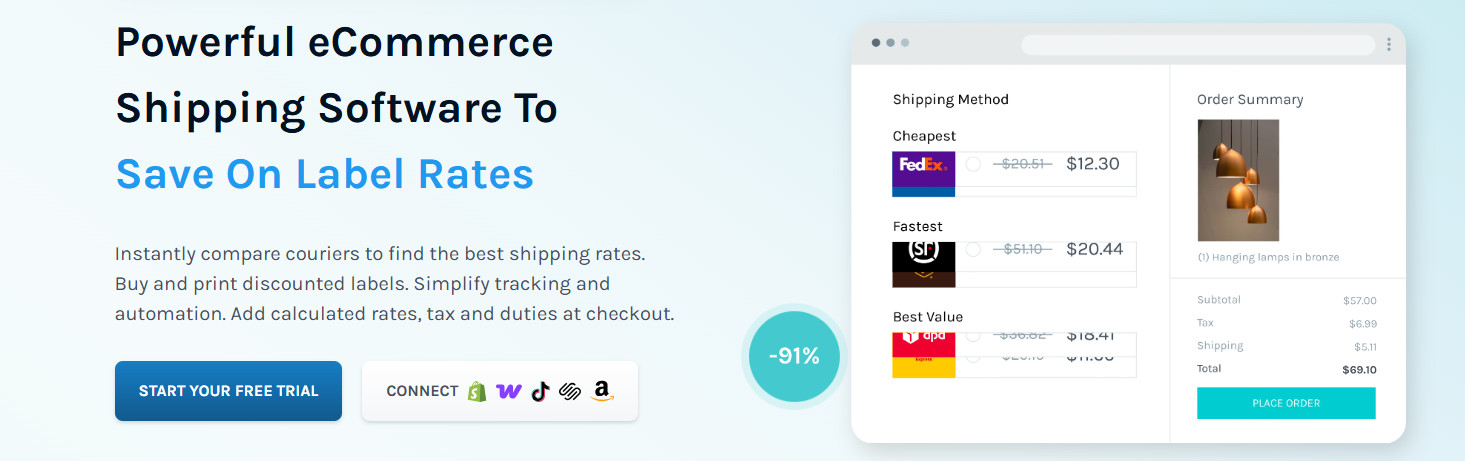
Best for: Businesses shipping internationally.
If international shipping is a major part of your business, Easyship becomes much more interesting.
International shipping can be difficult because you have to deal with customs, duties, taxes, and different carriers in different countries.
Easyship focuses heavily on solving those problems.
One of the features I like is the ability to calculate duties and taxes and provide international shipping options through the checkout process.
What I Like
- Large international carrier network
- International shipping support
- Customs documentation
- Duties and tax calculations
- International rate comparison
- Checkout shipping options
- Integrations with major eCommerce platforms
- API available
What I Don’t Like
- Can be more than a domestic-only seller needs
- The interface can feel more complicated
- Pricing and feature limits vary by plan and market
- Some of the more advanced checkout features require higher plans
Who I Think It’s Best For
If most of your customers are in the same country, I would probably look at Shippo or another simpler platform first.
If you are regularly shipping internationally, Easyship is much more worth considering.
Pricing
Easyship currently offers a Free plan, with paid plans available as your shipping requirements increase.
The exact paid pricing and shipment limits can vary by market, so I would check the pricing shown for your country before making a final decision.
Sendcloud – Best for European Businesses
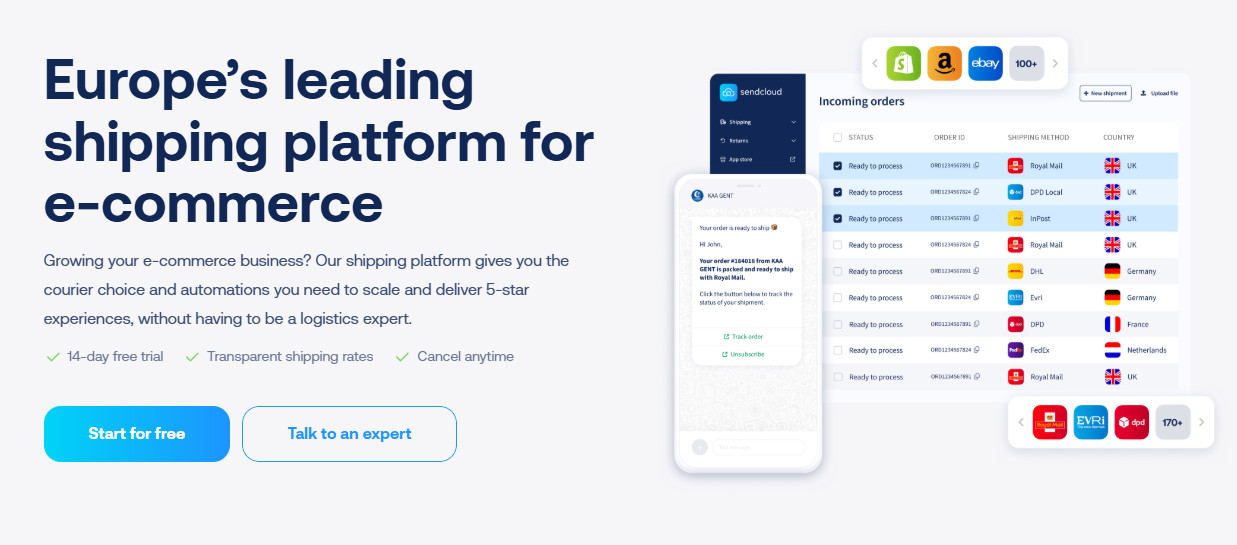
Best for: Businesses operating in Europe and dealing with multiple European carriers.
Sendcloud is particularly strong if you are based in Europe.
European shipping can become complicated because of different countries, carriers, delivery options, and cross-border requirements.
Sendcloud is designed around that environment.
What I Like
- Strong European carrier coverage
- Multiple carrier integrations
- Branded tracking
- Returns management
- Checkout delivery options
- Shipping rules
- Good reporting
- Customs support
- WhatsApp tracking notifications
- Good option for businesses expanding across Europe
What I Don’t Like
- Less attractive for businesses outside its strongest European markets.
- Monthly subscription plus per-label fees
- More complicated than basic shipping tools
- Higher plans can become expensive
Who I Think It’s Best For
If you’re operating in Europe and shipping between different European countries, Sendcloud is definitely worth looking at.
For a US-focused or very small business, I don’t think it would be my first choice.
Pricing
Current pricing starts with:
- Free – up to 20 parcels per month
- Lite – €28/month + €0.10 per label
- Growth – €87/month + €0.09 per label
- Premium – €175/month + €0.08 per label
- Pro – €639/month + €0.07 per label
The exact availability and pricing can vary by country, so these should be treated as the current published European pricing rather than a universal global price.
ShippingEasy – Best for Simple Automation
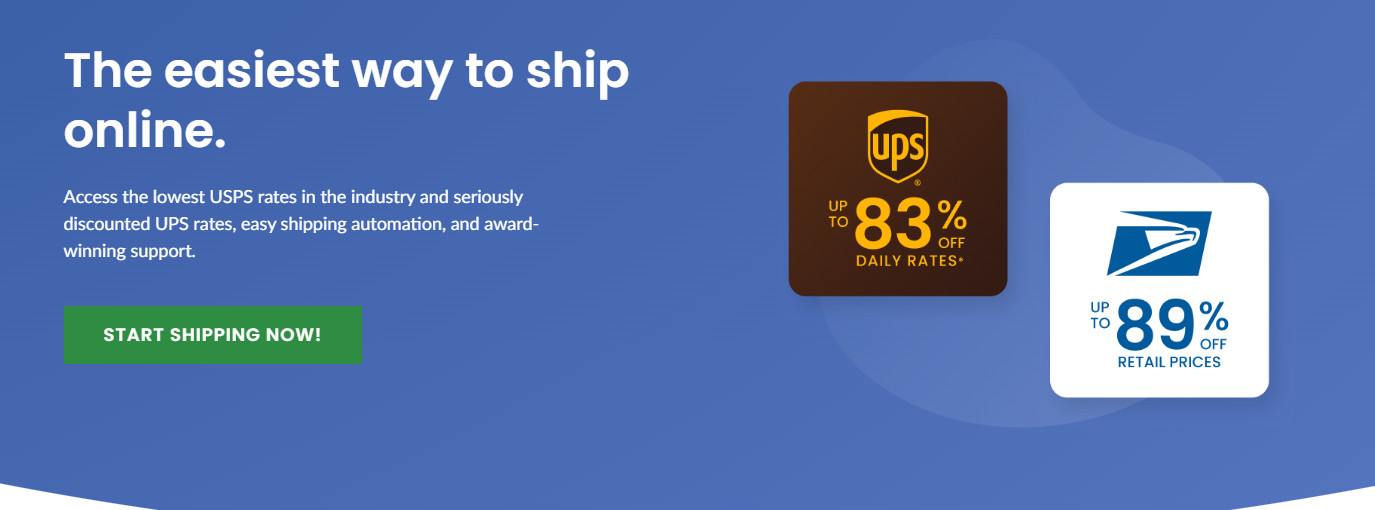
Best for: Smaller US businesses that want automation without going fully enterprise.
ShippingEasy sits somewhere between a basic shipping tool and a more advanced platform.
The main attraction for me is the automation.
It can handle things like shipping rules, order imports, and other repetitive tasks without being as intimidating as some of the larger platforms.
What I Like
- Easy to use
- Good automation
- Shopify integration
- Amazon integration
- eBay integration
- Discounted shipping rates
- Reporting
- Branded tracking
- Customer support
What I Don’t Like
- More limited carrier selection than some competitors
- Mostly focuses on US shipping
- Add-ons can increase the total cost
- Some users have reported order syncing problems
- Not the best choice for international or highly complex shipping
Who I Think It’s Best For
I would consider ShippingEasy for a smaller US-based business that wants automation but doesn’t need the complexity of ShipStation.
Pricing
ShippingEasy currently offers:
- Starter – Free for up to 25 shipments/month
- Growth – from $19.99/month
Pricing then increases according to monthly shipment volume.
Shopify Shipping – Best If You Only Sell on Shopify
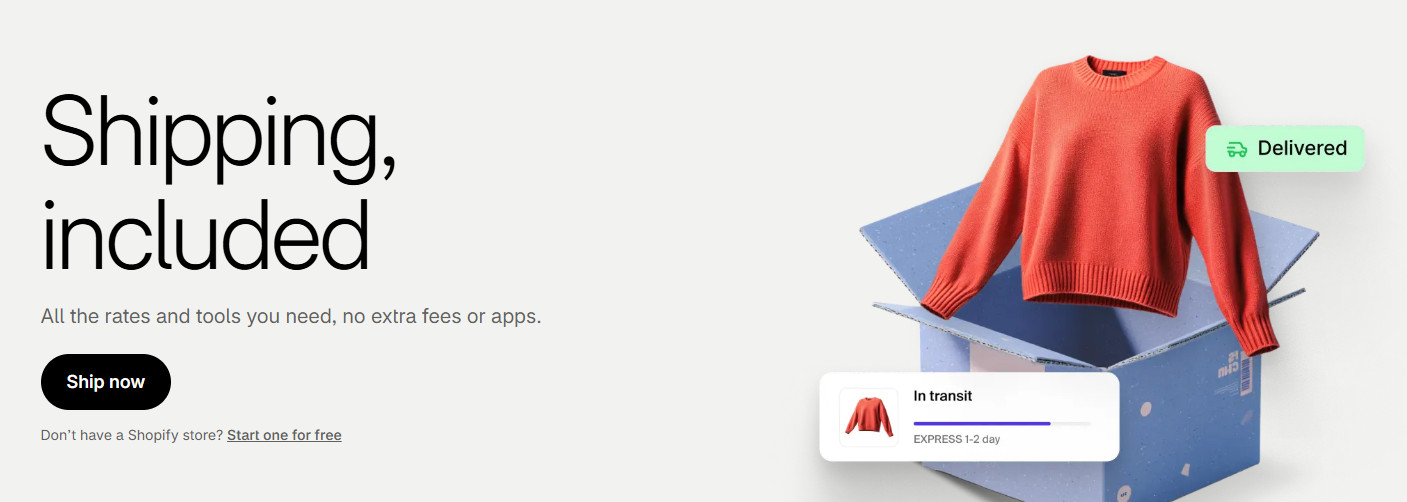
Best for: Shopify stores that don’t need multiple sales channels.
I wouldn’t automatically tell a Shopify store to buy third-party shipping software.
Sometimes the built-in option is actually the best choice.
If you only sell through Shopify and your shipping requirements are straightforward, using Shopify’s own shipping tools keeps everything in one place.
What I Like
- Already built into Shopify
- No separate shipping software subscription
- Simple setup
- Shipping rates can be shown at checkout
- Easy order management
- Convenient for Shopify-only businesses
- Strong integration with the Shopify ecosystem
What I Don’t Like
- Limited compared with dedicated multi-carrier platforms
- Mainly useful if Shopify is your primary sales channel
- Less advanced automation
- Less flexibility if you operate across multiple marketplaces
- Carrier availability and features depend on your location and Shopify plan
Who I Think It’s Best For
If you only sell through Shopify and your shipping requirements are relatively simple, I would start here before paying for another platform.
The point where I would seriously consider dedicated shipping software is when you add another major sales channel or your shipping process becomes more complicated.
Pricing
Shopify Shipping is included within the Shopify ecosystem rather than being a separate standalone shipping software subscription.
The available carriers, discounts, and features depend on your Shopify setup and location.
EasyPost – Best for Developers and Custom Systems

Best for: Businesses that need to build shipping directly into their own software.
EasyPost is different from the other platforms because it is primarily an API rather than a traditional shipping dashboard.
It is designed for businesses that want to build shipping functionality directly into their own website, software, marketplace, or ERP.
What I Like
- Large carrier network
- Address verification
- Rate shopping
- Tracking
- Shipping labels
- Insurance
- API access
- Very flexible
- Good for custom software
What I Don’t Like
- Requires technical knowledge
- Not designed for a normal small eCommerce business
- You need development resources
- You are responsible for building the user experience
- More ongoing maintenance
Who I Think It’s Best For
If you’re running a marketplace, logistics business, 3PL, or another software-based business where shipping is actually part of your product, EasyPost makes a lot of sense.
For a normal online store, I wouldn’t build around an API unless there is a very specific reason to do so.
Pricing
EasyPost’s current pricing is different from a traditional monthly shipping platform.
Its Free Access plan provides up to 3 000 labels per month, with additional labels currently charged at $0.08 each.
The Bring Your Own Carrier Account option is currently $20/month plus $0.08 per label.
There are also separate charges for certain tracking, address verification, and other services.
My Final Verdict
There isn’t one shipping platform that is perfect for every business.
It really comes down to what you need.
Shippo would be my first choice for most small and growing eCommerce businesses because it gives you a good balance between ease of use, integrations, automation, and pricing.
ShipStation makes more sense when the operation becomes larger and more complicated.
Pirate Ship is an excellent free option for smaller US businesses that mainly use USPS and UPS.
Easyship is worth considering if international shipping is a major part of your business.
Sendcloud is particularly attractive for European businesses.
ShippingEasy is a good option for smaller US businesses that want straightforward automation.
Shopify Shipping is still worth using if you are a Shopify-only store with relatively simple requirements.
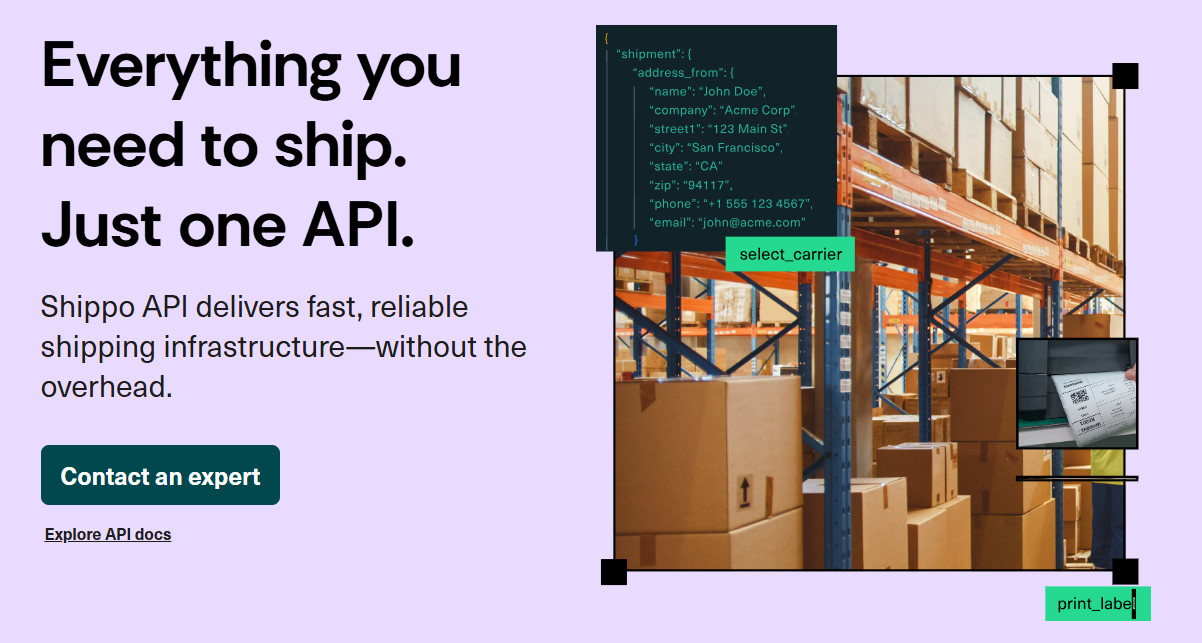
And EasyPost makes sense when you actually need to build shipping into your own software.
For me, the biggest thing is not choosing the platform with the longest feature list.
It is choosing the platform that removes the most work from your business without creating another complicated system that your team has to manage.
If you’re still deciding which direction to take, I would keep it simple:

Stay with your platform’s built-in shipping while your operation is small and straightforward
Move to a dedicated shipping platform when you start selling across multiple channels or need more automation.
Use a free label platform if your shipping requirements are very basic, and it genuinely saves you money.
And only build your own system when shipping is actually a core part of what your business does.
For most eCommerce businesses, buying the right software is going to be much easier, cheaper, and less risky than trying to build a shipping platform from scratch.