


Last Updated on October 16, 2026 by Ewen Finser
Whether it’s your first time looking for one or you’re simply switching providers, applying for a merchant account can be a daunting task. Between choosing an appropriate processor, hunting down your business documents, and waiting a few weeks for a decision, it can take a while.
So, what if you’ve done all this only to get hit with a denial? If a processor turned down your application, there’s usually a good reason for it. Sometimes, it’s something as harmless as not providing enough documentation. In these cases, the relatively easy fix is just resubmitting the missing files. In other cases, processors won’t want to work with newer businesses, which are often considered riskier because they have a limited financial history and more unknowns.
But for established businesses, underwriters often deny applicants due to a number of factors, such as a particular issue with their business’s operations or their financial history.
Here are some possible culprits.
Why Underwriters Deny Merchant Account Applications

Prohibited, Age-Restricted, or Regulated Industries
Some processors maintain a list of prohibited industries that get automatic denials. But even if your industry isn’t outright prohibited, certain ones (such as those that are age-restricted or highly regulated) can be challenging to take on, and the processor has to be a lot more careful to ensure they’re following the appropriate guidelines. For example, you would need age-verification systems if your business sells tobacco products or is in the gaming field. If you don’t meet these requirements, a denial is fairly likely.
Examples of industries commonly considered high-risk include gaming, travel, firearms, adult content, cannabis, and nutraceuticals.
Excessive Chargebacks
The higher your chargeback ratio, the more likely it is that your merchant account application will be denied. Although there isn’t a standardized threshold to aim for, you want to keep chargebacks well below 1% — usually below 0.5% or even 0.3%.
One factor that contributes to this is long delivery times, which may also raise a flag. The longer it takes for you to deliver your product or service to your customers, the higher the likelihood of chargebacks. For instance, those delivering goods within the same day or in a few days are relatively low-risk, but businesses with delivery timelines extending into weeks or even months may be seen as high-risk.
High VAMP Ratio
The VAMP (Visa Acquirer Monitoring Program) ratio is another important metric to consider. As of April 2026, those with at least 1,500 fraud and dispute events per month with a VAMP ratio of at least 1.5% can be required to implement additional risk-mitigation measures. Because the VAMP ratio considers both fraud and dispute events, this is separate from a traditional chargeback ratio.
Presence on the MATCH List
Previously known as the TMF (terminated merchant file) list, the MATCH (Member Alert to Control High-Risk Merchants) list is a Mastercard database listing businesses with excessively high risk levels. Many processors, even those that specialize in high-risk industries, will automatically deny applicants that are on the MATCH list, although some may consider them.
One of the most common reasons for a business appearing on the MATCH list is because of too many chargebacks. Other possibilities are:
- Compromised account data
- Money laundering
- Excessive fraud
- Business owner convicted of fraud
- Bankruptcy, liquidation, or insolvency
- Violating card network standards
- Collusion
- PCI-DSS noncompliance
- Illegal transactions
- Identity theft
Generally speaking, merchants remain on the MATCH list for five years.
Poor Business or Personal Credit
A low credit score can signify serious financial issues and is not something that all processors will be willing to take on. So if either your business or personal credit score is poor, underwriters could decide not to do work with you.
Tax Liens
Tax liens against you or your business are viewed similarly to poor credit, often resulting in underwriters viewing you as unreliable and turning you down. But aside from reliability, collections could also spell cash flow issues for the future, which can be a hard sell.
The lien amount and duration can influence how much of a factor this is, as large liens or those that have been left unsettled for several years can be more problematic.
High-Ticket Items

The higher the value of items you sell, the more impactful those financial losses (such as those from chargebacks) can be. That’s why businesses selling expensive products like jewelry, watches, electronics, specialized equipment, designer clothing, collectibles, and others are considered riskier. The same goes for service businesses, such as those selling courses, coaching, or seminars.
Plus, underwriters will compare your estimated average ticket value to others in your industry, and this could be an issue if your projection seems inaccurate.
Unrealistic Estimated Processing Volume
When you apply for a merchant account, you’ll have to give the underwriters some idea of how much you expect to process on a monthly basis. If your estimate is far outside the range established by the previous merchant processing statements you submitted, this will raise suspicion.
Payment Terms
Lengthy payment terms, such as net 60 or net 90 terms, can raise concerns about potential cash flow issues, as the longer it takes to collect payment from your customers, the more likely it is that some invoices will go unpaid.
Unclear or Absent Website Policies
The underwriting decision isn’t all about finances, as your website needs to meet certain standards:
- Present terms & conditions and privacy policy
- Refund, return, and/or cancellation policy
- Accurate product descriptions with prices
- Business contact information
You may also need to present proof that you own the website domain. An incomplete or misleading website can lead to denial.
Poor Customer Reviews
If an underwriting team searches up your business to find a slew of negative reviews accusing you of poor service or unethical conduct, this could seriously harm your approval odds.
Third-Party Fulfillment or Dropshipping
Working with a 3PL provider can be considered riskier, since you don’t have full control over how your products are stored and shipped. The risk level is even higher with dropshipping because you have even less control — you don’t keep any inventory in stock, so you can’t know for certain what the product quality will be like and when the items will ship out.
Cross-Border Transactions
If your business frequently sells to international customers, this can complicate the underwriting process. This is especially true when selling to those in countries with high fraud rates, sanctions, or regulatory issues.
Reapplying for a Merchant Account
Before reapplying for a merchant account, you’ll want to identify and resolve the issue (or issues) that caused the denial in the first place. For instance, if you have a particularly low credit score, you’ll want to increase it by establishing good habits and fully repaying your debts. If there are problems with your website, you’ll need to correct them. If your documentation was incomplete, you should resubmit it and include the missing items.
Depending on the payment processor and the reason your application was rejected, you may be able to reapply directly to the same processor. However, there can be a waiting period involved.
You should also ensure that you’re applying through a processor that’s appropriate for your business, as they are not all the same. You’ll want to do some research beforehand to find processors that have experience working with businesses in your industry to increase your chances of approval.
Increasing Your Approval Odds
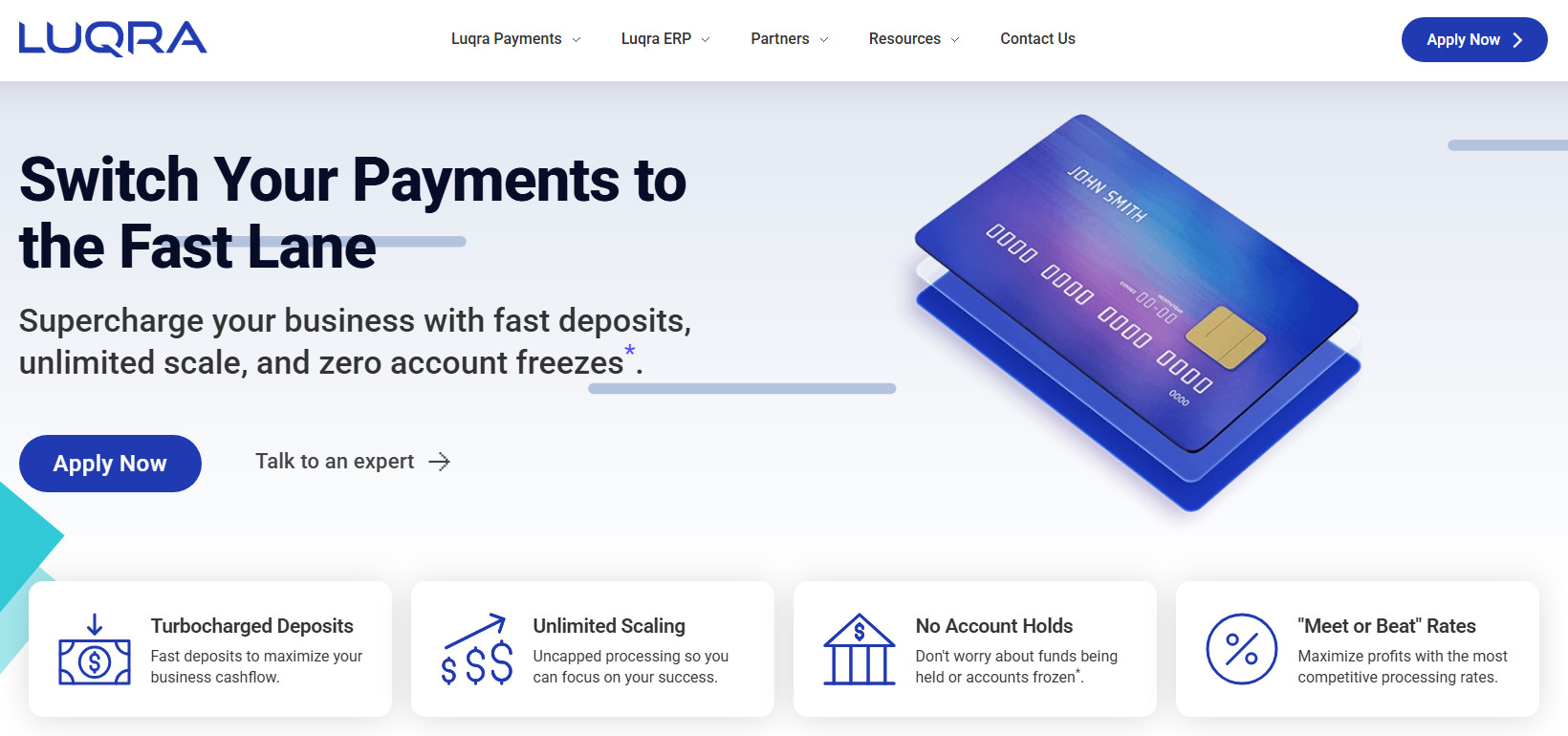
Researching a processor beforehand is particularly important if there’s any chance that your business could be flagged as high-risk. In this case, it’s imperative that you apply for a merchant account through a processor that’s explicitly high-risk-friendly, such as Luqra or PaymentCloud. Both of these processors are less fazed by rapid growth and complex industries like e-commerce, dropshipping, telemedicine, nutraceuticals, supplements, vapes and e-cigs, coaching, courses, and others.
On the other hand, if you’re worried about another denial, processors to avoid would be those operating as payment facilitators (PayFacs), like Stripe, Square, and PayPal. These do not provide traditional merchant accounts, grouping sub-merchants under a single master merchant account instead. Because of the nature of this model, PayFacs are even less willing to tolerate risk.
While applying for a merchant account through a high-risk-friendly provider can drastically improve your approval odds, no processor can guarantee approval, as they still have their own standards and conduct a thorough underwriting process.
Moving Forward After Merchant Account Denial
Going through a lengthy merchant account underwriting process only for the provider to deny your application is a difficult position to find yourself in. However, it certainly isn’t hopeless, as merchant account providers all have different perspectives toward risk. It’s possible that one processor could deny you while you get approved elsewhere with the same exact information.
Don’t blindly apply after a denial, though. It’s important to nail down the exact reason why you were initially denied and take action to correct the issue. Also, research the various merchant account providers to find ones that have experience with others in your industry and are less likely to get scared off.
Taking both of these steps will help to increase the chances of a smooth underwriting process and swift approval.