


Last Updated on September 15, 2026 by Ewen Finser
Social Snowball is a notable influencer, affiliate, and referral marketing platform that has earned its place in Shopify’s partner network. It takes the idea that your happiest customers can make the best affiliates, and scales it through consistent automation.
But today, this is not the only job that modern partnerships have to do. Creators, affiliates, publishers, and customer advocates are part of the same growth strategy. For example, a creator posts a review, accepts a flat campaign fee, and earns commission. A shopper may discover that content on TikTok, continue their journey by comparing the product on Amazon, and then finally buy from Shopify or Walmart. A Shopify-only referral workflow can consequently leave important gaps.
The right alternative therefore depends on your operating model. Some brands need broader channel coverage, while others need traditional publishers, enterprise controls or richer creator workflows.
Social Snowball Still Makes Sense for Some Ecommerce Brands
Social Snowball is not a platform that every growing brand needs to leave behind because it does a good job at converting existing Shopify customers into affiliates, and gives them an easy way to recommend products.
For example, its Safelink feature automatically creates a unique one-time-use discount code when someone clicks an affiliate link. From a brand protection perspective, this is a huge benefit. It helps prevent codes from ending up on coupon websites and makes attribution more reliable.
This may be exactly what’s needed for a Shopify brand that has a loyal customer base. However, the platform becomes less suitable when the program starts scaling past customer referrals.
As a marketer with more than 15 years of experience, I can say that brands usually begin looking for alternatives for one of three reasons: they want to recruit more experienced creators, they need better tools for paid creator campaign management, or they sell across multiple channels.
At that point, it’s not about finding a platform with more features because almost every sales demo can showcase an impressive list. What matters most is whether those features match the way your partnerships work and scale.
Leading Social Snowball Alternatives at a Glance
Platform | Best for | Main strength |
Refersion | Established DTC affiliate programs | Reliable tracking and flexible commissions |
Impact | Enterprise level and complex partnership teams | Broad management across affiliates, creators and referrals |
Levanta | Brands who sell across multiple ecommerce channels | One creator and affiliate program across Amazon, Shopify, and Walmart |
Awin | Brands searching for established publishers | Provides access to a large global partner network |
Partnerize | Enterprise brands with compliance needs | Automation, fraud monitoring, and global transactions |
Superfiliate | Shopify brands prioritizing creator marketing | Strong creator, gifting, and content workflows |
Shopify Collabs | Small to mid size Shopify brands testing the channel | Native Shopify integration and performance management |
Refersion for Building a Solid Affiliate Foundation
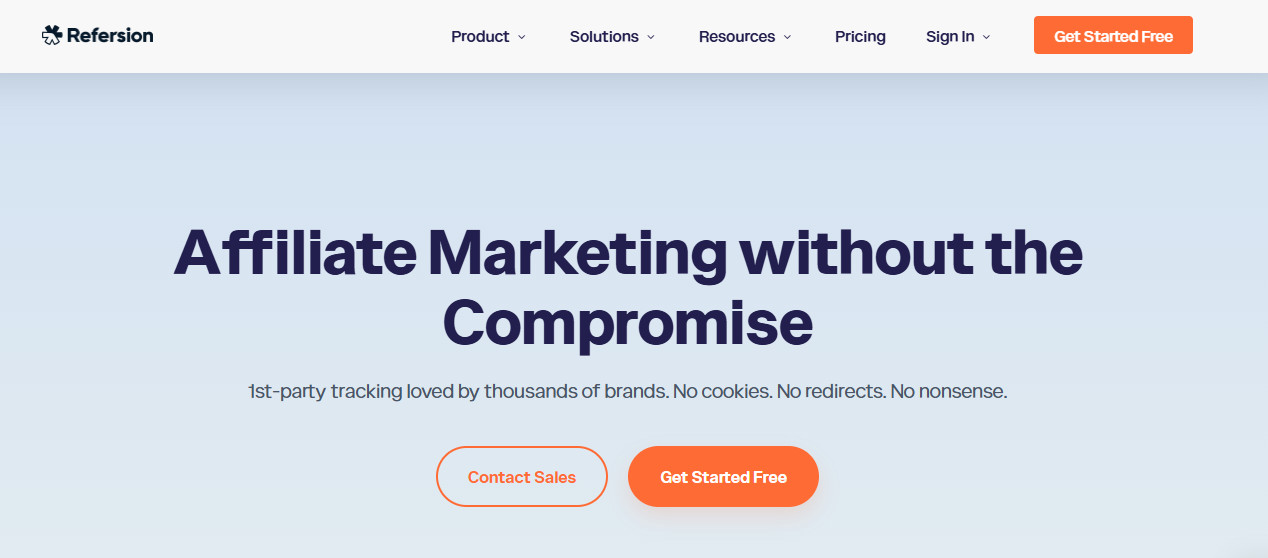
For brands that already have an affiliate program and want more control over their structure, Refersion is a strong option. The platform is designed around the core aspects of affiliate management: recruiting partners, creating offers, tracking conversions, setting commissions, and management payments. Brands also get a clear view of the customer journey with its first-party tracking feature, which shows where sales are coming from without relying on third-party cookies.
With Refersion, commission structures can be adjusted by product, partner type, or campaign. Brands can also create tiered rewards that increase as affiliates reach set performance levels.
A common mistake brands make is giving every partner the same rate indefinitely. In reality, different products have different margins, and different partners create different levels of value. So, a creator bringing in new customers should not always be treated the same way as a coupon partner appearing at the end of the buyer’s journey.
Refersion could be a great choice for DTC brands that want dependable affiliate infrastructure without moving immediately into a large enterprise platform. Nonetheless, it’s still more focused on traditional affiliate management than on the full creator campaign process.
The biggest difference that I see between Social Snowball and Refersion is the platforms’ starting focus. Social Snowball begins by turning existing Shopify customers into affiliates, while Refersion excels at building a more structured affiliate program around different partner types. It works well for brands that want to recruit experienced affiliates, create separate offers, or reward new customer acquisition in a different way than last-click conversions.
In my opinion, it’s worth transitioning between Social Snowball and Refersion when the customer referral loop is still doing the job, but your team needs more control over commissions and attribution. You’re not just replacing referrals; you will be building a more structured program that can support them with content publishers, creators, and other performance partners.
If your team mostly deals with links, codes, offers, and commissions, this focus could be beneficial. However, if you also require social discovery, gifting, content approvals, and marketplace sales capabilities, another option may be a better fit.
Impact for Complex Partnership Programs
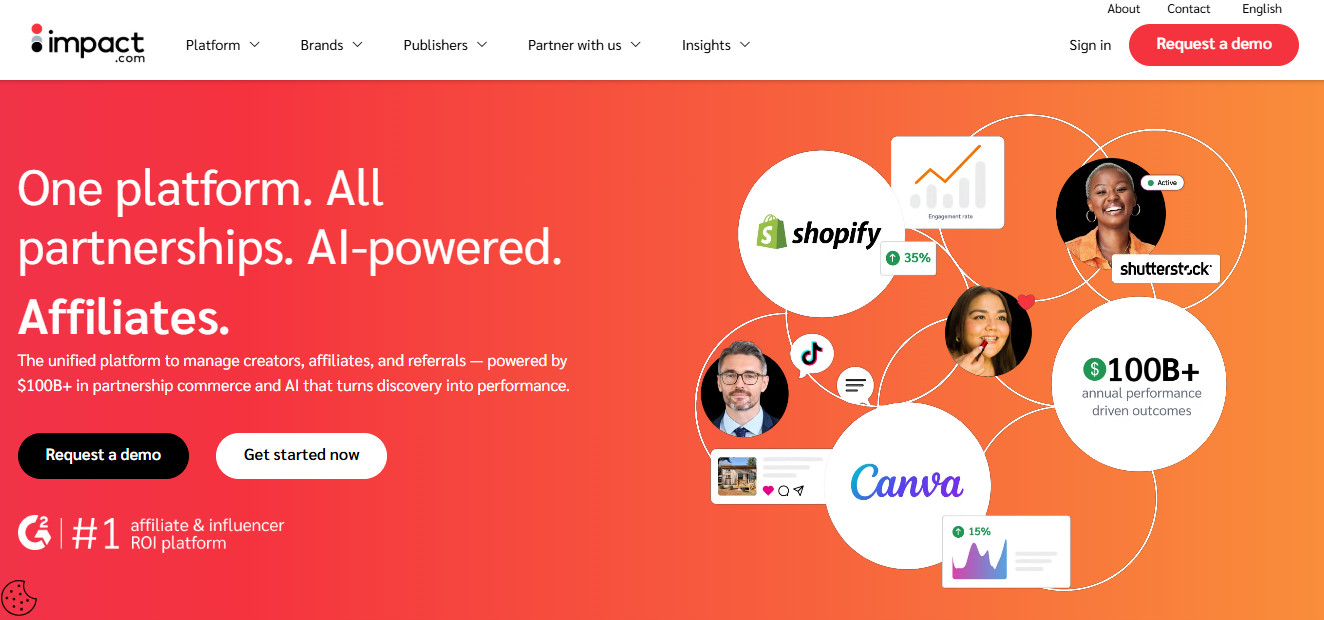
Impact is designed for companies that manage multiple types of partnerships simultaneously. The platform covers affiliates, creators, customer referrals, and has tools for recruitment, contracting, tracking, payments, fraud protection, and performance optimization. Brands have the ability to manage their complex partnership programs from the same system instead of dealing with each one as independent mediums.
With Impact’s cross-device tracking, automated partner workflows, and more advanced reporting, it’s a credible choice for larger brands that operate across several markets, websites, or business units.
Looking at the two platforms, Impact solves a much broader operational problem than Social Snowball because it keeps Shopify referrals and affiliate activation simple. Impact is very much built for organizations managing different partner groups, contracts, payment models, and reporting needs at the same time.
For instance, let’s say a brand has many creators promoting product launches, editorial affiliates are driving search engine traffic, customer advocates are sharing referral links, and regional teams are negotiating their own partnerships. Impact allows them to manage these relationships under the same roof, instead of dispersing them across separate tools and reporting systems.
However, I would only change to Impact once the complexity is real. If your brand’s main goal is to turn Shopify customers into advocates, it will be easier to manage with Social Snowball. Impact is more valuable when a brand needs governance, cross device measurement, and custom workflows that can support multiple team members without losing visibility.
The downside to Impact is the learning curve that comes along with it. It needs someone who understands the program well enough to configure it, manage it, and use the reporting properly. If there’s no internal ownership, brands will pay for an advanced system, but continue to make decisions in spreadsheets.
I would go with Impact when a partnership program is already complex or moving towards that direction. For smaller teams trying to launch an affiliate program, Impact may offer functionality that the brand can actually use.
Keep reading: Best Impact Alternatives for Partner Marketing
Levanta for Cross-Channel Sales
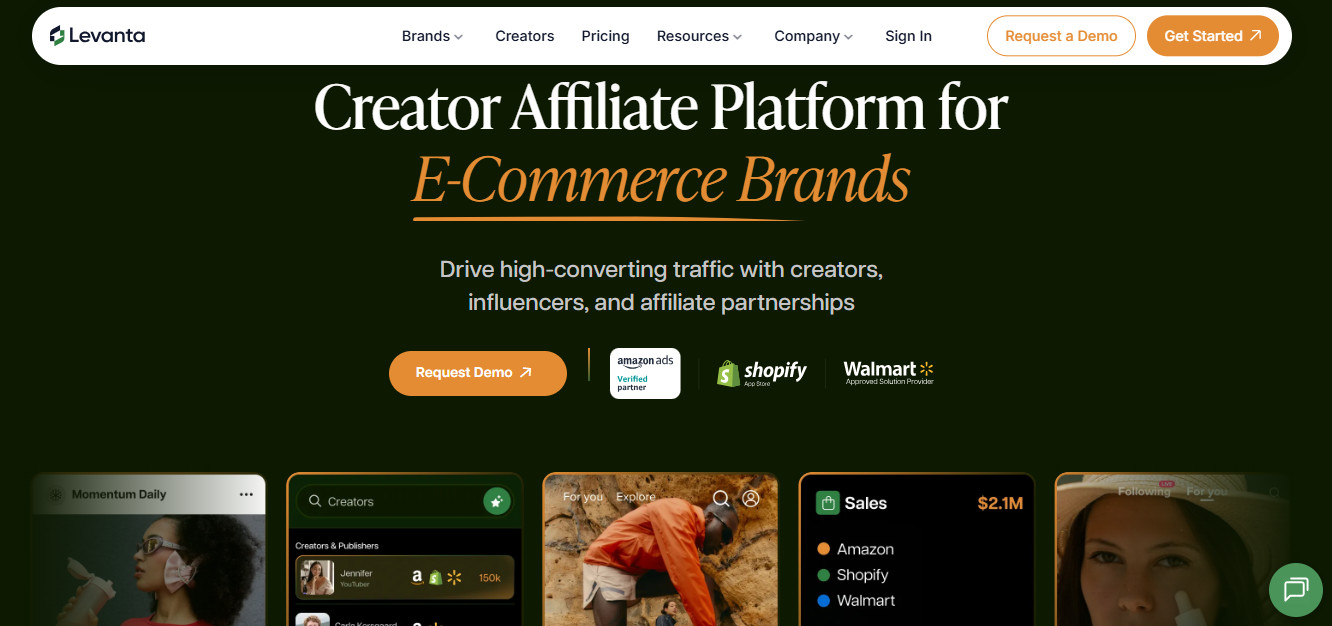
For ecommerce brands that want to run creator and affiliate partnerships across Amazon, Shopify, and Walmart, Levanta, in my opinion, is the strongest alternative.
And it’s not just because it integrates with multiple platforms. Levanta gives brands one place to recruit partners, send samples, set commission structures, negotiate paid opportunities, track results, and manage payouts.
In modern marketing, having a single source of truth is important because consumers barely have a straight purchasing journey. It usually goes something like this: you see a creator’s TikTok promoting a product, check its Amazon reviews, and then purchase from Walmart because that’s where you’re used to shopping. However, another customer finds the same product by reading a blog and then buys it directly from the brand’s Shopify store. Meaning, every customer journey is unique.
If all these sales channels are tracked separately, the partnership team will never have a complete view of what is working.
Brands can use its Creator Marketplace with AI-powered discovery and social listening to discover new partners. They can then support those partnerships through product sampling, performance commissions, and Paid Placements.

Levanta assembled this report to help digital merchants navigate the new AI-shaped buying journey. Discover why creators now drive the clicks AI can’t and how to turn that into revenue.
What I particularly like is that the platform does not force every creator relationship into a commission-only model. This type of approach is often attractive to brands because it seems low-risk. However, the truth is experienced creators aren’t fans of producing quality content without some sort of guaranteed compensation. Levanta gives brands the ability to negotiate flat-fee placements and still connect those campaigns to performance. It is beneficial to both brands and creators because it creates room for hybrid arrangements, such as a smaller upfront fee combined with commission.
Levanta also helps brands evaluate past attributed revenue. Features such as cross channel reporting, product-level performance, and new brand data provides a clear view of which partner is bringing in new customers and driving revenue.
Social Snowball can be the easier choice for a simple Shopify referral program. But when creators, affiliates, and retail channels become part of the same growth strategy, Levanta as an alternative would make more sense.
Awin for Access to Established Publishers
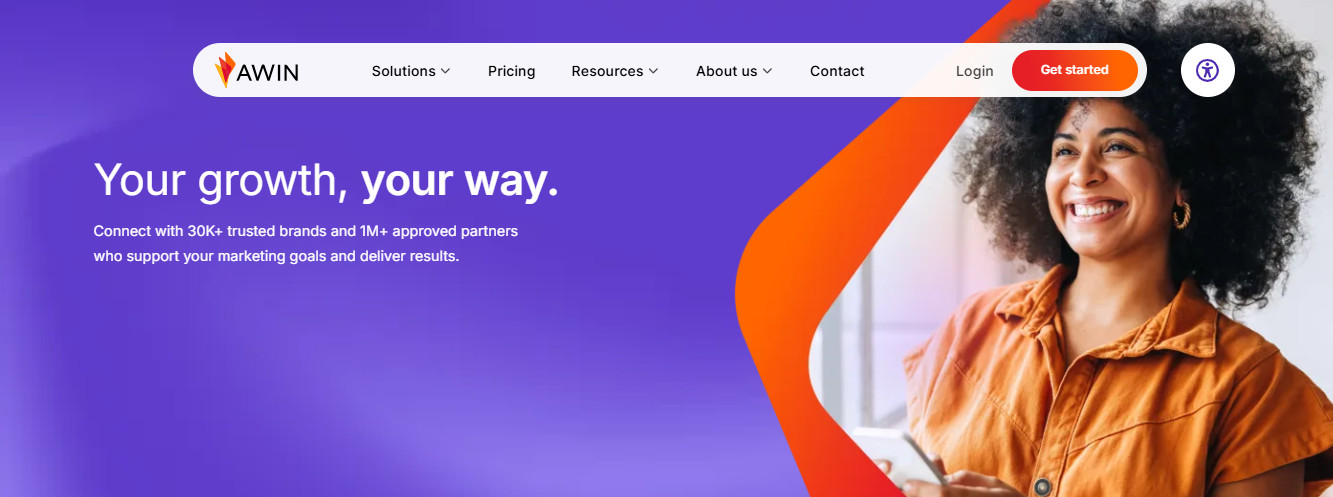
Awin outperforms other Social Snowball alternatives for the size and variety of its partner network. Instead of only focusing on customers or social creators, it connects brands with content publishers, editorial sites, comparison platforms, loyalty partners, cashback sites, and influencers.
Awin’s Partner Directory has more than one million partners, advanced search filters, and AI-generated recommendations to help brands find qualified opportunities. This access and reach is valuable for brands entering new markets or trying to develop relationships with more established publishers.
In comparison to Social Snowball, Awin looks beyond the brand’s existing customer base for scaling. Instead of simply converting previous buyers into advocates, Awin’s platform can reach a new audience through publishers that already have established traffic, authority, and content.
This difference can influence at what point the brand enters the purchasing journey. Rather than just rewarding referrals at checkout, a brand can work with review sites, editorial publishers, or comparison mediums that help customer research, evaluate, and discover products earlier. I would only move to Awin when a publisher’s access and international reach is more important than post-purchase referral automation.
From my experience, a large partner network is only useful when a brand is being selective about its partners. Affiliate teams often get distracted by big numbers; recruiting hundreds of partners may sound impressive, but practically speaking, most of them never publish content, while the rest intercept coupon conversions at checkout.
A more effective strategy is to review partner types that are being recruited and what role each of them plays in the purchasing journey. For example, content publishers could introduce new customers at the beginning, while review sites can support product research. Loyalty and coupon partners can help complete a sale, but they’re not always creating the initial demand.
While Awin’s platform provides access to all of these publishers, the marketing team still needs to strategically set commission rates, monitor performance, and identify which partnerships drive revenue to justify additional investment.
Partnerize for Control and Compliance
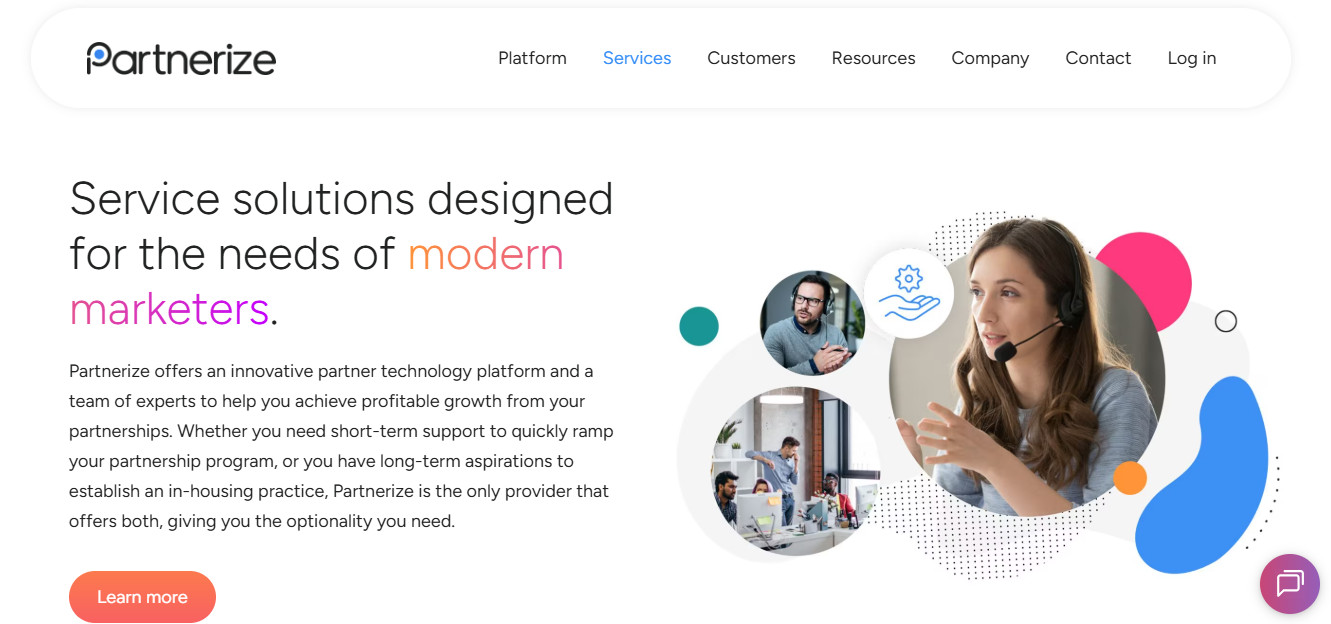
Another suitable option for larger and more established partnership programs is Partnerize. The platform includes partner discovery, recruitment, tracking, reporting, commissioning, and global payments.
One of the key highlights is Partnerize’s ongoing compliance and fraud monitoring through BrandVerity. These controls are crucial when a program involves multiple partners across various regions. Manually reviewing if affiliates are following paid search standards, using approved language, or placing discount codes correctly can become a dreadful process.
Partnerize can help automate more of that monitoring and provide brands flexibility over how different partners are rewarded.
Partnerize solves a later-stage problem. Social Snowball makes it relatively simple for a Shopify brand to activate customers and manage referrals. Partnerize only becomes more useful once a brand’s partnerships expand across regions, teams, and different sets of rules.
Let’s say a global brand needs a specific commission structure in North America, another one for loyalty partners in Asia, and more thorough approval processes for paid search or promotional language. When this happens, consistency and compliance are no longer just administrative details; they directly protect the brand’s budget and reputation.
So if your priority is speed and simplicity, Social Snowball is sufficient enough. However, switching to Partnerize might be worth it if your team needs to create standards for how partners are approved, monitored, and paid without making each market operate the same.
In my opinion, this wouldn’t be the right platform for a small Shopify brand launching its first affiliate program. Partnerize’s real value appears when a brand has a complicated operation throughout various markets, different commission structures, and approval mandates.
My rule of thumb is pretty simple. If one team member is managing affiliates, creators, social media, and has several other marketing responsibilities, a more basic platform will be easier to use. But if the program involves dedicated partnership managers, regional marketers, finance, and legal team members, Partnerize would be much more relevant.
Superfiliate for Creator-Led Shopify Brands
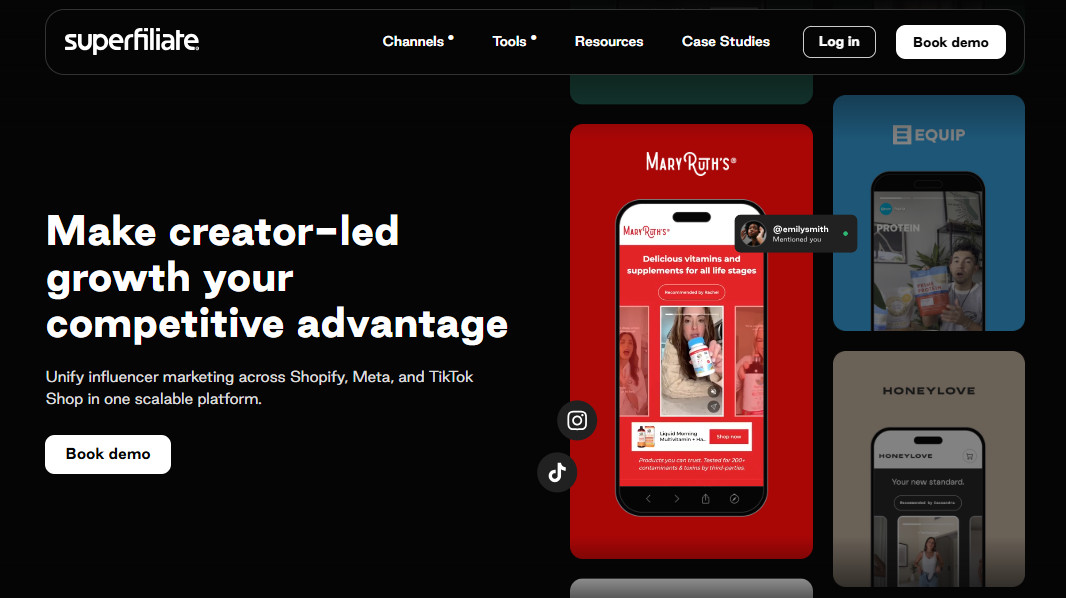
Superfiliate is a great match for Shopify brands who position creators as more than affiliates with social media accounts. The platform brings together influencer, affiliate, and ambassador programs together across Shopify, Meta, and TikTok Shop.
Current features include social listening, creator communication, gifting, and seeding, payouts, reporting, a UGC library, and cobranded landing pages. This makes it extremely valuable for brands that are actively managing creator campaigns, and not just handing out affiliate links.
Superfiliate’s personalized and cobranded landing pages are an interesting example. A creator’s audience goes through a more personalized experience around the partnership instead of landing on a generic product page. This can make a customer feel like the product recommendation is a natural part of the journey, and not a salesy ad attached to a discount code.
This practical difference shows up in how internal teams measure value. Social Snowball shows success by measuring how many customers join, share links, and drive referred orders. With Superfilliate, a creator partnership can also produce UGC that the brand can reuse in paid ads, emails, or product pages even if the original post didn’t convert immediately.
This can consequently have an impact on how budgets are evaluated. A creator with modest direct revenue can still be valuable if their content performs in advertising or creates assets that a brand would otherwise have to produce. Social Snowball is more closely tied to referrals, while Superfiliate provides internal teams with more ways to extend the value of each creator relationship.
Superfiliate definitely goes deeper into creator relationships, content, and campaign management. But it is focused on a Shopify and social commerce ecosystem, so might not suit organizations with broader reach.
I would consider Superfiliate for a Shopify brand that focuses on working with creators across Meta, TikTok Shop, and its DTC store. But brands driving significant revenue from Amazon or Walmart in addition to Shopify should carefully evaluate if they need a separate system for those retail channels.
Shopify Collabs for Getting a Program Started

If we talk about accessibility, Shopify Collabs easily wins on this Social Snowball alternatives list. It’s free to install and is fully integrated with the Shopify environment, removing additional setup time that comes with using a separate platform.
Brands can recruit creators, send gifts, create affiliate links, discount codes, monitor sales, and automate commission payments via Shopify Billing.
For small to medium-sized businesses, these features are ideal for testing whether creator affiliate marketing works for their audience. It’s a strategic way to launch a simple, focused program, allowing teams to define ownership, recruitment processes, and success metrics before investing in more advanced software.
Shopify Collabs does have its limitations because it’s not designed for complex attribution or partnership programs operating across multiple commerce platforms. There are less specialized referral automation capabilities, but it also requires less commitment from a brand that is still testing the channel. Internal teams have the basic infrastructure they need to bring on creators, issue links and codes, send products, and keep track of commission sales without committing to a more advanced platform.
Collabs becomes useful as a learning environment during the first few months of a program launch. Brands can monitor how many creators accept invitations, produce content, and drive revenue. They can also test out different commission rates and identify how much internal time the program needs.
Social Snowball, in my opinion, becomes the stronger option when your brand already knows customer advocacy works and needs to automate the process more seriously. Think of it this way: Shopify Collabs provides the idea, but once the program grows, its lighter reporting and control abilities could become the reason why a team would begin looking at Social Snowball or its alternatives.
For Shopify-only brands that are still learning, Collabs can be a great starting point. However, growing partnership programs will need a more advanced software system that provides more control and reporting over time.
Things to Consider Before Switching Platforms

Changing platforms when you already have a program in place can be disruptive, especially when active affiliates need new links, codes, or payment instructions. Prior to making a switch, it’s of most utter importance to understand what the current platform is limiting the team from doing.
Start off by evaluating partner recruitment. Social Snowball is good at activating existing customers, but your goal is to source experienced creators or large publishers; take a look at where each alternative gets its partners and how easy the outreach process is.
Then, map out where customers make purchases. A Shopify dashboard may look impressive, but it can miss Amazon or Walmart orders that were influenced by the same creator. If marketplace revenue is a substantial part of the business, cross-channel tracking should be a top priority in your evaluation.
Compensation and payment structures are also important factors that need to be analyzed strategically. Commission-only programs are simple, but they don’t work for every creator. A platform that supports flat fees, product samples, private commissions, and performance bonuses provides a brand more ways to build competitive offers.
And lastly, calculate the real cost. This includes the subscription, percentage of revenue fees, payment costs, implementation work, and the hours spent migrating data between different tools. Keep in mind that a lower monthly fee doesn’t always translate to the lowest overall cost. Because if your internal team still needs separate systems for gifting, creator comms, and marketplace reporting, the “inexpensive platform” can quickly become an expensive operation.
The Best Alternative Depends on Your Brand’s Direction
Social Snowball is a good option for brands focused on converting Shopify customers into affiliates. It is a valuable growth loop, and not every single business needs something more complicated. The alternatives become relevant when a program starts advancing or moving in a different direction.
Refersion provides a strong foundation for traditional direct-to-consumer affiliate management.
Impact and Partnerize are designed for complex enterprise programs that may need compliance and fraud protection built in.
Levanta allows brands to run and track a single creator and affiliate program across Amazon, Shopify, and Walmart.
Awin gives brands access to an extensive partner network that offers unrivaled reach if you have the marketing team to make use of it.
Superfilliate offers deeper creator workflows for Shopify brands actively managing creator campaigns.
And Shopify Collabs is an easy, risk-free way to test out affiliate marketing for the first time.
The truth is, the best Social Snowball alternative is one that matches where your customers shop, how your partners promote, and where your business scales. So look past the impressive sales demos and choose the tool that actually suits your day-to-day workflow.