


- Popular Snov.io Alternatives at a Glance:
- What Actually Breaks When Snov.io “Stops Working”
- Why Teams Look for Alternatives, and What to Fix First
- 1. Inboxally
- 2. Lemlist
- 3. Apollo.io
- 4. Instantly.ai
- 5. Hunter.io
- 6. Mailshake and Reply.io
- The Constraint Most Teams Misdiagnose
- Knowing When the Problem Is the Tool, and When It Is the System
Last Updated on May 6, 2026 by The Digital Merchant Team
Snov.io works, but it does not scale the way most teams expect.
I have spent more than 20 years building and auditing sales and marketing systems across SaaS, healthcare, enterprise tech, ecommerce, and services. One of the most consistent patterns I see is teams getting early traction with Snov.io, then hitting a wall once they try to scale outbound. Open rates drop, replies slow down, and performance becomes unpredictable.
At that point, most teams assume they need a better tool. Sometimes they do, but more often they are solving the wrong problem. Here is how to think about alternatives, and where each one actually helps.
Popular Snov.io Alternatives at a Glance:
- InboxAlly: best when emails are not reaching the inbox consistently, focuses on deliverability and sender reputation rather than sending.
- Lemlist: best for improving personalization and reply rates when deliverability is already stable.
- Apollo.io: best for better data, targeting, and all in one outbound workflows.
- Instantly.ai: best for scaling outbound volume across multiple inboxes and domains.
- Hunter.io: best for simple and reliable email discovery.
- Mailshake and Reply.io: best for structured outreach and sales process management.
What Actually Breaks When Snov.io “Stops Working”
As you scale, inbox providers start evaluating your behavior more closely. They look at engagement signals, consistency, domain reputation, and user interaction patterns. If those signals weaken, your emails don’t land where they used to.
From your perspective, it looks like performance dropped, but in reality, visibility dropped.
This is where most teams go wrong. They assume fewer replies mean worse messaging, when in many cases it means fewer people are actually seeing the message.
When I audit campaigns, I’m not looking at subject lines first. I’m looking at placement. Because if the email doesn’t hit the primary inbox, nothing else matters.
Why Teams Look for Alternatives, and What to Fix First

Most teams start looking for alternatives to Snov.io when performance becomes inconsistent. Open rates decline, replies slow down, and campaigns that once worked stop producing reliable results. The natural assumption is that the tool is no longer sufficient.
The problem is usually not the tool itself. It is a lack of visibility into how inbox providers are evaluating your emails. Most platforms give you control over sending and sequencing, but they do not meaningfully influence or expose the reputation signals that determine whether your emails are actually seen.
As a result, teams often respond by switching tools or adding more of them when the real issue sits elsewhere in the system.
How to Approach this Problem
A more effective way to approach issue is to break outbound into three layers:
- The data layer determines who you contact.
- The sending layer controls how campaigns are executed.
- The deliverability layer determines whether your emails reach the inbox at all.
If your targeting is weak, improving your data layer will help. If your messaging or sequencing is underperforming, improving your sending layer will help. But if your emails are not consistently reaching the inbox, neither of those changes will produce reliable gains.
With that in mind, here are several alternatives to consider, based on which part of the system you are trying to improve:
1. Inboxally
InboxAlly is not a traditional outbound tool, but a deliverability platform designed to improve where your emails land. It focuses on influencing how inbox providers (like Gmail and Outlook) interpret your emails.
It generates positive engagement signals (opens, replies, interactions) in a controlled way, which helps build and repair your sender reputation over time. The goal is to move your emails out of spam or promotions and into the primary inbox consistently.
Tools like Snov.io operate at the data and sending layers, which helps you find leads, write emails, automate sequences, and scale campaigns.
InboxAlly operates underneath that. It does not replace your outreach platform; it strengthens the foundation those tools depend on, which is inbox placement and sender reputation.
Teams that are experiencing declining open rates, inconsistent performance, or campaigns that used to work but no longer do tend to benefit the most. It is especially useful when messaging and targeting are already validated, but results do not match the effort.
Keep reading: My 2026 InboxAlly Review: Does this help with email deliverability?
Pros
- Directly improves inbox placement and sender reputation
- Works alongside existing outbound tools rather than replacing them
- Helps stabilize performance as you scale
- Useful for warming up domains and repairing deliverability issues
Cons
- Does not provide lead data or outreach automation
- Requires an existing outbound system to plug into
- Results depend on consistent usage and proper setup
- May feel less intuitive if you are expecting a traditional sending tool
InboxAlly is the comprehensive suite I need to solve challenging deliverability problems across the board. It's like a triage hub for diagnosing and fixing email deliverability rates in one dashboard. I've tried a lot of tools, but this is the one I've stuck with.
2. Lemlist

Lemlist is a cold outreach platform built around personalization and creative engagement. It focuses on helping your emails feel more human by allowing dynamic text, personalized images, videos, and custom landing pages inside sequences.
Lemlist helps you create outreach that stands out in crowded inboxes. Instead of sending the same message to everyone, you can tailor each email with personal details, visuals, and custom touches that increase the chances of a reply.
While Snov.io combines lead generation and basic outreach in one place, Lemlist goes deeper on the messaging layer. It is less about finding contacts and more about improving how your emails feel once they are sent.
Teams that already have decent deliverability and contact data, but struggle with low reply rates or generic messaging, might benefit the most from Lemlist.
Pros
- Strong personalization features (images, videos, custom variables)
- Good for improving reply rates and engagement
- Flexible campaign building
Cons
- Limited built-in lead database compared to Snov.io
- Does not directly improve deliverability
- Can take more time to set up campaigns properly
3. Apollo.io
Apollo.io is a sales intelligence and outreach platform that combines a large B2B contact database with sequencing and CRM style workflows.
Apollo.io helps you find leads, enrich contact data, and run outbound campaigns from a single platform. It is designed to reduce the need for multiple tools by combining prospecting and outreach.
Snov.io offers a simpler database and outreach system, while Apollo.io operates at a larger scale with deeper data, more filters, and tighter workflow integration. It is more of an all-in-one sales engine.
Teams that are struggling with targeting, list quality, or scaling prospecting might get the most value from Apollo.io.
Pros
- Large and frequently updated contact database
- Advanced filtering and targeting options
- Combines prospecting and outreach in one system
Cons
- Data accuracy can still vary depending on niche
- More complex than Snov.io for new users
- Does not solve inbox placement or deliverability issues
4. Instantly.ai
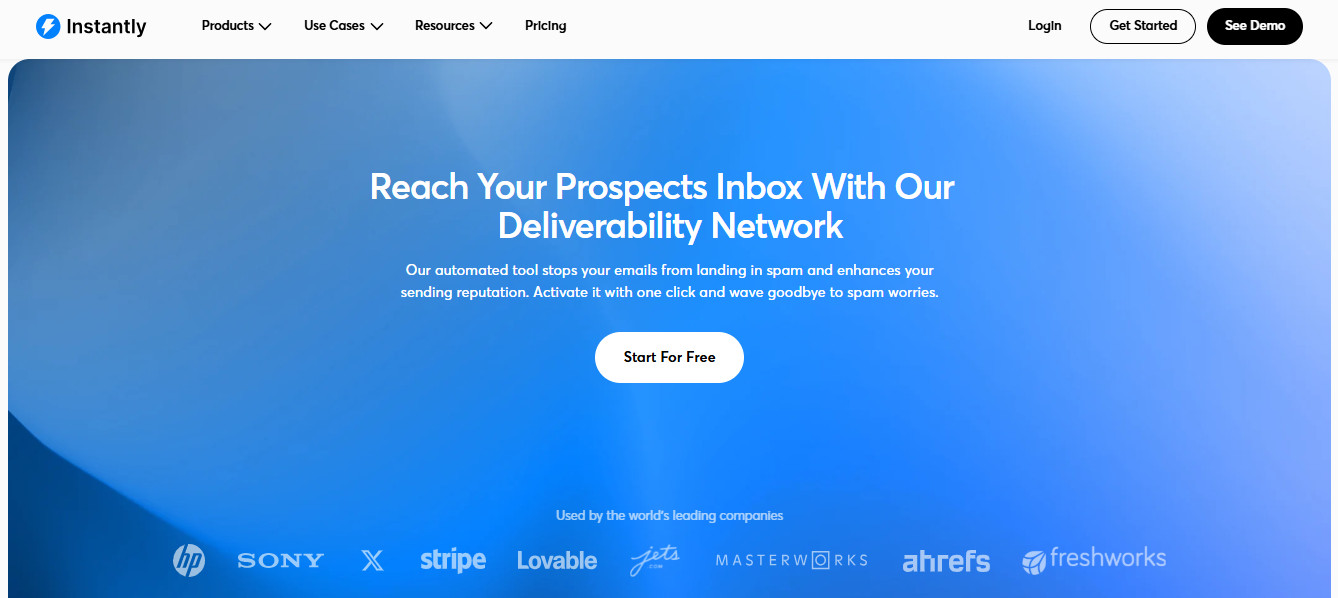
Instantly.ai is a cold email platform designed specifically for high-volume outbound campaigns across multiple inboxes and domains.
Instantly.ai allows you to send large numbers of emails by distributing volume across many email accounts. It also includes automation features like inbox rotation, basic warmup, and campaign scaling tools.
Snov.io is more of a balanced, all-in-one tool, while Instantly.ai is optimized for scale. It is built for sending a high volume of emails rather than managing the full outbound process.
Instantly.ai might be great for teams that already have working campaigns and want to increase output, agencies running outbound at scale, or operators managing multiple domains.
Pros
- Designed for high-volume sending
- Supports multiple inboxes and domain rotation
- Simple interface for scaling campaigns
Cons
- Scaling can amplify deliverability problems if not managed properly
- Limited built-in data compared to Snov.io
- Warmup features are not a complete deliverability solution
5. Hunter.io
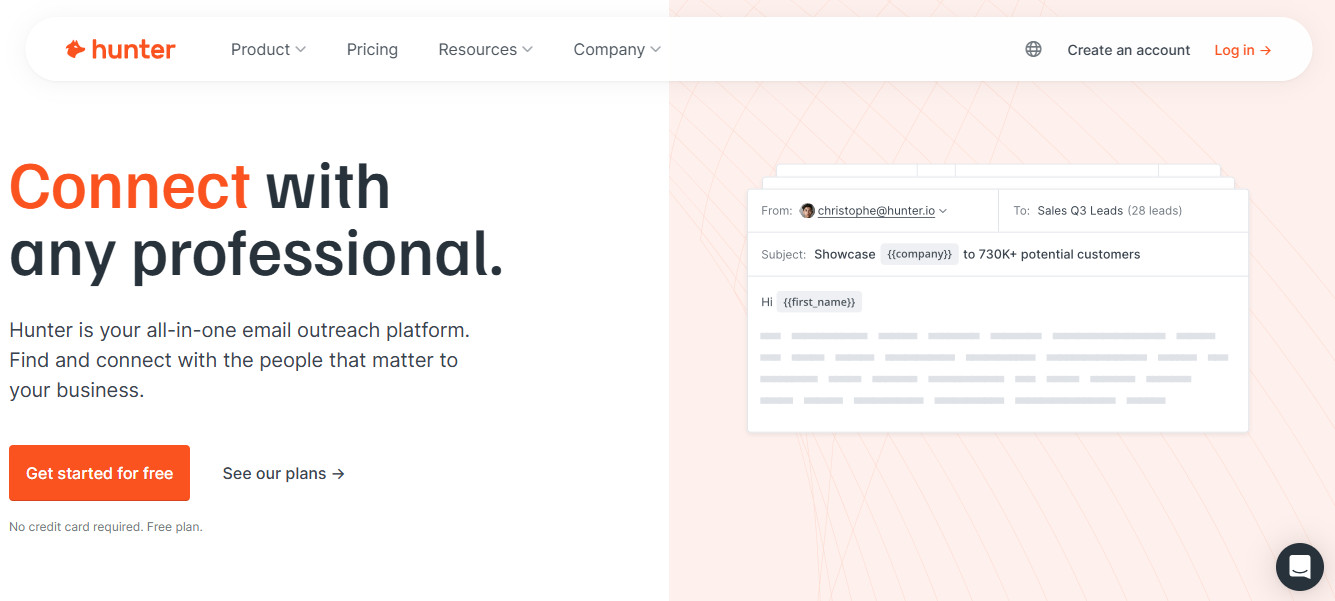
Hunter.io is an email discovery and verification tool focused on helping you find and validate professional email addresses.
Hunter.io helps you build contact lists by finding emails associated with domains and verifying whether those emails are likely to be valid. It is often used at the very beginning of the outbound process.
Snov.io is known for both lead generation and outreach, while Hunter.io is more focused and specialized. It does one thing well, which is finding and verifying emails, but it does not try to manage the full outreach workflow.
Small teams, freelancers, or anyone who needs a simple and reliable way to build email lists without a complex system might prefer Hunter.io.
Pros
- Simple and easy to use
- Reliable email verification
- Good for building clean lists
Cons
- No full outreach or sequencing capabilities
- Limited compared to all-in-one platforms
- Does not address deliverability or engagement
6. Mailshake and Reply.io
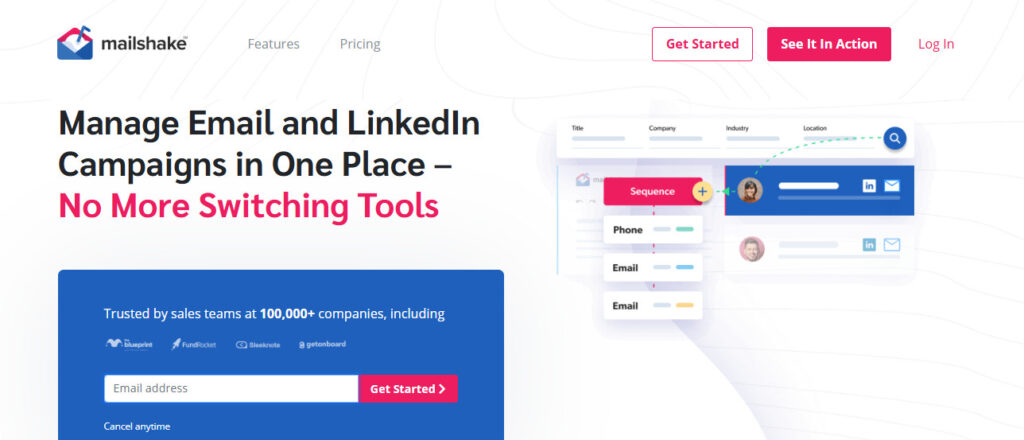
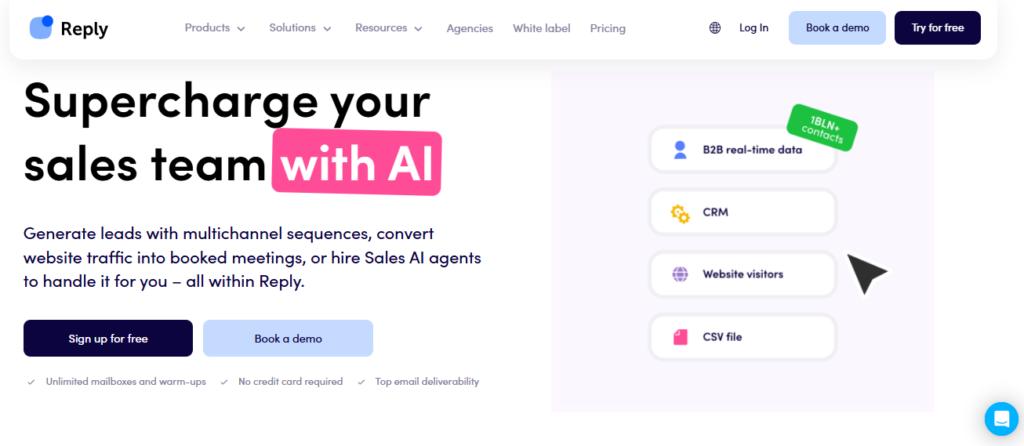
Mailshake and Reply.io are sales engagement platforms designed to manage structured outreach campaigns and follow-ups across multiple channels.
Both tools help you create multi-step sequences, automate follow-ups, and organize outreach across email, calls, and social channels. They are built to bring consistency and process to outbound efforts.
While Snov.io often focuses on simplicity and combining basic features, Mailshake and Reply.io go deeper into workflow management and sales process structure. They are more focused on execution and coordination than lead generation.
Sales teams that need structured processes, collaboration, and multi-step campaigns could get the most out of these tools.
Pros
- Strong sequencing and follow-up automation
- Good for team collaboration and workflows
- Multi-channel outreach capabilities (especially Reply.io)
Cons
- Less emphasis on lead data compared to Snov.io
- Can feel rigid if you prefer flexible workflows
- Do not directly influence deliverability or inbox placement
The Constraint Most Teams Misdiagnose

Inbox providers do not evaluate your campaigns the way you do.
They are not judging your offer or your copy first; they are measuring behavior over time. Engagement patterns, sending consistency, and recipient interaction all feed into whether your emails are trusted or filtered away.
When those signals weaken, your visibility drops. Yes, your campaigns still run, and dashboards still show activity, but fewer real people are actually seeing your emails.
This is why adding volume or switching tools rarely fixes the issue. You are optimizing what happens after delivery, while the real constraint is whether delivery is happening in the first place.
Knowing When the Problem Is the Tool, and When It Is the System
If your challenge is around data quality, targeting, or workflow limitations, then replacing a platform like Snov.io with something like Apollo.io or Lemlist can create real improvements.
But if your symptoms are declining open rates, unpredictable performance, or campaigns that degrade over time, switching tools will not address the root issue. Those are signals that your deliverability layer is unstable.
This is where InboxAlly fits into the system. It is not another outbound platform; it is a way to reinforce the underlying trust signals that determine whether any platform performs at all.
Once that layer is stable, most tools start working the way they were expected to in the first place.