


Last Updated on July 25, 2026 by Ewen Finser
DispatchTrack is a popular delivery management system for a number of reasons. The routing works, the appointment scheduling is clean and the proof of delivery workflow is one of the better ones in the category.
Most buyers don’t run into problems during the demo. They run into them three months into the contract.
One of the issues is that the platform is priced in layers. That’s not a problem in itself until you start noticing which features are missing. You pay for the core, and then you pay again for things you assumed were already included, like customer self-scheduling, advanced reporting, and certain integrations. Each one shows up as a separate line item. It’s these that can make DispatchTrack’s pricing too expensive.
By the time you’ve turned on everything your operation actually needs, the monthly number looks very different from the one in the original proposal.
This guide covers where those costs come from, what the alternatives look like, and what to ask before signing anything.
What DispatchTrack includes and where the extra costs show up
The core platform handles delivery execution well. Route optimization, driver tracking, customer notifications, and proof of delivery. For a carrier focused on dispatch and delivery, those tools do the job. DispatchTrack processes over a million deliveries a day and works with major retailers like Ferguson, Ashley Furniture, and Walmart. The track record is real.
The surprises come at the edges.
Customer self-scheduling
Letting customers pick or change their own delivery windows is one of the biggest call-volume reducers in appointment-based delivery. For a carrier managing ten retail accounts, each with two-hour windows, the difference is significant.
But this feature is not always included in the base plan. If it comes as an add-on priced per account, ten accounts add up fast. And by the time you see the first invoice, you’ve already committed to the setup.
Advanced reporting
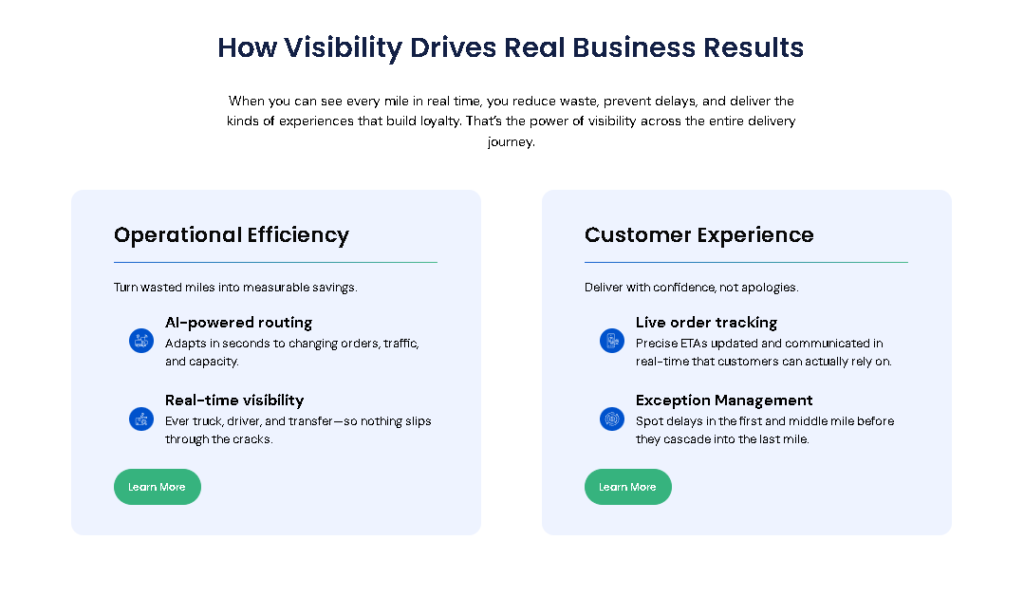
The standard dashboard shows you what happened and any exceptions, but doesn’t necessarily offer any insights into why. An ops manager trying to figure out why one service area is generating three times more failed deliveries than another needs to cut the data by route, by driver, and by retail account at the same time. That kind of analysis frequently requires a reporting upgrade that wasn’t in the original quote.
Integration costs
DispatchTrack connects to ERPs, WMS platforms, and retail portals. But what those connections cost depends on what you’re connecting and how deep the integration needs to go.
In one implementation I worked on, we scoped the WMS integration at two weeks of engineering time. It took six. And when DispatchTrack released a major update eight months later, we spent another week fixing the connection.
That time never shows up on a software invoice. But it costs the same whether you track it or not.
The warehouse gap that no pricing tier fixes
There’s a second cost conversation that most DispatchTrack buyers have at the same time as the pricing one: what do we do about the warehouse?
DispatchTrack starts at the point of dispatch. Inbound receiving, putaway, staging, cross-dock, all of that lives in a separate system. If you manage both warehouse and delivery, you need a WMS alongside DispatchTrack, and you need the two to stay in sync.
That sync has a cost that almost never appears in a pricing proposal. Picture the scene:
It’s 5:45am. Your team is building routes. The WMS shows 23 units of a sectional sofa ready to go across four stops.
What the system may not know is that three of those units were pulled from staging at 5:38am after a defect was flagged during receiving. The sync between systems hasn’t run yet, but the routes go out and the crews leave nonetheless.
Stop two is a failed delivery. The customer took the day off work. A Williams Sonoma account manager calls before 9am. You spend the next two hours rebuilding routes and explaining why a sofa that was on the manifest wasn’t actually on the truck.
No pricing tier solves that. It’s not a feature gap, but a structural one.
And the integration itself needs someone to own it. Every time DispatchTrack pushes an update, someone on your team checks whether the connection to the WMS still works. Every time the WMS updates, same thing.
I’ve had that job. It’s not complicated. But it never ends, and it never shows up on an invoice. It’s a people cost your tech stack is quietly generating every month.
The Friday cost nobody puts in the contract
Most ops managers in final mile delivery know this afternoon well.
Delivery records in DispatchTrack. POD confirmations in a shared drive. Contractor invoices from four carriers in three different formats. Two to three hours to match everything up, find the gaps, and close out the week.
DispatchTrack doesn’t reconcile contractor payments. That process lives outside the platform entirely.
For a small operation it’s manageable. For a 3PL running 30 contracted crews across multiple retail accounts, it’s a recurring cost that adds up every single week without appearing on any software invoice.
A mismatched POD that doesn’t get caught until Tuesday means a contractor dispute, a delayed payment, and a phone call that didn’t need to happen.
How the main platforms compare
Here’s how DispatchTrack, the lower-cost dispatch alternatives, and a true end-to-end platform (Grasshopper Labs) compare across the things that matter most:
Capability | DispatchTrack | Onfleet / Routific | Grasshopper Labs |
|---|---|---|---|
Route optimization and dispatch | Yes | Yes | Yes |
Appointment scheduling | Yes | Limited | Yes |
White glove POD | Yes | Yes (Onfleet) | Yes |
Warehouse management (WMS) | DT WMS, invitation only | No | Yes |
Real-time staging visibility | Via DT WMS | No | Yes, native |
Contractor payment reconciliation | No | No | Yes |
Client visibility across warehouse and delivery | No | No | Yes |
Native EDI with retail partners | Limited | No | Yes, Wayfair, Electrolux, 100+ |
What the alternatives actually look like
If you’re re-evaluating DispatchTrack because the costs came in higher than expected, there are two directions to go.
Platforms that solve the same dispatch problem at a lower price. Or platforms that solve a broader problem without the add-on structure.
Onfleet
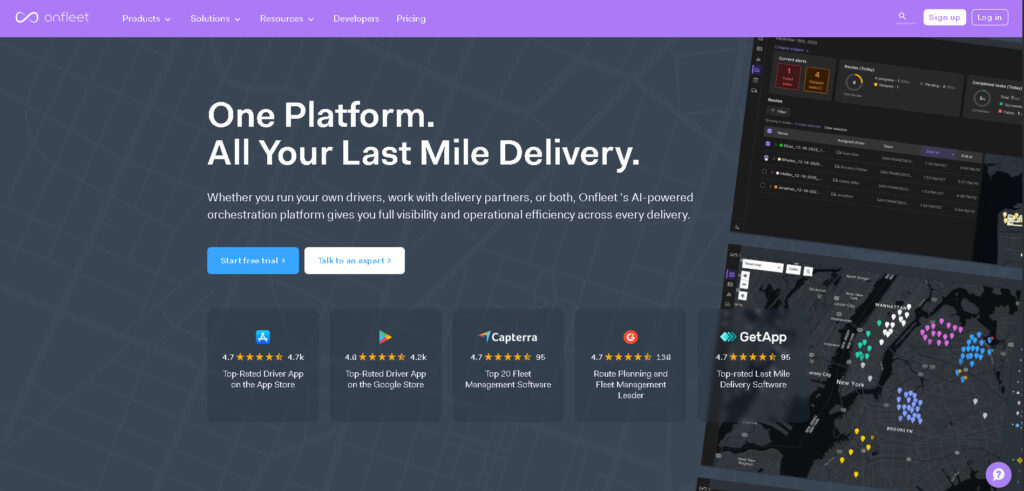
Dispatch, route optimization, driver tracking, and POD at a more accessible price point. Fast to implement. Short learning curve for drivers.
The tradeoff is the same scope limitation. Onfleet starts at dispatch and ends at POD. No warehouse visibility, no contractor payment reconciliation. Moving from DispatchTrack to Onfleet trades one set of limits for another at a lower price.
Routific
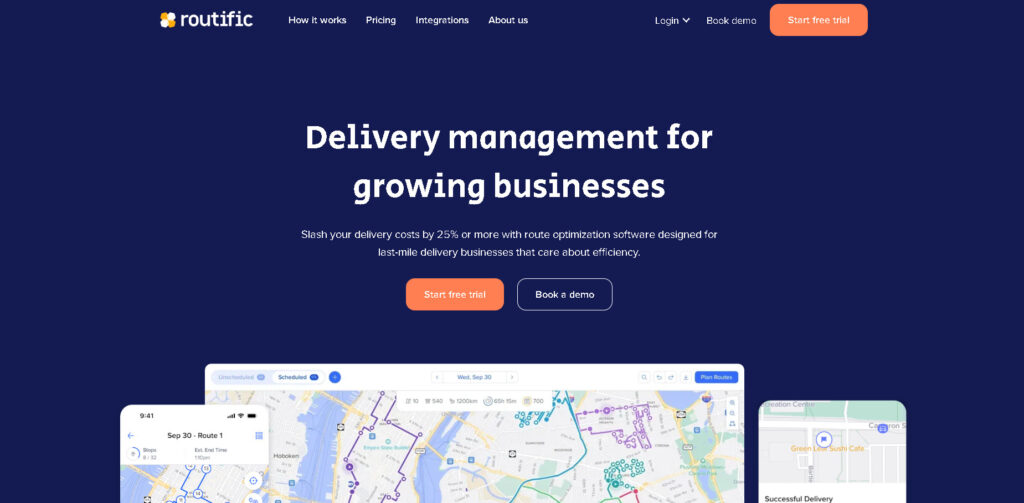
The strongest pure routing algorithm in the mid-market. If route planning is the specific problem, this is the answer. Usage-based pricing makes it accessible for smaller operations.
It builds the best route based on what it knows. It doesn’t know what’s staged, what was pulled from receiving, or what the warehouse confirmed ten minutes ago. Same structural gap as Onfleet.
DispatchTrack with DT WMS
In May 2026, DispatchTrack launched DT WMS, a warehouse management layer for 3PLs. It covers receiving, putaway, staging, and cross-dock. Because it connects to DispatchTrack’s delivery tools, warehouse data can flow into routing and dispatch on the same platform.
Two things worth knowing. First, DT WMS is currently invitation only. Confirm availability and implementation timelines directly with DispatchTrack. Second, there is a real difference between a warehouse layer that just launched and one that has been running under real operational pressure for years. If you need it to work reliably from day one, that gap matters.
Grasshopper Labs
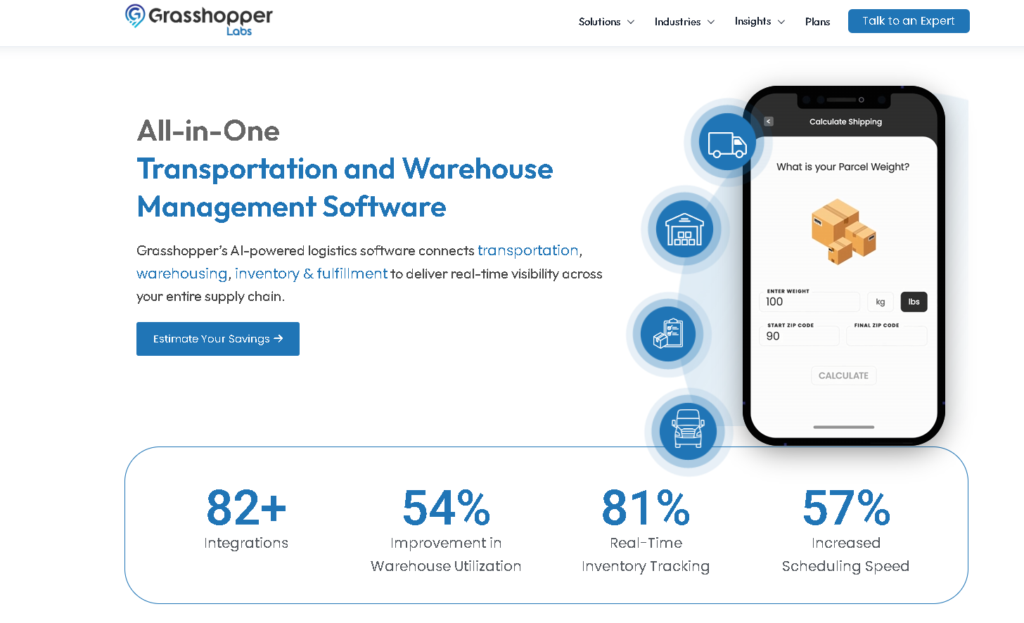
Grasshopper is not a cheaper version of DispatchTrack. It was built by the team behind Deliveright, an actual big and bulky delivery operator, around one assumption: warehouse management and final mile delivery are the same problem and should live in the same system.
Staging visibility means that when something gets pulled at 5:50am, dispatch knows at 5:51am. Integrated contractor payments flow straight into reconciliation from POD. Client visibility shows inventory, deliveries, and exceptions in one view.
Grasshopper isn’t the right fit if dispatch is the only problem. Onfleet or Routific will get you there faster. Implementation takes a lot longer than the alternatives.
The question worth asking before you sign
Before renewing with DispatchTrack or switching to any of the alternatives above, one question cuts through the pricing complexity:
What is the total cost/benefit of running this platform, including the time it saves and the systems it doesn’t cover?
For DispatchTrack, Onfleet, and Routific that means adding the cost of the WMS, the integration between them, and the time your team spends keeping the two in sync. For Grasshopper Labs, the longer implementation will have its own costs.
Whatever the required calculation, it’s worth running the numbers before your next contract renewal.