


Last Updated on July 25, 2026 by Ewen Finser
Seel and Extend both offer extended warranty and post‑purchase protection solutions for ecommerce and retail brands. The key difference between them is Seel’s flexible returns platform, which Extend does not provide; this makes Seel a broader post-purchase option overall.
However, Extend does offer more specialized product protection plans for certain high-value categories, such as electronics and furniture.
So, if you’re an online merchant weighing up post-purchase solutions, which one should you pick? Ultimately, neither one is better than the other; the choice depends on the nature of your operations and what you need from your provider. I’ve broken each one down in detail below.
Quick verdict
- Choose Seel if you want a broader post-purchase platform combining warranty protection, shipping coverage, and flexible returns.
- Choose Extend if you mainly sell high-value products where long-term warranty coverage and accidental damage protection matter most.
At a Glance: Seel vs. Extend
Seel | Extend | |
Best For | Merchants wanting warranty, shipping protection, and flexible returns in one platform | Merchants focused on extended warranties for high-value products |
Extended warranty coverage | Product protection plans with optional accidental damage coverage | Strong warranty and accidental damage plans, especially for electronics and home goods |
Shipping protection | Covers loss, damage, theft, and qualifying delays | Shipping protection available alongside product protection |
Returns | Worry-Free Purchase adds optional return flexibility | No equivalent returns-focused product |
Best-fit categories | Apparel, mixed catalogs, merchants with return complexity | Electronics, furniture, mattresses, high-value products |
Pricing model | Usually shopper-paid protection fees | Usually shopper-paid warranty fees based on product/category |
What Seel Offers
Seel is an extended warranty and post-purchase protection platform. It gives online shoppers the chance to pay a surcharge to access these services at checkout, providing extra coverage and peace of mind.
Alongside delivery protection and extended warranty, Seel also offers an extended returns platform (Worry-Free Purchase), giving merchants a broader post-purchase toolkit.
Core Extended Warranty Coverage
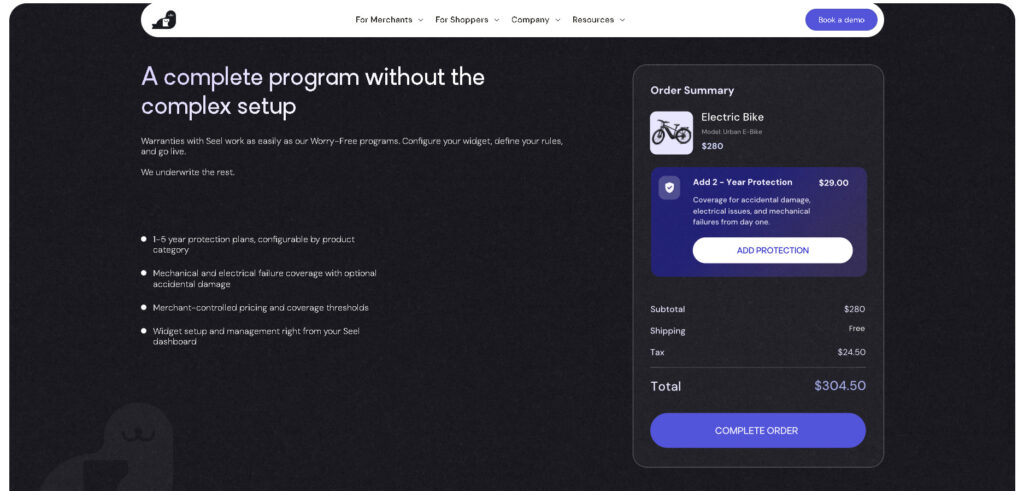
Seel’s Product Protection plans provide additional coverage beyond the manufacturer’s warranty. Essentially, it offers customers the chance to buy longer-lasting protection against product malfunction or failure. Certain plan variants also include coverage of accidental damage (when specifically purchased).
In the event of a claim, Seel’s default approach is to try to repair the covered product. If this isn’t possible/practical, the company will replace the product at no extra cost to the shopper.
Shipping Protection (Worry‑Free Delivery)
Seel’s Worry‑Free Delivery is a shipping and delivery protection facility. It entitles your customers to refunds on their orders in the event of loss, damage, theft, and qualifying delays in transit.
Domestic packages not delivered within 30 days of fulfillment are treated as lost, while those not delivered within 10 days may qualify as delayed (international timelines are longer, so it’s worth doing your own research here if you regularly ship overseas).
For lost packages, Seel compensates up to the actual item value paid, whereas delays are compensated via a fixed cash amount (usually $5 USD per delayed domestic shipment).
Damage is only covered under this plan when an item’s usability has clearly been impacted; solely cosmetic issues won’t entitle your customers to a refund. This often causes disputes between Seel and its clients, so it’s worth bearing in mind if you’re thinking of using the platform.
It’s also important to note that Seel’s shipping protection has an exclusion list; various categories of goods (high‑value jewelry, automobiles, live animals, cash, certain perishable goods, and fine art above specific thresholds) are not eligible for coverage.
Customers must typically report issues within 90 days of an order date, with narrower seven‑day windows for porch piracy or damage reports.
Return Flexibility (Worry‑Free Purchase)
Seel’s other main offering is Worry‑Free Purchase, which allows shoppers to return eligible items within a short window (commonly seven days) for almost any reason.
Enabling this can allow for significant efficiency gains for you as a merchant; you’re essentially outsourcing your entire returns function to Seel in cases where customers opt for the coverage.
What Extend Offers
As noted above, Extend has a narrower focus than Seel when it comes to post-purchase products (though it does offer a broad range of tools for ecommerce generally). Its key offering in this area centers around extended warranty and product protection plans, with shipping protection available as part of its broader platform.

Its extended warranty plans typically cover mechanical and electrical failures once manufacturer warranties expire. It also addresses accidental damage (such as from drops, spills, and stains).
Extend’s plans generally exclude typical consumable or wear‑and‑tear components unless otherwise specified. There are other limits (like single‑incident benefits) you should also take into account.
Shopper Claim Experience
When you’re signing up for any kind of customer experience service as an ecommerce merchant, end-user satisfaction is perhaps the most important factor to consider. Your customers are the lifeblood of your business, so you don’t want to alienate them with a negative experience on a third-party platform.
In the context of Seel and Extend, this becomes relevant at claim time. How good is each platform at dealing with customer claims?
Seel
Seel centralizes claims through its Resolution Center, where shoppers log in using the email and order or policy ID, then file shipping, warranty, or return claims following step‑by‑step instructions.
Seel automates decisions regarding shipping claims, so these are generally dealt with pretty quickly. There is still some variance in processing times, but valid claims appear to lead to refunds in about 24 hours on average.
Technical issues can arise, but these cases appear to make up only a small minority of the company’s overall claim volume.
It’s worth remembering that the entire Seel claims process takes place independently from you as the merchant. So, if complaints are causing bottlenecks in your business, outsourcing some of them to Seel could be a good way to improve overall customer satisfaction.
Extend
Extend also endeavors to address claims quickly, and has made good use of AI in this regard; its automated claims handler is efficient in most cases.
However, it’s not perfect. As with many automated claims systems, some customers have reported frustration when claims require additional documentation or when automated decisions do not meet expectations.
On the plus side, Extend’s human support agents are generally effective when it comes to clearing up messes left behind by its AI. Also, as is the case with Seel, Extend takes the burden of customer complaints off your hands in a lot of cases.
Pricing
Both Seel and Extend are shopper-funded, so you won’t need to worry about paying for either platform yourself. However, there are important differences to be aware of in terms of the impact each revenue model will have on your customers.
Seel
Seel’s fees vary from one merchant to the next, but they typically sit at around 2% of purchase value. So, if you sell an item for $100, Seel’s protection will usually cost around $2.
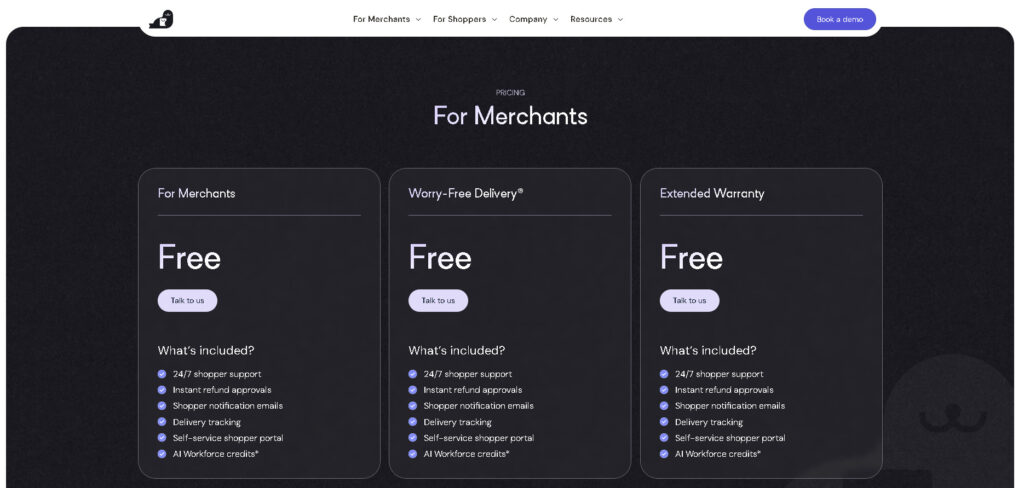
In addition to transactional protection, Seel has begun promoting AI agents for support, returns, risk, and sales with usage‑based pricing. This is merchant-funded, but it’s not a core part of Seel’s offering. You won’t need it in order to put post-purchase infrastructure in place.
Extend

Extend is considerably pricier for customers. Extended warranty pricing often falls in the range of roughly 5–20% of product price for multi‑year protection; this depends on the product category and the individual merchant.
While this doesn’t affect you directly as a merchant, it’s worth considering how the resulting price increase might impact your buyer journeys.
Category Fit
Electronics
Extend is strongly positioned in electronics, with clear three‑year protection plans that combine accidental damage (drops, spills, cracked screens) and extended coverage for mechanical or electrical failure beyond manufacturer warranties. This makes Extend a natural fit for merchants selling smartphones, laptops, tablets, consumer electronics, and accessories where device damage is common and buyers are accustomed to buying protection plans.
Seel’s extended warranty can also cover electronics and product malfunctions after manufacturer warranty expiration, and its shipping protection is highly relevant for fragile electronics that may be damaged in transit. However, Seel’s offering here is less about accidental damage benefits and more about bundling shipping protection and return flexibility in a single resolution experience.
Seel may therefore appeal to you if you’re focused on overall post‑purchase satisfaction rather than only device coverage; however, if your business mainly sells malfunction-prone electronics, you might prefer Extend’s specialization in this area.
Apparel and Soft Goods
Merchants selling primarily apparel and soft goods (fashion items, footwear, and accessories) tend not to rely heavily on extended warranties, but they benefit significantly from flexible returns and clear shipping protection.
Seel’s Worry‑Free Purchase is therefore a great fit if you’re in this vertical, as it allows buyers to return items for fit and preference reasons, even when products are nominally final sale. Extend does offer protection for categories like jewelry and rugs, focusing on accidental damage or defects, but its core strength is not in solving fit‑related return friction.
Furniture, Mattresses, and Home Goods
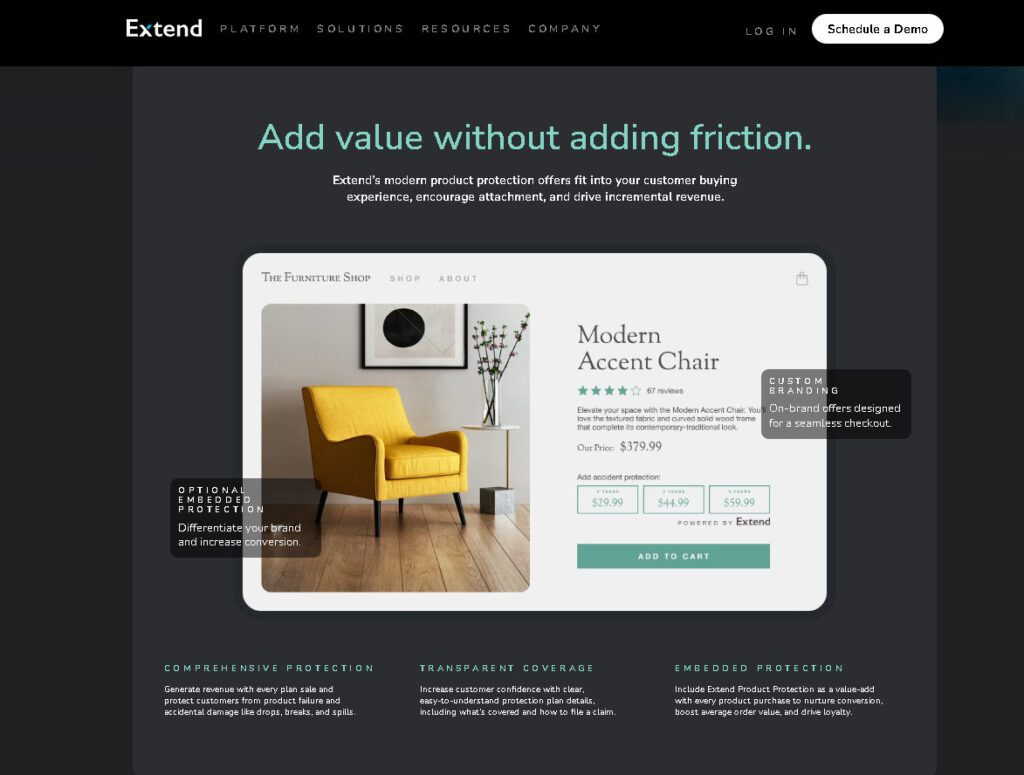
Extend puts a lot of emphasis on its furniture and mattress plans, offering long‑term coverage (often five or ten years) for accidental damage and mechanical failure.
Seel can support home goods merchants with shipping protection (for example covering loss or damage while heavy items move through carriers) and potentially extended warranty, but this doesn’t go as far as specialized upholstery or mattress damage coverage.
So, if your primary requirement is deep, long-duration product protection, Extend may be the better fit. Seel is more compelling when logistics risk and return complexity are your main pain points.
Seel vs. Extend: Which Should Merchants Choose?
If you’re still trying to evaluate Seel vs Extend, consider the following questions:
What’s the main problem?
If you’re chiefly seeking to address potential mechanical or accidental damage to high‑value products (electronics, furniture, mattresses), you may lean toward Extend’s specialized plans. If you’re mainly grappling with returns volume, logistical risk, and scattered support tools, you’ll probably favor Seel’s unified platform.
How important are flexible returns for fit and preference?
Fashion and marketplace businesses that rely on buyer confidence around sizing and style can use Seel’s Worry‑Free Purchase to offer optional, fee‑based return flexibility beyond standard policies; Extend does not offer an equivalent returns‑centric product at similar scale.
Do I want a single vendor for warranty, shipping, and returns?
Seel’s API and plugins are built to wrap extended warranty, shipping protection, and return assurance into one integration, reducing vendor sprawl. Extend can cover product protection and some shipping issues but is not a complete post‑purchase operating system.
Ultimately, Seel makes the most sense for merchants looking to turn warranty, shipping protection, and returns into a single outsourced resolution layer. Extend is better suited to brands seeking specialized product protection for discrete, high-value items.