


Last Updated on July 15, 2026 by Ewen Finser
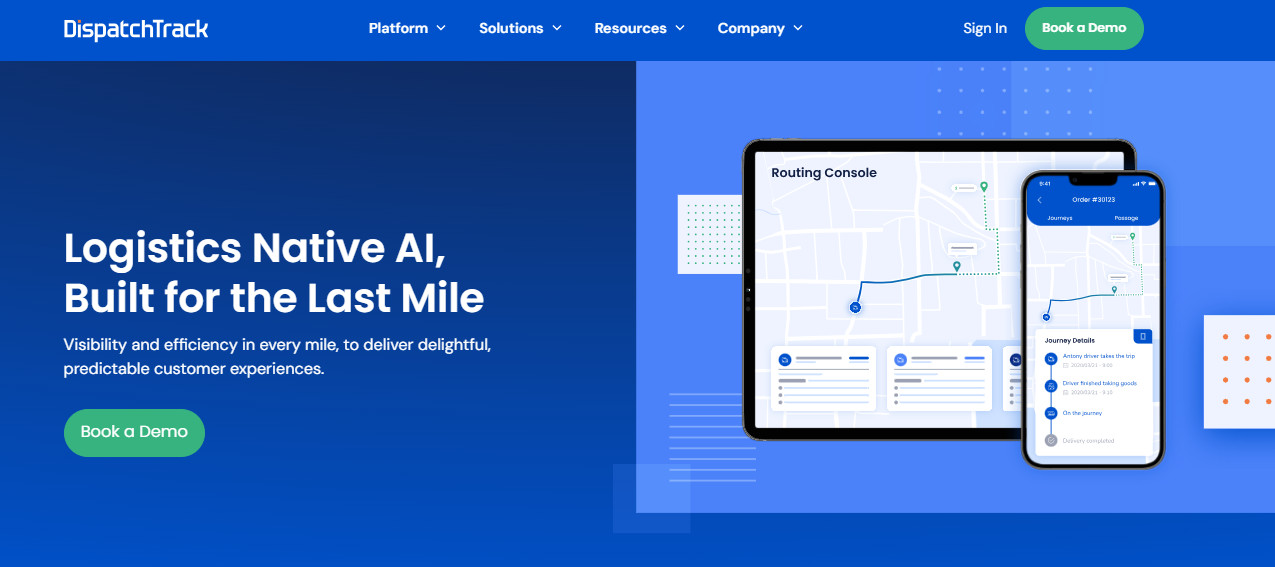
DispatchTrack is a well-established platform. If you’re running appointment-based final-mile delivery, the routing is solid, the customer communication layer works, and the proof of delivery workflow is one of the more developed ones in the category. For a carrier whose main job is managing the delivery side cleanly, it does that well.

So why are people looking for alternatives?
Usually one of three reasons:
- The pricing model adds up faster than expected once you turn on the features you actually need.
- The warehouse side of the operation lives in a separate system, and the gap between what the warehouse knows and what dispatch sees creates problems that no TMS tier solves.
- Your operation has grown past what a routing-focused tool was built for.
This roundup covers the five most relevant alternatives for last mile carriers and 3PLs evaluating a switch.
The Best DispatchTrack Alternatives in 2026
Best for AI-driven carrier assignment at high shipment volumes: Locus
Best for global enterprise logistics with complex multi-country workflows: LogiNext
Best for national carrier orchestration across mixed networks: Bringg
Best for dispatch-focused operations needing clean routing and POD: Onfleet
Best for operations that need warehouse management and final mile delivery on one platform: Grasshopper Labs
Why Buyers Switch From DispatchTrack
DispatchTrack has been the default answer for furniture and appliance carriers for years. The appointment scheduling is mature, the driver scorecards are useful, and the retail account management handles multi-client POD requirements without rebuilding the workflow each time. For a pure dispatch operation, it holds up well.
Where buyers run into friction tends to fall into a few areas. The modular pricing means features that feel like they should be included, such as customer self-scheduling, advanced reporting, and specific integrations, often come as separate line items.
By the time an operation is configured for what it actually needs, the monthly number looks different from the original proposal.
The scope limitation is the other common trigger. DispatchTrack starts at dispatch. Everything before the truck leaves, from receiving and staging to cross-dock consolidation, lives somewhere else.
For operations managing both sides, that creates a daily data sync problem that no tier upgrade fixes.
One thing worth flagging before getting into the alternatives: in May 2026, DispatchTrack launched DT WMS, a warehouse management layer for 3PLs, currently available by invitation only.
If warehouse integration was the primary driver for this search, confirm availability and implementation timelines directly with DispatchTrack before ruling it out.
How the Platforms Compare
Capability | Locus | LogiNext | Bringg | Onfleet | Grasshopper Labs |
|---|---|---|---|---|---|
Route optimization | Yes | Yes | Yes | Yes | Yes |
Carrier orchestration | Yes | Limited | Yes | No | Yes |
Appointment scheduling | Limited | Limited | Yes | Limited | Yes |
White glove POD | Limited | Limited | Limited | Yes | Yes |
Warehouse management | No | No | No | No | Yes |
Native EDI with retail partners | Limited | Limited | Limited | No | Yes, Wayfair, Electrolux, 100+ |
The Alternatives: What Each One Actually Does
1. Locus
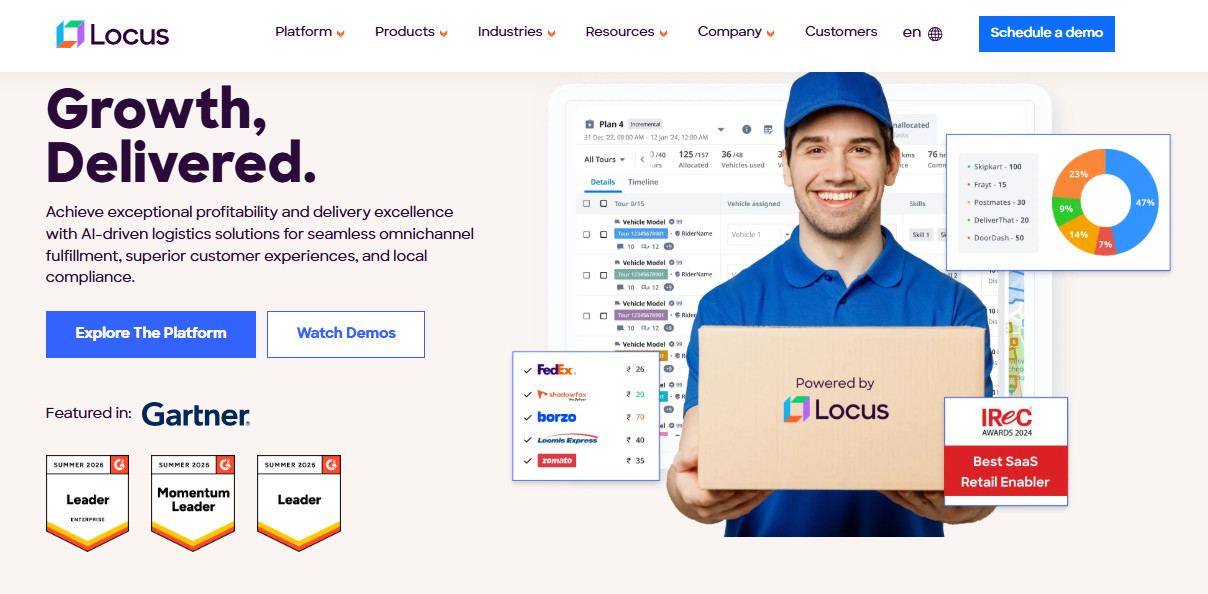
Locus solves a specific problem: you have more shipments, more carriers, and more cost variables than any dispatcher can manually optimize.
The platform automatically assigns each order to the right carrier at the right cost based on SLA requirements, carrier performance history, and real-time availability.
At 500 shipments a day, that’s a useful tool. At 5,000 shipments a day across multiple regions and carrier contracts, it’s what keeps a dispatch team from being permanently underwater.
The carrier performance scoring is where it earns its place. The algorithm learns which carriers consistently miss windows in specific zones and adjusts future assignments accordingly. Managing logistics across multiple sites, you stop pulling those reports manually the week it goes live.
What to look more closely at: Locus requires clean historical data, configured cost models, and integrated carrier APIs before it delivers on its promise. In one implementation I worked on, we scoped the data preparation at three weeks. It took eight. The platform also doesn’t touch the warehouse. Receiving, staging, and cross-dock still live in a separate system.
Best for: Operations processing thousands of daily shipments across mixed carrier networks where manual carrier assignment has become the primary bottleneck.
2. LogiNext
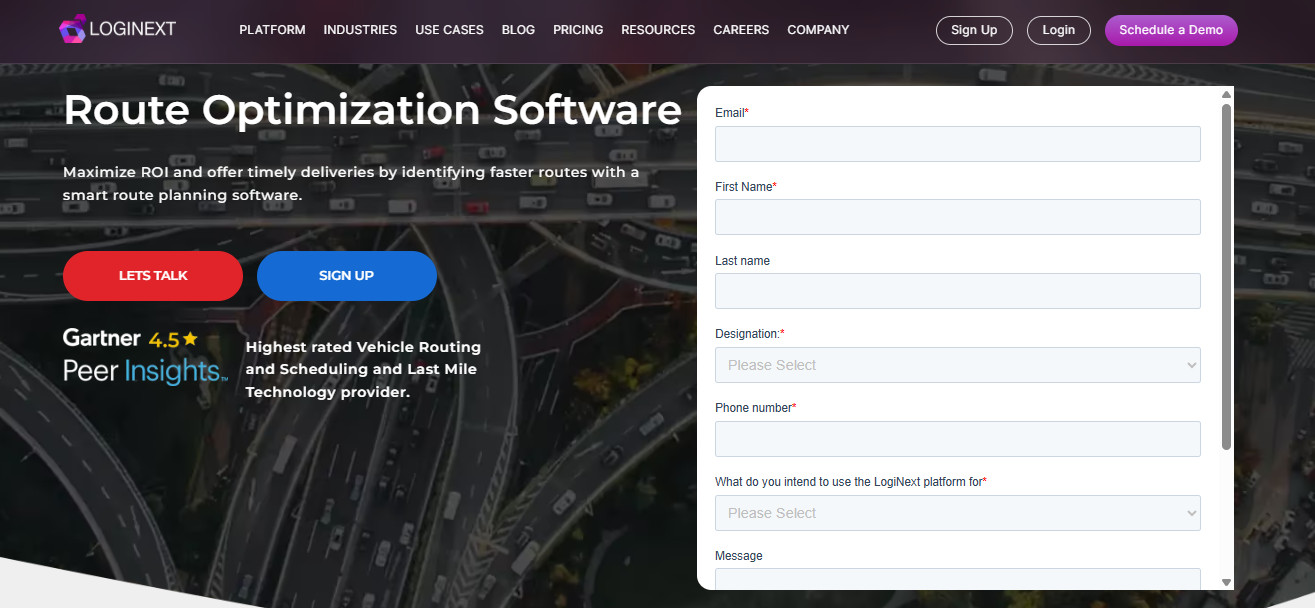
LogiNext covers route optimization, real-time tracking, automated scheduling, and workforce management across deliveries, pickups, and returns in a single deployment.
The platform has particular strength in multi-country operations across India, the Middle East, and adjacent markets where localization, regulatory requirements, and mixed delivery models are the core challenge.
A logistics operation coordinating deliveries across multiple countries with different carrier ecosystems and compliance requirements can run it on one platform. Honestly, not many platforms can say that.
For a domestic carrier running final-mile delivery out of a single region, that breadth adds complexity without adding much value.
What to look more closely at: The implementation scoping call for LogiNext alone took three sessions before we got to a number. No implementation timeline, no feature walkthrough, just working out what the contract would even look like. For a mid-market carrier running domestic operations, the implementation investment outpaces the problem it’s solving.
Best for: Enterprise operations managing multi-country, multi-vertical delivery logistics where geographic complexity and regulatory breadth are the core challenge.
3. Bringg

Bringg handles carrier orchestration at national scale. If you’re running owned fleet in your primary markets, contracted carriers in secondary ones, and on-demand capacity for peak overflow, the platform auto-assigns orders across all of that without a dispatcher making that call on every shipment.
A retailer processing 3,000 orders daily across eight regions, with different SLA commitments per region and different carrier performance histories, gets real value from that automation.
In markets where performance data is strong, the assignment decisions consistently outperform what a human dispatcher produces under time pressure.
What to look more closely at: Implementation runs three to six months. First-year costs, once you add setup, integrations, and training, run substantially higher than most mid-market budgets. Four months into a Bringg evaluation is not the moment to discover the platform was solving a problem you don’t have yet. Ask that question at the first call.
Best for: Enterprise retailers and large 3PLs with the technical resources and budget for national-scale carrier orchestration across mixed carrier networks.
4. Onfleet
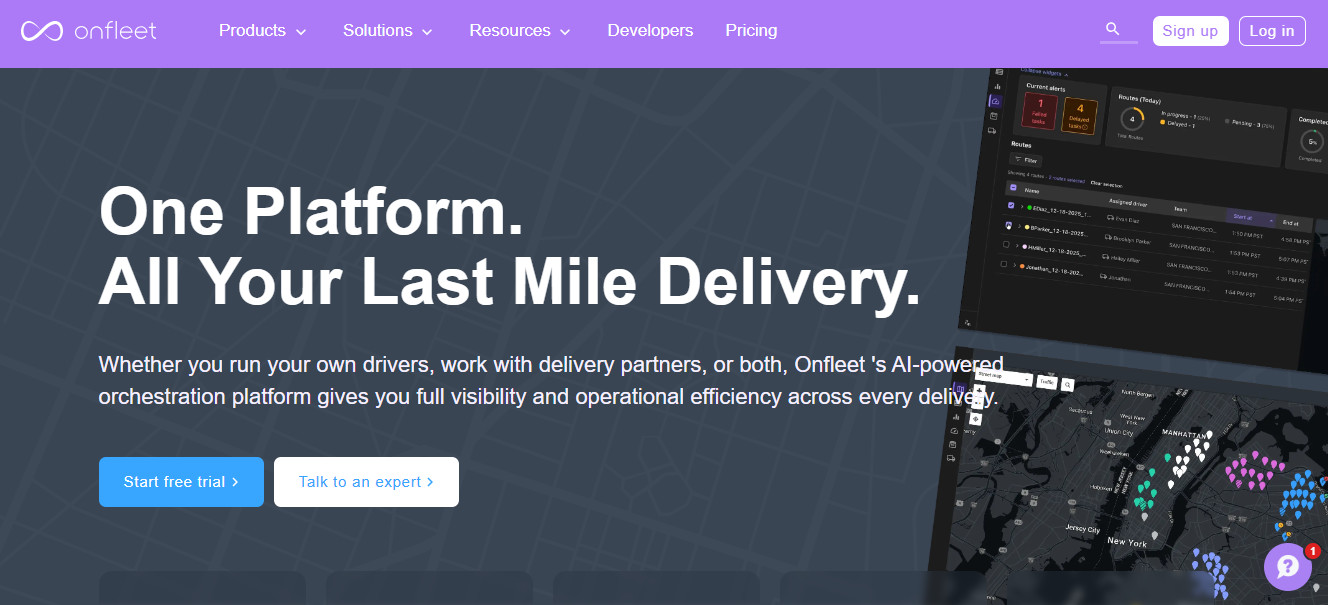
Onfleet is where most DispatchTrack evaluators end up looking first. The price point is more accessible, implementation is fast, and driver onboarding takes hours rather than days. For a carrier running a dedicated fleet on predictable routes, Onfleet does the job without the overhead.
The POD workflow handles photo, signature, and barcode capture cleanly. The API is consistently rated as one of the more reliable ones in the category for connecting to tools already in use. If an operation needs to be live in two weeks, Onfleet gets it there.
What to look more closely at: Onfleet starts at dispatch and ends at POD confirmation. Warehouse visibility, contractor payment reconciliation, and cross-dock coordination are outside its architecture. Moving from DispatchTrack to Onfleet trades one set of limitations for another at a lower price point.
Best for: Dispatch-focused carriers and last mile operations that need clean routing, strong POD, and fast implementation without warehouse complexity.
5. Grasshopper Labs
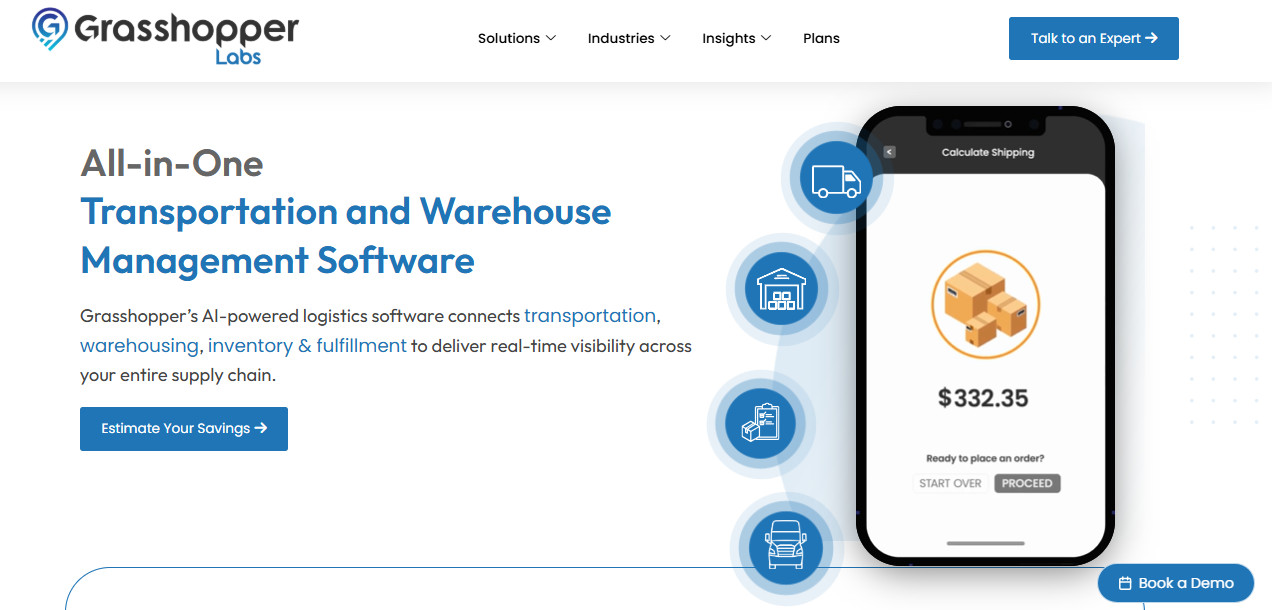
Every platform above starts where the truck starts. Grasshopper Labs approaches this differently because the platform was built around the idea that warehouse management and final mile delivery aren’t two problems you stitch together.
They’re one problem, and splitting them into two systems creates work that someone on your team absorbs every single day. It doesn’t show up as a line item, but it’s there.
Grasshopper was built by the team behind Deliveright, an actual big and bulky delivery operator. That origin matters because the features reflect what a real operation runs into.
Where it stands out: Warehouse receiving, staging, dispatch, proof of delivery, and contractor payment reconciliation all run on the same data. When something gets flagged in receiving at 5:50am, dispatch sees it before the routes go out. Contractor payments close out when the crew captures POD. Native EDI with Wayfair, Electrolux, and 100-plus retail partners means onboarding a new retail client takes days rather than weeks of custom integration work.
What to look more closely at: Purpose-built for big and bulky operations. If you’re running a parcel fleet or same-day courier network, it’s more platform than you need. Implementation takes longer than any other option on this list, and there is a real learning curve.
Best for: Last-mile carriers, 3PLs, and mid-market retailers managing furniture, appliances, and oversized freight who need warehouse management and final-mile delivery on a single platform.
Which Alternative Fits Your Operation
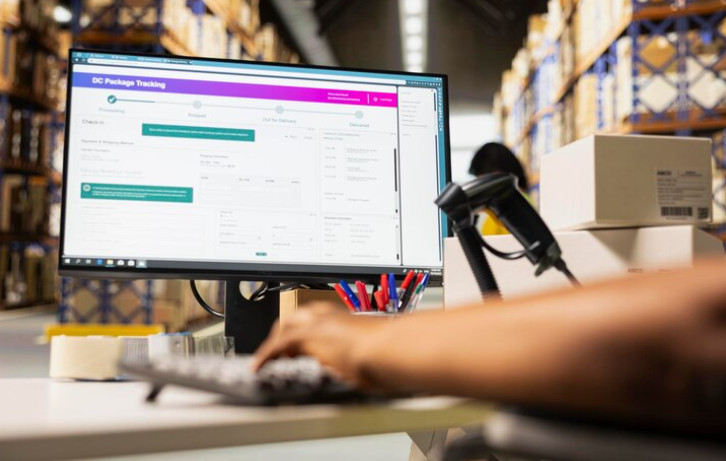
The starting point is understanding which limit you’ve actually hit with DispatchTrack, because the alternatives solve different versions of the problem.
Locus makes sense when the volume of carrier assignment decisions has grown past what a dispatcher can handle manually. The prerequisite is having clean historical data and integrated carrier APIs already in place. Without that foundation, the implementation turns into a data project before it becomes a logistics project, and the timeline stretches accordingly.
LogiNext is the right answer for operations spanning multiple countries with different carrier ecosystems and compliance requirements per market. The implementation scope reflects that complexity. For a domestic carrier running final mile out of one or two regions, that depth adds overhead without solving the actual problem.
Bringg works when the assignment decisions across a national mixed-carrier network have outgrown manual dispatch. Before starting that evaluation, it’s worth being honest about whether the problem you’re solving justifies three to six months of implementation. If the answer is not yet, the platform is right, but the timing is wrong.
Onfleet fits when dispatch and delivery execution are the core need and the warehouse is already handled separately. It gets operations live faster than anything else on this list, and the scope is clear from day one.
Grasshopper fits when the warehouse and the delivery operation are the same problem and are currently running as two separate systems. If DT WMS is available and the implementation timeline works, it’s worth evaluating alongside Grasshopper. The key question is how well a warehouse layer added in 2026 integrates with a dispatch platform built over years.
The Bottom Line
The most common names that come up when buyers search for DispatchTrack alternatives are Locus, LogiNext, Bringg, and Onfleet. Each one is a legitimate platform that solves a real part of the last-mile delivery problem. Locus handles carrier assignment at scale. LogiNext handles multi-country complexity. Bringg handles mixed carrier orchestration. Onfleet handles dispatch execution quickly and cleanly.
Grasshopper Labs is a very different option. None of the others cover the warehouse side of the operation, while Grasshopper Labs is built around closing that gap from the start. For carriers and 3PLs where the warehouse and the delivery operation are the same daily problem, that’s where the evaluation should start.