

Last Updated on July 14, 2026 by Ewen Finser
Most last mile delivery software solves the same problem: How do you get a driver from point A to point B in the most efficient order, with the customer notified along the way and a proof of delivery captured at the door?
But there are a lot more factors that come into play when you’re considering the best last mile solution for your business. Maybe the difficulty comes from your diverse presence across a number of international sites. Maybe there’s a disconnect between your routing tool and warehouse management. Or perhaps route planning is the bottleneck, and you just need the most efficient solution out there.
This guide covers the best last mile delivery software options in 2026. What each one does well, where each one stops, and which type of operation each one fits.
The Best Last Mile Delivery Software in 2026
The right platform depends on where your operation breaks down. Here is how the main options compare:
Platform | Best for | Core differentiator |
|---|---|---|
Last-mile carriers, 3PLs, and retailers managing big and bulky freight who need warehouse and final mile on one platform | Single data model from warehouse receipt to delivery confirmation. No integration to maintain between WMS and TMS | |
Dispatch-focused carriers needing clean routing, strong POD, and fast implementation | Driver app with short onboarding curve. Clean API for connecting to other tools already in use | |
Operations where route planning is the primary bottleneck and the warehouse runs separately | Best pure routing algorithm in the mid-market. Usage-based pricing accessible for smaller operations | |
Enterprise operations managing multi-country, multi-vertical delivery logistics | First, middle, and last mile under one deployment across multiple carrier ecosystems and markets | |
Enterprise retailers and 3PLs running national mixed carrier networks | Automatic carrier assignment across owned fleet, contracted carriers, and on-demand networks | |
Final-mile carriers running appointment-based big and bulky delivery | Appointment scheduling, per-account POD configuration, and driver scorecards built for the furniture and appliance segment |
The Platforms: What Each One Is Built For
1. Grasshopper Labs
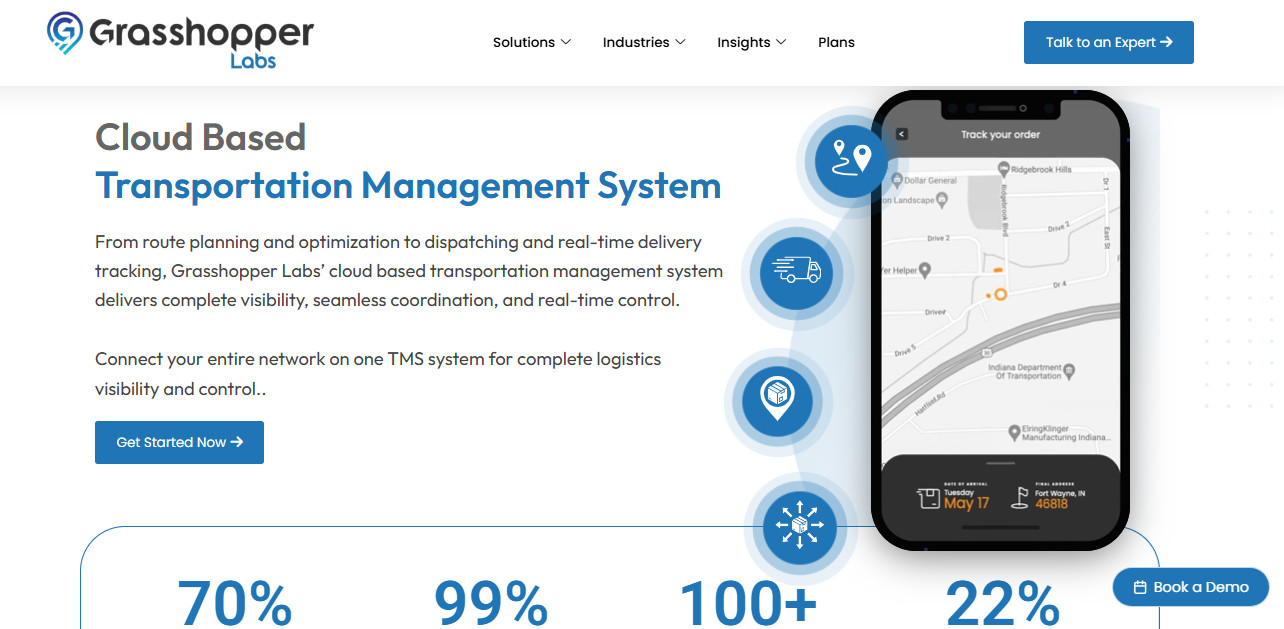
Grasshopper was built by the team behind Deliveright, an actual big and bulky delivery operator. The platform was built by people who ran this kind of operation, not people who studied it. That difference shows up in the features that exist and the ones that don’t.
It’s aimed at carriers, 3PLs, and mid-market retailers for whom routing isn’t the hard part. The hard part is everything around it: what’s actually staged and ready before the crew leaves; whether the contractor who made the delivery gets paid accurately and on time; whether the retail client can see inventory status and delivery confirmation without someone building a manual report.
When a crew captures POD, that flows directly into the payment process. The Friday afternoon spreadsheet that most carriers run across delivery records, invoices, and POD confirmations from three different places stops being a weekly problem. Retail clients get a single view of inventory status and delivery confirmation without someone building a manual report.
Most routing tools don’t solve those problems because they were never designed to. The warehouse problem is normally considered separately, but if you’re looking for a way to manage both in one tool, Grasshopper excels. If you’ve already got warehouse solved, check out the other tools.
What to keep in mind: Not the right fit for a straightforward parcel or courier operation. The depth that makes it powerful for big and bulky adds setup complexity that simpler operations don’t need. Implementation will take the longest time of any of these options, so the integrated WMS aspect needs to be worth it.
Best for: Any operation that needs warehouse management and final mile delivery in one integrated solution. Teams where managing that gap between two disparate systems has become the cost center.
2. Onfleet
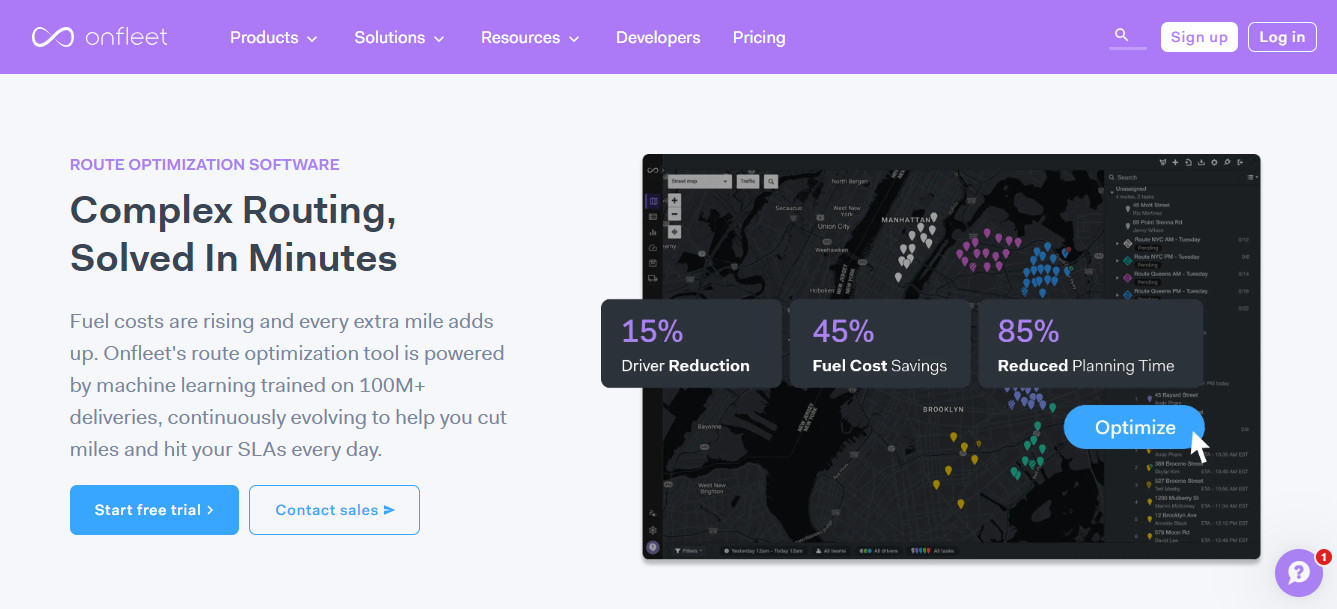
This is the platform most mid-market carriers look at first when they outgrow a basic routing setup. The driver app is genuinely good. New crew members figure it out in a morning. The POD workflow handles photo, signature, and barcode capture cleanly. The API is one of the more reliable ones in the category for connecting to other tools already in use.
For a dispatch-focused operation running a dedicated fleet on predictable routes, Onfleet does exactly what it promises and gets you there fast.
What to keep in mind: Someone on your team owns the connection between your WMS and Onfleet, and that connection needs attention every time either system updates. Limited analytics and communication features can limit efficiency.
Best for: Dispatch-focused carriers and last mile operations that need clean routing, strong POD, and fast implementation without warehouse complexity.
3. Routific
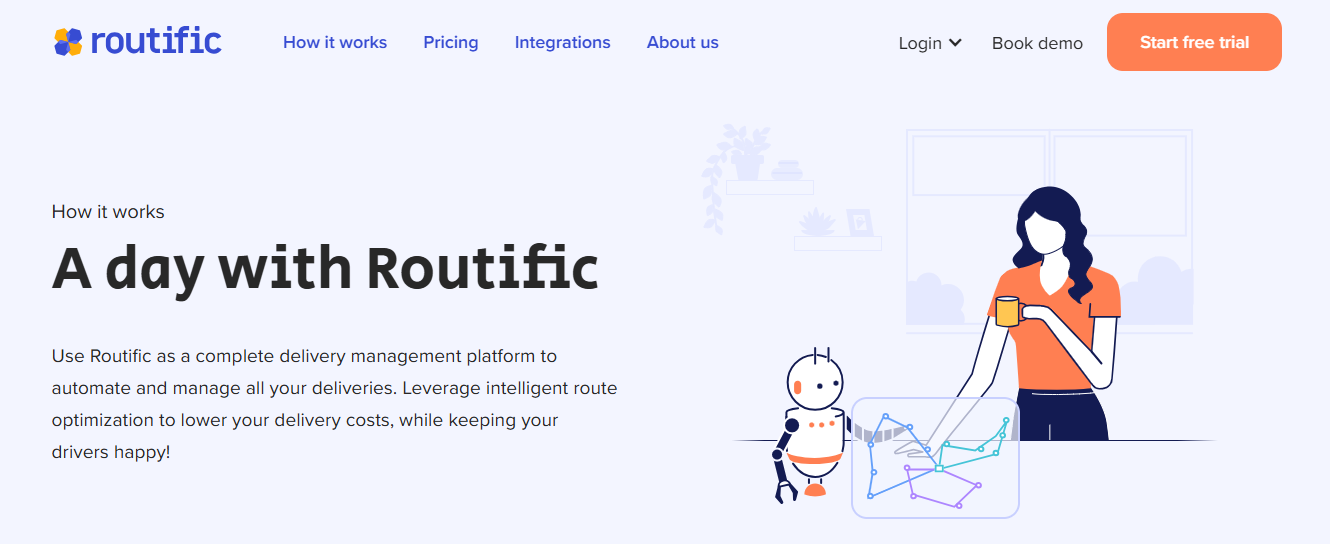
The strongest pure routing algorithm in the mid-market. Feed it 200 stops with time windows, vehicle capacities, and driver start locations, and it builds cleaner routes faster than most ops teams can do manually. A route that saves 22 minutes per driver across a 15-driver fleet is 330 minutes of labor recovered every single day.
Usage-based pricing makes it accessible for smaller operations. Customer support is consistently rated as one of the strongest in the category.
What to keep in mind: Routific builds the best route based on what it knows. It doesn’t know what’s staged, what was pulled from receiving, or what the warehouse confirmed before the routes went out. A perfectly optimized route still fails if the item wasn’t actually ready when the crew left.
Best for: Operations where route planning is genuinely the primary bottleneck and the warehouse side is either simple or managed separately.
4. LogiNext
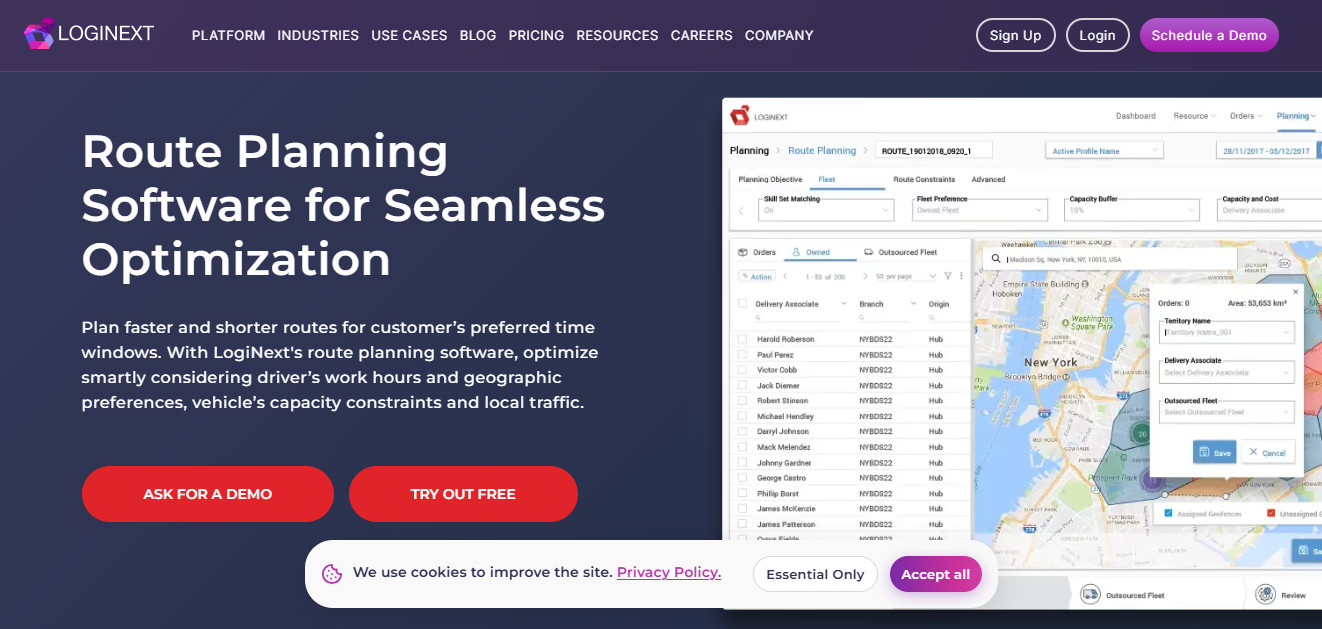
LogiNext covers route optimization, dispatch, real-time tracking, and delivery management across first mile, middle mile, and last mile in a single deployment. A logistics operation managing pickups from supplier locations, consolidation at regional hubs, and final delivery to the customer door can run all three legs on one platform without connecting separate systems for each.
For a team that needs last-mile routing and nothing else, the first implementation question on LogiNext is always about first mile and middle mile configuration. That configuration work adds weeks before you get to the routing problem you actually came to solve. For multi-country operations where that full scope is the actual need, that complexity is justified.
What to keep in mind: The breadth that makes LogiNext powerful for multi-country operations adds configuration complexity for teams that only need last mile. Strong in APAC and MENA markets with particular depth for operations managing mixed delivery models across multiple countries.
Best for: Enterprise operations managing multi-country, multi-vertical delivery logistics where geographic complexity and the need to connect first, middle, and last mile under one system are the core challenge.
5. Bringg
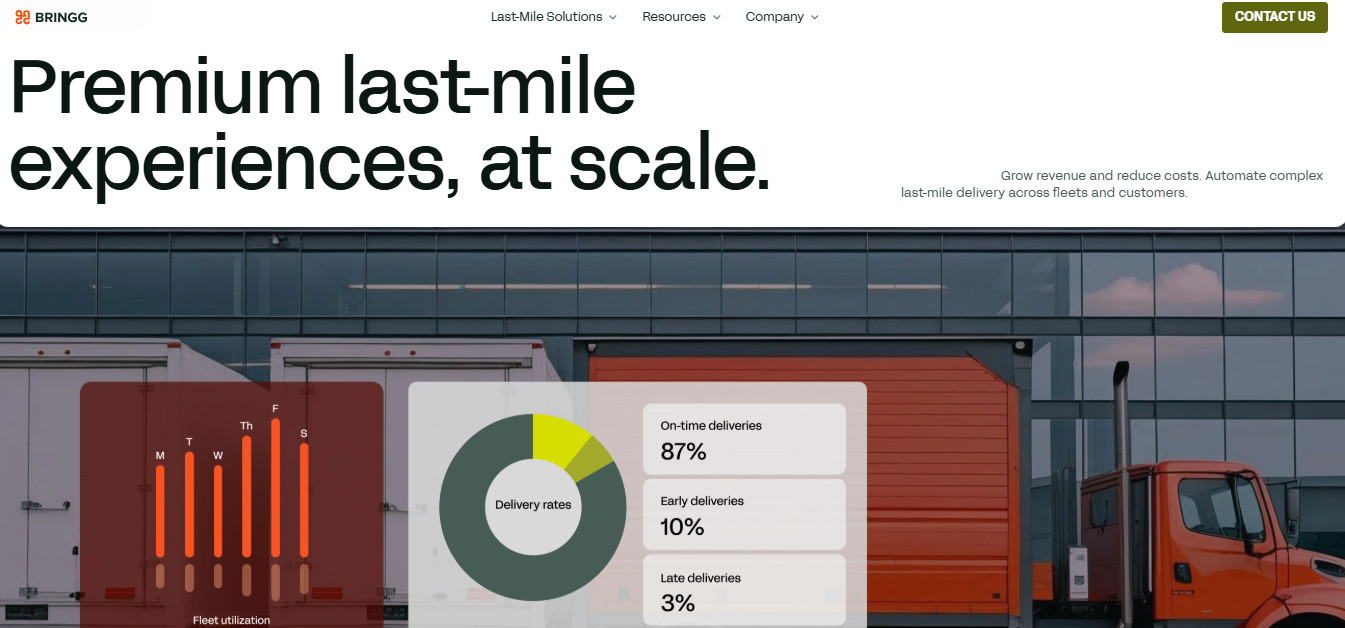
Bringg solves a specific problem at a specific scale. You’re running owned fleet in your primary markets, contracted carriers in secondary markets, and on-demand overflow during peak periods. You need a single system to assign orders across all of them automatically, without a dispatcher manually making that call on every shipment.
A retailer processing 3,000 orders daily across eight regions, with different SLA commitments per region and different carrier performance histories, needs that automation. At that volume, a human dispatcher making assignment decisions in real time is the operational bottleneck. Bringg removes it.
What to keep in mind: Implementation runs three to six months. First-year costs, once you factor in setup, integrations, and training, are substantially higher than most mid-market operations budget for when they start the evaluation. Most teams that regret a Bringg evaluation discover they were solving a problem they didn’t have yet. That question is worth asking in the first meeting, not after months of scoping.
Best for: Enterprise retailers and large 3PLs with the technical resources and budget for national-scale carrier orchestration across mixed carrier networks.
6. DispatchTrack
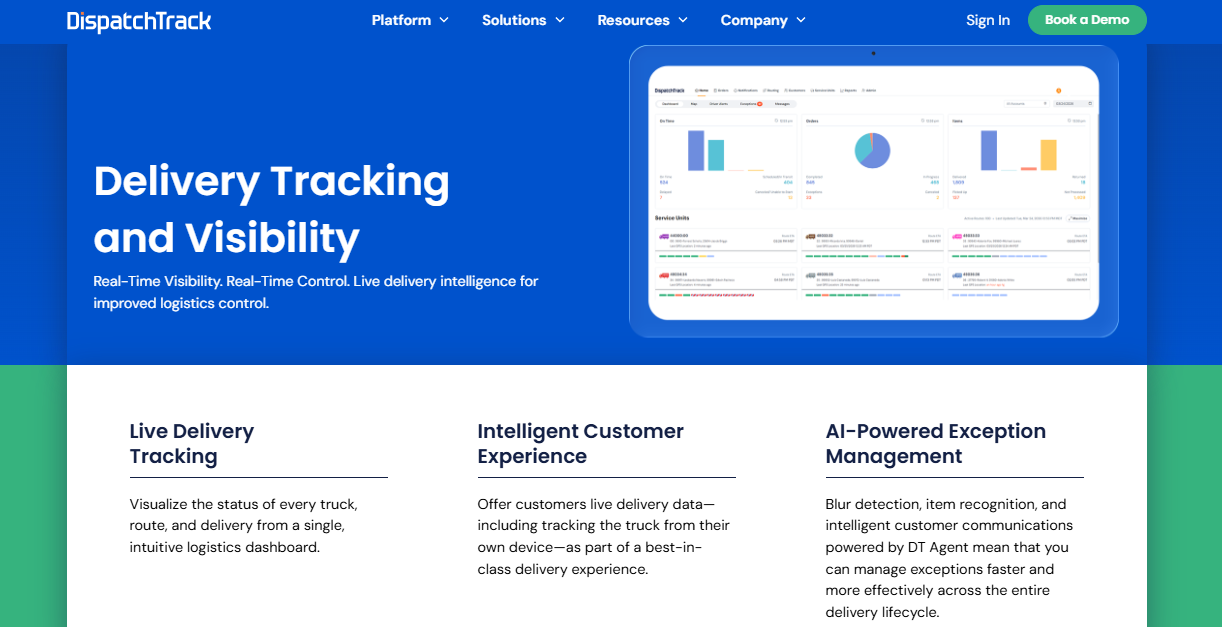
The name that comes up most often when furniture and appliance carriers outgrow their current routing tool. Confirmed two-hour windows sent to the customer before the crew leaves. Automated ETAs that update in real time. Live tracking links that cut inbound call volume. A carrier managing ten retail accounts, each with different POD requirements and different SLA commitments, can configure all of that once and the crews follow it automatically on every job.
In May 2026, DispatchTrack launched DT WMS, a warehouse management layer for 3PLs currently available by invitation only. For buyers evaluating DispatchTrack because of the warehouse gap, the question is not whether DT WMS exists but how seamlessly a warehouse layer added in 2026 integrates with a dispatch platform built over years. That maturity gap matters for operations that need it to work reliably from day one.
What to keep in mind: Built as a TMS first. Confirm current DT WMS availability and implementation timelines directly with DispatchTrack before factoring it into your evaluation.
Best for: Final-mile carriers and retailers running appointment-based big and bulky delivery who need a recognized TMS with strong customer communication and per-account POD configuration.
How to Choose: Matching the Platform to Your Operation
What’s the biggest challenge your operation faces? There will be a platform to solve it.
Warehouse and final mile integration requires sync calls and manual integration: Grasshopper Labs is the only all-in-one platform that brings all that data together, closing the gap between warehouse and delivery.
Dispatch and delivery execution is the core need with fast implementation: Onfleet gets you operational in days. The driver app shortens onboarding to hours, and the API connects cleanly to tools you’re already running.
Route planning is the bottleneck, and the warehouse runs separately without friction: Routific solves that problem better than anything else at its price point.
Multi-country operations with different carrier ecosystems and compliance requirements: LogiNext covers that complexity under one deployment. The configuration investment reflects the scope.
National carrier network with owned fleet, contracted carriers, and on-demand overflow: Bringg automates assignment decisions at scale. Before starting that evaluation, confirm whether the implementation timeline and cost fit where your operation is today, not where you plan to be.
Appointment-based final mile for furniture, appliances, or oversized items where retail account management is the primary challenge: DispatchTrack is the most proven tool in that segment.
The Bottom Line
The best last mile delivery software in 2026 depends entirely on where your operation breaks down.
For warehouse and final mile on one platform: Grasshopper Labs.
For routing: Routific.
For dispatch and POD: Onfleet.
For multi-country logistics: LogiNext.
For national carrier orchestration: Bringg.
For appointment-based big and bulky delivery: DispatchTrack.
Since each of these platforms solves a different problem, starting there, with your business’s single biggest bottleneck, should narrow down the options. Look at what’s breaking or holding things up and work through to a solution.