


Last Updated on July 14, 2026 by Ewen Finser
I manage logistics across multiple sites and spend a lot of time evaluating platforms in this space. That’s the background this guide draws on. When mid-market carriers and 3PLs come across FarEye during a software search, the platform looks promising at first.
The customer experience tools are genuinely good. Branded tracking, self-service rescheduling, and delivery communications that keep the retailer relationship intact when something goes wrong.
For enterprise operations processing hundreds of thousands of shipments across complex carrier networks, that capability set earns its place.
The issue for most mid-market operations is that FarEye was built for a different weight class. The implementation scope reflects enterprise complexity. The pricing reflects enterprise volume.
A carrier managing a few thousand deliveries a week across one or two regions often finds the platform is solving problems they don’t have yet, while the problems they do have sit somewhere else.
Some carriers will find that route-building is their biggest bottleneck. Others will realize that having a last-mile platform which sits on top of existing systems without replacing them causes more problems than it solves.
This guide covers five alternatives, what each one actually does, and which type of operation each one fits.
The Best FarEye Alternatives in 2026
Platform | Best for | What makes it different |
|---|---|---|
Operations processing thousands of daily shipments across mixed carrier networks | AI carrier assignment that learns from performance data and improves over time | |
Multi-country logistics across Asia, Middle East, and adjacent markets | Full chain visibility from first mile to final delivery, with cross-border customs compliance built in | |
Enterprise retailers and 3PLs running national networks across owned and contracted carriers | Automatic carrier assignment across mixed networks, reducing manual dispatcher decisions at scale | |
Dispatch-focused mid-market operations needing clean routing and fast implementation | Best-in-category driver app and clean API for connecting to existing tools | |
Mid-market operations managing warehouse and final mile delivery together | Warehouse management and final mile delivery on one platform, with no integration to maintain between the two |
Why Mid-Market Operations Move Away From FarEye
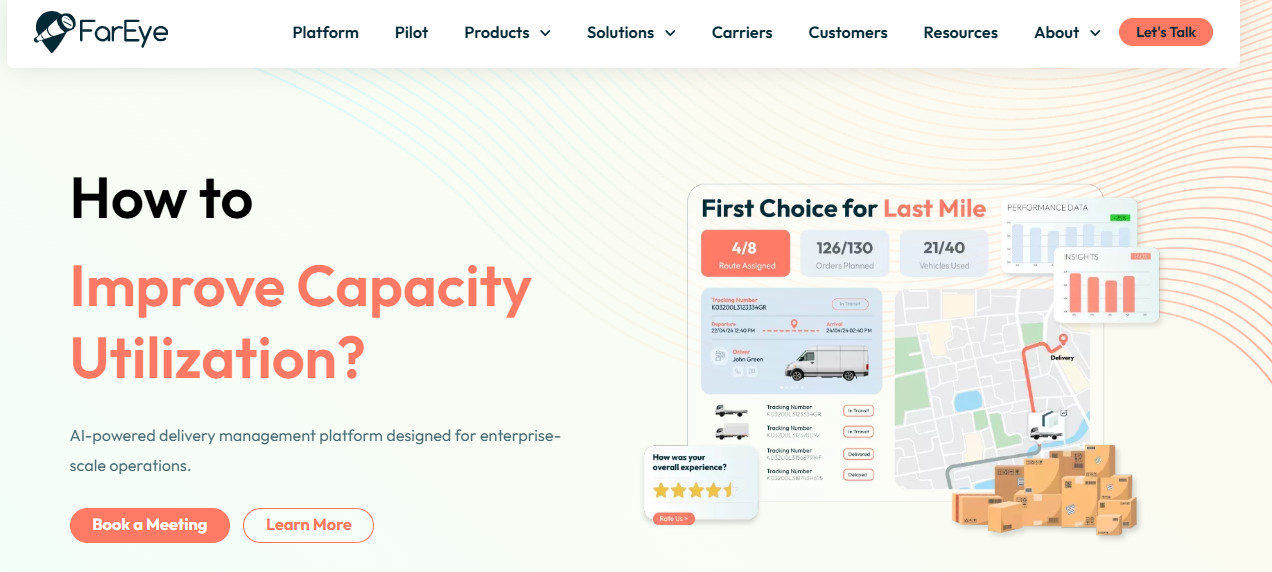
FarEye competes on the post-dispatch customer experience layer. Real-time tracking, branded delivery notifications, consumer self-service tools. That’s the core of what it does well.
Where mid-market carriers run into trouble is the implementation. FarEye’s no-code workflow builder is flexible, but configuring it for a specific operation’s carrier mix, service levels, and retail account requirements takes time and internal resource that smaller teams often can’t spare.
The pricing reflects volumes that mid-market operations rarely reach, so the cost-per-delivery economics don’t work the same way they do for the enterprise customers the platform was designed for. Some operations also decide to centralize their warehouse and dispatch operations into one platform, which FarEye can’t handle.
The Alternatives
1. Locus
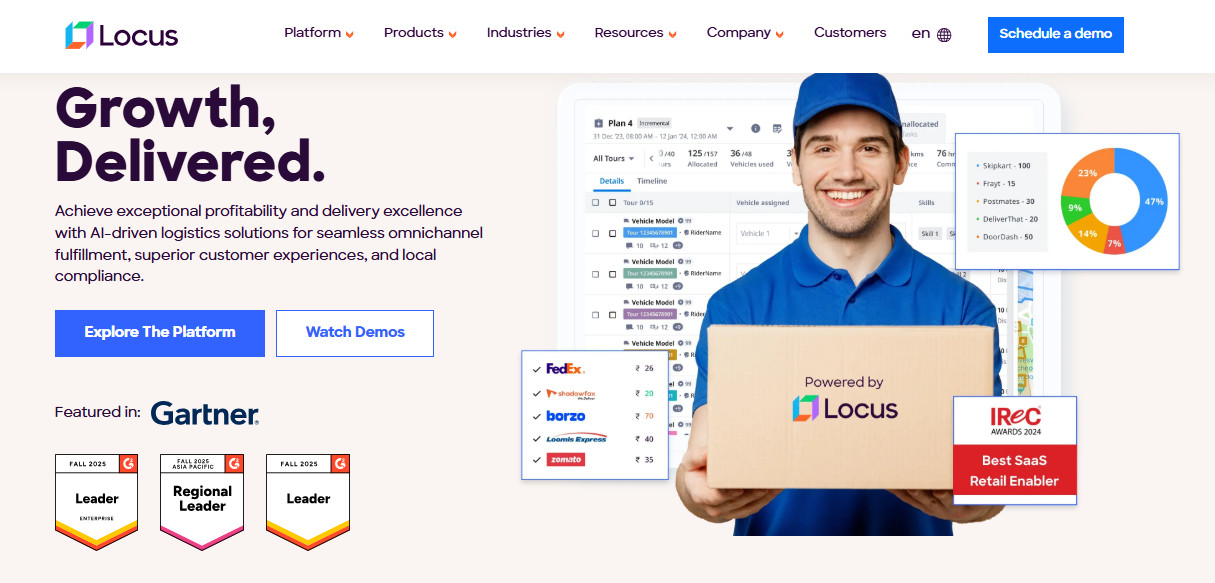
Locus is built for operations where the volume of daily carrier assignment decisions has outgrown what a dispatcher can handle manually. The platform assigns each shipment to the right carrier at the right cost based on SLA requirements, carrier performance history, and real-time availability.
At a few hundred shipments a day, a good dispatcher can manage those decisions. At a few thousand across multiple regions and carrier contracts, you need something that does it automatically and gets better at it over time.
The carrier performance scoring is the part that takes time to appreciate. The algorithm learns which carriers consistently miss delivery windows in specific zones and adjusts future assignments accordingly.
I’ve managed operations where pulling that kind of insight required someone building a report every week. Locus surfaces it automatically.
What to keep in mind: Locus requires clean historical data, configured cost models, and integrated carrier APIs before it delivers on its promise. In one implementation I worked on, we estimated three weeks for data preparation. It took eight. The platform also doesn’t touch the warehouse side of the operation.
Best for: Operations processing thousands of daily shipments across mixed carrier networks where the volume of assignment decisions has become the operational bottleneck.
2. Shipsy
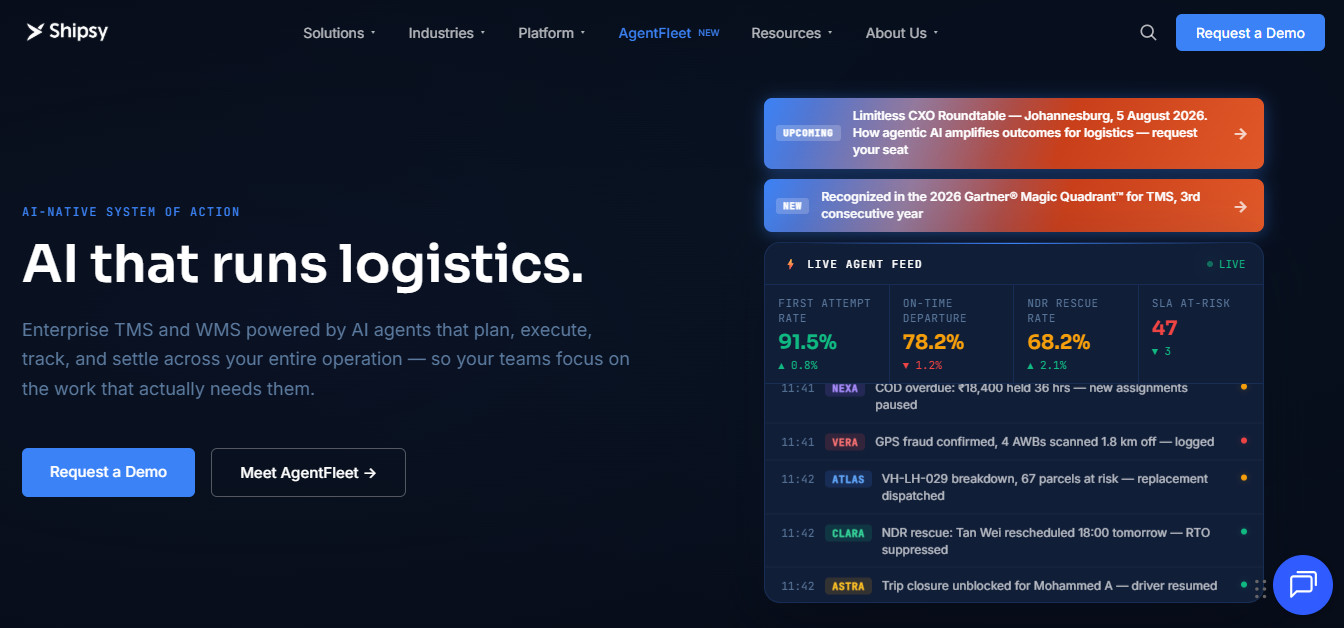
Shipsy covers the full logistics chain across markets where compliance and routing are the same problem. First mile pickups, middle mile consolidation, and final mile delivery across a single deployment, with cross-border customs compliance built into the workflow rather than bolted on.
The platform has real depth in India, the Middle East, and APAC. Working across operations that span multiple countries.
I’ve seen the compliance layer slow things down in ways that routing tools are completely blind to. A shipment that clears one market and then sits for three days waiting on documentation in the next one is a failure that shows up in delivery performance data but originates somewhere no dispatch tool can see.
Shipsy was built for that problem. Its clients include Aramex, Etihad Cargo, and Domino’s.
What to keep in mind: Shipsy’s geographic strength becomes a limitation for operations primarily in Western markets. The advanced features around freight forwarding and shipment procurement carry a learning curve, and customer support response times have drawn criticism from users.
Best for: Operations managing multi-country logistics across Asia, the Middle East, and adjacent markets where cross-border compliance and multi-modal visibility are central to the operation.
3. Bringg
Bringg solves a specific orchestration problem. You’re running owned fleet in your primary markets, contracted regional carriers in secondary ones, and on-demand capacity for overflow.
Each carrier has different performance histories, different cost structures, and different SLA commitments depending on the zone. Manually assigning orders across that network is where dispatch teams spend time they shouldn’t have to.
The platform auto-assigns based on carrier performance scores, cost thresholds, and delivery windows. A retailer processing 3,000 orders daily across eight regions gets assignment decisions that account for all of that without a dispatcher touching each one. Its client list includes Walmart, Coca-Cola, KFC, and Metro, which gives a sense of the scale it was built for.
What to keep in mind: Implementation runs three to six months. I’ve seen operations spend four months in a Bringg scoping process before realizing the platform was solving a problem they didn’t have yet.
That question is worth asking in the first meeting. First-year costs, once you account for setup, integrations, and training, tend to come in well above what most mid-market operations budget for at the start.
Best for: Enterprise retailers and large 3PLs with the technical resources and budget for national-scale carrier orchestration across mixed carrier networks.
4. Onfleet
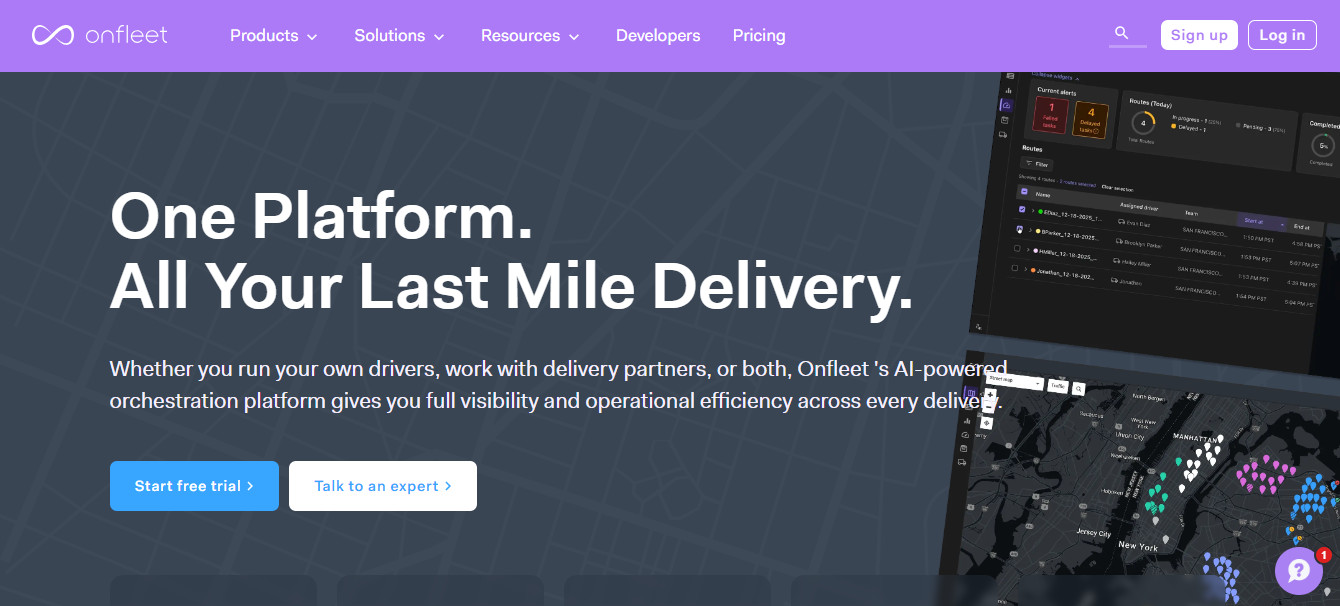
Onfleet is where most operations land when they need to be up and running quickly. The driver app is one of the better ones in the category. New crew members learn it in a morning, which matters when you’re onboarding across multiple locations under pressure.
The POD workflow handles photo, signature, and barcode capture without friction, and the API connects cleanly to other tools without requiring custom development.
For a dispatch-focused operation that needs to be live in two weeks, Onfleet removes most of the obstacles that slow down other implementations.
There are no data infrastructure requirements to clear before go-live and no carrier API configurations to work through first.
What to keep in mind: Onfleet starts at dispatch and ends at proof of delivery. Warehouse visibility, contractor payment reconciliation, and cross-dock coordination are outside what it covers.
For an operation managing both warehouse and delivery, someone on your team ends up owning the connection between Onfleet and your WMS, and that connection needs attention every time either system updates.
Best for: Dispatch-focused mid-market carriers and last mile operations that need clean routing, strong proof of delivery, and fast implementation without warehouse complexity.
5. Grasshopper Labs
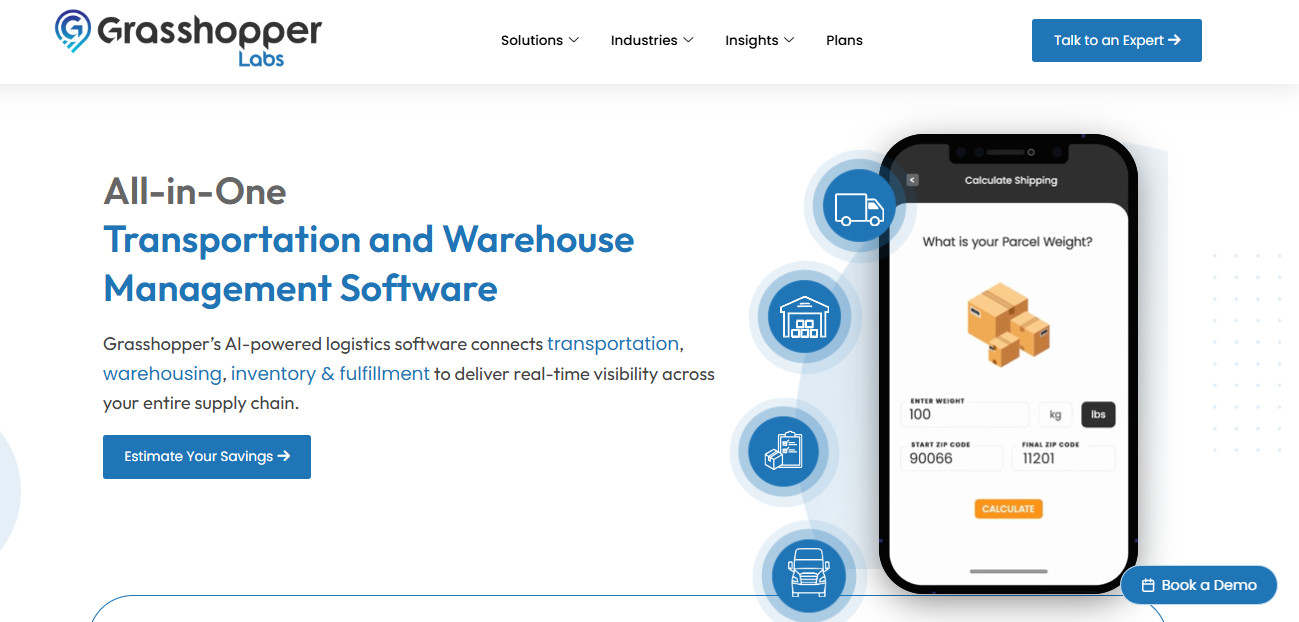
Every platform reviewed above starts where the truck starts. Grasshopper starts where the inventory starts, and for operations managing both sides, that is the difference that matters.
Grasshopper was built by the team behind Deliveright, a big and bulky delivery operator. The platform was designed around the problems a real operation runs into day to day. That shows up in which features exist and how they work. Warehouse receiving, staging confirmation, dispatch, proof of delivery, and contractor payment reconciliation all live in the same system.
When something gets flagged in receiving at 5:50am, the dispatch team sees it before the routes go out rather than finding out when the crew calls in from the first stop.
Contractor payments close out as part of the delivery workflow. When a crew captures proof of delivery, that feeds directly into payment reconciliation. The manual Friday process of cross-referencing delivery records, POD confirmations, and contractor invoices from different places stops being something your team has to manage.
For 3PLs managing retail accounts, native EDI integrations with Wayfair, Electrolux, and more than 100 retail partners mean onboarding a new client takes days rather than weeks of custom integration work.
What to keep in mind: Grasshopper is purpose-built for big and bulky delivery operations. If you’re running a parcel fleet or same-day courier service, the platform covers more than you need. Implementation takes longer than the other options on this list, and the learning curve is real.
Best for: Last-mile carriers, 3PLs, and mid-market retailers managing furniture, appliances, and oversized freight who need warehouse management and final-mile delivery connected on a single platform.
Which Alternative Fits Your Operation

The starting point for this decision is understanding what FarEye was actually solving for you and whether the alternative you’re considering solves the same thing better, or something different altogether.
- Locus and Bringg both solve carrier orchestration problems, but at different scales and with different requirements. Locus works best when the daily volume of assignment decisions has outgrown manual dispatch, and you have the data infrastructure to support it.
Bringg is built for operations running national mixed-carrier networks where the orchestration complexity is the primary challenge. Both require significant implementation investment, and neither touches the warehouse.
- Shipsy covers ground that none of the others do for operations spanning multiple countries in APAC and MENA markets. If cross-border compliance is a daily operational problem, Shipsy was built for it.
However, for domestic Western operations, that depth adds complexity without adding value.
- Onfleet is the right answer when speed of implementation matters more than breadth of capability. It solves the dispatch and delivery execution problem cleanly and gets you operational faster than anything else on this list. The trade-off is that the warehouse side remains your problem to manage separately.
- Grasshopper makes sense when the warehouse and the delivery operation are the same problem, and you’re currently managing them as two separate systems. FarEye doesn’t close that gap, and neither does any other platform on this list. If that’s the operational cost you’re carrying, Grasshopper is where the evaluation should start.
The Bottom Line
The most common names that come up when buyers search for FarEye alternatives are Locus, Shipsy, Bringg, Onfleet, and Grasshopper Labs. Each one solves a real problem. Locus handles carrier assignment at volume. Shipsy handles cross-border logistics complexity. Bringg orchestrates mixed carrier networks at scale. Onfleet handles dispatch execution quickly. Grasshopper Labs brings your WMS and dispatch together into one platform.
Whatever issues your operation is facing, there’s a software solution that can address it. Which of these FarEye alternatives is best for you will depend on your size, your challenges, and what you want to integrate.