


Last Updated on October 12, 2026 by The Digital Merchant Team
A bounced email, or one that lands in spam, is a missed chance to reach a customer. And most of the time, you don’t find out until your numbers start dropping.
Mail Tester vs InboxAlly comes up a lot for people trying to fix that, but these tools tackle the problem from opposite ends. Mail Tester looks at your list. It flags fake, old, and risky addresses so you can delete them before your next send. InboxAlly looks at your reputation. Its network of seed inboxes opens, clicks, and replies to your emails, which shows Gmail, Outlook, and other email providers that people want to hear from you.
Knowing where your emails are getting stuck will tell you which one to pick.
A Quick Look at Mail Tester and InboxAlly
Platform | ||
Best For | Quick email deliverability tests | Long-term inbox placement improvement |
Price | Pay as you go from $19, or monthly plans from $39 | From $149 per month |
Key Features | – Duplicate email remover – Spam trap removal – Risk, domain, and MTA validators – Real-time bouncing – Anti grey-listing tech – Team accounts | – Repair/Increase deliverability on any IP/domain on any platform – Works with any email-sending service – Auto-detect adapts to your sending – Multiple sender profiles – Intuitive dashboard |
Use Cases | – Businesses sending to large lists – Lists that haven’t been used in a while – Small businesses and freelancers who only clean their list once in a while | – Emails landing in spam, even with a clean list – Cold emailers sending from new domains – Agencies managing several clients – Online stores sending big campaigns – Companies with strict security rules |
Free Trial | Yes, new users get 100 free verifications to test the tool | Yes, 10 days free |
InboxAlly is the comprehensive suite I need to solve challenging deliverability problems across the board. It's like a triage hub for diagnosing and fixing email deliverability rates in one dashboard. I've tried a lot of tools, but this is the one I've stuck with.
How Mail Tester and InboxAlly Work
One tool cleans up who you’re sending to, and the other changes how email providers see you. Each one is explained in more detail below.
What Is Mail Tester?
Mail Tester is an email verification and deliverability tool that helps businesses keep their email lists clean.
Its main job is verifying your list, which means checking every address on it to make sure it’s real and safe to send to. This is important because lists pick up bad addresses over time, like typos, old accounts that no longer exist, fake signups, and spam traps. When you send to too many of these, your emails bounce, and providers start to see you as a risky sender. Mail Tester finds these addresses so you can remove them before you hit send.
It also offers inbox placement reports, which show whether your emails land in the inbox or spam, and blacklist monitoring, which alerts you if your domain ends up on a spam blacklist.

What Is InboxAlly?
InboxAlly is a tool that helps your emails land in inboxes instead of spam folders by improving your sender reputation. Your sender reputation is like a trust score that email providers like Gmail and Outlook give you, based on how people react to your emails.
InboxAlly works by simulating real engagement, like opens, clicks, and replies, to train email providers to trust your messages. To use it you add InboxAlly’s seed addresses to your email list, and their inboxes interact with your emails the way real readers would, including pulling them out of spam. It works with any email platform, and you never have to give InboxAlly access to your accounts.

Mail Tester vs InboxAlly: Pricing
Mail Tester charges by the email, and InboxAlly charges by the month. That makes a big difference in what you’ll end up spending.
Mail Tester Pricing
Mail Tester gives every new account 100 free verifications, with no credit card needed. After that, you can pay as you go or pick a monthly plan.
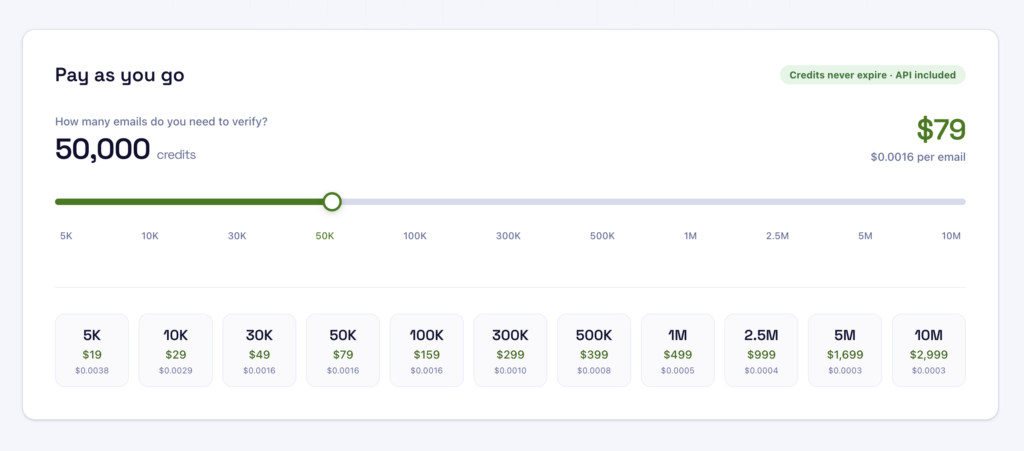
With pay as you go, you buy credits. One credit checks one email address, and your credits never expire.
- $19 for 5,000 credits
- $29 for 10,000 credits
- $49 for 30,000 credits
- $79 for 50,000 credits
- $159 for 100,000 credits
- $299 for 300,000 credits
- $399 for 500,000 credits
- $499 for 1 million credits
- $999 for 2.5 million credits
- $1,699 for 5 million credits
- $2,999 for 10 million credits
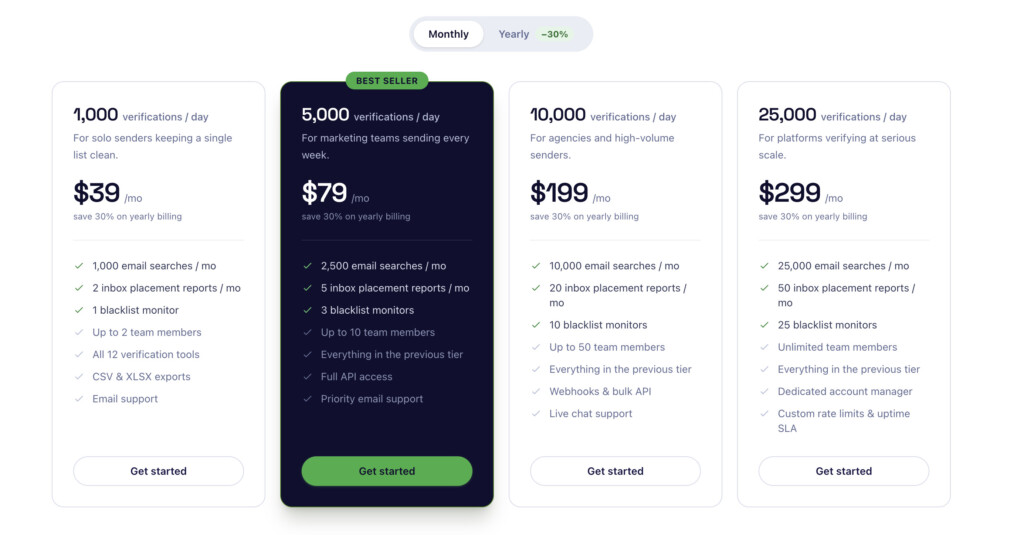
The monthly plans bundle email checks with inbox placement reports and blacklist monitoring. You save 30% if you pay yearly.
- $39/month: 1,000 verifications per day, 2 inbox placement reports, 1 blacklist monitor, up to 2 team members.
- $79/month: 5,000 verifications per day, 5 inbox placement reports, 3 blacklist monitors, up to 10 team members, full API access.
- $199/month: 10,000 verifications per day, 20 inbox placement reports, 10 blacklist monitors, up to 50 team members.
- $299/month: 25,000 verifications per day, 50 inbox placement reports, 25 blacklist monitors, unlimited team members, a dedicated account manager.
InboxAlly Pricing
InboxAlly’s plans are based on how many seed emails you can use each day. Every plan comes with a dedicated customer success manager who can help you get set up properly to start getting results. There’s a 10-day free trial, and you don’t need a credit card to start.
- Starter, $149/month: 100 seed emails a day and 1 sender profile, with email support.
- Plus, $645/month: 500 seed emails a day and 5 sender profiles, with live chat added.
- Premium, $1,190/month: 1,000 seed emails a day and 10 sender profiles, with phone support, a setup call, and weekly check-ins.
- Enterprise: Priced by quote, with thousands of seed emails a day and no limit on sender profiles.

Winner: Mail Tester
For about the same price as one month of InboxAlly’s Starter plan, you could verify 100,000 emails with Mail Tester, and those credits never expire. Its monthly plans also start at just $39, and even its biggest plan costs less than InboxAlly’s. Just keep in mind that you’re paying for different things. If you only need to clean your list, Mail Tester gives you more for less. If you need to fix a damaged sender reputation, Mail Tester can’t do that, so InboxAlly’s higher price is worth it.
Mail Tester vs InboxAlly: Key Features
Mail Tester’s tools are all about prevention, while InboxAlly’s are about repair. The lists below show what you get with each.
Mail Tester Features
Everything in Mail Tester is built to catch bad addresses before they cost you:
- Duplicate email remover
- Spam trap removal
- Risk validator
- MTA validations
- Domain validator
- Complainers verifier
- Syntax verifier
- Real-time bouncing
- Disposable email checker
- Team account
- Anti-greylisting tech
- Selected download
- API access
InboxAlly Features
InboxAlly gives you a lot of control over how and when engagement happens on your emails:
- Works on any IP address or domain
- Connects with any email platform you use, with a full API and built-in integrations for tools like HubSpot and Klaviyo
- Uses your own emails, not filler content
- Shows your progress on a dashboard
- Lets you choose when emails get opened
- Detects your sends and adjusts automatically
- Handles large lists
- Opens emails from locations across the U.S.
- Supports multiple sender profiles
- Doesn’t need your email login
- Lets you set your own sending schedule and reporting time zone
- Boosts engagement on specific campaigns
- Offers ready-made or custom engagement profiles
- Has custom plans for enterprise teams

Winner: InboxAlly
Finding bad addresses is useful, but it won’t pull you out of spam once you’re there. InboxAlly can. Every plan also includes inbox placement testing and blacklist monitoring, which overlaps with part of what Mail Tester offers.
Mail Tester vs InboxAlly: Use Cases
Think about what’s going wrong with your emails right now. That will point you to the right tool.
When You Should Use Mail Tester
Mail Tester is great for businesses that send campaigns to large lists, or lists that haven’t been used in a while. Running your list through it before you send cuts down on bounces and protects your sender reputation.
It’s also a good choice for small businesses and freelancers who only need to check their lists once in a while, since their pay-as-you-go credits never expire.
When You Should Use InboxAlly
InboxAlly is the better choice if your emails keep landing in spam, even with a clean list. A clean list stops bounces, but it can’t fix a damaged sender reputation.
InboxAlly also helps cold emailers who are sending from a new domain. Email providers don’t trust a domain with no sending history, so if you send a lot of emails right away, they’ll likely end up in spam. InboxAlly’s auto-warmup tool helps fix this by sending a small number of emails at first and slowly increasing them over time. That way, your domain builds a good track record before your real outreach starts.
InboxAlly is also a great option for agencies, online stores, and companies with strict security rules. Agencies can set up a separate sender profile for each client and track them all from one account. Online stores and brands can boost engagement on a big email, like a sale announcement, to help it reach the inbox instead of promotions or spam. And companies with strict security rules can use it too, since InboxAlly never asks for your email logins.
Winner: InboxAlly
InboxAlly offers more solutions for different types of inbox problems. Along with fixing your sender reputation, it offers free tools like list verification, and every paid plan includes inbox placement testing and blacklist monitoring. Mail Tester is still a great pick if you only need to clean large lists, but InboxAlly can handle more of your problems in one place.
Mail Tester or InboxAlly: Which is Better?
If bounces are your biggest problem, start with Mail Tester. It’s cheap, and you only pay for the emails you check.
If you’re stuck in spam even with a clean list, InboxAlly is what you need. Fixing a damaged reputation takes ongoing work, and that’s what it’s built to do.
Overall, InboxAlly takes the win because it does more to improve where your emails land. Just know it’s a bigger monthly cost, so it makes the most sense for businesses that depend on email to bring in customers.
InboxAlly is the comprehensive suite I need to solve challenging deliverability problems across the board. It's like a triage hub for diagnosing and fixing email deliverability rates in one dashboard. I've tried a lot of tools, but this is the one I've stuck with.