


- Where the ladder.io Model Falls Short
- What Are the ladder.io Alternatives?
- Right Side Up: Fractional Marketing Leadership and Embedded Growth Talent
- SmartSites: Full-Service SEO and PPC for Performance-Focused Teams
- Motion: Performance Creative for Paid Advertising
- Decoded Advertising: Story-Driven Campaign Strategy
- CIENCE: B2B Lead Generation and Outbound Programs
- Millimetric: AI-Driven Marketing Analysis for Startups
- How to Choose the Right Partner at Series B
- Choosing Between Your ladder.io Alternatives
Last Updated on October 2, 2026 by Ewen Finser
When you start scaling marketing, the partner you choose doesn’t only impact the pipeline; it shapes how your team can expect to operate over the next few years.
ladder.io has built a strong reputation as a growth marketing agency. They’ve been running paid ads, A/B tests, and conversion optimization campaigns for startups and Fortune 500 companies since 2015. They’ve also built a model around a practical idea: use data to figure out what works, and then do more of it. However, problems can start to appear when a business gets more complex, and the same structured, test-heavy model that initially felt like a strength begins to feel limiting.
Let’s walk through where it falls short at certain growth stages and which ladder.io alternatives are worth investigating. This, of course, is dependent on your team structure, budget, and where you’re trying to go.
Where the ladder.io Model Falls Short
Agency experimentation models like ladder.io’s are built around a specific kind of engagement: the agency owns the testing process, and the client sees the output. This can work really well when you have a narrow set of growth levers to pull and just need external horsepower to pull them faster.
For companies that have moved past the early stages, like Series B SaaS companies or growing e-commerce brands that ladder.io typically would work with, the marketing problem gets a lot thornier. It’s no longer just a matter of finding the ad that performs best, but about complex coordination across teams, making sure messaging is consistent, providing your sales team with what they need to close deals, and deciding which new markets are actually worth going after.
There’s also a structural problem. In an agency model, there is no marketing leader inside your company, just an account team outside of it. Strategy gets handed down from people who aren’t in your planning meetings, don’t have context on your roadmap, and aren’t accountable to your board. For early-stage companies running simple acquisition plays, that gap is manageable. For Series B companies trying to build a real marketing function, it can be a real liability.
Finally, the agency experimentation model is innately optimized for execution, not leadership. If you need someone who can sit in senior leadership meetings, shape positioning, build the marketing org, and mentor junior marketers on your team, an agency account team isn’t equipped for that role, no matter how sophisticated their testing infrastructure is. That’s not a knock on the model; it’s just not what it’s designed to do.
What Are the ladder.io Alternatives?
There’s definitely no shortage of agencies out there, but it’s going to come down to where you are in your business and growth journey, and where you’re looking to go. Some fall into the same trap as ladder.io and are built with execution in mind, not leadership. The options below were chosen because they each represent a different approach to the growth problem, whether that’s how they structure their teams, where they focus their energy, or the kind of client they’re actually built to serve.
Right Side Up: Fractional Marketing Leadership and Embedded Growth Talent
For Series B SaaS companies, the marketing challenge isn’t just growing faster; it’s building something durable that can scale with you.
Rather than locking you into a fixed agency structure, Right Side Up is built to flex with your company. Need a fractional VP of Growth to own your demand gen strategy while you scale? They can place one. Need to add a product marketing specialist six months later when you launch a new tier? That too. As your marketing complexity grows, your Right Side Up team grows with it, and without the lag of recruiting, onboarding, or the rigidity of an agency retainer that wasn’t built for where you are now.
The leadership layer is where the difference from an agency model is most noticed. A Right Side Up marketer isn’t managing your account from a distance; they’re in your standups, attending your all-hands, building real relationships with your sales and product teams, and developing the kind of contextual understanding of your business that takes months to accumulate. That institutional knowledge stays with your company as the engagement continues, and transitions to full-time hires are significantly smoother as a result.
Their talent network spans growth, brand, lifecycle, product marketing, AI services, and analytics, giving scaling companies access to the full marketing stack through a single, flexible relationship. Where ladder.io optimizes for testing velocity, Right Side Up optimizes for strategic depth and long-term growth ownership, a tradeoff that increasingly favors Right Side Up as a company’s marketing complexity grows.
SmartSites: Full-Service SEO and PPC for Performance-Focused Teams

SmartSites is a well-regarded full-service digital marketing agency with particular strength in SEO and paid search. Their model is more traditional than ladder.io’s, and they manage campaigns, produce content, and optimize websites for organic performance, but they’ve earned a strong track record across both B2B and B2C clients and are frequently cited for transparent reporting and genuine collaboration.
Their team consists of content writers, designers, developers, SEO strategists, PPC analysts, email and social media specialists, and project managers to keep things aligned. The Client Hub follows each lead from first click to final sale to give you a clear view of your results.
For companies whose primary bottleneck is organic search visibility or paid search performance, SmartSites offers a capable team and a process that clients consistently describe as straightforward and results-focused. They tend to work best when you have a clear channel mandate and need a dependable execution partner.
Where they fall short is at the strategic layer. Like most traditional agencies, SmartSites separates strategy from execution, and their team operates externally rather than as an embedded part of your org. For companies that need channel management more than marketing leadership, that’s a reasonable tradeoff. For companies that need both, it’s a gap worth factoring in.
Motion: Performance Creative for Paid Advertising
Motion has built a strong reputation in e-commerce and DTC for its creative-first approach to paid advertising. Their model is built around producing and testing ad creative at scale using performance data to identify winning concepts quickly and doubling down before fatigue sets in. It’s a focused, well-executed approach to a specific problem.
Motion’s AI analyzes your data, audience, and positioning to provide recommendations specific to your company. It also allows you to track competitors’ ads to see how you stack up and where you can improve.
For SaaS companies, Motion is most relevant when creative quality and testing velocity on paid social are the primary constraint. If you’re running high-volume Meta or TikTok campaigns and creative refresh cycles aren’t keeping pace with spend, their specialization is genuinely valuable. They’re less suited for companies that need broader growth strategy, multi-channel thinking, or any meaningful layer of marketing leadership.
Motion works best as a specialist partner alongside a broader strategy function and not as a standalone growth solution. If you already have the strategic layer covered and need execution firepower on paid creative, they’re worth a serious look.
Decoded Advertising: Story-Driven Campaign Strategy
Decoded Advertising occupies an interesting middle ground between brand-building agencies and performance shops. Their approach combines narrative and storytelling with data-driven media placement, making them a fit for companies that feel the tension between building brand equity and driving measurable short-term results.
They generate traction for your business with performance marketing and UX and CX strategy. With integrated campaigns, brand building and identity, and GTM planning, they help set you up for your business’s future.
For SaaS companies starting to invest more seriously in brands, particularly those moving upmarket or targeting enterprise buyers, Decoded brings a perspective that pure performance agencies often lack. They understand that messaging and positioning matter as much as channel efficiency, and they build campaigns that try to do both.
They’re not a direct ladder.io replacement in terms of scope or model, but they address a gap that naturally emerges as companies mature past pure acquisition optimization. If your marketing challenge is as much about what you’re saying as where you’re saying it, Decoded is worth evaluating alongside more execution-focused options.
CIENCE: B2B Lead Generation and Outbound Programs

CIENCE specializes in B2B outbound lead generation, combining data research, list building, and managed SDR programs to build pipelines at scale. Their model is built for companies with an outbound sales motion that needs to generate qualified meetings consistently, a meaningfully different problem from what ladder.io or most growth agencies are designed to solve.
CIENCE begins by learning your business needs before building human SDR, scaled outbound, AI-supported, or hybrid motion. They have a 4.4 average rating across eight review platforms.
For SaaS companies with longer sales cycles, well-defined ICP profiles, and a sales team that can close once meetings are booked, CIENCE offers a structured, scalable approach to top-of-funnel pipeline generation. They take on the operational complexity of outbound, so your internal team doesn’t have to.
The tradeoff is focus. CIENCE does outbound well, but they’re not a full-funnel growth partner. If your bottleneck is pipeline volume and your sales motion is built for it, they’re a strong fit. If you need a broader marketing strategy alongside lead generation, you’ll likely need to pair them with something else.
Millimetric: AI-Driven Marketing Analysis for Startups
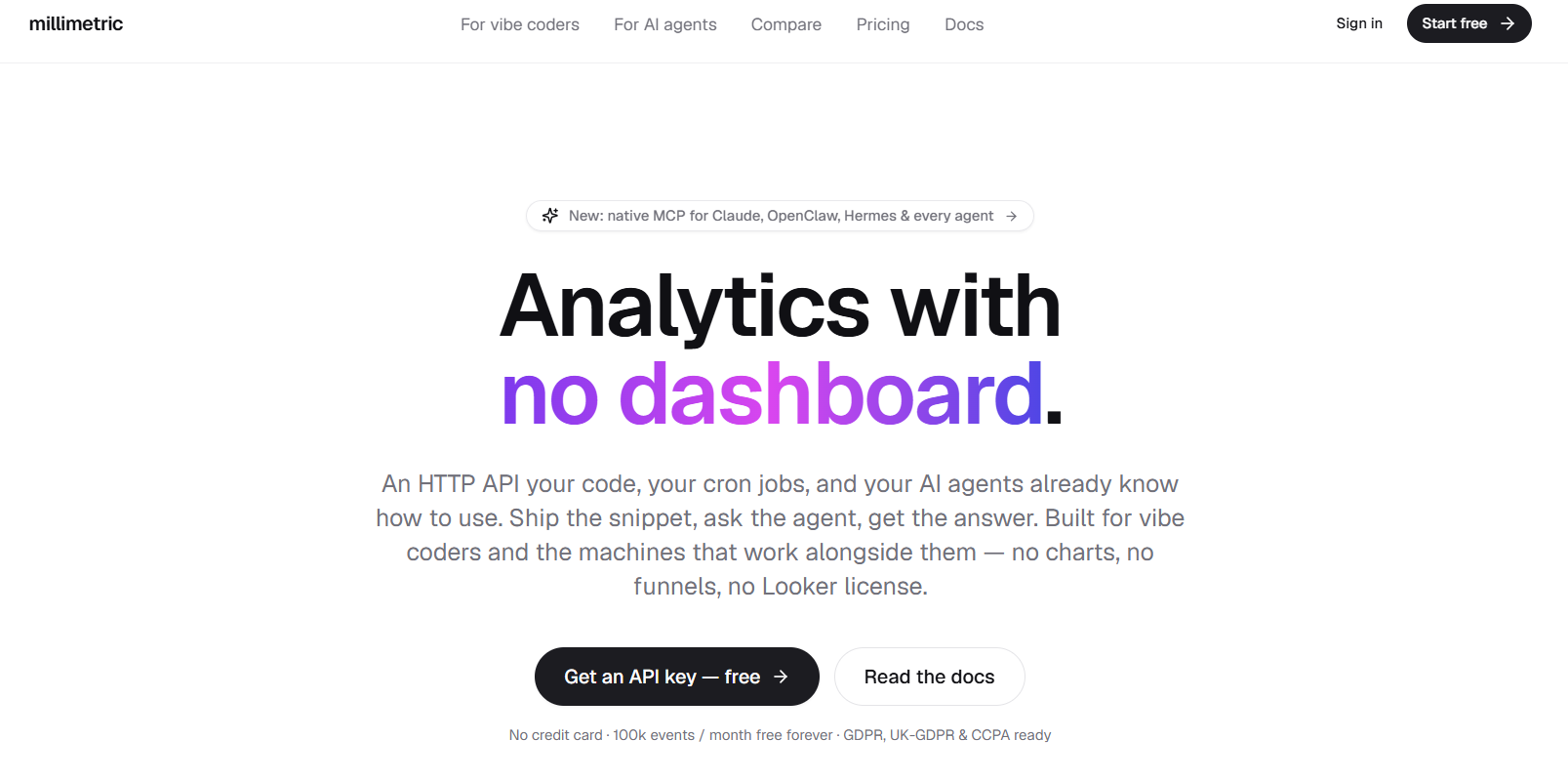
Millimetric positions itself as an AI-powered growth analytics and strategy partner, with a focus on helping companies make sense of their marketing data before scaling spend. They function less as an execution agency and more as an analytical layer. They surface insights, identify underperforming channels, and help prioritize where to place future bets.
For startups still in discovery mode, figuring out which channels deserve investment and why, Millimetric’s approach can meaningfully accelerate the learning process and reduce the cost of bad channel decisions. Their AI-driven analysis can surface patterns that manual reporting often misses.
For Series B companies that have already validated their primary channels and are focused on scaling execution, Millimetric may be earlier-stage than what’s needed. They’re a strong fit for the analytical foundation phase; less so for companies that have moved past it and need a partner focused on growth and leadership rather than insight generation.
How to Choose the Right Partner at Series B

The most important question here isn’t “which agency runs the best tests?” It’s: “what does our marketing organization realistically need to grow?”
Agency experimentation models answer a specific version of that question: you need more data on what works in paid channels, and you want a structured external team to generate it efficiently. That’s a legitimate need, and ladder.io fills it reasonably well. Still, it’s a narrow answer to a question that only gets bigger as a company scales.
Series B companies usually face a more complex set of challenges. You have product-market fit and some repeatable motion, but you’re trying to grow faster than your current team can manage. The work isn’t just running more experiments, it’s building the functional depth to run multiple channels at once, align marketing with sales and product, develop a brand that can compete in a crowded category, and lay the groundwork for the kind of marketing org that can carry you to Series C and beyond.
Before you commit to a growth partner, it’s worth asking yourself three guiding questions:
- Do you need more testing velocity or more strategic depth? If you have a clear channel strategy and just need to move faster, an agency model might serve you well. If you’re still finding your GTM footing or need senior marketing leadership, embedded talent is the safer bet.
- Where does growth knowledge need to live? If it’s fine for that knowledge to sit inside an external agency, a traditional model can work. If you’re building a durable marketing function and want institutional knowledge to compound inside your company, you need partners who operate seamlessly as part of the team.
- What cross-functional collaboration does your marketing motion actually require? If growth is primarily a paid acquisition problem, a specialist agency can probably solve it. If it depends on tight alignment between marketing, product, sales, and customer success, you’ll want marketers who can work across those functions from the inside.
Choosing Between Your ladder.io Alternatives
ladder.io has built a credible, differentiated approach to growth marketing, especially for companies that need structure around paid experimentation and are comfortable with an agency model. For teams with a narrow channel focus, a lean internal setup, and a need for execution efficiency, it’s a sensible choice.
But as a company moves beyond the early stage, the limits of the agency experimentation model become more obvious. By Series B, the challenge is no longer just running better tests. It’s building the leadership layer, developing cross-functional depth, and creating institutional knowledge that stays inside the business.
When you break down what that actually requires, the picture gets clearer. You need a model that can scale with you, provide real strategic leadership, and work across your entire go-to-market motion. That’s where embedded fractional teams start to stand apart.
For Series B SaaS companies dealing with real marketing complexity, it’s the approach most likely to get you exactly where you’re trying to go.