


- In-House Affiliate Program vs. Affiliate Network: The Basics
- What Does Each Model Cost?
- Affiliate Recruitment: The Network’s Biggest Advantage
- When Does It Make Sense to Bring Your Affiliate Program In-House?
- What Changes When You Bring Your Affiliate Program In-House
- Can You Use Both?
- Which Affiliate Model Is the Right Fit for Your Brand?
Last Updated on October 6, 2026 by Ewen Finser
Moving an affiliate program in-house might mean lower fees, more control, and closer relationships with your partners. It also means taking responsibility for work your affiliate network may currently be doing for you, from recruitment to program administration.
Affiliate networks offer built-in infrastructure, established publisher relationships, and a way to get a program up and running. In-house programs can give brands more control over partner relationships, commissions, data, and attribution, but it also puts more responsibility on your internal team.
Keep in mind that “in-house” doesn’t mean you need to build your own affiliate technology from scratch. Most brands use affiliate management software to handle tracking, reporting, payouts and other program operations. The brand uses the platform to manage the program and partner relationships directly, rather than operating inside a third-party network.
So which model makes sense for you? The answer depends on your affiliate program’s size, recruiting needs, internal resources, and what you’re currently getting for the fees you pay.
In-House Affiliate Program vs. Affiliate Network: The Basics

An affiliate network acts as an intermediary between brands and affiliates. The network gives you the technology to track referrals and commissions, handles a lot of administrative infrastructure, and gives you access to an existing pool of publishers and other potential partners. Brands typically pay network fees on top of the commissions they pay affiliates.
With an in-house program, the brand manages its affiliate relationships directly. Most use affiliate management software to handle the technical side, including tracking, attribution, reporting, and payments. The brand has greater control over how the program operates and owns the partner relationships, but its team is also responsible for recruiting affiliates and managing the program.
Here’s how the two models compare at a glance:
Affiliate Network | In-House Affiliate Program | |
Cost | Affiliate commissions plus network and other applicable fees | Affiliate commissions plus software and internal resources |
Recruitment | Access to an established publisher pool | Brand recruits partners directly |
Control | Program operates within the network’s systems and requirements | Brand controls program terms and partner relationships |
Management | Network provides infrastructure and may handle some administrative tasks | Brand manages the program, usually with affiliate management software |
Data | Data and reporting depend on the network | Brand has direct access to its program and partner data |
What Does Each Model Cost?

Cost is one of the biggest reasons brands consider moving an affiliate program in-house. But to make a real comparison, you’ll need to look at more than just the network fee or the price of affiliate management software.
With an affiliate network, you’ll pay commissions to your affiliates along with the fees charged by the network. Those vary considerably. Awin, for example, currently charges $49 per month for its Access plan, plus a 3.5% tracking fee on the value of each transaction. Its Accelerate plan starts at $99 per month plus a 2.5% tracking fee.
As your affiliate channel grows, those percentage-based fees can add up fast. At $10,000 in affiliate-driven sales per month, a 3.5% tracking fee works out to $350. At $100,000, it’s $3,500.
When you run your program in-house, you’ll still pay affiliate commissions, plus the cost of the software you use to manage the program. For basic affiliate management software, entry-level plans typically run about $50 to $200 per month, although more sophisticated partner platforms can cost considerably more.
You’ll also need to figure in the cost for the people doing the work to manage your program. Recruiting and onboarding affiliates, managing relationships, monitoring performance, and handling program administration all take time.
That makes total cost the more useful comparison when you’re considering an in-house affiliate program vs. an affiliate network.
A network may cost more in fees but reduce some of the work your team has to handle. An in-house program may reduce percentage-based fees, but you may not save much if you need to add significant headcount to run it.
Affiliate Recruitment: The Network’s Biggest Advantage

One of the biggest arguments for using an affiliate network is recruitment. Networks give you access to an existing pool of publishers that are already looking for brands and offers to promote. For a newer program without established affiliate relationships, that can make it much easier to get started.
The size of the network pools only tells you so much, though. What you’ll need to ask is, “How many of these publishers are actually a good fit for our brand, and how much business could they generate for us?”
A network with thousands of potential partners isn’t particularly valuable if those partners don’t suit your business, and your best affiliates are still coming through your own outreach or existing relationships.
Your existing program data can help you put a value on that network access. Look at the affiliates driving meaningful revenue and where those relationships originated. How many did you find through the network, and how many came from your own recruitment, referrals, or existing relationships?
You may find the network introduced you to some of your most valuable partners. Or you may discover that most of your revenue comes from affiliates your team would be working with regardless. That’s a much better measure of the network’s recruitment value than the total number of publishers in its database.
Recruitment becomes a bigger responsibility when you bring your program in-house. You’ll need a strategy for finding, evaluating, and onboarding partners rather than relying on the network’s publisher base. If your team is already doing a lot of that work, you may find that you’re paying for a network benefit you don’t use very much.
When Does It Make Sense to Bring Your Affiliate Program In-House?
There’s no revenue number or program size that automatically means it’s time to move in-house. The calculation tends to shift as a program grows and the brand becomes less dependent on the network for recruitment and day-to-day infrastructure.
Networks often make sense for newer or smaller programs that need access to publishers and don’t have the resources to manage everything themselves. As affiliate revenue grows, percentage-based network fees can become a lot harder to swallow. At the same time, established programs could have direct relationships with partners driving the most value for you.
Moving in-house can be attractive when you want more control over those relationships. You can communicate directly with partners and maintain full ownership of your program data and attribution. But you also need the internal resources and expertise to recruit partners, manage the program, and keep an eye on performance.
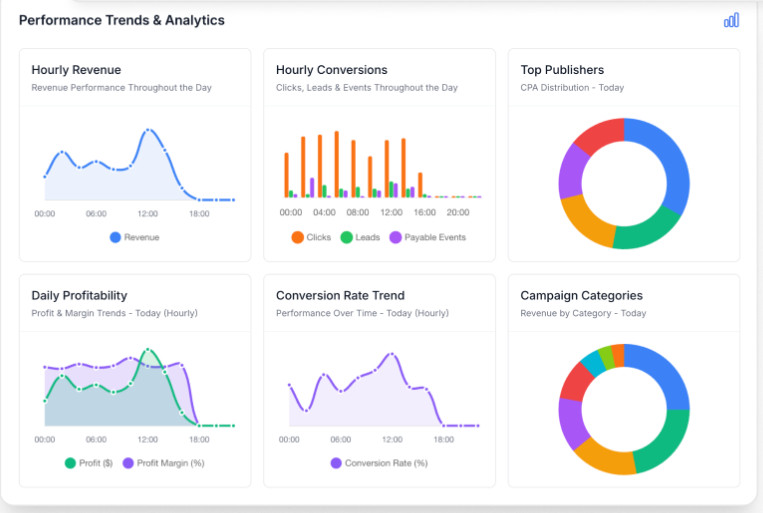
Affiliate management platforms can provide infrastructure without requiring you to operate inside a traditional network. With platforms like Everflow and ClickGo, brands manage their partner relationships directly while the platform manages tracking, attribution, reporting, and payouts. That makes an in-house model more practical, but your brand would still need someone responsible for running the program.
A few signs can tell you when that calculation is starting to shift. Look at how much of your affiliate revenue comes from a relatively small group of established partners, whether your team is already recruiting successful affiliates outside the network, and how much you’re paying in network fees as the program grows.
You should also consider whether you have enough affiliate performance data to know which relationships are worth investing in. The more mature your program becomes, the easier it is to make decisions based on the partners and tactics that are actually producing revenue rather than relying on the network primarily for access.

Everflow makes partner management simple, fast, and transparent. Real-time data, clean reporting, and tools built for affiliate managers who want to scale with confidence.
What Changes When You Bring Your Affiliate Program In-House

As we’ve talked about, having an in-house affiliate program gives you more control, but it also shifts more of the day-to-day work onto your team.
Instead of relying on a network’s existing publisher base, you need a process for identifying potential partners, evaluating whether they’re a good fit, and getting them into the program.
Onboarding and communication also become your responsibility. That can include approving applications, sharing links and creative assets, explaining commission structures, answering partner questions, and keeping your strongest affiliates happy.
Your team also needs to monitor performance and manage the financial side of the program. That means reviewing attribution, watching for unusual activity, handling payouts, and troubleshooting any issues that might come up.
Affiliate management software can take care of much of the technical infrastructure, but it doesn’t replace program management. Someone still needs to own the strategy, partner relationships, and ongoing decisions.
For a brand with an experienced affiliate or partnerships team, that may be completely manageable or even desirable. For a smaller company without dedicated resources, the staffing requirement can outweigh the savings from leaving a network.
Can You Use Both?

You don’t necessarily have to choose one model for every affiliate relationship. Some brands use a network for access to its publisher base while managing other partners directly through their own program.
A hybrid approach can also make sense as a transition strategy. You can move established relationships in-house gradually rather than changing the entire program at once, while continuing to use the network for recruitment.
The tradeoff is additional complexity. Running both models means managing multiple systems (and potentially different commission structures). You’ll want to make sure the value you get from maintaining the network justifies that extra work.
Which Affiliate Model Is the Right Fit for Your Brand?

To decide which way to go, look at the full cost of each model, including network or software fees, affiliate commissions, and the internal resources required to run the program. Then consider how much value you’re getting from the network’s publisher pool and how important direct control over your partner relationships and data is to your business.
For a newer program, paying more for a network might be worthwhile if it helps you recruit affiliates and reduces the burden on your internal team. As your program grows, you may want to revisit that calculation.
If you’re recruiting and managing your strongest partners yourself while network fees continue to climb, bringing more of the program in-house may make financial and operational sense.