


Last Updated on September 22, 2026 by Ewen Finser
Checks are slow, cost money to print and mail, get lost, and are one of the most common targets for payment fraud. None of that is news to the person signing a stack of them every Thursday afternoon.
So what’s stopping paper holdouts from changing usually isn’t all the downsides; it’s the tangle underneath: a vendor list full of bad or old records, a handful of suppliers who insist on paper, a reconciliation routine built around outstanding checks, and the worry that switching means calling two hundred vendors in the same week.
So let’s deal with those obstacles directly.
The Bottom Line Up Front
Treat the move as a gradual conversion, not a single switchover date. Clean up and segment your vendor list first, tighten your controls around bank details before you collect them, convert vendors in waves as their invoices come due, and rebuild your reconciliation around scheduled debits instead of cleared checks. And, when all is said and done, expect to keep a small number of checks permanently.
Start with the Vendor List, Not the Software

The instinct is to pick a payment tool first. In my experience as a CPA, this is just wrong.
The better first step is an honest look at who you pay. To do so, pull twelve months of disbursements, and sort vendors by payment count and dollar volume. In most small and midsize businesses, a short list of vendors accounts for the majority of checks written, and a long tail gets paid once or twice a year.
Then, sort that list into roughly four groups:
- Vendors who already accept electronic payment and say so on their invoices, which typically includes utilities, larger suppliers, insurance carriers, and software providers
- Vendors who would accept ACH if asked but have never been asked
- Vendors who prefer checks out of habit or because of how they match incoming payments
- Vendors who require paper, whether because of internal policy, a lockbox arrangement, or the nature of the payee
This tells you where the work actually is. The first group can often be converted without a single phone call. The second needs a simple request. Only the third and fourth groups need real thought, and they’re usually smaller than people expect.
This is also the right moment to clean up the vendor master file; duplicate vendors and missing W-9s become more dangerous once bank details enter the picture.
Fix Your Controls Before You Collect Bank Details

The biggest risk in this transition is not the payment rail itself; it’s vendor impersonation. A fraudster emails your AP contact, posing as a real supplier with “updated” banking instructions. If that change gets keyed in without verification, the next payment goes to the wrong account, and you never see the money again.
Checks have a built-in control in the form of the signature. When that control disappears, it needs a replacement, and it needs one before the first ACH payment is sent.
So verify every new set of bank details (and every change to existing ones) by calling the vendor at a phone number you already had on file — never the number in the email requesting the change. Separate the person who can add or edit vendor bank information from the person who approves or releases payments. Then, set an approval threshold above which a second person has to sign off, and keep a record of who verified each account and when.
If you’ve been using positive pay on your checking account, keep it. You’ll still write some checks, and positive pay protects those.
Convert in Waves, Not All at Once

The reluctance to ask every vendor to change on the same day is reasonable, and the answer is simply not to do it.
A workable approach runs in stages. Begin by making electronic payment the default for every new vendor. Your onboarding form asks for a W-9 and payment details together, and paper becomes the exception that has to be requested. This alone stops the problem from growing.
Next, convert the vendors who already advertise electronic payment. For many of them, the remittance details are on the invoice, and you can verify and switch without much back-and-forth.
Then work through your highest-volume check recipients one at a time as their next invoices come due. A short, plain note works better than a campaign: you’re moving to electronic payments, here’s what they will receive, here’s how remittance detail will reach them, and here’s who to call with questions. Converting at the next invoice means each vendor has one specific payment to watch for rather than a vague future change.
Handling Vendors Who Prefer or Require Checks
Some vendors worry about matching payments. A check arrives with a stub showing which invoices it covers, while an ACH deposit might show up on their bank statement with a company name and nothing else. My fix here is sending remittance detail separately, usually by email, listing invoice numbers and amounts for each payment. Once a vendor sees that detail arrive reliably, the objection tends to fade.
On the other hand, some vendors are uncomfortable sharing bank information — particularly smaller operators or individuals. Others route payments through a lockbox or a factoring company that has published specific remittance instructions, and you have to follow those instructions regardless of your preference (this comes up often in trucking and construction, where factored invoices are common). Some payees genuinely can’t take electronic payment easily; certain government offices, courts, permit departments, small landlords, and older individual vendors fall into this group.
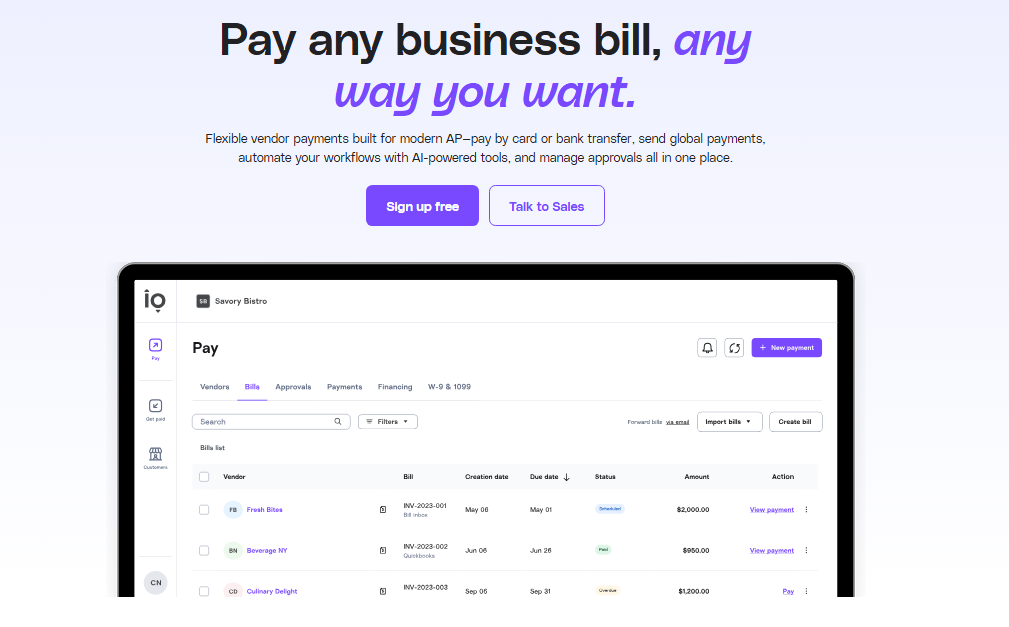
For vendors who stay on paper, the useful question shifts from “how do I convert them” to “how do I stop printing checks in-house.” Several accounts payable platforms (I like Melio for this) let a business fund payments by bank transfer or card and then deliver a mailed check to vendors who want one. The vendor never even has to know.
From the vendor’s perspective, nothing changes. From yours, the check stock, printer, signature, and trip to the post office go away, and the payment runs through the same approval and recording process as your electronic payments.
What Changes in Reconciliation

As the outstanding checks list shrinks dramatically, the float disappears. With checks, cash left your account whenever the vendor got around to depositing it. With electronic payments, cash leaves on a date you choose, and your cash forecast needs to reflect that (many businesses discover they’d been quietly relying on a few days of mail and deposit delay).
Bank feed descriptions also change. Instead of a check number you can match against a register, you may see an ACH entry labeled with a payment provider’s name, or a single debit covering several vendor payments. Decide early how those will be recorded. Some businesses use a clearing account for platform debits and reconcile it separately; others rely on a direct sync with QuickBooks Online, Xero, or NetSuite so each bill payment posts individually. Either way works, but pick one and document it so the month-end close doesn’t depend on one person remembering how it’s done.
Timing is another adjustment. Know whether funds are debited when a payment is scheduled, sent, or delivered, because that determines which period the cash movement lands in.
There are smaller benefits too. Stale-dated checks, unclaimed property follow-up, and reissues for lost checks mostly disappear. And year-end 1099 preparation gets easier when vendor records are complete, which is an added bonus.
What to Keep Checks For
A complete move away from checks isn’t realistic for most businesses. Plan to keep a small check capability for payees who require paper and aren’t reachable through a mailed-check service, for government fees and deposits where a physical check is expected, for occasional one-off payments like refunds or settlements, and as a fallback if an electronic payment is delayed or rejected.
Keep the check stock locked, limit who can access it, maintain positive pay, and track every check written in the same approval log as everything else. After all, a business writing six checks a month instead of sixty has still solved the problem.
In the end, getting off paper checks is less a technology decision than it is a clean-up and controls project with a payment method attached. The businesses that stall are usually the ones trying to change everything at once. The ones that succeed start with their vendor list, protect themselves before collecting bank details, move vendors gradually, and accept that a few checks will stick around.