


- Quick Comparison of The Best Shipping Software for Etsy Sellers in 2026
- What To Look For In Shipping Software For Etsy Sellers
- The Best Shipping Software for Etsy Sellers in 2026
- 1. Shippo: Best Overall for Most Etsy Sellers
- 2. ShipStation: Best for High-Volume Etsy Shops
- 3. Easyship: Best for International Etsy Sellers
- 4. Sendcloud: Best for UK-Based Etsy Sellers
- 5. ShippingEasy: Best for Simple Automation
- 6. EasyPost: Best for Custom Shipping Setups
- What is the Right Shipping Software for Your Etsy Shop?
Last Updated on June 9, 2026 by Ewen Finser
FTC Disclaimer: We do make money from this blog and may receive compensation for this work in the form of commissions, fees and complimentary product access. Review our full FTC disclosure here.
Etsy is one of the easiest places to start an online business. Millions of active shoppers, a simple setup, and built-in tools to buy and print labels mean you can go from idea to first sale faster than almost anywhere else.
But if you’ve been selling online for a while, and your order volume has increased, Etsy’s native shipping tools are probably not enough anymore.
Etsy’s batch label tools are unreliable at scale, weights often have to be entered manually order by order, and you are locked into Etsy’s pre-negotiated rates with no ability to compare pricing across carriers in real time. That’s why sellers needing broader carrier access, more automation, or multi-channel shipping management often turn to third-party platforms.
The right shipping platform will sync all of your orders into one dashboard, let you compare rates across USPS, UPS, FedEx, and DHL in real time, create labels in bulk, handle tracking, and automates the repetitive decisions you shouldn’t be making manually every single day.
At the time of writing this article, Shippo and ShipStation are the only verified Etsy shipping partners, meaning both will easily integrate with the platform. That said, Shippo and ShipStation are two very different shipping platforms, offering different levels of options, support, and pricing.
Also, if you are planning to expand to other online marketplaces or sell on a global scale, there are a few other shipping platforms that you may want to consider.
Quick Comparison of The Best Shipping Software for Etsy Sellers in 2026
- Shippo: Best Overall for Most Etsy Sellers
- ShipStation: Best for High-Volume Etsy Shops
- Easyship: Best for International Etsy Sellers
- ShippingEasy: Best for Simple Automation
- Sendcloud: Best for UK-Based Etsy Sellers
- EasyPost: Best for Custom Shipping Setups
Software | Best For | Etsy Integration | Key Strengths | Key Limitations | Carrier Access |
Most Etsy sellers (overall balance) | Verified Partner | Easy to use, fast setup, 40+ carriers, strong integrations, scalable | Basic reporting, less advanced automation | 40+ carriers (USPS, UPS, FedEx, DHL, etc.) | |
High-volume / scaling shops | Verified Partner | Advanced automation, strong reporting, multi-warehouse support | Steep learning curve, higher cost, complex setup | Broad (many carriers) | |
International sellers | Not verified | 550+ carriers, duties/taxes automation, strong global tools | Expensive for domestic, slower UI, weaker support | 550+ global carriers | |
UK/EU-based sellers | Not verified | Strong EU carrier network, VAT handling, branded experience | Weak U.S. support, higher pricing, fewer integrations | Strong in EU | |
U.S. sellers needing automation | Not verified | Good automation, email tools, easy onboarding | Limited carriers, add-on costs, syncing issues | USPS, UPS, FedEx only | |
Custom / developer setups | Not verified | API flexibility, 100+ carriers, fully customizable | No dashboard, requires dev work, no built-in UX | 100+ carriers |
What To Look For In Shipping Software For Etsy Sellers

The best shipping software for Etsy sellers pulls all your orders into one place (including sales from other online marketplaces) so you can manage fulfillment more efficiently. But order syncing is really just the starting point. Here’s what actually matters:
Multi-Carrier Rate Comparison in Real Time
You want options, and plenty of them. Being able to compare rates across USPS, UPS, FedEx, DHL, and even regional carriers is a huge time and money saver. Some platforms (Shippo, for example) offer access to discounted rates without needing high-volume fulfillment or negotiated carrier contracts, which makes a real difference when you’re still building momentum.
Bulk Label Creation
When orders start stacking up, printing labels one at a time just isn’t going to cut it. Good shipping software lets you create and print a high volume of labels in minutes, freeing you up to focus on the parts of your business you actually love.
Address Validation to Reduce Delivery Errors
Typos happen to everyone, and unfortunately they can be pretty costly. The best shipping software pulls address information directly from your orders so there’s no manual data entry, and then validates it before you ship, so you’re not paying to redeliver a package because someone’s zip code was off by a digit.
International Shipping Support
Shipping internationally can get complicated quickly, but it doesn’t have to feel that way. Good software removes most of that friction by automatically generating customs forms and calculating duties upfront, so you can confidently send your products anywhere in the world without the guesswork.
Branded Tracking and Notifications
Shipping is part of your brand experience, not just a logistics step. Custom tracking pages and post-purchase emails keep you present and visible after checkout, giving your customers the kind of polished, thoughtful experience that turns a one-time buyer into a repeat one.
Automation That Handles the Repetitive Stuff
The ability to automatically select carriers, apply package templates, and trigger tracking updates can save you hours of repetitive work every single week. Set your preferences once, and let the software handle the routine decisions while you focus on everything else.
Multi-Marketplace Support
One of the biggest advantages of dedicated shipping software is being able to pull orders from every platform you sell on (Amazon, eBay, Shopify, WooCommerce, and more) into a single, tidy dashboard. No tab-jumping, no tangled spreadsheets, and no missed shipments. While there are a multitude of third-party shipping partners available for you to use, at this time, Shippo and ShipStation are the only verified 3rd party Etsy shipping partners. US-based sellers can easily sync the app with their store to automatically import and export all shipping data.
While you can use a shipping service other than ShipStation and Shippo for orders via a third-party integration, you may be limited in what can sync and in overall functionality. Additionally, as of October 21, 2024, there are some limitations on the data you can automatically import from non-verified apps, such as access to shipping addresses, submitting tracking numbers, and marking an item as shipped, though you can still manually add this info to the shipping partner app. Note: Those already connected to a 3rd-party shipping app before this date may continue using the partners as they always have.
The Best Shipping Software for Etsy Sellers in 2026
1. Shippo: Best Overall for Most Etsy Sellers
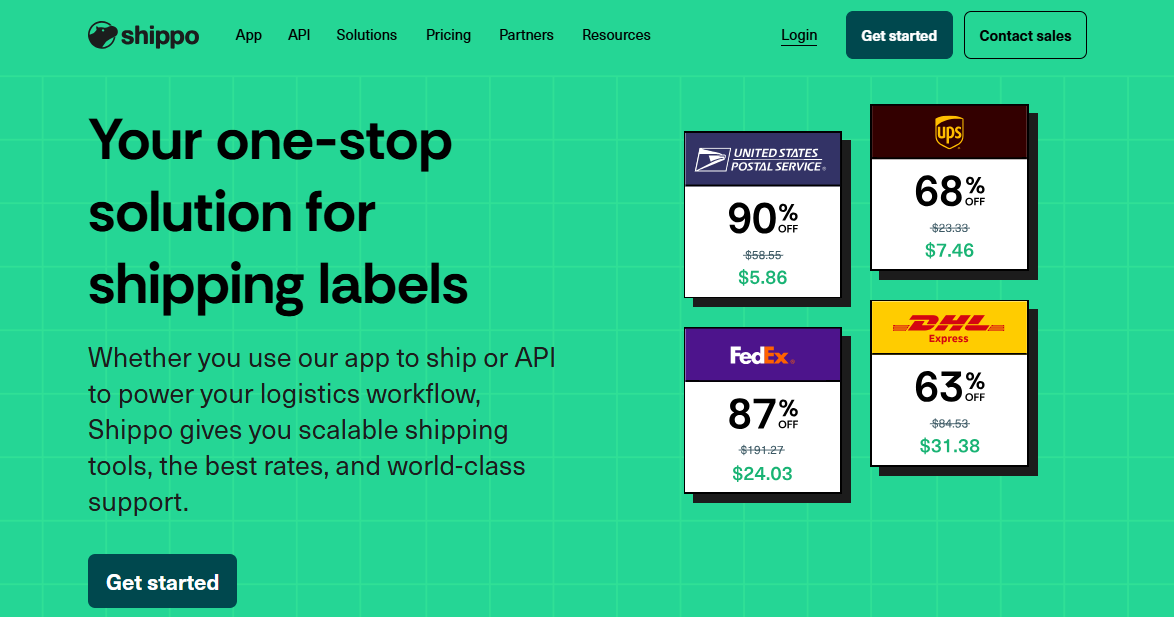
If you’re looking for an easy-to-use, well-balanced, affordable shipping software platform, Shippo is one of the safest bets out there.
Because it’s a verified Etsy partner, integration is easy and reliable. Orders sync into a clean dashboard, where you can compare rates across USPS, UPS, and FedEx without jumping between tabs. It’s also built to integrate with just about every online marketplace available today.
What I really like the most about Shippo, and what sets it apart from the other shipping software platforms on this list, is the ease of use. You don’t have to be a logistics expert or have a dedicated team to operate the system.
Pros:
- Verified Etsy integration
- Very easy to set up and use
- 40+ carriers (USPS, UPS, FedEx, DHL, and more)
- Powerful automation rules that actually save time
- Good balance between power and simplicity
- Scales out to multiple marketplaces
Cons:
- Basic reporting
- Automation isn’t as advanced as enterprise tools
- Not ideal for highly complex fulfillment setups
2. ShipStation: Best for High-Volume Etsy Shops
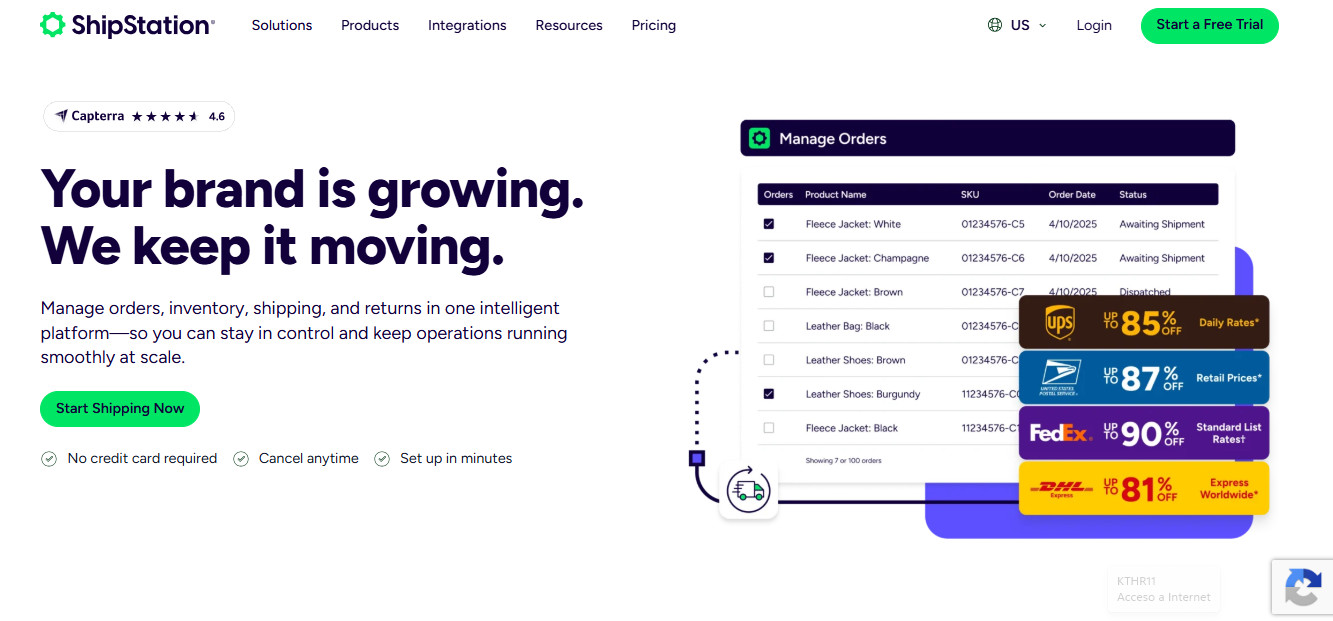
ShipStation is also a verified Etsy partner, but it offers a very different, more complex user experience. If you are reaching the point of multi-warehouse operations, large teams, and high order volume, ShipStation gives you the tools to manage it all.
However, being a much more robust system than the others on this list comes with trade-offs: there is a steep learning curve, integration can take a fair amount of time, and the interface can feel overwhelming if you don’t need advanced workflows.
Pros:
- Verified Etsy integration
- Extremely powerful automation (routing, splitting, workflows)
- Tons of integrations (100+)
- Strong reporting and analytics
- Great for multi-channel selling
Cons:
- Steep learning curve
- Can feel overwhelming if you just want something simple
- Pricing climbs quickly
- Some reliability complaints during peak times
3. Easyship: Best for International Etsy Sellers
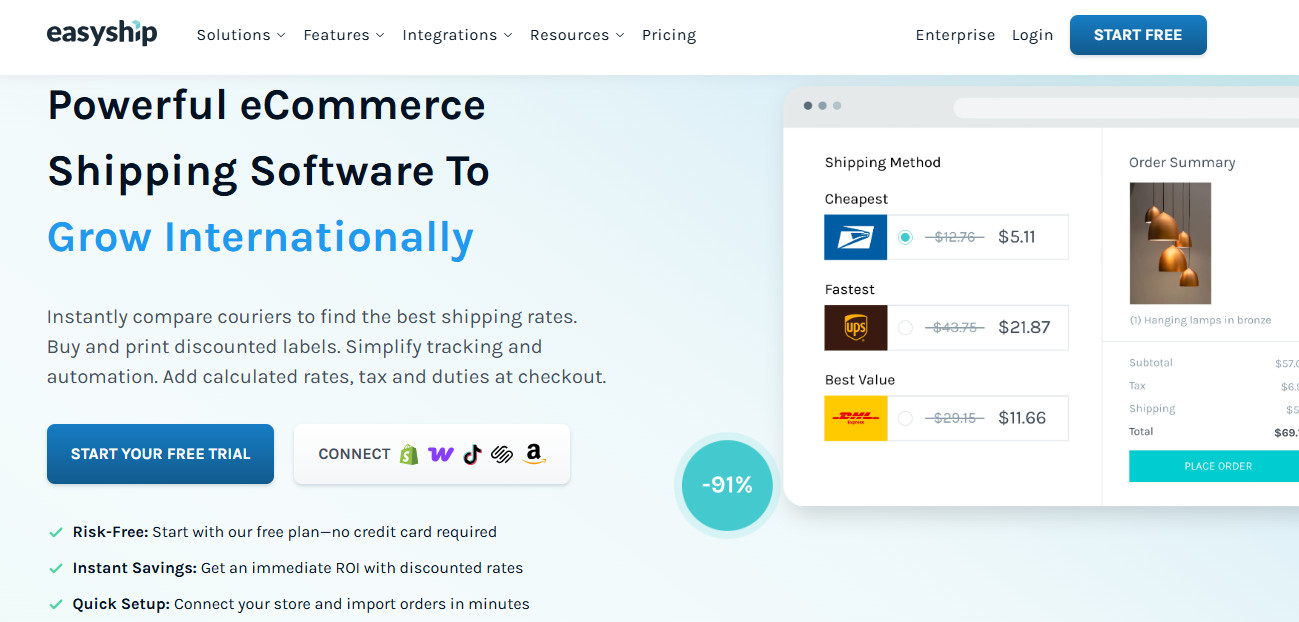
If you ship mostly on a global scale, Easyship belongs on your short list. It’s built for international shipping with the biggest advantage being showing duties and taxes upfront, so your buyers don’t get hit with unexpected charges at delivery, which, as you likely know all too well, can often lead to complaints or returns.
Pros:
- 550+ carriers worldwide
- Automatically calculates duties and taxes
- Handles customs forms for you
- Helps create a smoother international checkout experience
Cons:
- Not verified by Etsy
- Overkill (and more expensive) for domestic-only sellers
- Interface can feel heavy/slower
- Customer support has a weaker reputation
4. Sendcloud: Best for UK-Based Etsy Sellers
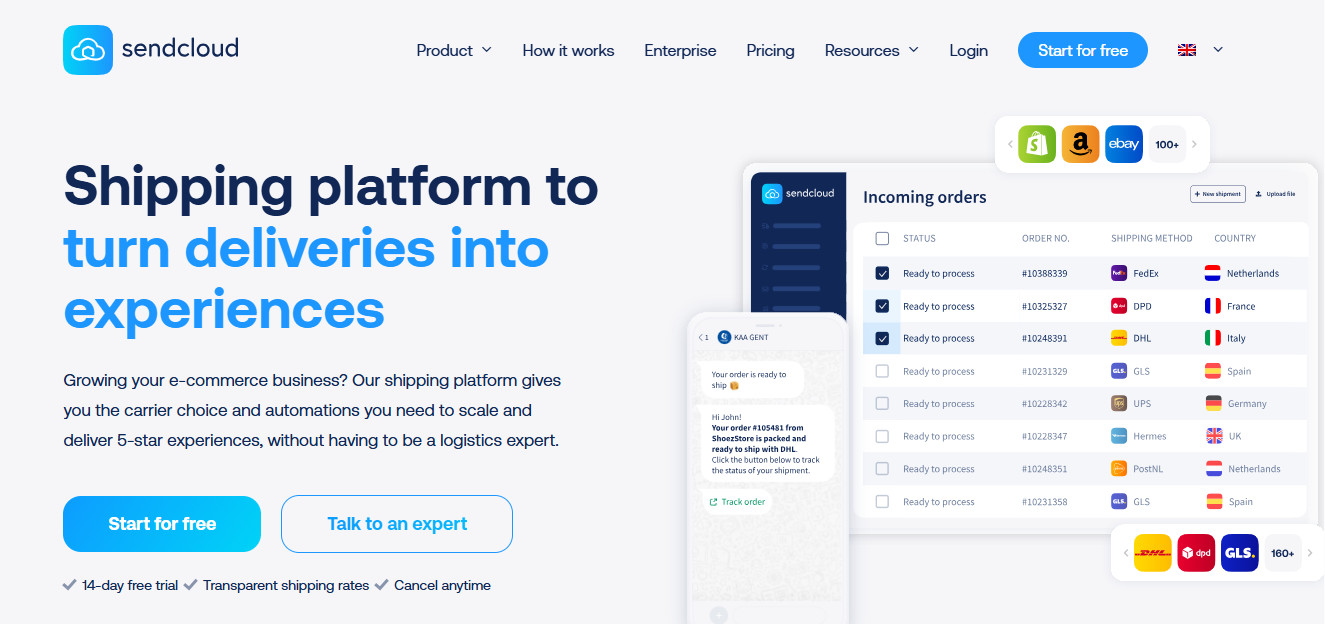
If you’re based in the UK or EU and rarely ship overseas, Sendcloud is built specifically for you!
It handles things like VAT and cross-border EU shipping better than the majority of shipping software on the market today. Its checkout experience is noticeably more polished for the UK and EU markets.
Pros:
- Excellent European carrier coverage
- Built-in checkout features with delivery options
- Strong branded tracking and returns experience
- Good reporting insights
Cons:
- Not great for U.S.-based sellers (not verified by Etsy in U.S.)
- Higher starting price
- Fewer integrations than competitors
5. ShippingEasy: Best for Simple Automation
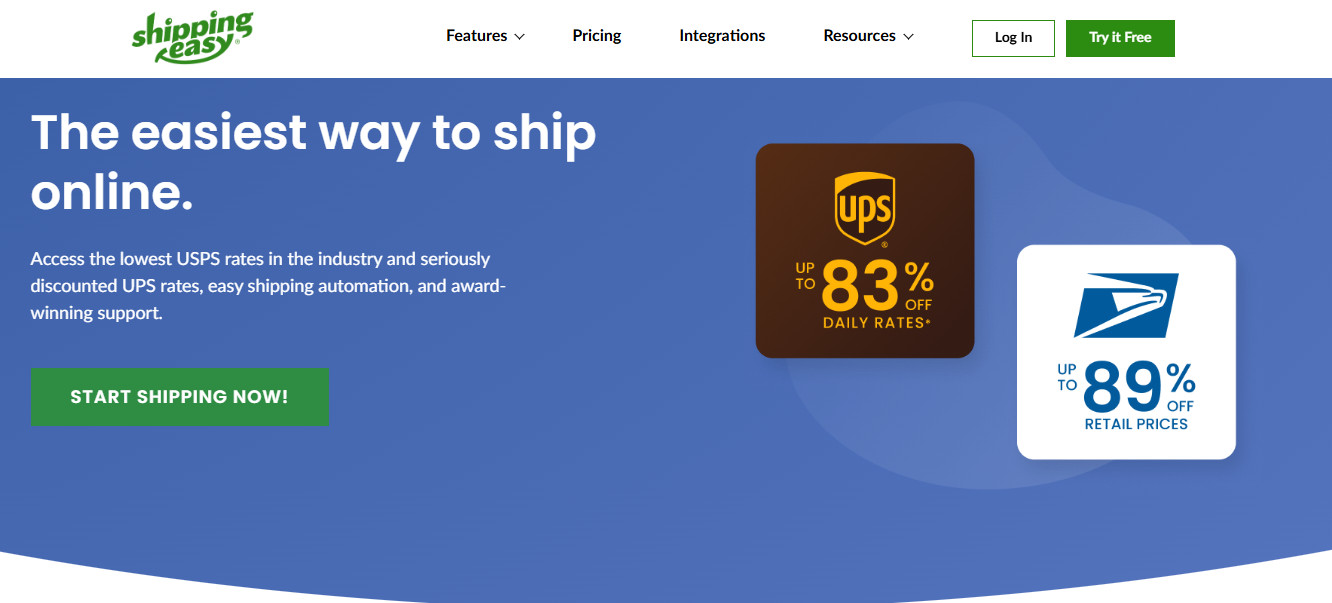
ShippingEasy is a solid middle-ground option, so not great for newer shops or enterprise monsters. The platform offers more automation capabilities and better reporting than basic tools, but without going full enterprise heavy like ShipStation. That said, it’s more limited when it comes to carrier choice since it only supports shipping through USPS, UPS, FedEx. (In comparison, Shippo supports 40+ carriers). I also like the add-on of email marketing tools.
Pros:
- Strong automation for everyday workflows
- Built-in email marketing tools
- Good onboarding and support
- Easy to get started
Cons:
- Not verified by Etsy
- Only supports USPS, UPS, and FedEx
- Add-ons can get expensive
- Some syncing issues reported
6. EasyPost: Best for Custom Shipping Setups
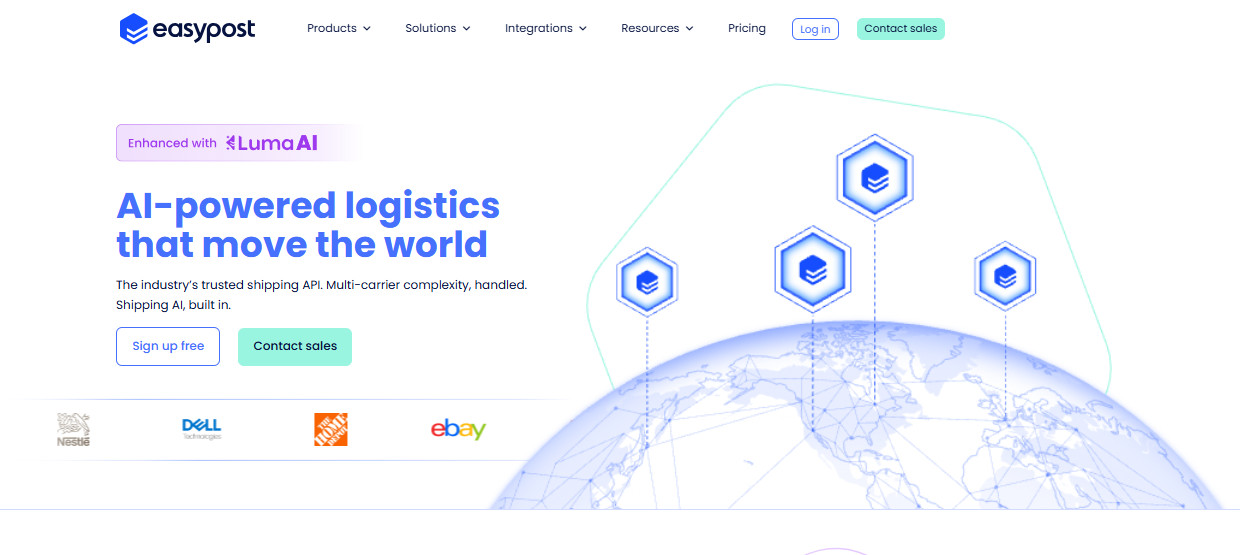
EasyPost is a completely different category of shipping software, but worth mentioning. It’s not really “software” in the usual sense: it’s an API that requires serious configuration on your end. So instead of logging into a pre-built shipping system like the others on this list, you (or a developer) will have to build your own customized shipping system that specifically meets your shipping model.
The benefit of this type of system is that it allows you to embed shipping into your order process, so you can set it and forget it, after a substantial amount of configuration up front.
Pros:
- 100+ carriers
- Extremely flexible and customizable
- Great for building custom workflows
Cons:
- No built-in dashboard
- Requires technical knowledge
- No out-of-the-box branding or UI
What is the Right Shipping Software for Your Etsy Shop?
Most Etsy sellers don’t need an enterprise-grade shipping platform with every bell and whistle imaginable.
What you do need is something that takes you from printing basic labels to actually managing your shipping in a way that saves time, reduces errors, and makes your customers feel taken care of.
If you’re just getting started or want something that’s genuinely easy to set up without sacrificing real savings, we recommend giving Shippo a try. It’s approachable, connects to all your sales channels, and gets you access to discounted rates across multiple carriers without any volume requirements.
Whatever platform you choose, the goal is the same: spend less time on shipping and more time on the work you actually love doing.