


Last Updated on August 25, 2026 by Ewen Finser
As one of the newer tools on the market, Warmforge has quickly gained traction in the outbound marketing space. One of Warmforge’s main advantages is its integrated workflow, which allows users to manage multiple outbound functions within a single platform.
Teams look to employ email deliverability tools for a range of reasons, from team size and client volume to the types of campaigns they run. As your operation evolves, your requirements will change too, making it critical to regularly reassess your setup and determine whether your current tools still meet your needs.
When evaluating the growing number of deliverability platforms on the market, you’ll want to start by identifying the specific problems you’re trying to solve, as not every tool is built for the same purpose.
Some of the most commonly considered alternatives include Lemwarm, Instantly, TrulyInbox, Folderly, InboxAlly, and MailReach. These platforms solve different deliverability problems. Some are optimized for outbound scale, others for reputation monitoring, while a few focus more heavily on inbox placement recovery and engagement-based remediation.
This guide breaks down what operators actually gain by switching from Warmforge, so you can choose the right platform for your current sending environment.
What Warmforge Does Well

Some teams may prefer to stick with Warmforge because it offers a more centralized outbound workflow, reducing the need to manage multiple standalone tools. For users already working within the broader Salesforge ecosystem, the integration between products is relatively straightforward and can help simplify day-to-day campaign management.
As a newer entrant to the market, it’s naturally compared with more established tools that have longer track records in the deliverability space.
Besides the Forge integration, Warmforge’s strengths include:
- Automated warm-up workflows
- Inbox placement
- Deliverability monitoring
- Integration with other tools
- User-friendliness for scaling teams
Lemwarm: Focused on Warm-up
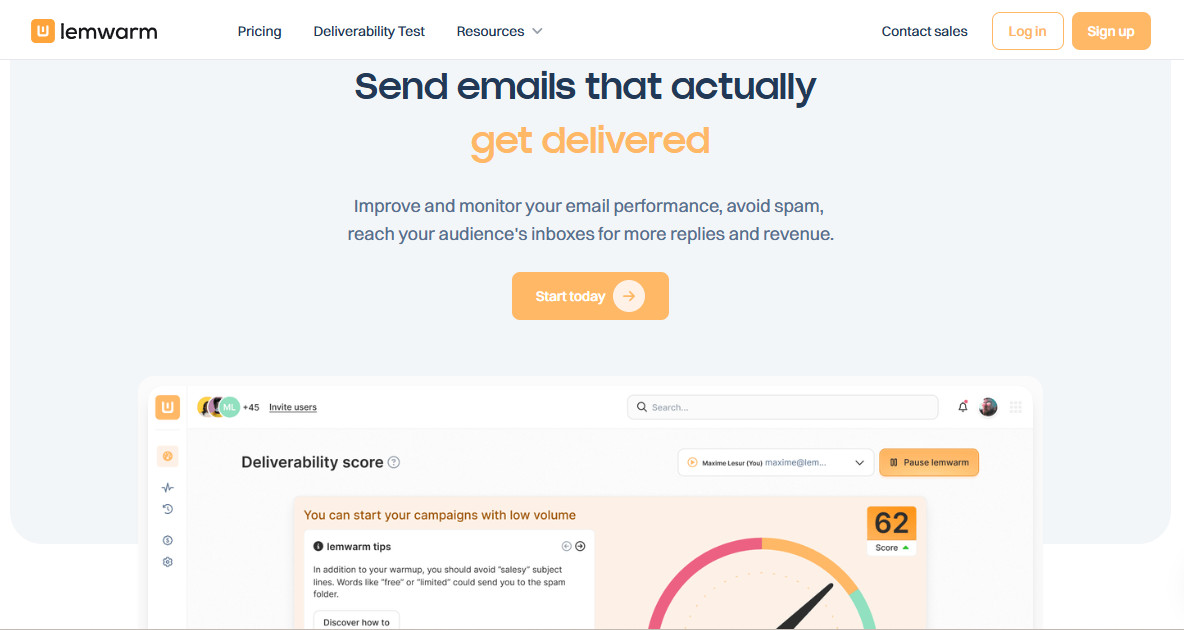
Lemwarm is one of the earlier email warm-up tools to gain traction in the market, which is part of why it remains a familiar option for larger organizations and established outbound teams. It’s generally used by teams looking for ongoing sender reputation maintenance rather than advanced remediation or deep technical diagnostics.
While it’s not designed as an all-in-one outbound platform, Lemwarm is relatively straightforward to use and focuses primarily on email warm-up and sender reputation management. It can be particularly useful for newer domains and inboxes, gradual reputation building, and maintaining consistent sending patterns over time.
That said, some teams may begin to outgrow the platform when dealing with more complex deliverability issues, such as:
- Damaged domain reputation
- Blacklisting
- Persistent spam folder placement
- Infrastructure or DNS misconfigurations
For teams operating at higher sending volumes or managing more complex outbound infrastructure, there may eventually be a need for tools that provide deeper diagnostics, monitoring, or remediation capabilities in addition to basic warm-up functionality.
In that sense, Lemwarm is often better suited as a preventative maintenance tool rather than a comprehensive deliverability recovery platform.
Instantly: If You’re Looking to Scale
Instantly combines mailbox management, sending infrastructure, sequencing, and warm-up into one tool, which is great for operational efficiency. Instantly has become popular among teams managing large outbound volumes.
Like Warmforge, Instantly is great for:
- Large-scale outbound campaigns
- Multi-mailbox management
- Agency workflows
- Lead generation operations
The tool is marketed towards large-scale teams managing sends for up to hundreds of different mailboxes. So, if your team wants to move to a tool that provides everything under one roof as a way to simplify sending to large volumes, then Instantly fits the bill.
Because the tool is optimized for scale, it’s not really the best for deliverability recovery. Earlier, we touched on finding a tool for the problems you’re trying to solve, and if you’re trying to repair damaged sender reputation or recover inbox placement after aggressive sending, then Instantly may not provide the level of depth you need.
TrulyInbox: Affordable for Smaller Volume
Unlike Lemwarm and Instantly, TrulyInbox is a warm-up tool geared towards smaller teams, as it offers a budget-friendly solution. It is a good option if you need to maintain your domain activity and assist a new, growing team to avoid common send mistakes.
TrulyInbox is perfect if you operate in any of the following environments:
- Small agency or business
- Low-volume outbound sends
- Freelancing
It is a solid entry-level tool, especially if you have plans to scale in the future and want to ensure you get the basics right from the get-go!
If you manage large-volume sending, then TrulyInbox may not be the right tool for you. When looking at the capability of other tools in the market, it’s clear that it is not recommended for advanced data diagnosis, blacklist recovery, or reputation remediation.
Folderly: Enterprise Offering

There isn’t much that Folderly can’t do; it provides infrastructure analysis, spam triggers, deliverability data, plus DNS configuration (besides baseline health auditing). It offers more visibility, making it a match for advanced, larger teams.
If you’re operating in a large agency, managing multiple clients with multiple mailboxes, or an enterprise organization, then Folderly would be a sensible option.
It offers improved capabilities in the following areas:
- DNS configuration analysis
- Spam trigger identification
- Infrastructure auditing
- Deliverability monitoring
- Reputation diagnostics
- Inbox placement testing
Advanced features come at a cost, and these capabilities, coupled with complex workflows, make it a premium option that is built for teams that are part of a wider operations team. The consensus here can be concisely framed as: “why use it if you don’t need it?”
InboxAlly: A Fit-for-Purpose Solution
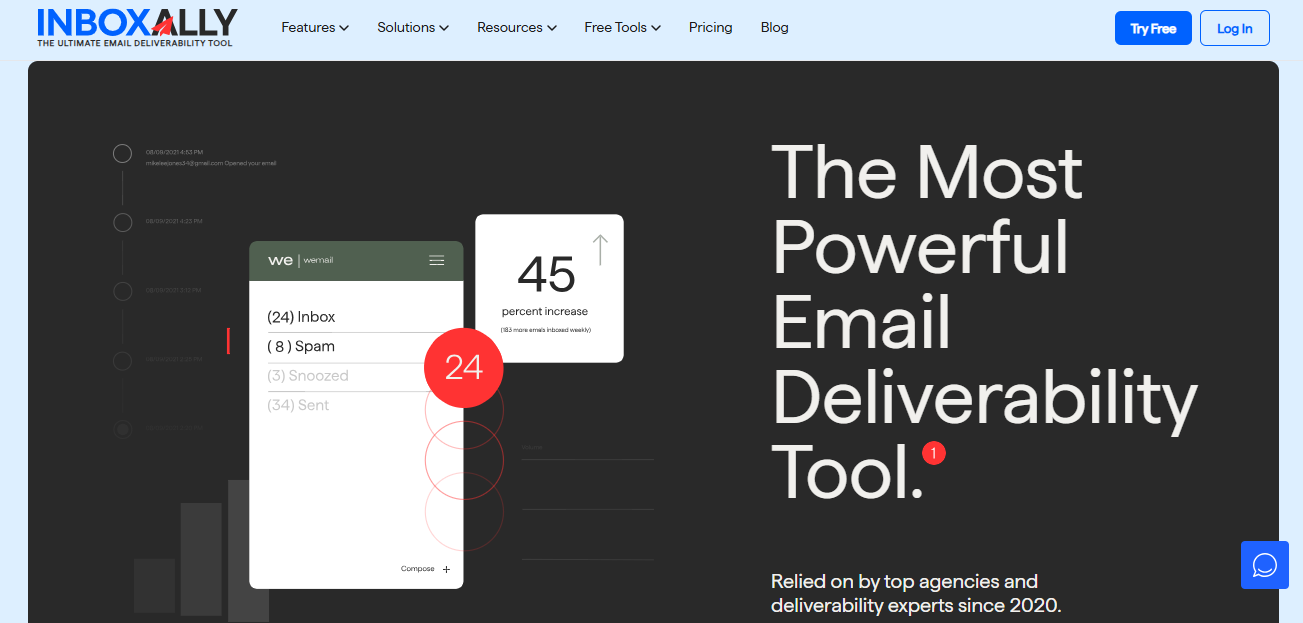
InboxAlly takes a different approach to deliverability compared to most traditional warm-up tools. Rather than relying primarily on passive warm-up activity within a shared network, it focuses more directly on active engagement behavior and sender reputation recovery.
That distinction matters for operators dealing with genuine deliverability decline rather than simply trying to maintain healthy sending habits. While many warm-up platforms are designed to gradually build sender activity over time, InboxAlly is built around improving trust signals and rebuilding positive engagement patterns with mailbox providers.
InboxAlly is particularly well-suited for teams dealing with:
- Declining inbox placement
- Weakened domain reputation
- Damaged sender trust
- Blacklist recovery
- Persistent spam folder placement
For operators already experiencing deliverability problems, this engagement-focused approach can offer a different layer of remediation compared to passive warm-up alone. That’s also what positions InboxAlly differently from platforms like Warmforge, Lemwarm, or TrulyInbox, which are more heavily centered around warm-up workflows and sender maintenance.
As a result, InboxAlly is often viewed as a more premium, fit-for-purpose option for teams prioritizing engagement recovery, inbox placement stabilization, and long-term sender reputation management.
InboxAlly is the comprehensive suite I need to solve challenging deliverability problems across the board. It's like a triage hub for diagnosing and fixing email deliverability rates in one dashboard. I've tried a lot of tools, but this is the one I've stuck with.
MailReach: Identifying the Root Cause

MailReach is best used for useful placement testing and deliverability analysis. It does an excellent job at identifying whether poor performance is due to spam placement or sender reputation problems.
As a mid-level tool between warm-up and diagnostics, MailReach gives teams clarity around what is not working by focusing on the technical infrastructure, reputation damage, spam filtering and declining engagement.
It suits operators that need:
- Deliverability troubleshooting
- Inbox placement testing
- Root-cause diagnosis
It’s a solid deliverability and warm-up platform, but one of MailReach’s biggest shortfalls is scalability. Pricing can become steep as mailbox volume increases, particularly for agencies or larger outbound teams managing multiple inboxes. Plus, it doesn’t have some of the bulk-management and workflow automation features that teams expect at scale, making large account management more challenging.
Unlike other all-in-one platforms such as Instantly or Salesforge, MailReach focuses primarily on deliverability, so teams still need separate tools for sequencing, lead management, and campaign execution.
Final Thoughts
An important consideration when evaluating Warmforge alternatives is the quality of the warm-up network itself. Some tools rely more heavily on shared mailbox ecosystems, while others focus on engagement behavior and sender reputation signaling.
As email providers become more adept at identifying artificial engagement patterns, many operators are beginning to prioritize tools that support stable long-term deliverability rather than short-term inbox gains alone. This is especially notable for businesses that rely heavily on outbound email for revenue generation, lead acquisition, or client retention.
When looking at all these tools holistically, the differentiation is clear, and one of the biggest mistakes you can make is choosing a tool based on one factor only, thinking that they all accomplish the same thing. In reality, the differences between these tools become extremely important once sending volume grows or inbox placement starts declining.
Prioritize the problem you’re trying to solve in reference to the following deliverability attributes:
- Warm-up
- Monitoring
- Infrastructure Analysis
- Diagnostics
- Reputation Repair
- Engagement Recovery
Assess your operational goals, such as scale or campaign type, when assessing these tools, and don’t forget to take your current domain health and sending behavior into account. For teams actively struggling with inbox placement, reputation damage, or sender trust deterioration, InboxAlly stands out as one of the strongest alternatives because it focuses on engagement recovery and deliverability remediation rather than passive warm-up alone.