


Last Updated on August 12, 2026 by Ewen Finser
For B2B SaaS companies, understanding what drives revenue is becoming increasingly difficult.
Multi-touch attribution helps marketers understand how different campaigns, channels, and interactions contribute to conversions and revenue. Instead of giving all credit to the first or final touchpoint, these platforms analyze the complete customer journey, helping teams make better decisions about where to invest budget and resources.
Choosing the right platform can be a serious challenge, as B2B SaaS companies need attribution tools that can handle long sales cycles, connect marketing activity with pipeline outcomes, and provide visibility across teams such as marketing, sales, and partnerships.
Best Multi-Touch Attribution Tools for B2B SaaS At a Glance
Platform | Best For | Biggest Strength | Attribution Focus |
Managing partner programs and complex customer journeys | Full-funnel attribution, partner management, automation, analytics, and payouts in one platform | Full-funnel attribution across the customer journey, including partner influence and downstream revenue | |
Enterprise partnership programs | Established partnership platform with broad partner discovery and management capabilities | Multi-touch attribution with visibility into partnership performance across channels | |
Performance marketing teams and affiliate networks | Strong campaign management and reporting features for high-volume performance | Conversion and performance tracking for affiliate and performance marketing campaigns |
What is Multi-Touch Attribution?
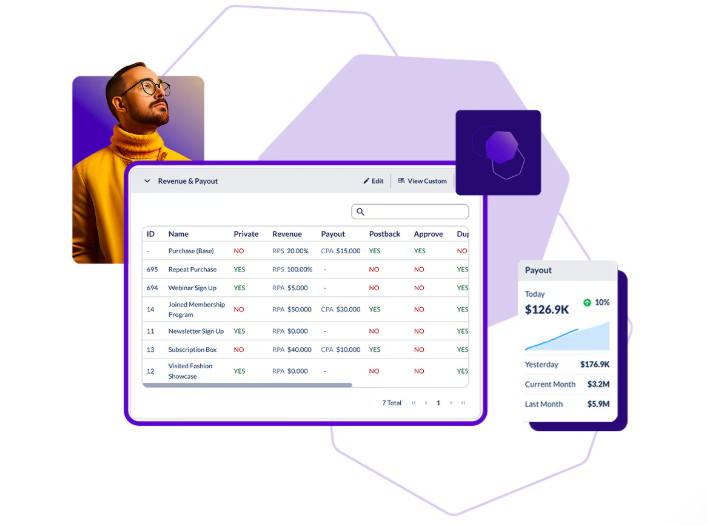
Multi-touch attribution helps marketers understand how different marketing channels contribute to conversions and revenue across the customer journey. Instead of relying solely on the last click, multi-touch attribution looks at the combination of marketing activities that influenced a conversion.
Various attribution models will answer that question differently; some will give equal credit to every interaction, while others emphasize the first touch that introduced the customer. Advanced platforms allow companies to compare multiple attribution models simultaneously, which helps evaluate performance from different perspectives.
It’s important to understand that no single model is universally “correct.” Rather the best approach depends on your sales cycle, customer buying behavior and business goals.
Attribution Priorities That B2B SaaS Teams Should Focus On
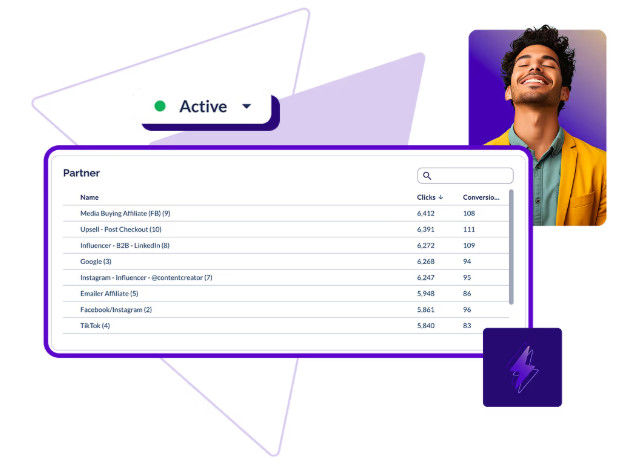
I often see companies comparing software based on feature checklists. Vendors will sell their platforms based on integrations, promises of AI-powered dashboards, and reporting templates.
All these features sound impressive, but they don’t solve the greatest attribution challenges.
1. Handling Long Buying Journeys
SaaS deals can take weeks or even months to close. During that time, prospects may interact with paid search, content marketing, partners, product demos, sales conversations, and procurement before signing a contract. Attribution platforms that only measure the final interaction miss much of this journey.
2. Connecting Marketing, Partnerships, and Sales Data
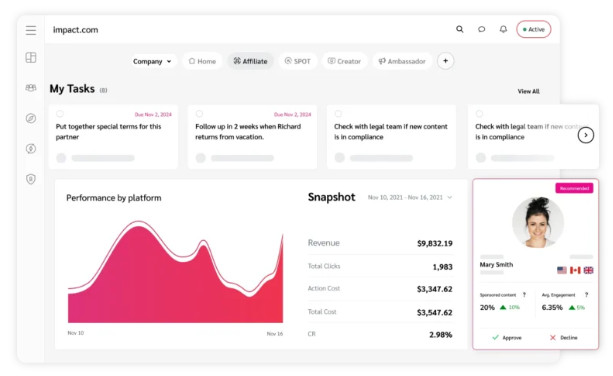
A lot of attribution tools are great at measuring digital advertising, while others specialize in CRM reporting. But few connect the complete customer journey across multiple teams.
This connection becomes increasingly important when partnerships enter the picture.
If every team works with separate reporting systems, nobody will see the entire journey. The strongest attribution platforms bring these touchpoints together, eliminating the need to manually pull reports from different platforms.
3. Comparing Attribution Models
Marketing leaders rarely depend on a single attribution model forever because different teams have different priorities. A demand generation manager may want first-touch reporting to evaluate acquisition channels, while finance may care more about revenue attribution closer to conversion.
One attribution model limits your ability to answer various business questions from multiple teams. Look for platforms that let teams compare attribution models, without rebuilding reports every time business priorities change.
4. Can Teams With No Technical Knowledge Use Multi-Touch Attribution Tools?
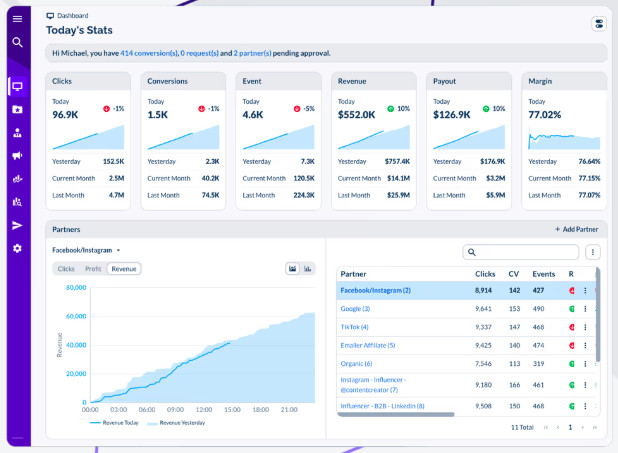
I’ve worked on some powerful marketing platforms that most internal team members did not touch because they required constant technical support. An attribution platform will only create value if marketers can easily access and understand the insights themselves.
In fact, user-friendly and simple reporting ends up being more important than other advanced features hidden behind complicated configurations.
5. Budgeting Decisions
The core of attribution is to improve business decisions.
- Which partner generated the pipeline?
- Which campaign influenced enterprise deals?
- Which content accelerated conversions?
- Which channels need more investment?
- Which campaigns should be paused?
Your platform should be able to produce dashboards that answer these questions or else it may not be delivering much value.
6. A Centralized Platform
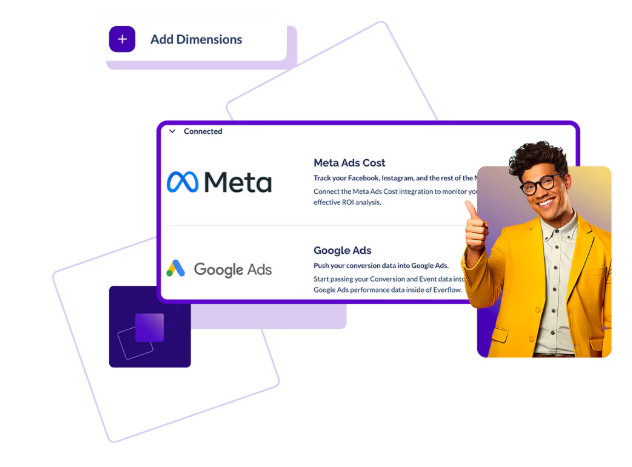
When evaluating attribution software, especially for B2B SaaS companies, I would prioritize platforms that centralize partner management, reporting, attribution, analytics and payment workflows into one connected ecosystem.
Having a single source of truth improves reporting accuracy, but also helps the entire team make decisions using the same data.
7. A Platform That Grows with Your Partner Program
Organizations often purchase software based on today’s needs versus where they’ll be in two or three years. A platform that works well for a small affiliate program may become limiting as your partner ecosystem expands and attribution requirements become more complex.
Choosing software that can scale alongside your future business goals helps avoid costly migrations, and gives reassurance that reporting and operational workflows won’t become manual as a program grows.
Comparing the Best Multi-Touch Attribution Tools for B2B SaaS
Each platform serves different attribution needs depending on your company size, sales complexity and marketing maturity. Some platforms are built to prioritize marketplace access, others focus on affiliate tracking, while others are designed for companies managing complex partner ecosystems across long B2B sales cycles.
Everflow

Everflow is designed for businesses managing partner programs that need a clear view of complex customer journeys across partnerships, performance marketing and multiple acquisition channels. For B2B SaaS companies, Everflow combines full-funnel attribution, partner management, automation, analytics, and payment infrastructure into a single platform.
Rather than just showing which partner generates the final conversion, Everflow is built to help teams understand the journey from the first partner interaction through downstream revenue. For companies with longer sales cycles, this level of visibility is valuable when customers engage with multiple marketing channels before even speaking to sales.
On top of that, everything lives in one place. Instead of stitching together separate tracking, reporting, and payout tools, marketing teams can manage partner onboarding, attribution, reporting, optimization, and payments from a single platform.

Everflow makes partner management simple, fast, and transparent. Real-time data, clean reporting, and tools built for affiliate managers who want to scale with confidence.
Impact

Impact is a notable name for partnership automation because it supports a broad range of partnership types, including affiliates, influencers, strategic partners and customer referrals. Many enterprises value its extensive marketplace and partnership discovery features. It becomes very useful for companies looking to recruit new partners at scale.
However, companies with mature partner programs may need deeper visibility into long-term partner contribution beyond the initial conversion. Deeper visibility into the full customer journey and downstream revenue becomes increasingly important in order to make smarter partner investments.
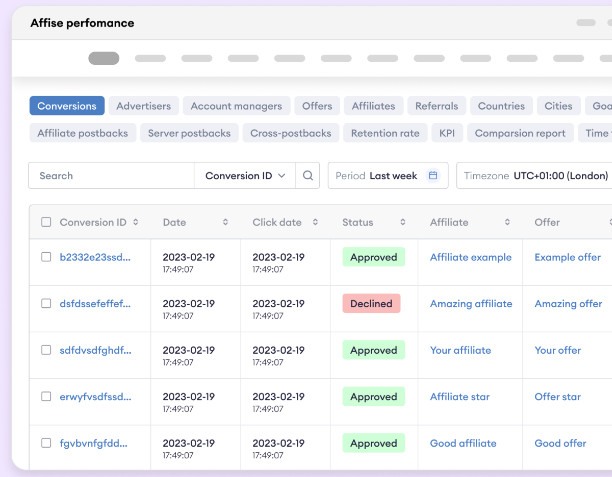
Affise

Affise is a popular choice for performance marketing teams, affiliate networks, and agencies managing high volumes of campaigns. Its reporting and campaign management features work well for organizations focused on scaling performance marketing programs.
For B2B SaaS companies that have longer buying journeys, however, understanding partner performance requires a broader view. Instead of only measuring the final conversion, they need to see how each partner influences the complete customer journey; from initial awareness through revenue generation.
Choosing The Best Multi-Touch Attribution Tool for B2B SaaS
It’s worth looking beyond feature checklists when evaluating attribution platforms. As an organization, you’ll want to prioritize solutions that give a complete view of partner performance, connect attribution with meaningful outcomes, automate time-consuming workflows, and provide valuable data to each department.
As B2B SaaS buying journeys continue to grow more complex, multi-touch attribution will become less about tracking every interaction and more about understanding which activities truly influence revenue. The right platform should help teams move beyond fragmented data, uncover the full customer journey, and make confident decisions about where to invest time and resources.
Ultimately, successful attribution is not merely about collecting more metrics; it’s about creating clarity across marketing, sales, and partnerships so organizations can optimize performance, strengthen relationships, and scale revenue with confidence.