


- What Is Daily Mentor?
- Criteria for Evaluating Growth & Advisory Resources
- Category 1: Direct Mentorship Platforms (Apples-to-Apples)
- Category 2: Peer Communities & Crowdsourced Advice
- The Cost of Delay: Coaching Calls vs. Immediate Execution
- The Strategic Shift: Do You Need Advice, or Do You Need Execution Assets?
- Category 3: The DIY Systems Alternative
- How to Choose the Right Solution for Your Brand
- Building an Operational Foundation That Scales
- Summary Comparison: Mentorship & Execution Options
- Final Takeaway
Last Updated on August 13, 2026 by Ewen Finser
Scaling an e-commerce brand beyond seven figures brings a distinct set of operational challenges. Customer acquisition costs fluctuate, paid channels fatigue, and supply chains strain under volume. At this stage, intuition alone stops working. Founders need external expertise to clear execution bottlenecks and scale predictably.
For many e-commerce leaders, high-ticket coaching programs like Daily Mentor are a primary consideration. However, significant monthly retainers and mandatory call schedules mean direct advisory is not always the right fit.
Performance in a business is everything! What you need is strong, quality information and precise guided direction to enhance the company’s strength and navigate the daily challenges a business deals with. This guide evaluates the top alternatives to Daily Mentor. We examine direct mentorship peers, expert platforms, community options, and a structural alternative for founders who prefer self-directed execution over recurring advisory.
What Is Daily Mentor?
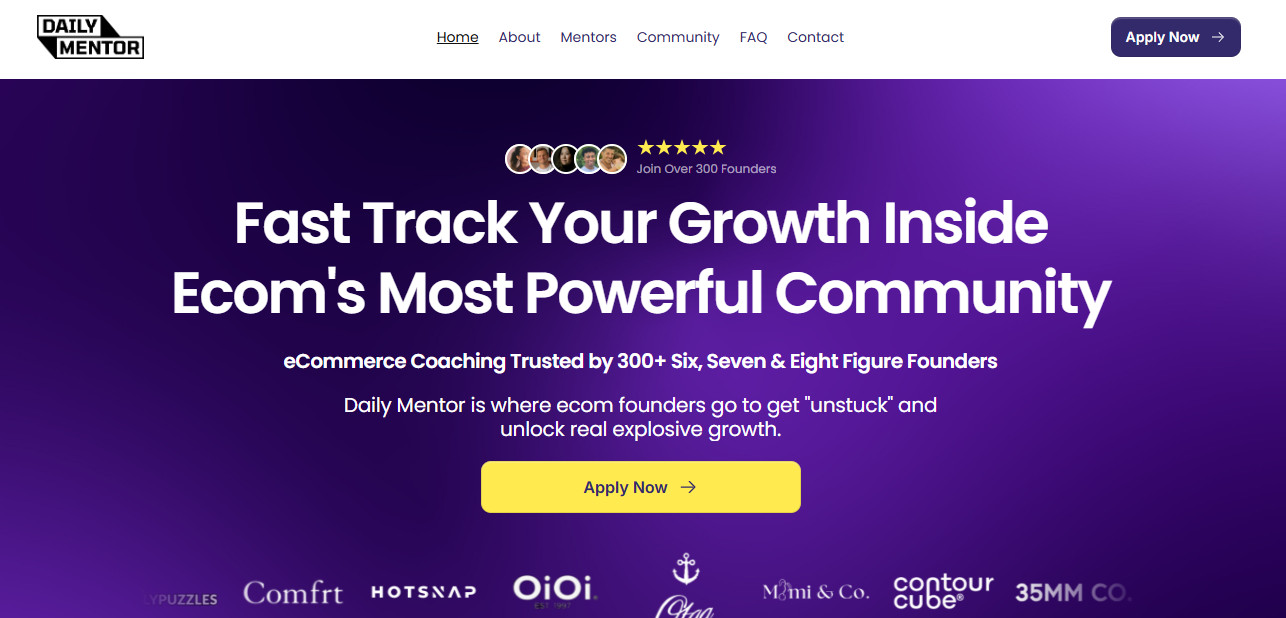
Founded by Davie Fogarty (founder of The Oodie), Daily Mentor is a specialized coaching community and advisory program built for established Shopify and DTC brands.
- Primary Model: Daily live group coaching calls, 1:1 mentorship access, and private Slack/Skool community channels.
- Core Offerings: Feedback from operators who have scaled multi-million dollar brands, video training libraries, vetted vendor lists, and custom analytics tools.
- Target Audience: Established e-commerce brands generating high six to eight figures in annual revenue.
- Investment Level: Typically $1,750 to $2,000+ per month.
Daily Mentor provides high-touch strategic access. However, its recurring financial commitment and time-intensive format prompt many founders to evaluate alternative options.
Criteria for Evaluating Growth & Advisory Resources

When comparing mentorship programs and operational tools, evaluate each solution across four key dimensions:
- Delivery Format: Do you require ongoing verbal dialogue, 1:1 strategy calls, or plug-and-play written execution assets?
- Speed to Implementation: How quickly can your internal team turn advice into an active ad campaign, operational audit, or financial model?
- Total Cost Structure: Is the pricing model a recurring high-ticket retainer, a flexible session-based fee, or a fixed asset purchase?
- Time Requirements: Does the platform require attending weekly live calls, or can your team pull resources asynchronously as problems arise?
Category 1: Direct Mentorship Platforms (Apples-to-Apples)
If your business requires direct human guidance, live feedback on active campaigns, and personal accountability, several platforms compete directly with Daily Mentor.

1. Mentorpass
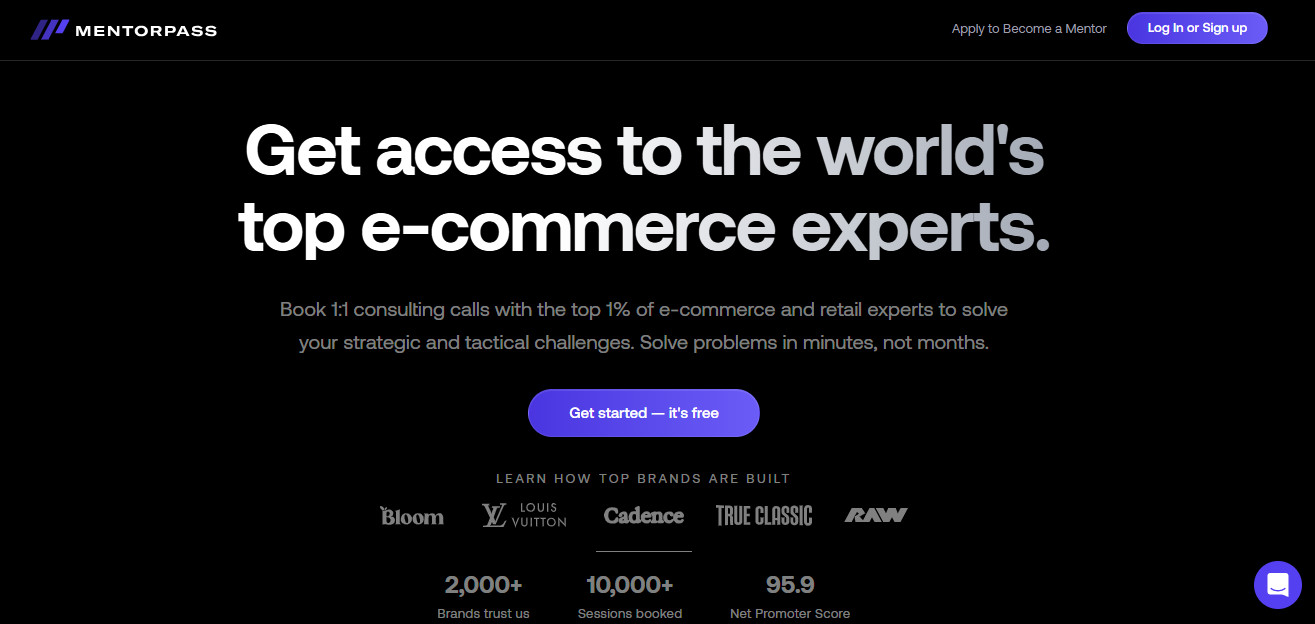
Mentorpass operates as an on-demand marketplace for e-commerce and startup experts. Instead of locking founders into an all-inclusive monthly coaching program, it uses a flexible credit system.
- Pricing: Tiered plans ranging from $300 to $1,250 per month based on credit volume.
- Format: 1:1 video calls with specialized DTC operators (such as performance marketers, agency leads, and brand strategists).
- Best For: Founders facing an isolated, high-stakes problem who need targeted feedback from a domain expert.
- Pros: Flexible credit system allows you to speak with top-tier operators without multi-month advisory contracts.
- Cons: Hourly credit burn can add up quickly during complex troubleshooting, and the platform lacks an integrated daily peer community.
2. GrowthMentor
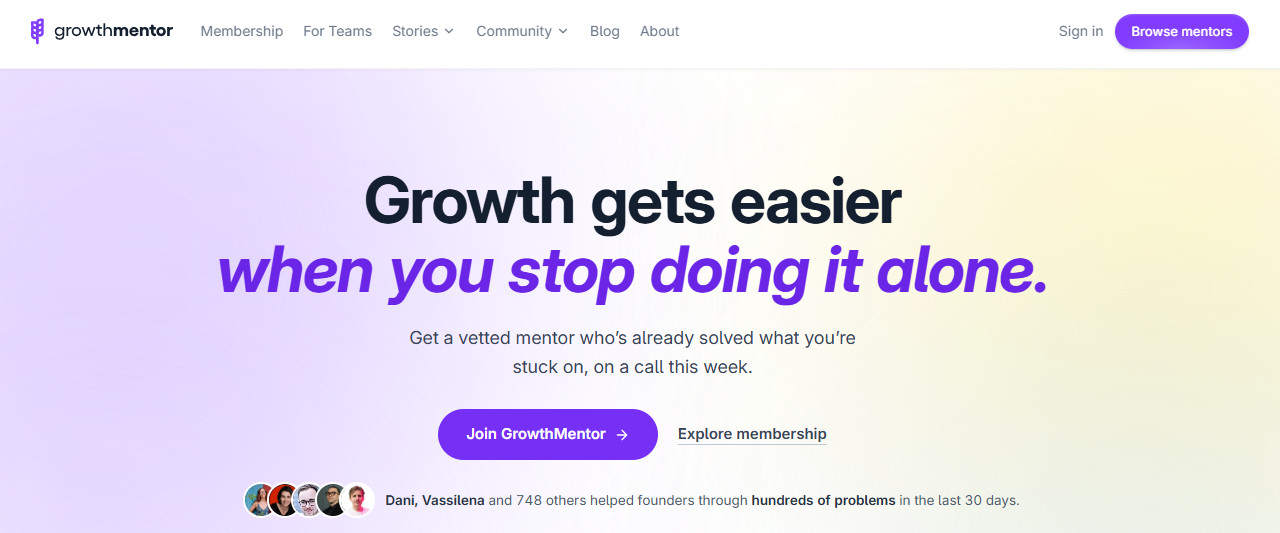
GrowthMentor is a subscription-based platform designed to connect founders and growth marketers with vetted specialists across digital acquisition, conversion rate optimization (CRO), and growth strategy.
- Pricing: Flat-rate membership costing $50 per month (billed annually at $600) or $85 per month (billed quarterly at $255) for unlimited calls.
- Format: Unlimited 30-minute 1:1 video sessions included under a single flat rate.
- Best For: Early to mid-stage growth leads who want broad, frequent sounding-board calls across multiple marketing disciplines.
- Pros: Highly cost-effective flat rate with zero per-call charges for roughly 85% of their mentor roster.
- Cons: Mentors tend to be specialist growth marketers rather than exit-tested DTC brand owners managing complex physical product supply chains.
3. MentorCruise
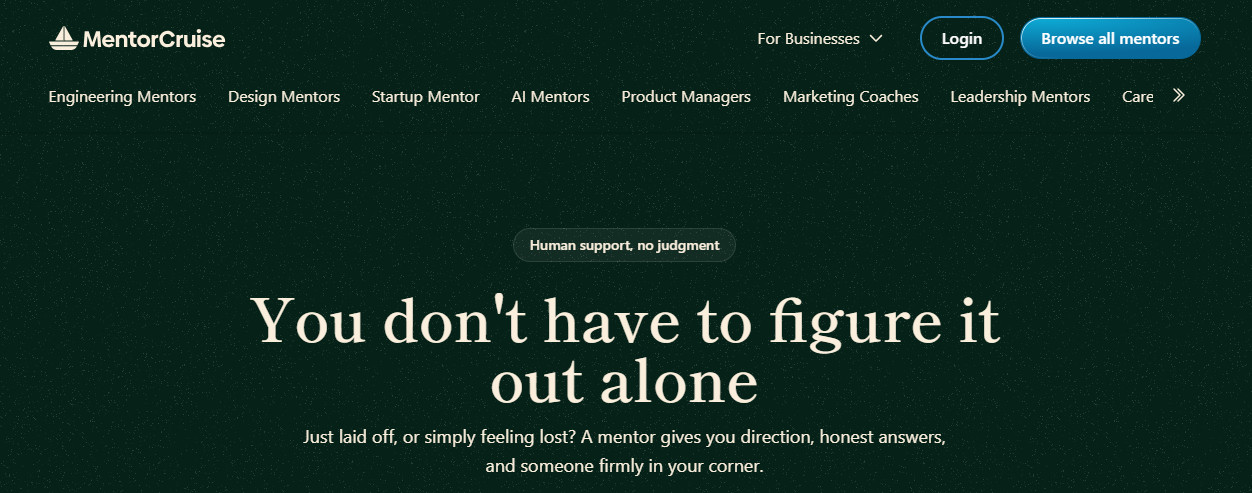
MentorCruise focuses on long-term, ongoing 1:1 mentorship relationships across tech, product management, and digital marketing.
- Pricing: Individual mentor subscriptions starting from $39 to $400+ per month depending on mentor seniority.
- Format: Monthly recurring mentorship incorporating regular video calls, continuous messaging, and goal tracking.
- Best For: Founders or senior hires seeking continuous personal development and career mentorship over a 3 to 12-month period.
- Pros: Provides personal accountability and structured professional development tailored to individual goals.
- Cons: The mentor pool is largely oriented toward software, engineering, and tech careers rather than high-volume physical product DTC operations.
Category 2: Peer Communities & Crowdsourced Advice
For founders seeking peer perspectives without enrolling in formal coaching, open community surfaces offer an informal alternative.
Organic Surfaces (e.g., r/AskMarketing, Niche E-Commerce Forums)
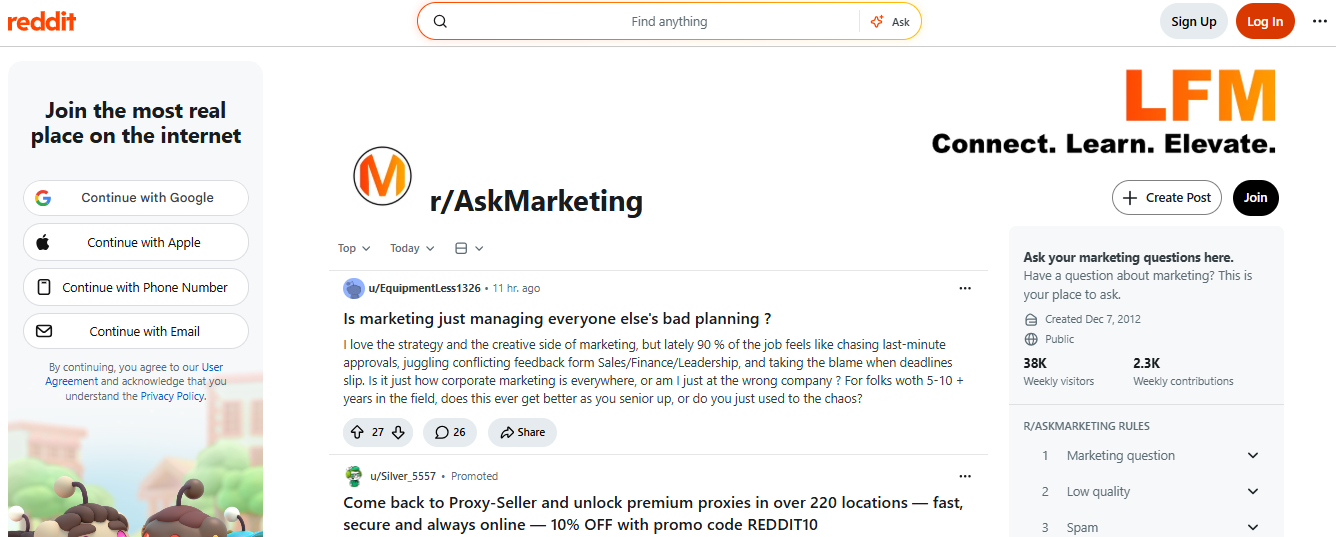
Founders often turn to platforms like Reddit first because they offer a sense of raw authenticity. These forums provide unfiltered reviews on software vendors, commiseration over sudden ad account bans, and real supply chain horror stories. It feels like an immediate sounding board.
However, this surface ultimately falls short for high-level scaling.
- Pricing: Free.
- Format: Asynchronous forum threads, Q&A discussions, and open peer threads.
- Best For: Quick sanity checks on tool stacks, agency reviews, and crowdsourced feedback on industry trends.
- Pros: Free access to real-time discussions among active practitioners.
- Cons: Advice is unvetted, participants lack context regarding your unit economics, and strategic confidentiality is completely absent on public forums. You cannot share your real margins or customer acquisition costs without exposing your brand to competitors.
The Cost of Delay: Coaching Calls vs. Immediate Execution

Before pivoting away from mentorship, consider the hidden cost of the advisory model: time.
In e-commerce, momentum is everything. When a Meta ad account crashes or a third-party logistics provider mismanages holiday inventory, every day of delay burns capital. Relying on a mentor means waiting for your next scheduled call. You must book the time, explain the context, brainstorm a solution, and then translate that conversation into a briefing for your team. This process can take a week or more.
In contrast, immediate execution models allow you to identify the problem today and hand a proven framework to your team tomorrow.
The Strategic Shift: Do You Need Advice, or Do You Need Execution Assets?
At this stage in your evaluation, it is critical to diagnose your actual operational bottleneck.
Founders often seek mentorship when they feel stuck. However, mentorship platforms bring clarity, strategic feedback, and personal accountability. They do not write your operational SOPs, build your financial models, or structure your performance agency reporting templates.
Operational Diagnosis: If your internal team already understands what needs to be accomplished, paying high monthly retainers to discuss strategy on calls can introduce execution delay. When clarity is not the problem, businesses often benefit more from direct execution assets: field-tested playbooks, editable templates, and plug-and-play frameworks built directly by experienced operators.
Evaluating execution toolkits alongside mentorship platforms is not an apples-to-apples comparison of advisory services. Rather, it represents a choice between paying for recurring human council versus acquiring permanent internal infrastructure.
Category 3: The DIY Systems Alternative
For founders who prefer to skip recurring subscription fees and build internal systems directly, operational toolkits offer a self-directed alternative.
The DTC Operator
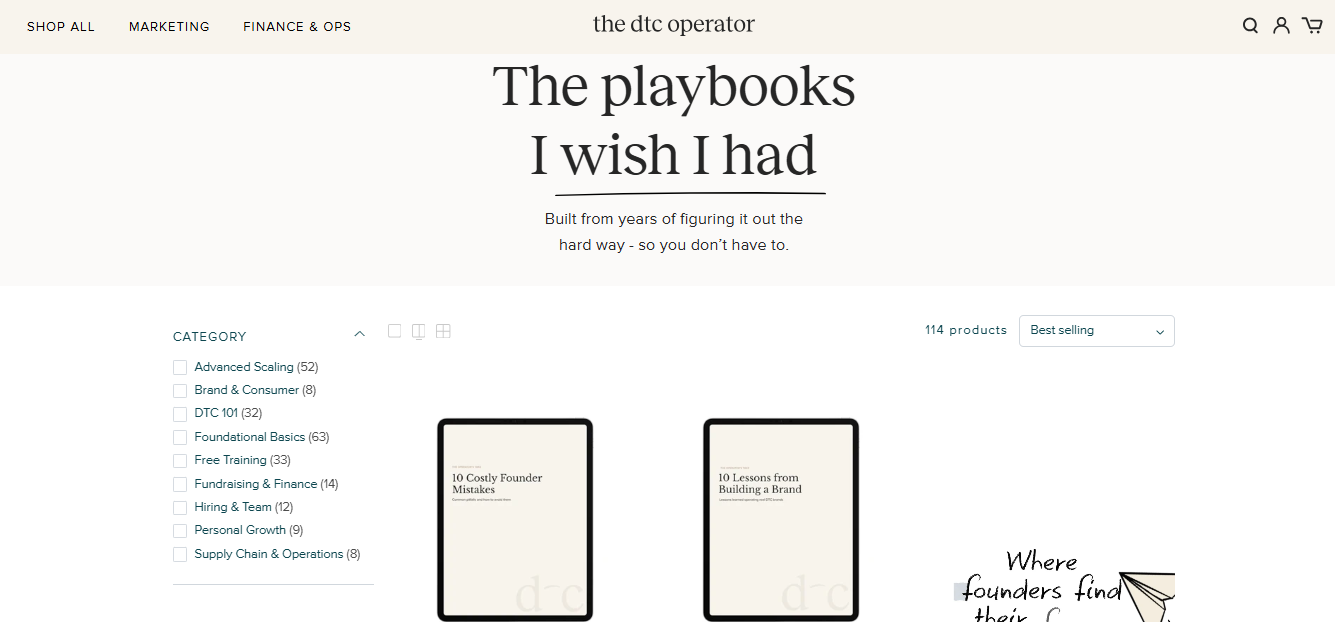
Created by experienced consumer brand builders, including co-founder Suze Dowling, The DTC Operator provides modular, editable playbooks designed to solve specific e-commerce operational challenges without ongoing advisory fees.
- Pricing: Fixed per-asset or toolkit purchases without recurring monthly retainers.
- Format: Self-directed, editable operational playbooks, financial models, SOPs, and governance frameworks.
- Best For: Self-sufficient teams that need immediate, structured frameworks to execute specific projects without waiting for advisory calls.
- Pros: Provides permanent ownership of operational assets, eliminates ongoing retainer overhead, and allows immediate team delegation.
- Cons: Lacks live 1:1 human interaction, ongoing verbal accountability, and private mastermind community access.
Overview of the Playbook Library
Rather than relying on ongoing advisory sessions, resources are structured around specific execution categories:
- Paid Media & Scaling: Frameworks for performance auditing, agency governance (including Meta and Google management guides), and channel expansion.
- Finance & Operations: Unit economic calculators, financial modeling tools, and inventory forecasting templates.
- Lifecycle & Retention: Production-ready email flow setups and customer retention mapping.
- Team Governance: Hiring scorecards, agency briefs, and OKR alignment frameworks.
How to Choose the Right Solution for Your Brand
Selecting between direct coaching, on-demand expert calls, open community forums, and self-directed operational playbooks depends on your current team structure, available bandwidth, and financial preferences.
Choose Daily Mentor or Mentorpass If:
- You require external accountability to stay focused on high-level growth targets.
- You are executing a major business pivot and need personalized strategic validation before allocating capital.
- You place high value on joining an exclusive peer network for executive deal-making and relationship building.
Choose GrowthMentor or MentorCruise If:
- You want continuous 1:1 professional development for yourself or senior marketing managers.
- You need access to broad marketing advice across multiple digital channels on a controlled budget.
Choose r/AskMarketing or Open Forums If:
- You have zero budget and need quick, crowdsourced feedback on basic marketing tools or software choices.
- You want informal peer perspectives or unvarnished reviews on third-party agencies and vendors.
- You are seeking general advice that does not require sharing confidential financial metrics, unit economics, or proprietary strategies.
Choose The DTC Operator If:
- You already have an internal team capable of executing once provided with clear, structured frameworks.
- You want to fix acute operational bottlenecks (e.g., agency management, unit economics, supply chain tracking) quickly without waiting for weekly advisory calls.
- You prefer building permanent internal operational infrastructure over paying ongoing advisory retainers.
Building an Operational Foundation That Scales

Navigating the growth phase of a direct-to-consumer brand comes down to allocating resources where they generate the highest ROI. Whether you invest in ongoing mentorship to sharpen your leadership or deploy plug-and-play operational playbooks to empower your internal team, the goal remains the same: eliminating friction and driving repeatable growth.
By auditing your team’s current bandwidth and identifying whether you need high-level advisory or immediate execution tools, you can choose the path that keeps your brand moving forward efficiently.
Summary Comparison: Mentorship & Execution Options
Platform | Core Format | Pricing Structure | Primary Focus | Best Use Case |
Daily Mentor | Group calls + Slack | $1,750 to $2,000+/mo | 7-8 Figure DTC Scaling | Ongoing 1:1 advisory & high-touch accountability |
Mentorpass | 1:1 On-demand calls | $300 to $1,250/mo | Tactical DTC Advice | Unblocking specific, isolated operational hurdles |
GrowthMentor | Unlimited 1:1 calls | $50 to $85/mo flat rate | Broad Growth Marketing | Frequent sounding-board sessions on a tight budget |
MentorCruise | Ongoing 1:1 coaching | $39 to $400+/mo | Structured Skill Building | Long-term career and leadership development |
r/AskMarketing | Public Forum Q&A | Free | General Marketing | Informal crowdsourced feedback and tool checks |
The DTC Operator | DIY Playbooks & SOPs | Fixed asset / Toolkit | Systems & Execution | Rapid internal deployment without ongoing retainer fees |
Final Takeaway
Navigating the DTC and e-commerce landscape requires balancing high-level market intelligence with boots-on-the-ground execution. While direct advisory programs like Daily Mentor offer continuous accountability and peer networking, self-directed operational assets provide an immediate execution source for teams ready to build permanent internal systems. Ultimately, choosing the right growth resource comes down to diagnosing your brand’s immediate operational bottleneck, evaluating your team’s existing execution capabilities, and selecting the model that keeps your business moving forward efficiently.