


- Mailshake Alternatives At A Glance
- 1. InboxAlly: A Different Approach to Email Deliverability
- 2. Smartlead: The Sender Agencies Run their Books On
- 3. Instantly: The Flat-Fee Volume Option
- 4. Saleshandy: The Reliable Pick
- 5. Woodpecker: The Deliverability-Conscious Sender
- What It Does Well:
- How I'd pick today
Last Updated on August 25, 2026 by Ewen Finser
I’ve been doing cold outbound long enough to have used most of the tools in this article at one point or another, and Mailshake has consistently been one of the more recognizable names in the space. It’s straightforward to set up, easy to learn, and capable of handling the basics of email outreach for many teams.
That said, the right tool often depends on where your business is today. A platform that works well for a solo founder may not be the best fit for a growing sales team. As outreach programs become more sophisticated, priorities tend to shift. Deliverability becomes more important, reporting needs become more complex, and team collaboration, automation, and scaling outreach across multiple users can start to matter a lot more than they did in the beginning.
Whatever the reason, shopping for a cold email sender in 2026 is more complicated than it needs to be, with most platforms marketing themselves on the same buzzwords and reviewers on G2 contradicting each other on basics like deliverability and ease of use.
So, to make the decision easier, I put together a list of five strong Mailshake alternatives, along with where each platform shines, where it falls short, and the types of teams that are likely to get the most value from it.
Mailshake Alternatives At A Glance
- InboxAlly: Best for improving email deliverability and sender reputation when inbox placement is becoming a problem.
- Smartlead: Best for agencies and high-volume teams managing multiple clients, inboxes, and outbound campaigns.
- Instantly: Best for founders and small teams that want to scale cold email with unlimited mailboxes at a predictable monthly cost.
- Saleshandy: Best for growing teams that want a simple, reliable outreach platform with minimal setup and a straightforward pricing model.
- Woodpecker: Best for teams that prioritize deliverability, inbox placement, and consistent cold email performance over advanced automation features.
1. InboxAlly: A Different Approach to Email Deliverability
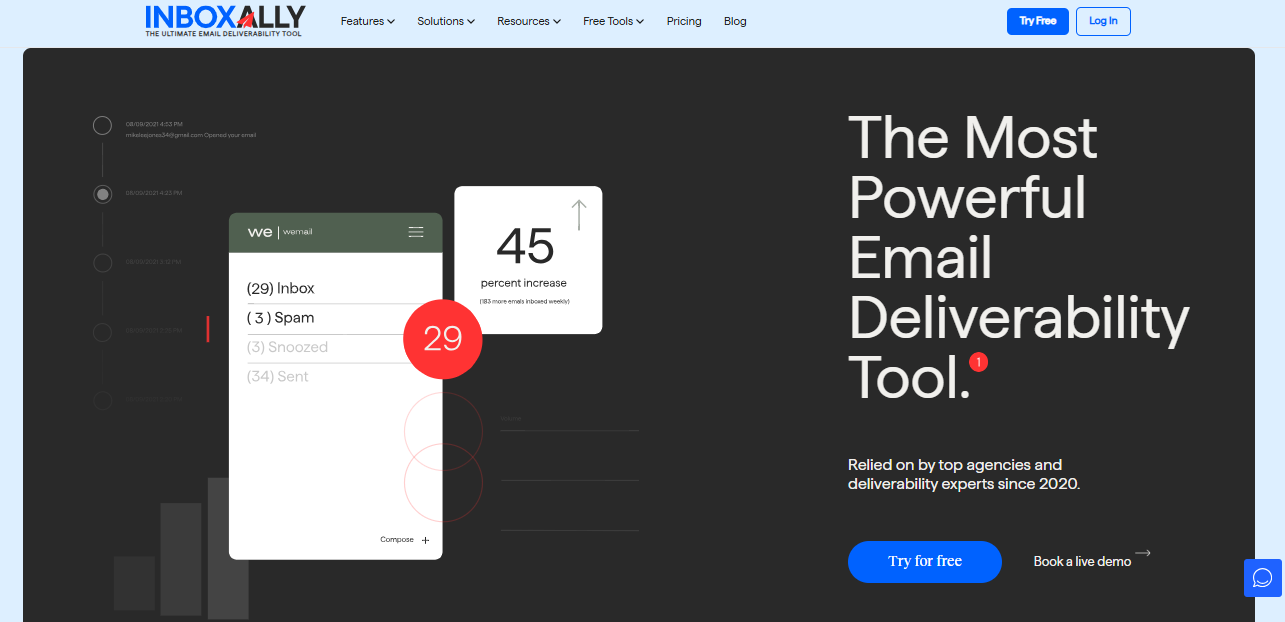
Most of the tools on this list are cold email platforms. They help you create campaigns, send emails, manage sequences, and track results. But none of them, Mailshake included, repairs damaged sender reputation.
I’ve been there enough times to say with confidence that switching sequencers does nothing for you if Gmail thinks your domain looks suspicious. Your emails will end up, at best, in Promotions inside Smartlead, the same way they will inside Mailshake.
So, instead of acting as a sending platform, InboxAlly focuses on email deliverability. That distinction matters because low reply rates are not always caused by the outreach tool itself. In some cases, the bigger issue is whether emails are consistently reaching the inbox.
What makes InboxAlly different from many email warmup tools is its focus on engagement signals. Traditional warmup tools typically generate activity between networks of inboxes to help establish sending patterns. InboxAlly takes a different approach by using engagement actions such as opens, replies, clicks, moving emails out of spam, and marking messages as important.
The goal is to help mailbox providers like Gmail and Yahoo see positive engagement with emails from your domain. Since inbox placement is heavily influenced by recipient behavior, many teams use deliverability tools alongside their sending platform rather than replacing one platform with another.
What It Does Well:
- Focuses specifically on email deliverability rather than campaign management
- Uses engagement-based workflows designed to support sender reputation
- Includes inbox placement testing across different mailbox locations
- Provides authentication checks for SPF, DKIM, DMARC, and BIMI
- Offers reporting focused on deliverability and sender health
Who it’s best for: Agencies, ESPs, mid-sized brands ramping up cold email volume, or anyone who has already lost money to a deliverability problem and isn’t keen on doing it again.
Pricing: Starts at $149/month for one sender profile and 100 seed emails per day. Higher-tier plans are available for larger sending volumes and additional sender profiles.
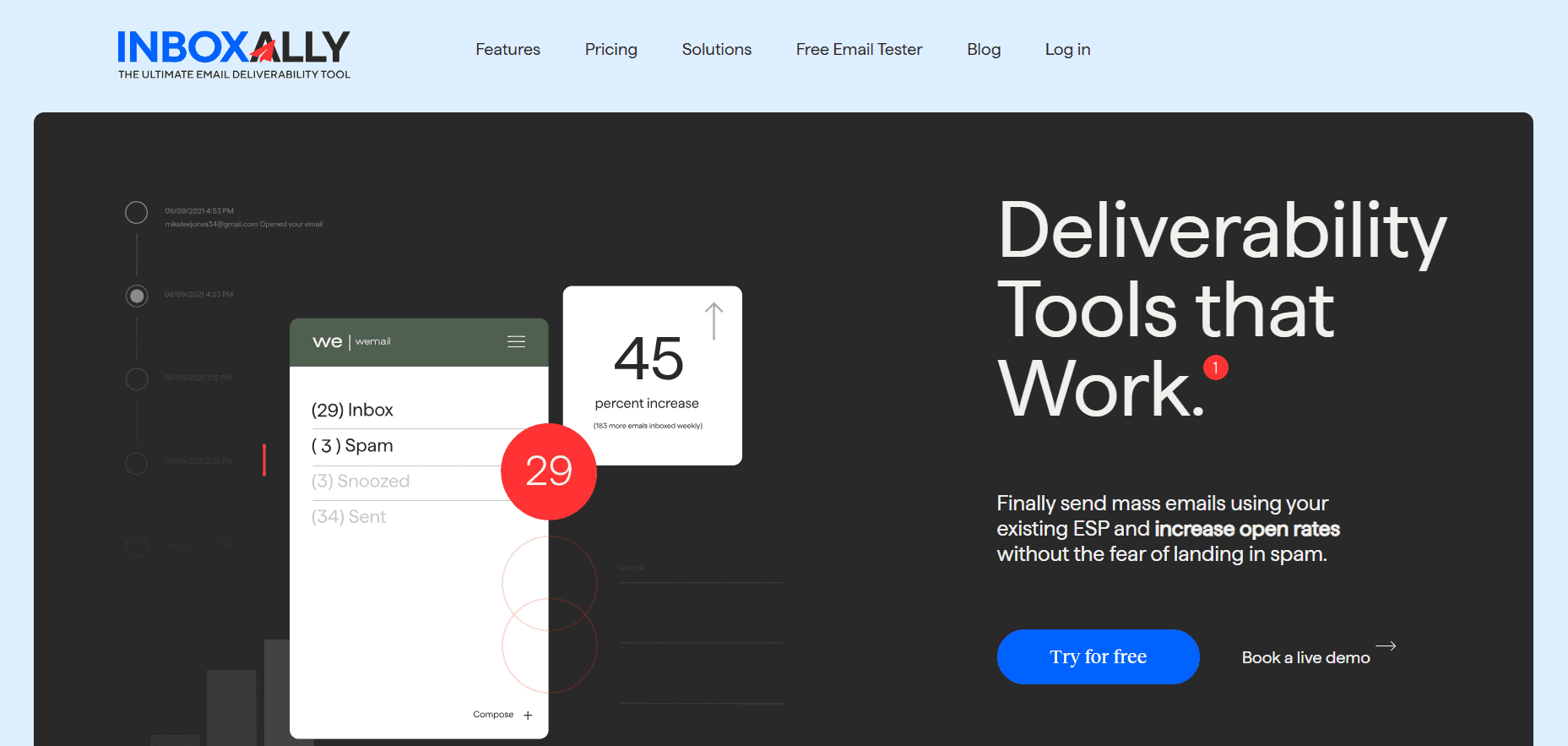
InboxAlly is the comprehensive suite I need to solve challenging deliverability problems across the board. It's like a triage hub for diagnosing and fixing email deliverability rates in one dashboard. I've tried a lot of tools, but this is the one I've stuck with.
2. Smartlead: The Sender Agencies Run their Books On

When I’m running outbound for clients, Smartlead is what I default to, and I think it’s because the platform was clearly designed by someone who had done agency work first.
Every plan ships with unlimited inboxes and unlimited warmup, which sounds like a minor feature, but then you remember that Mailshake’s starter tier limits you to one address per user. Smartlead adds sub-accounts for client isolation, a master inbox that consolidates replies from every connected mailbox, and a white-label portal you can rebrand and hand to clients without them ever seeing the Smartlead logo.
The pricing model is, at least to me, a huge refreshment from Mailshake. Mailshake bills per user, which means a five-person agency running thirty inboxes for a dozen clients pays for headcount it doesn’t actually need, while Smartlead bills based on contacts and feature tier and doesn’t care how many people log in.
The cost of all that depth is a decent learning curve. Smartlead’s campaign builder has subsequences, conditional logic, and dynamic variables that I genuinely use in client work, but I’ve seen new users on G2 describing the setup as harder than Instantly’s interface, and I think those reviews are fair.
It’s also email-only, with no LinkedIn module, no dialer, no pretense of competing with Salesloft, if that’s what you’ll ever need.
What It Does Well:
- Unlimited mailboxes and unlimited warmup on every tier
- White-label client portals on Pro and above
- Master inbox for cross-mailbox reply management
- API for agencies building automation around the platform
Who it’s best for: Cold email agencies, lead-gen shops, and high-volume in-house teams with ten or more sending inboxes.
Pricing: Basic at $32/month, Pro at $78/month, Unlimited Smart at $144/month, Unlimited Prime at $315/month. Extra client workspaces run $29/month each on Pro and up.
3. Instantly: The Flat-Fee Volume Option
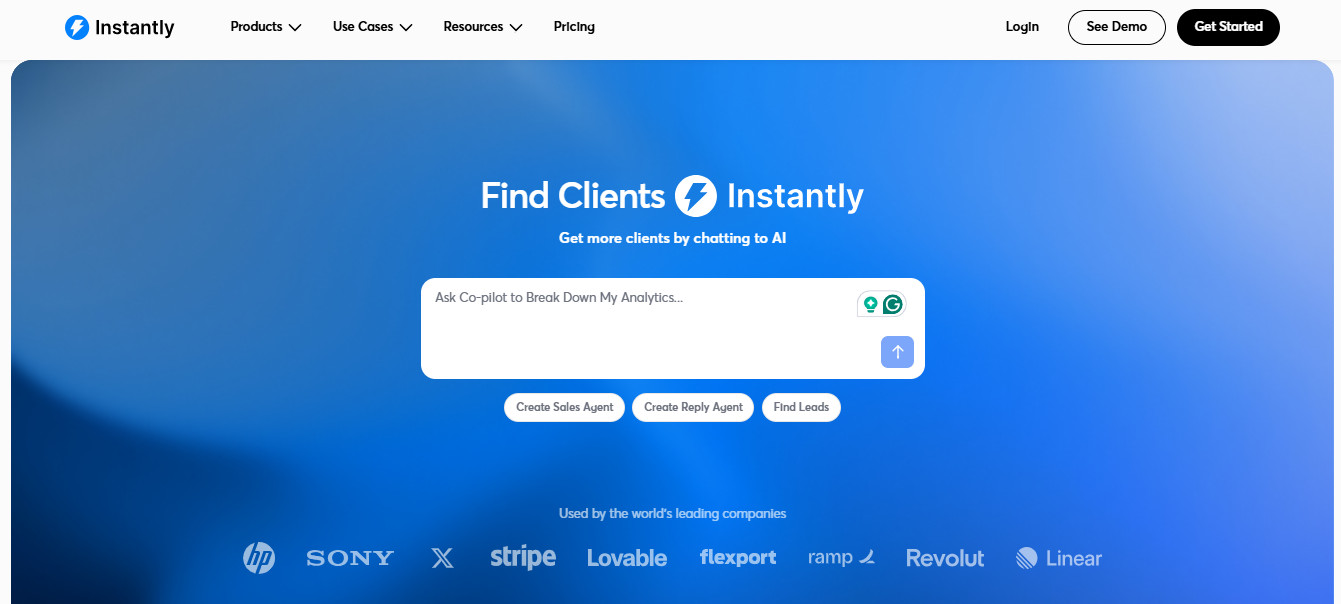
If you’re a founder and the main thing you need is the ability to send more emails without scaling cost, you’ll probably love Instantly‘s pricing.
Every plan comes with unlimited mailboxes under one workspace at a fixed monthly fee, unlimited warmup is included on every tier, and there are no per-user surcharges hiding in the terms.
I’ve moved friends off Mailshake’s Email Outreach plan onto Instantly Growth strictly based on the monthly bill drop, which is roughly from $295 to $47 for the same headcount. That number tends to end the conversation.
The caveat I’d point out is that Instantly has been steadily splitting itself into separate products, where outreach is one bill but AI credits, the CRM, website visitor identification, and inbox placement testing are all priced and billed independently.
The sticker price you see on the homepage is technically the one you pay, but it’s the price for one product out of five, and the realistic working setup I see most using, with AI features and basic prospecting included, lands between $77 and $124 per month. Still cheaper than Mailshake, just not as cheap as the front page suggests.
What It Does Well:
- Unlimited mailboxes at a flat fee
- Unlimited warmup on every plan
- Fast, clean interface
- AI Sales Agent for autonomous prospecting and reply handling (uses credits)
Who it’s best for: Founders, small teams, and anyone whose main problem with Mailshake was the feeling of being charged for sending more emails.
Pricing: Growth at $47/month, Hypergrowth at $97/month, Light Speed at $358/month, and custom Enterprise pricing with AI credits, CRM, and visitor ID billed separately.
4. Saleshandy: The Reliable Pick
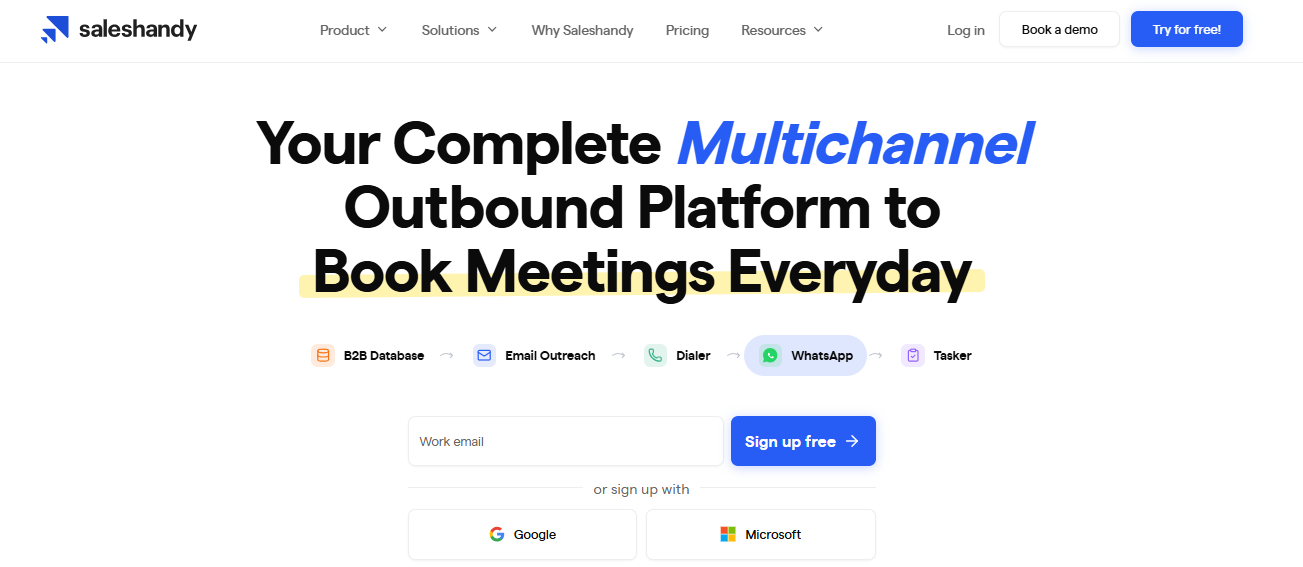
Sometimes you don’t want a Ferrari, you want a Honda Accord that goes from point A to point B for the next ten years without any repairs, right? Saleshandy fits that mood better than anything else in the category.
You connect unlimited email accounts, you run sequences, and you don’t have to worry about hitting a contact ceiling halfway through the month or figuring out which tier locks which feature behind which paywall.
In a category that’s gotten progressively more byzantine, with credit packs and tiered features and AI this and that billed as a separate product, I find Saleshandy’s pricing refreshingly readable. You pay per user, you get unlimited prospects, and that’s about it!
However, since Smartlead has more sophisticated automation and Instantly has better volume economics at scale, Saleshandy can, in comparison, come across as a bit shallow.
But what it has (and what I think it deserves credit for) is a good product that doesn’t punish smaller teams or charge extra for things that should be standard, which is why I’m mostly fine with its tradeoffs.
What It Does Well:
- Unlimited email accounts on a flat per-user fee
- No contact-based gating or active-leads limits
- A solid built-in B2B lead database
- Simple campaign setup with barely any learning curve
Who it’s best for: Growing teams and freelancers who want predictable monthly costs and reliable email outreach in a simple setup.
Pricing: Starts at $36/month (or $25/month on annual billing) with unlimited email accounts and 2,000 active prospects. Pro at $99/month and Scale at $199/month for higher volumes and agency features like whitelabel.
5. Woodpecker: The Deliverability-Conscious Sender
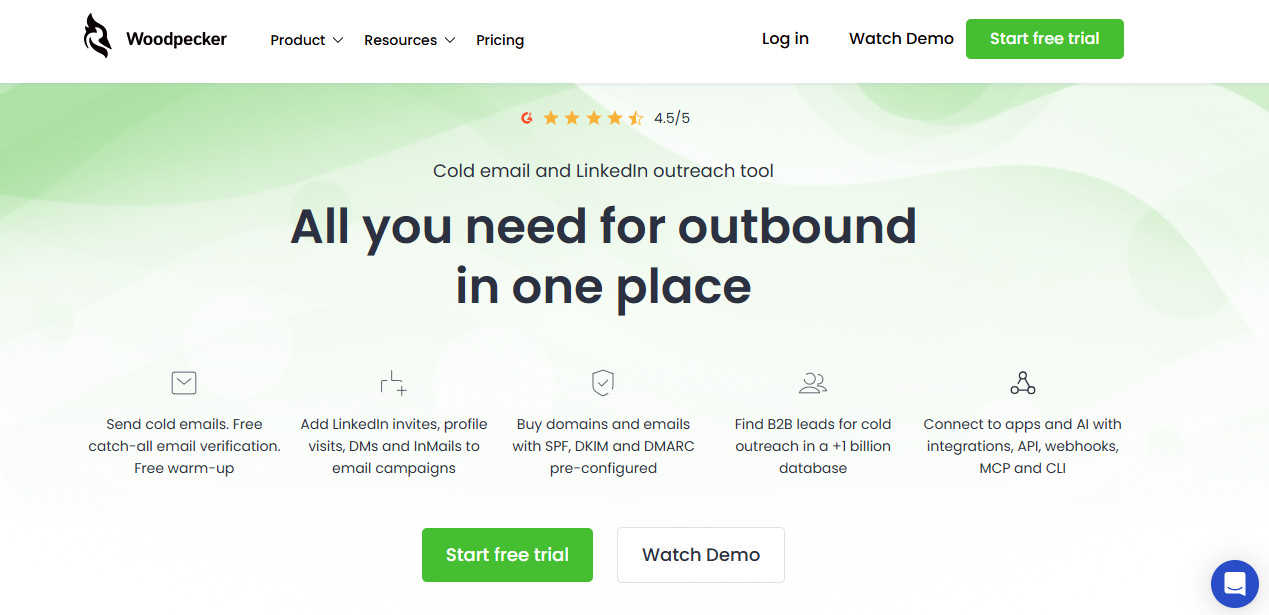
Woodpecker has a reputation in the cold email world that I’m sure other platforms envy, and in my experience, it earns it. The people who use Woodpecker tend to keep using it, and the reason they cite over and over is that their emails land in the inbox (go figure!).
It’s not the fanciest or the cheapest platform, but the deliverability discipline runs deep, which is why it’s been a go-to for a ton of people I know.
The pricing model is the most distinctive thing about Woodpecker, and the most polarizing. You’re not paying per user or by email volume but by how many new prospects you contact each month. I don’t mind that when outreach is predictable, but what happens when you land a big client and suddenly need to reach three thousand new prospects in a week?
Woodpecker is also a simpler tool than Smartlead, with less subsequence depth and less white-label polish. The focus is primarily on getting emails into the inbox, which means it can’t have every feature under the sun.
What It Does Well:
- One of the best inbox placements out of the box
- Automatic follow-up logic
- Built-in deliverability monitoring per inbox
- Genuinely human support, which is somehow a rare feature these days
Who it’s best for: Teams running predictable cold outbound volumes who treat deliverability as a non-negotiable.
Pricing: Starter at around $35/month ($24 with annual billing), with plans that tier up based on contacted prospects.
How I’d pick today

If you skimmed everything above, here’s the short version:
- Smartlead if you’re managing outbound across multiple clients or accounts.
- Instantly if you’re a founder or small team looking to scale without a lot of complexity.
- Saleshandy if you want a straightforward platform that’s easy to learn and manage.
- Woodpecker if deliverability and sending reputation are your top priorities.
One thing I’ve learned over the years is that switching platforms doesn’t automatically solve every outreach problem. If reply rates are falling or inbox placement is becoming inconsistent, it’s worth looking at deliverability alongside the sending platform itself.
In some cases, the issue is the software. In others, it’s sender reputation, domain health, or inbox placement. That’s why tools like InboxAlly can be worth considering as a complement to your outreach stack rather than a replacement for it.
Basically, the strongest outbound programs typically pay attention to both sides of the equation: the platform sending the emails and the factors that influence whether those emails actually reach the inbox.