


Last Updated on June 9, 2026 by Ewen Finser
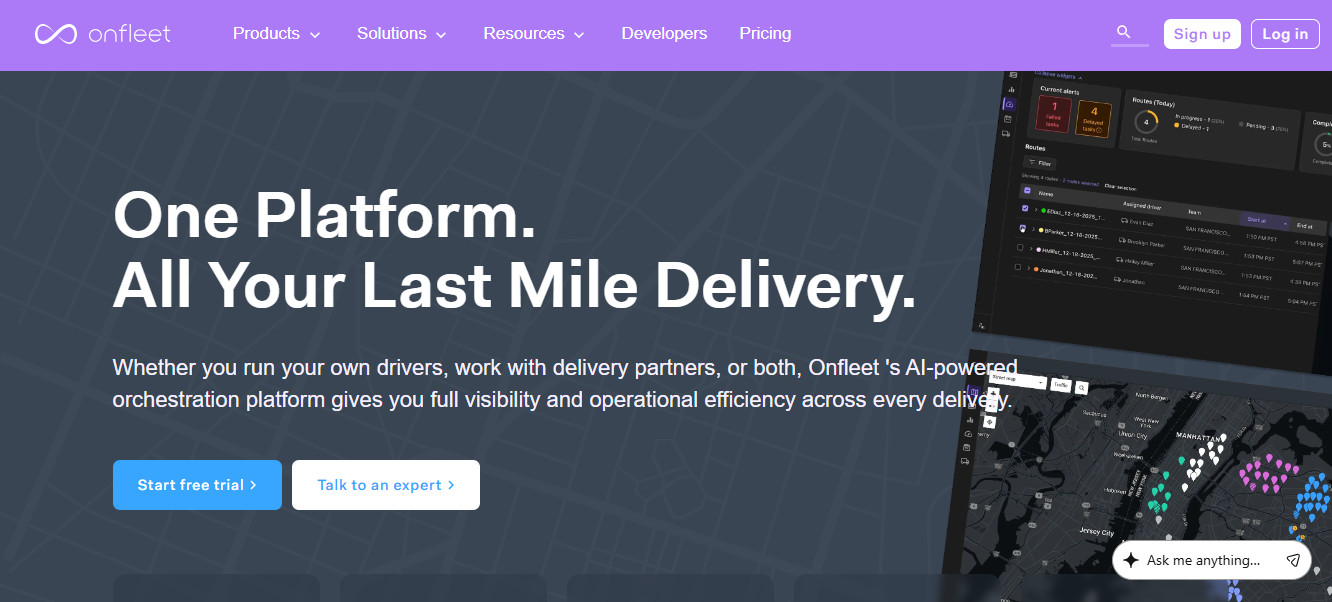
People searching for Onfleet alternatives are usually dealing with one of three problems. Their routes have gotten complex enough that Onfleet’s optimization isn’t keeping up.
Their operation has expanded into verticals, on-demand delivery, field service, mixed workflows that Onfleet wasn’t designed for. Or they’ve grown into a warehouse-and-delivery operation, and the gap between what the warehouse knows and what dispatch sees is costing them time and money every single day.
This roundup covers six alternatives honestly. Each one was built for a different version of that problem. The right answer depends on which version you’re dealing with.
The Best Onfleet Alternatives In 2026
- Grasshopper Labs: Best for operations that need both transportation (TMS) and warehouse (WMS) management in one platform
- Routific: Best for growing last-mile operations that need stronger, more advanced routing capabilities
- Tookan: Best for on-demand and multi-vertical delivery businesses managing different service types
- Locus: Best for high-volume operations, assigning thousands of shipments daily across multiple carriers
- DispatchTrack: Best for established final-mile carriers that want a well-known, trusted transportation management system (TMS)
- Bringg: Best for national carrier networks where manual dispatching is no longer scalable
What Onfleet Does Well and Where It Falls Short
Onfleet is a strong choice when the core problem is fast, simple dispatch. In practice, it handles proof of delivery very well. Drivers can capture photos, signatures, and barcode scans in the field, and that information shows up in the dashboard almost immediately.
The dispatch experience is also straightforward enough that most drivers can learn it quickly, which helps teams get up and running in days instead of weeks or months.
Where it starts to show limits is everything surrounding the actual route. Onfleet is built around delivery execution, not end-to-end logistics coordination. If your operation needs warehouse visibility before dispatch, support for LTL shipments, or a way to reconcile contractor invoices without relying on spreadsheets, you will quickly run into gaps in the system.
The biggest issue is that warehouse and transportation workflows are not truly unified. WMS integration depends on API connections rather than a single connected system. In real operations, that often means someone on the team is constantly checking that data is syncing correctly between systems instead of focusing on managing exceptions and delivery performance.
I have seen that gap create real operational risk. In one case, a transport delay was not flagged by the warehouse in time, which meant a production line was left waiting on materials that were still sitting on a truck. By the time the dispatch system updated, the opportunity to reroute or recover the delay had already passed. Onfleet could show where the driver was, but it could not surface that the issue started upstream in the warehouse release process.
With that in mind, here are a few Onfleet alternatives that might help bridge that gap:
1. Grasshopper Labs
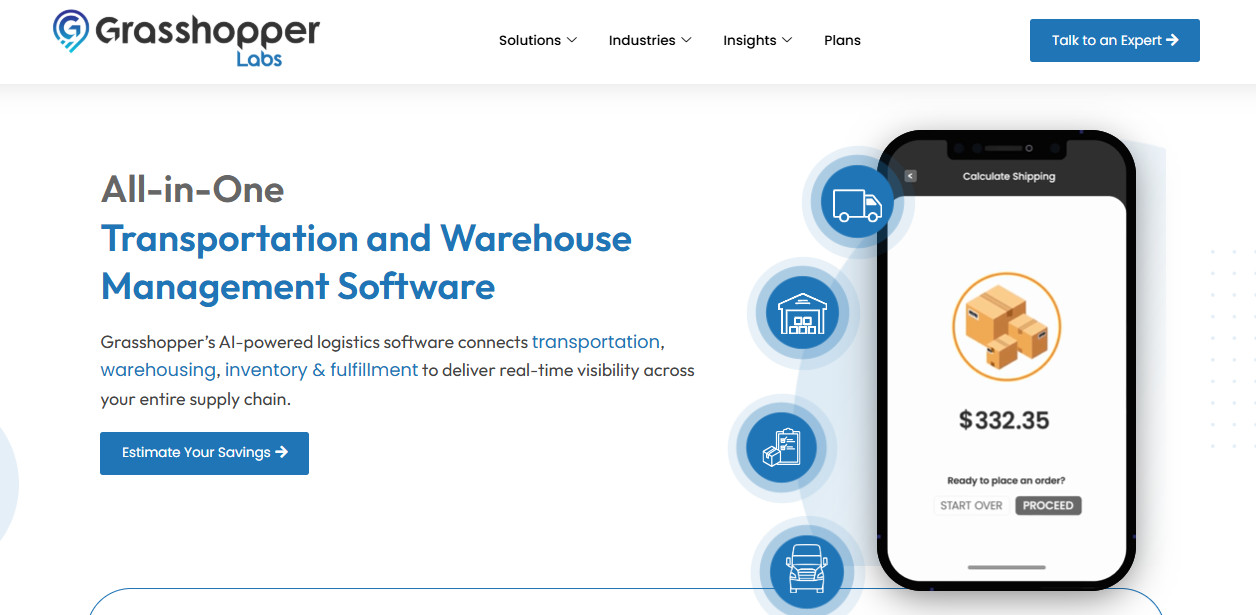
Grasshopper Labs sits in a different category than most last-mile tools. While other platforms focus on routing, task assignment, or carrier orchestration, Grasshopper is designed for operations where the real problem is the disconnect between warehouse activity and final-mile delivery.
In many big and bulky networks, those two sides of the business are still run in separate systems, which creates a daily gap between what the warehouse thinks is ready and what dispatch actually sends out.
When a route gets built based on staged inventory, but something changes in the warehouse after the last sync, dispatch does not see it; the result is often a failed stop, a delayed crew, or a last-minute scramble that could have been avoided.
Grasshopper removes that separation by combining warehouse management and delivery execution into a single system. Instead of relying on syncs between a WMS and a TMS, both teams operate from the same real-time data. When something changes in receiving or inventory, dispatch sees it immediately and can adjust before it becomes a downstream issue.
Grasshopper Labs Strengths
Where it is strongest is in complex, physical operations that require coordination across warehouse and field teams. Inbound receiving, putaway, and inventory updates are directly connected to dispatch planning, so what is staged is actually accurate at the moment the crew leaves the yard.
It also supports two-person crews with certification-based pairing, appointment scheduling, and white-glove proof of delivery requirements built into the workflow. On the back end, contractor payments are tied directly to completed delivery confirmation, which removes the need for manual reconciliation and end-of-week spreadsheets.
Grasshopper also supports EDI integrations with major retail partners, which is critical for large-scale retail logistics networks.
Where It Might Fall Short
The tradeoff is that Grasshopper is not designed for every use case. It is not a fit for lightweight same-day courier networks or hyperlocal parcel delivery, where dispatch is the only real complexity.
It also takes longer to implement than simpler routing-first tools because the unified warehouse and delivery architecture requires more upfront configuration. For teams that already have stable WMS and TMS systems working well independently, the switching cost may not be justified.
2. Routific
Routific is built for operations where routing efficiency is the biggest challenge.
If dispatchers are spending hours every morning manually building routes, balancing delivery windows, and trying to squeeze more stops into each driver’s day, Routific can have an immediate impact. Its routing engine is one of the strongest in the category for businesses where stop density, time windows, and vehicle capacity drive profitability.
Feed it 180 stops across four depot zones with different delivery windows per area, and it builds cleaner routes in fifteen minutes than most ops teams can build manually in two hours. A route that saves 22 minutes per driver across a fifteen-driver fleet is 330 minutes of labor recovered every single day.
Routific Strengths
Routific excels at multi-stop route optimization, accounting for factors like delivery windows, vehicle capacity, driver starting locations, and route balancing simultaneously.
It is particularly effective for grocery delivery, medical supply distribution, and other operations where appointment windows are critical, and route efficiency directly affects service quality.
Where It Might Fall Short
The tradeoff is that Routific focuses almost entirely on routing. It builds the best route possible based on the information it receives, but it has limited visibility into what happens before a delivery enters the route. If inventory is delayed, an order is not staged correctly, or a warehouse issue prevents a shipment from leaving on time, Routific has no way of accounting for those problems.
That means the platform delivers the most value when routing is the primary bottleneck. In my experience, operations that see the biggest return are those where dispatchers spend two or more hours each day building routes manually.
Note: Routific also does not include contractor payment reconciliation, so teams managing independent drivers or delivery partners will typically need separate processes for payroll and settlement.
3. Tookan
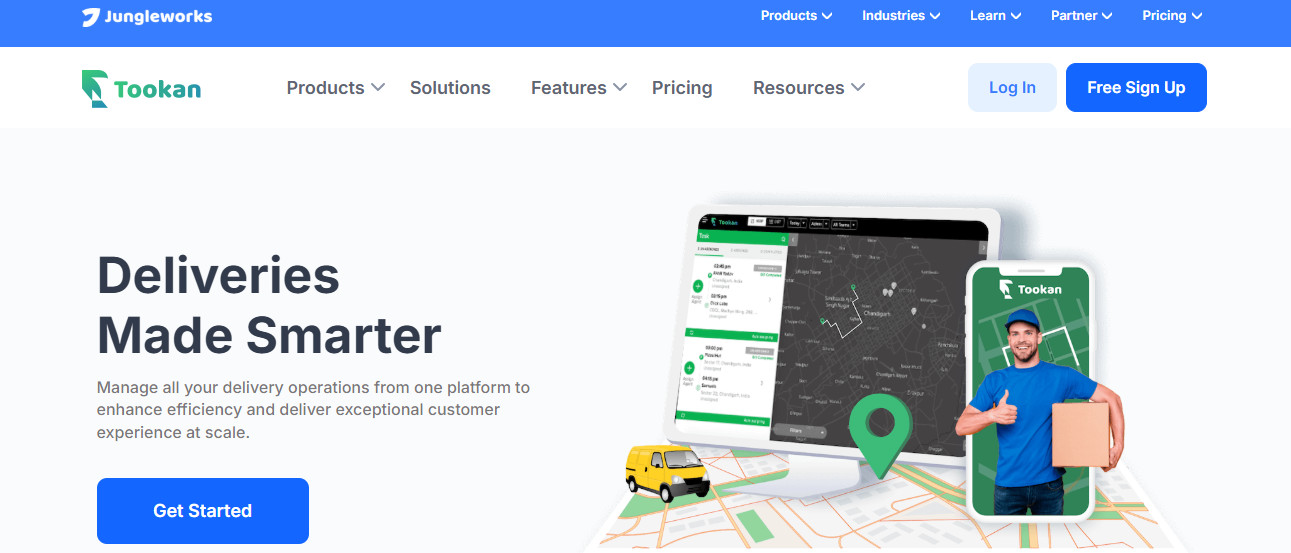
Tookan is best understood as a delivery management platform built for operations that do not fit neatly into a single workflow. Instead of focusing purely on routing or a single type of delivery, it is designed for teams that run multiple types of field activity in the same day.
That might include a courier business that also handles pickups, a field service team that mixes installations with deliveries, or a hyperlocal operation that blends scheduled appointments with on-demand jobs.
Many platforms organize everything around routes and drivers, but Tookan organizes around tasks and agents. That makes it easier to run mixed workflows without constantly switching tools or forcing every job into the same operational model.
Tookan Strengths
Where Tookan works best is in operations that need flexibility over deep optimization. It can handle deliveries, pickups, service appointments, and inspections within a single workflow, which reduces the need for separate dispatch systems.
It is also typically faster to implement than more complex routing-first platforms, and it is often more accessible from a pricing standpoint for smaller or mid-stage teams.
Overall, Tookan performs best when the main challenge is managing variety in daily work rather than maximizing efficiency in a single workflow. Once the operation moves into more advanced logistics needs like LTL coordination, cross-docking, or specialized crew requirements, it starts to reach the edge of what it was designed to handle.
Where It Might Fall Short
Tookan can fall a little short when an operation becomes more specialized. Route optimization is not as strong as tools built specifically for routing efficiency, so teams that prioritize mileage or density gains will feel that gap.
Proof of delivery workflows are also less refined than more retail-focused platforms, which can matter in environments with strict compliance or customer documentation requirements.
4. Locus
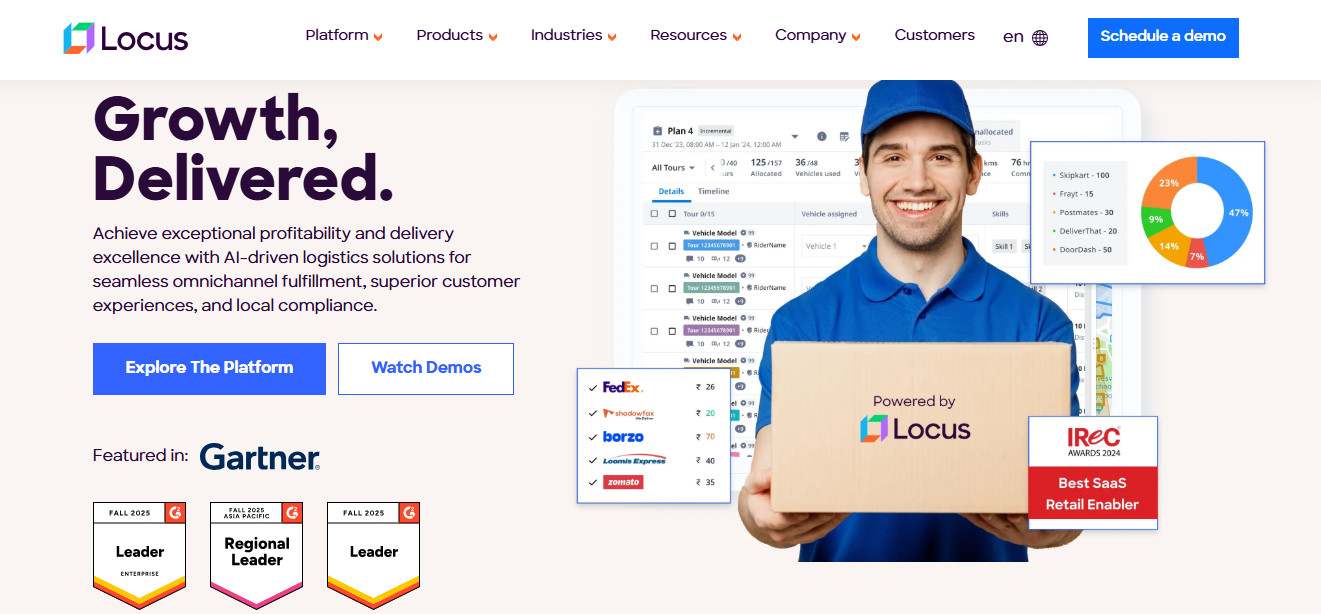
Locus is designed for operations where the challenge is no longer routing deliveries but deciding which carrier should handle them.
As shipment volume grows, manual carrier assignment becomes increasingly difficult. What works at a few hundred shipments per day quickly breaks down when thousands of orders must be assigned across multiple carriers, regions, service levels, and contract rates.
Locus automates those decisions by evaluating cost, SLA requirements, carrier performance, and real-time availability before assigning each shipment to the most appropriate carrier. For large logistics networks, that automation can eliminate thousands of manual decisions every day while improving consistency across the operation.
Locus Strengths
Locus excels at automatic carrier assignment across owned fleets, contracted carriers, and on-demand delivery networks. Its carrier performance scoring helps improve assignment decisions over time, allowing the platform to learn from historical outcomes rather than relying solely on static rules.
The platform is particularly well-suited for national e-commerce brands, large distributors, and high-volume logistics operations processing thousands of shipments each day across multiple regions.
Where It Might Fall Short
Carrier integrations, historical performance data, and cost models all need to be configured correctly before Lcous can make consistently effective decisions. Without that foundation, the automation is only as good as the information feeding it.
Implementation is also more involved than many teams expect. The software itself is only part of the investment. Internal engineering resources, system integrations, and process changes often represent a significant portion of the total project cost and timeline.
5. DispatchTrack
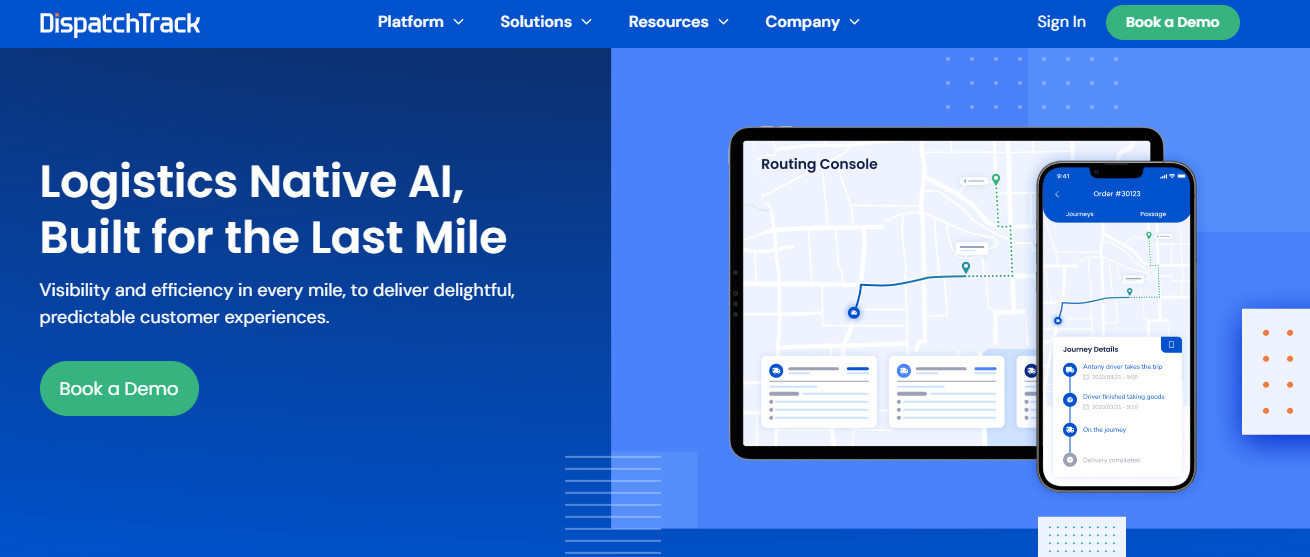
DispatchTrack is a popular choice for furniture, appliances, and other big and bulky delivery operations that need a mature transportation management system with strong customer communication tools. It is often the platform carriers evaluate when they have outgrown basic dispatch software but are not looking to replace their warehouse systems.
Its biggest strength is the customer experience layer. Appointment scheduling is built specifically for big and bulky delivery, with confirmed delivery windows, automated ETA notifications, and live tracking links that reduce those “Where is my order?” calls.
For carriers serving multiple retail clients, DispatchTrack also allows proof of delivery requirements to be configured at the account level, so each retailer’s documentation standards can be followed without creating separate workflows.
DispatchTrack Strengths
DispatchTrack is particularly strong for appointment-based delivery operations.
Automated customer communication, per-account proof of delivery requirements, and live tracking help improve service while reducing administrative workload.
Driver scorecards and exception reporting also give operations teams visibility into recurring delays, failed deliveries, and performance issues across routes, drivers, and service areas.
Where It Might Fall Short
DispatchTrack focuses on transportation management, not warehouse operations. Receiving, putaway, staging, and cross-dock processes all happen outside the platform. If a warehouse issue prevents an order from being loaded correctly, DispatchTrack typically does not become aware of the problem until it affects the delivery itself.
Contractor payment reconciliation also requires a separate process. Delivery records can be used to verify completed work, but matching those records to invoices and payments is still largely manual. For operations managing multiple crews or contractors, that often means several hours of administrative work each week.
And while the platform supports two-person delivery operations, pairing crew members based on certifications, skills, or job-specific requirements requires more manual oversight than some specialized big and bulky platforms.
6. Bringg

Bringg is designed for enterprise retailers and large logistics networks managing multiple delivery partners across different regions. Its strength is carrier orchestration.
Instead of focusing on routing a single fleet, Bringg helps businesses coordinate owned vehicles, contracted carriers, and on-demand delivery partners within a single platform.
As carrier networks grow, assigning orders manually becomes increasingly difficult. Bringg automates those decisions using factors such as carrier performance, service-level requirements, cost thresholds, and real-time capacity.
For organizations managing large, mixed-carrier networks, that automation can improve consistency while reducing the operational burden on dispatch teams.
Bringg Strengths
Bringg excels at automatic carrier assignment across owned fleets, regional carriers, and on-demand delivery providers. It also helps retailers maintain a consistent post-purchase customer experience, even when deliveries are being fulfilled by multiple transportation partners across different markets.
The platform is built specifically for the carrier complexity that often overwhelms simpler transportation management systems. For national retailers and large 3PLs, that can be a significant advantage.
Where It Might Fall Short
Bringg’s biggest challenge for many organizations is scale. Implementation typically requires substantial configuration, integrations, training, and internal resources.
First-year costs are often significantly higher than companies expect when moving from a dispatch-focused platform like Onfleet.
A retailer managing owned fleets in some regions while relying on multiple contracted carriers elsewhere can use Bringg to maintain service standards without needing dedicated dispatch teams for every market.
Where to Go From Here
A mistake I see in almost every software evaluation is treating the platform as the problem. Most of the time, the platform is just exposing a bottleneck that was already there.
Routing, warehouse visibility, carrier assignment, contractor management, customer communication, and appointment scheduling are completely different problems that happen to show up in the same delivery workflow.
The teams that make the best software decisions start there.
They identify the bottleneck first, then choose the platform built to solve it. The ones that don’t often spend six months and a six-figure budget replacing a system, only to discover the real problem never lived in the dispatch software to begin with.