


Last Updated on August 12, 2026 by Ewen Finser
Launching an affiliate program for your WooCommerce setup is easy enough to start. Most merchants begin with a basic affiliate plugin and call it a day. This works as long as you keep things simple; you get referral links, basic commission tracking, and a simple way to pay affiliates without leaving WordPress.
The problem is that WooCommerce brands usually don’t stay simple for long. As you scale, it becomes increasingly important to either pivot to a more robust plugin setup or a dedicated affiliate platform.
This list covers the most useful options across both categories, judging them across a few vital factors:
- Onboarding: Some tools are better built for merchants who want to quickly install and get going.
- Tracking capabilities: Basic affiliate tracking is not the same as clean attribution across channels.
- Commission flexibility: If your margins vary by product, category, or partner type, flat commissions get overwhelmed fast. Product-specific rates and SKUs can make a big difference here.
- Fraud detection: Coupon sites, bad traffic, duplicate attribution, and partner behavior you do not want to pay for can eat into the channel.
- Scale: This includes reporting speed, payout workflows, partner management, and whether your team still trusts the data as the program grows.
So, whether you’re looking for a better plugin or an all-in-one platform, let’s take a look at some of the best affiliate software for WooCommerce.
At a Glance
Type | Best for | Key strengths | Limitations | Scale fit | |
Platform | Growing brands with a serious affiliate strategy | Deep attribution, SKU-level reporting, fraud controls, payout infrastructure | Higher cost, requires active management | Large / scaling | |
Plugin | Stores not ready for a dedicated platform | WooCommerce-native, product-specific rates, large add-on ecosystem, anti-fraud | Limited analytics, attribution depth, and scale | Small to medium | |
Platform | Larger brands managing affiliates, influencers, and publishers | Advanced reporting, a large vetted marketplace, fraud and compliance tools | Monthly fee + 2.5% transaction fee; complex setup; important features locked to Enterprise | Large / enterprise | |
Plugin | Brands wanting software plus a partner network, especially internationally | 200k+ publishers in 180+ countries, AI publisher matching, SKU-level tracking | Regional setups needed for international affiliates; less direct ownership of partner relationships | Medium to large | |
Plugin | Smaller stores wanting a simple, flexible commission setup | Lightweight, stays in WordPress, commission rules by affiliate/product/category, PayPal payouts | No meaningful analytics, attribution, or fraud controls | Small | |
Platform | Brands wanting a simple, standalone tool without deep analytics | Clear conversion dashboard, automated payouts, large affiliate marketplace (higher tiers) | Weak cross-channel visibility; marketplace gated behind paid plans | Small to medium |
Everflow
For WooCommerce brands that have outgrown basic affiliate plugins, Everflow is one of the strongest options. It combines partner tracking, reporting, analytics, payout infrastructure, and automation in one system, and it leans much harder into attribution depth and reporting quality than plugin-first tools do. It also offers reporting specifically for e-commerce product performance, including partner- and SKU-level sales analysis, which is a big deal for brands with large catalogs or uneven margins across products.

In practice, this means that Everflow tends to be a better fit when your affiliate program is no longer a side channel, and you’re trying to better understand which partners drive repeat purchases, which products move best by partner, where reporting gets inconsistent, or how to reduce manual payouts.
It’s also one of the few options here that feels built for teams looking to holistically manage affiliate, partner, and performance relationships with a single reporting layer.
However, Everflow is not the cheapest or most lightweight route. It’s also not the set-it-and-forget-it option. It works best when a brand is actively managing partners, reviewing reporting, adjusting payouts, and using transaction data to optimize the program over time. It makes more sense for brands that already have a defined, growing affiliate strategy and not a small store testing it for the first time.
Best for: WooCommerce brands that want better attribution, SKU-level visibility, fraud controls, and an easy scaling system.

Everflow makes partner management simple, fast, and transparent. Real-time data, clean reporting, and tools built for affiliate managers who want to scale with confidence.
AffiliateWP
If you want to stay inside WordPress and keep things familiar, AffiliateWP is still one of the most practical plugin options that offers a real affiliate setup without forcing you into a larger standalone platform. It integrates directly with WooCommerce, supports product-specific commission rates, and has a large add-on ecosystem covering lifetime commissions, direct link tracking, coupon workflows, and multi-tier commissions. It has also added anti-fraud features to catch paid search affiliates and similar issues.
Overall, a pretty solid package for a plugin.
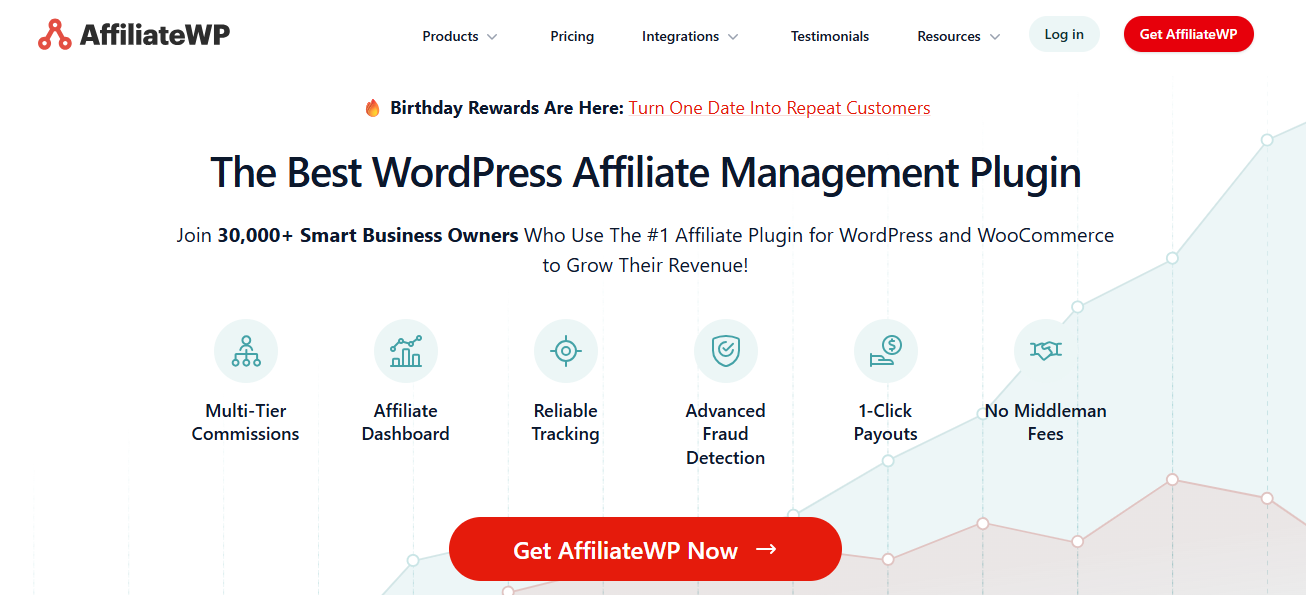
Where it starts to feel limited is the same place most plugins do: broader analytics, deeper attribution, and operational scale. You can absolutely run a serious affiliate program on AffiliateWP, but if your team starts asking bigger questions about cross-channel reporting, longer customer journeys, product-level profitability by partner, or cleaner automation across a larger program, you will soon feel its limitations.
Best for: WooCommerce brands that want a strong plugin and are not ready to move up to a dedicated platform.
impact.com
impact.com is one of the more mature dedicated partnership platforms in this category, and it offers a WooCommerce integration specifically positioned as a plug-and-play app for recruiting, tracking, and managing publishers. It also has a dedicated Protect & Monitor product focused on fraud, compliance, and traffic issues across the customer journey.

It’s particularly appealing for larger brands that want more than just affiliate tracking; it’s built for broader partnership management, which matters if your program includes media partners, content affiliates, influencers, app partners, or more structured partner relationships over time.
Where impact.com has a real edge is in the depth of its reporting and partner operations infrastructure. It offers dozens of reports covering performance by geolocation, SKU, promo code, time of day, and new versus existing customers, along with access to a large vetted partner marketplace — a meaningfully different level of operational tooling than any plugin can offer.
The tradeoff is cost and complexity: impact.com charges a monthly SaaS fee plus a 2.5% transaction fee on partner-driven sales, setup requires real technical resources, and some of the more advanced features, like attribution risk protection and partner insight reports, are locked to the Enterprise tier. For a WooCommerce brand with a straightforward affiliate program, that overhead is hard to justify. For one, running a multi-partner ecosystem across affiliates, influencers, and content publishers, it makes a lot more sense.
Best for: Larger WooCommerce brands with a broad partnership strategy and more complex compliance needs.
Awin
Awin is a global affiliate network with a WooCommerce plugin that integrates its tracking suite directly into checkout, covering multi-currency support and product-level tracking by SKU. Its reporting includes journey path analysis, publisher performance breakdowns, and sector benchmarking, which is more depth than most plugin tools offer out of the box.

What sets it apart is the network — with 200,000+ publishers across 180+ countries, you’re not just getting software; you are getting access to an existing pool of partners to recruit from. Awin also uses AI-driven recommendations through its Ava tool to surface relevant publisher matches, which is useful if building out a partner roster from scratch is part of the challenge.
The main tradeoffs are scope and ownership. International programs require separate regional setups, which adds overhead as you scale across markets. And because you’re operating within a network, you have less direct ownership of partner relationships than you would on a standalone platform; publishers on Awin are part of a shared ecosystem, not partners you recruit and manage entirely on your own terms.
Best for: WooCommerce brands that want software plus network reach, especially across international markets.
SliceWP
SliceWP is one of the more sensible lightweight options if you want something simpler than AffiliateWP but still more capable than the most basic affiliate plugins.
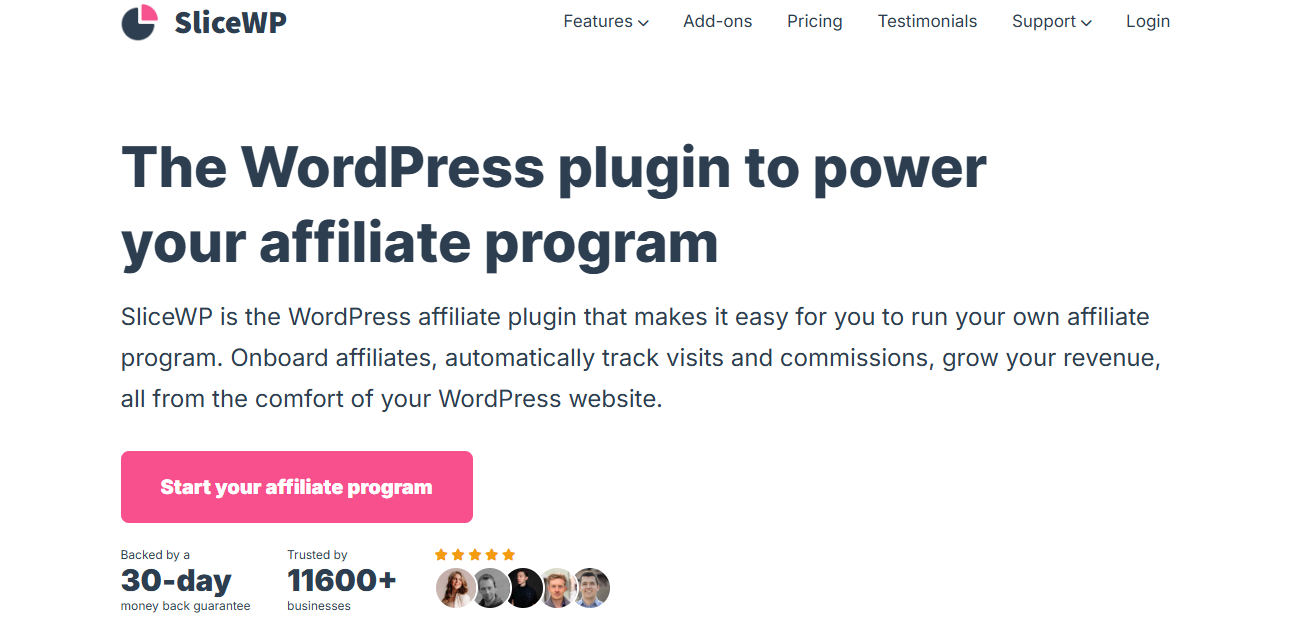
The pitch is straightforward: stay inside WordPress, manage affiliates from your own dashboard, and set commission rules by affiliate, product, or category. It also supports coupon-based workflows and PayPal payouts.
This makes it a decent fit for smaller stores that care about product-level commission logic but do not need a full partner platform. In practice, it usually suits lean teams that want to keep costs and setup time down.
Another reason it works for some WooCommerce brands is that it keeps the learning curve pretty manageable; you’re not dealing with a bigger partner system or trying to wire together a bunch of outside tools just to get an affiliate program live. For stores that mainly want to recruit a small group of affiliates and keep everything close to the e-commerce stack they already use, that simplicity is part of the appeal.
Of course, this simplicity is also its biggest tradeoff. If your real need is better analytics, deeper attribution, fraud controls, or a platform that can scale with a larger partner program, this is probably not your end-state tool.
Best for: Smaller WooCommerce stores seeking a clean, plugin-based affiliate setup with flexible commission rules.
Refersion
Refersion sits somewhere between the simplicity of a plugin and the structure of a dedicated platform. It has a WooCommerce plugin, positions itself around affiliate tracking and custom commissions, and is clearly aimed at brands that want a fairly straightforward affiliate management layer without living entirely in the WordPress plugin world.
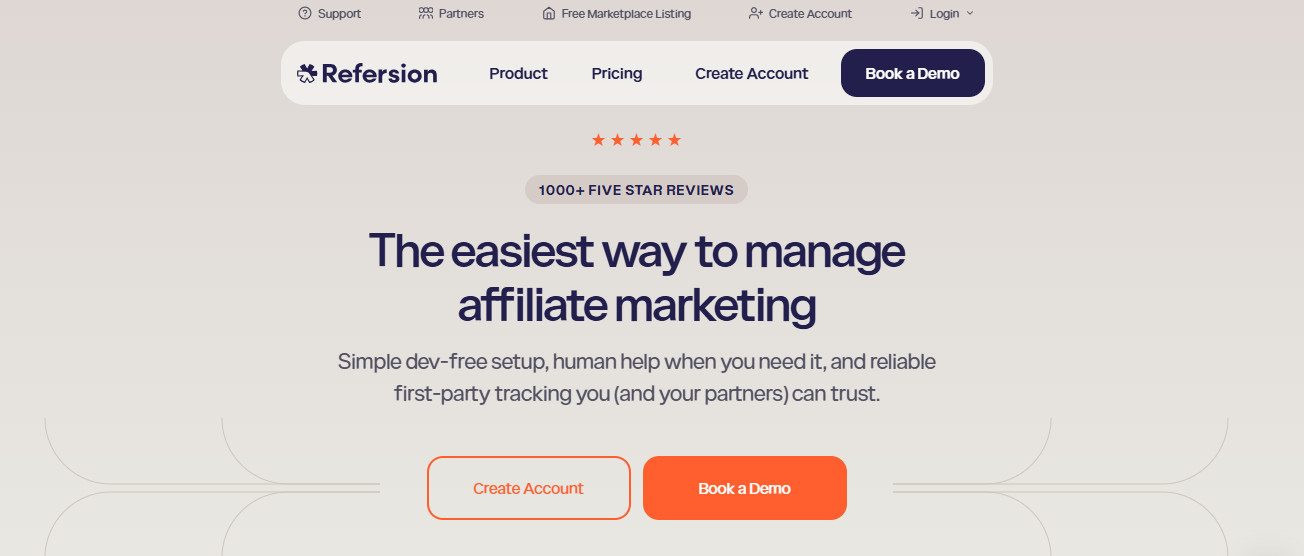
The dashboard surfaces conversion data clearly, and commission payouts are automated, which removes most of the manual overhead for standard program management. It also has a vast marketplace of affiliates that you can filter by industry, publisher type, or individual name, though it’s reserved for higher-tier plans.
The gaps show up in attribution and reporting depth. Refersion tracks conversions well enough, but it does not give you the kind of cross-channel visibility or customer journey analysis that more advanced platforms offer. If your program runs mostly through direct affiliate links with straightforward commission logic, that’s fine. If you start needing to understand how affiliate fits into a broader acquisition mix, it falls short.
Best for: Brands that want a relatively simple standalone affiliate tool and don’t need the deepest analytics.
Choosing Between the Best Affiliate Software for WooCommerce
If you’re a smaller WooCommerce store and you mainly want a reliable way to launch and manage affiliates inside WordPress, AffiliateWP is probably the most practical starting point. Awin also deserves a look if you want a vast international marketplace to choose from.
However, plugins are usually better when you want a quick launch, a lower upfront cost, and something your team can manage directly inside WordPress. Dedicated platforms tend to make more sense once you care about deeper analytics, cleaner attribution, fraud controls, partner operations, and scale across a larger catalog or a more serious partner program.
So for WooCommerce brands that are clearly moving past plugin-level needs and want stronger analytics, better fraud controls, SKU-level visibility, and a more unified way to manage partner revenue, Everflow is the one I would put at the top. It handles the things that actually break affiliate programs at scale: attribution that goes beyond last-click, SKU-level reporting by partner, fraud controls that catch bad traffic before it costs you, and payout infrastructure that doesn’t fall apart as volume grows.
For a WooCommerce brand treating affiliate marketing as a serious revenue channel, that combination is hard to find elsewhere.