


Last Updated on October 12, 2026 by Ewen Finser
When one of your eCommerce store’s shoppers tries to complain about a delayed parcel, a damaged item, or a missing refund, your agent needs order context as quickly as possible. This is the challenge call center software needs to address; everything else is secondary to moving that needle in the right direction.
For that reason, the tools I rate highest are the ones that sit naturally inside Gorgias and Zendesk (the two leading customer service platforms in the eCommerce space), surface customer context during calls, route returns and refund conversations to the right queue, and support SMS without forcing you to adopt a second messaging stack (and that do all this for a reasonable price).
Unfortunately, there aren’t many platforms that can squeeze all these features in while also remaining affordable. In this article, I’ve compiled a list of the tools that do the best job.
At a Glance
- Aircall: Best all-in-one communications and intelligence platform for scaling eCommerce teams, including UK teams
- CloudTalk: Best for Shopify-first operations that need order context directly inside the dialer
- JustCall: Best for teams that prioritize high-volume SMS and outbound calling over inbound support
- Dialpad: Best AI coaching stack for Zendesk-only teams with budget for a premium solution
- Talkdesk: Best for large retailers that need enterprise-grade contact center infrastructure and deep Shopify automation
Best Call Center Software for eCommerce Brands
Aircall
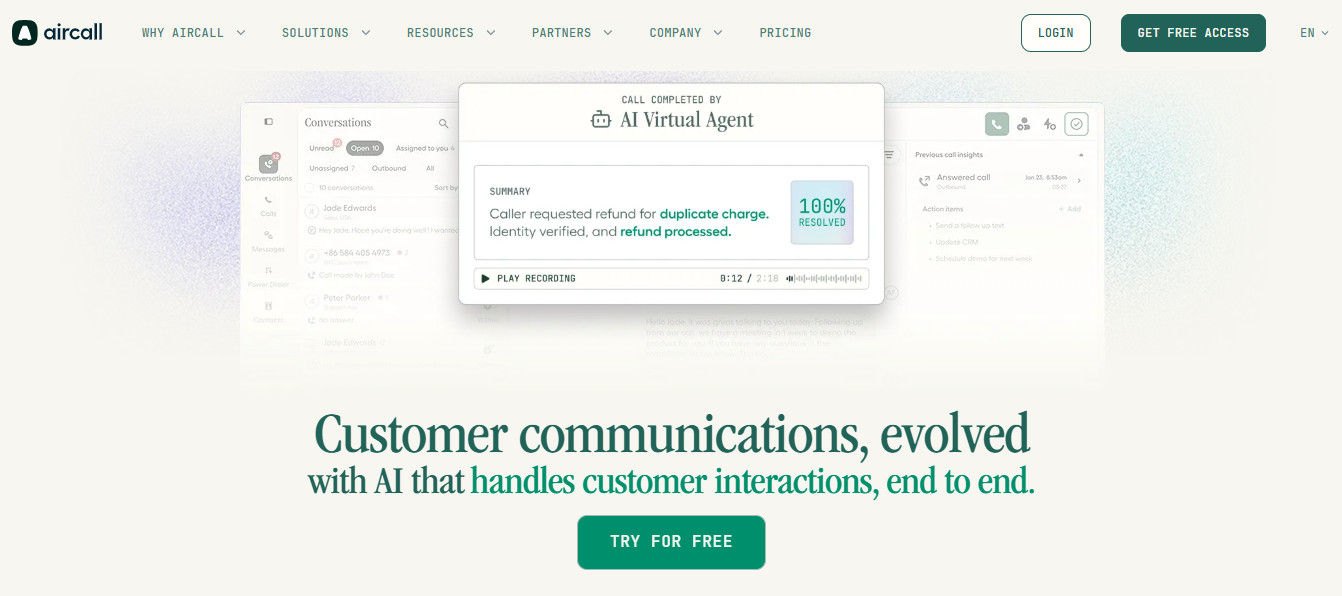
If I owned a growing eCommerce brand and wanted a customer communications platform that rolls out quickly and feels native inside support workflows, Aircall is the product I would pick. It’s the one tool on this list that functions as a genuine communications and intelligence platform, not just a phone system bolted onto your helpdesk.
What I like most is that Aircall is clearly built around the reality of support and sales teams already living in other systems. Aircall’s Zendesk integration centralizes phone operations inside Zendesk and uses helpdesk data to provide real-time context, while the Gorgias v2 integration can automatically create and manage phone and SMS tickets, sync contact data, tags, and internal notes, and surface Gorgias information in the Aircall dialer during setup tests. This all translates to a smoother service process when customer issues arise.
Aircall’s setup and operating model is also pretty clean, which means it’s easier to use than a lot of its competitors.
The Essentials tier comes with a voice plan, IVR, call recording, click-to-dial, SMS/MMS, and desktop and mobile softphones. More advanced routing, analytics, queue callback, Power Dialer, and voicemail drop into higher tiers. I think this separation does a good job of catering to eCommerce firms at different levels.
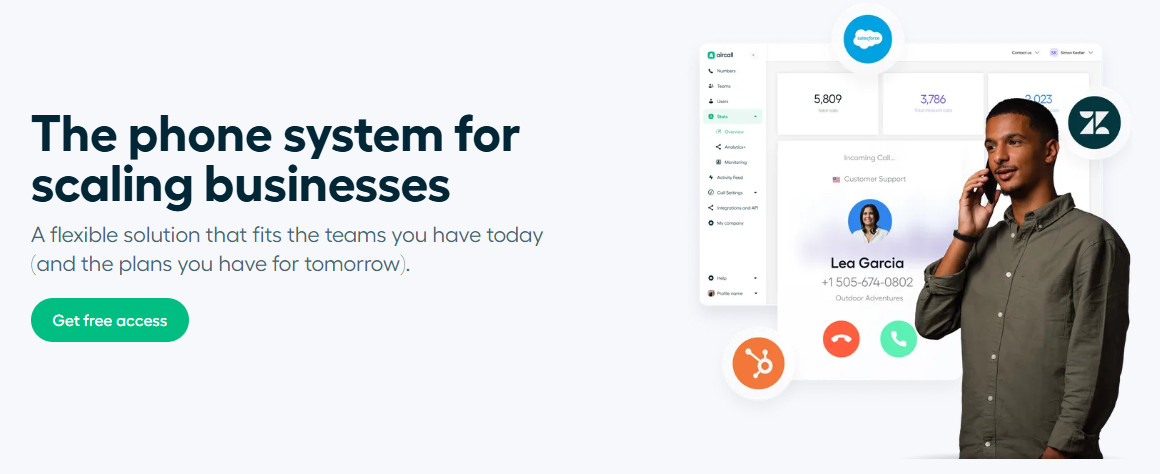
For eCommerce specifically, I think Aircall hits a very useful middle ground. It doesn’t try to replace the helpdesk, the order system, and the communication layer all at once. Instead, it plugs voice, SMS, and messaging into the tools you already use, which is often the easier and more productive way to reduce complexity. Its recent acquisition of Piper AI takes its existing capabilities a step further, adding automated post-call workflows across email and WhatsApp without asking teams to adopt another standalone tool.
Aircall’s AI Assist is available as an add-on, and in my opinion, it’s where the platform starts to pull ahead. It handles call summaries, sentiment analysis, key topics, and call scoring, feeding that data directly into the CRM tools your team already uses rather than sitting in a separate dashboard.
Aircall charges $30/month per license on the Essentials plan and $50/month per license if you move up to Professional; there’s a three-seat minimum on both of these plans. You should note that the AI Assist feature is sold separately, costing $9 per license on the basic tier. This makes it largely inaccessible for solo operations or very small stores, but it’s an excellent option if you’re in the small-to-medium bracket.
Gorgias integration | ✅ Yes |
Zendesk integration | ✅ Yes |
Shopify / order context | ✅ Yes (native Shopify integration surfaces order data on calls) |
SMS support | ✅ Yes (SMS + MMS built-in) |
Returns/refund workflows | ⚠️ Partial (enabled via integrations like Gorgias, not native logic) |
Seasonal scalability | ✅ Strong (cloud-based, easy to add users) |
UK support & compliance | ✅ Yes (London office, ICO registered, UK-localized knowledge base) |
Aircall for UK eCommerce Teams
Aircall has a London office and a dedicated UK and Ireland team, so you get local support, a UK knowledge base, and account managment in your time zone. They’re registered with the ICO under UK GDPR and hold SOC 2 Type II certification, with international data transfer safeguards documented in their DPA.
Custom Neon, a global neon signage brand with distributed teams across Australia, the UK, and US, uses Aircall to route calls between time zones so customers get support nearly around the clock. Their UK team handles European orders using Aircall’s AI call summaries and sentiment analysis to keep service quality consistent across offices. You can explore the retail and eCommerce solution page or start a free trial from the UK site.
CloudTalk
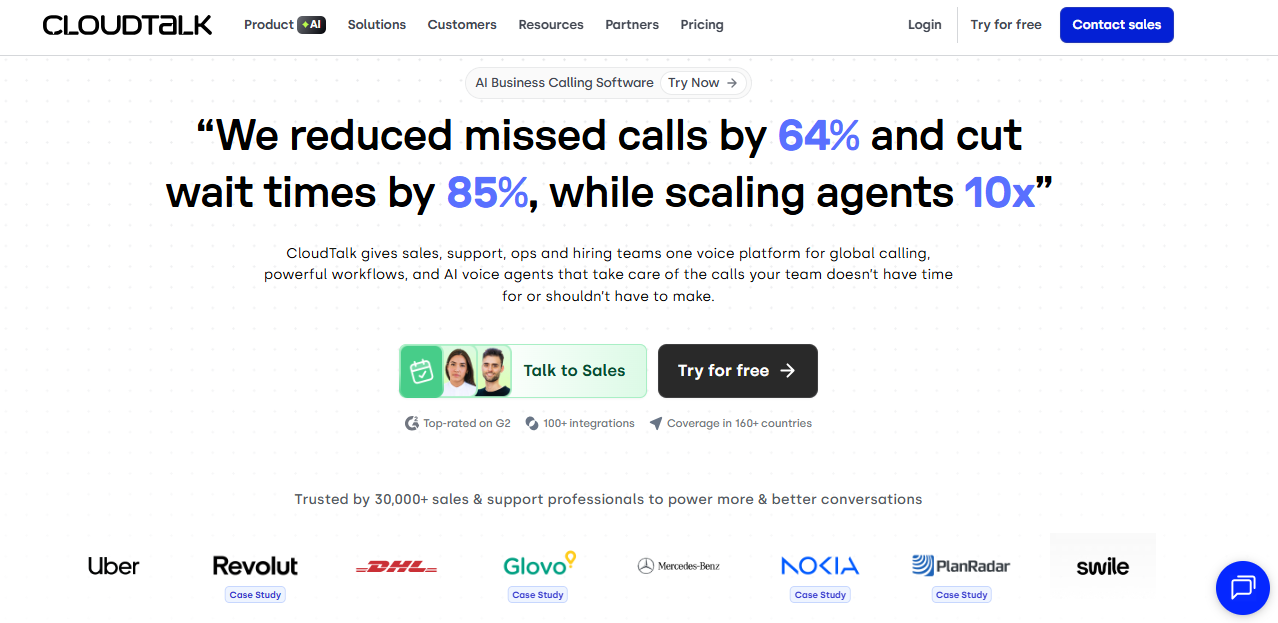
If you’re running a store on Shopify and using Gorgias or Zendesk as well, CloudTalk is a solid option.
Its Shopify integration surfaces a lot of useful information within contact profiles, including last-order details, shipping and payment statuses, and customer contact details. This can serve to reduce a lot of friction, as your agents won’t need to use multiple platforms to gather all this information in real-time.
Its usability and call quality are top-class across all subscription tiers, so it wins a lot of points in terms of practicality.
Unfortunately, CloudTalk starts to feel add-on-heavy once you move beyond basic voice functionality. If you need stronger dialers, branded caller ID, AI voice agents, or more advanced workflow design, your “cheap” option stops being especially cheap.
I also have big concerns around customer service here. When things break, they can stay broken for a while due to the platform’s lack of effective responsiveness. Issues will always crop up, even on solid tools, so this is something to bear in mind.
Ultimately, if your operation is heavily Shopify-driven and you want order context directly in the calling workspace, CloudTalk is perhaps the strongest option on this list. However, if you value clean packaging, good customer support, and a balanced support-plus-sales posture, I’d consider looking elsewhere.
In terms of pricing, CloudTalk is one of the more cost-effective options; its Lite plan costs just $19/user every month, with no minimum requirement for the number of licenses. However, a lot of the more useful functions in terms of messaging, integrations, and reporting are locked behind the Essential tier ($29/user per month) or the Expert tier ($49/user per month).
Gorgias integration | ✅ Yes |
Zendesk integration | ✅ Yes |
Shopify / order context | ✅ Yes (Shopify integration with synced order data) |
SMS support | ✅ Yes (calls + SMS workflows) |
Returns/refund workflows | ⚠️ Indirect (via integrations like Gorgias/Shopify) |
Seasonal scalability | ✅ Strong (handles growing call volumes easily) |
JustCall
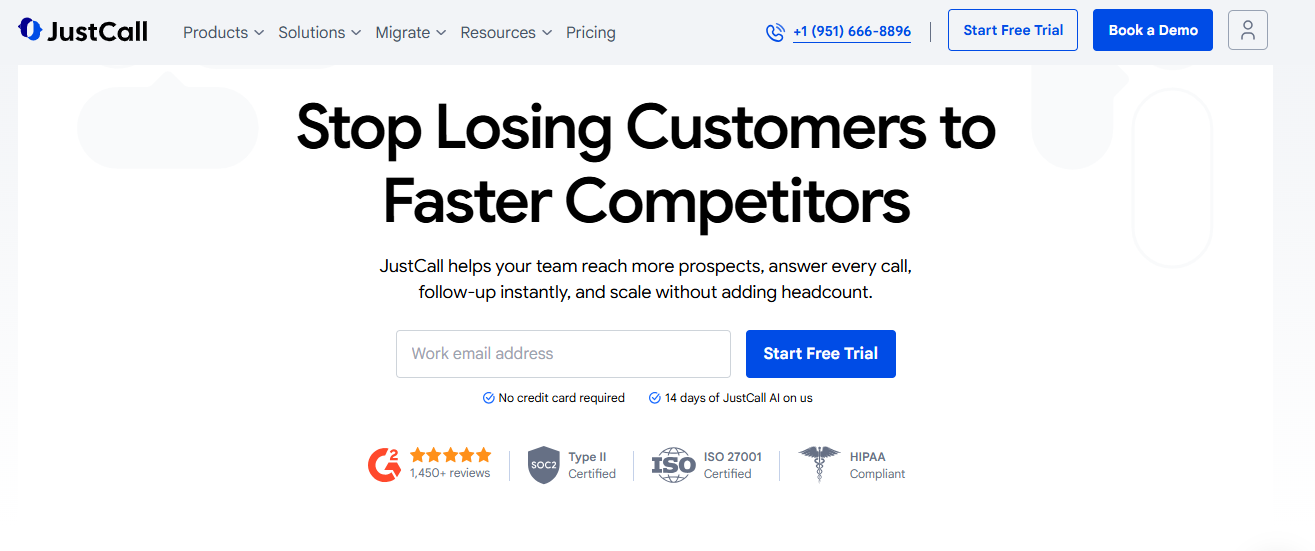
JustCall is the option I would consider for teams that want a lot of calling and texting in one place that are willing to accept a product that’s oriented more towards outreach than support.
It integrates with both Gorgias and Zendesk, and calls and SMS logging are both supported on each platform. Both integrations also offer one-click messages and calls, which removes some of the friction you’ll encounter in this area on other platforms. If your eCommerce team leans heavily on SMS for delivery updates, proactive outreach, or high-volume customer comms, this is a big plus.
JustCall’s current public pricing shows Team at $29 per user per month billed annually, Pro at $49, and Pro Plus at $89, with AI Review Assist as a $9 per-user add-on and a separate AI Voice Agent track above that.
The Team plan is pretty reasonable (the basic feature set it offers is rock-solid), so it provides a great entry point for smaller eCom companies. However, if you’re looking for better coaching, advanced AI, or more detailed statistics, you’ll need one of the more expensive packages.
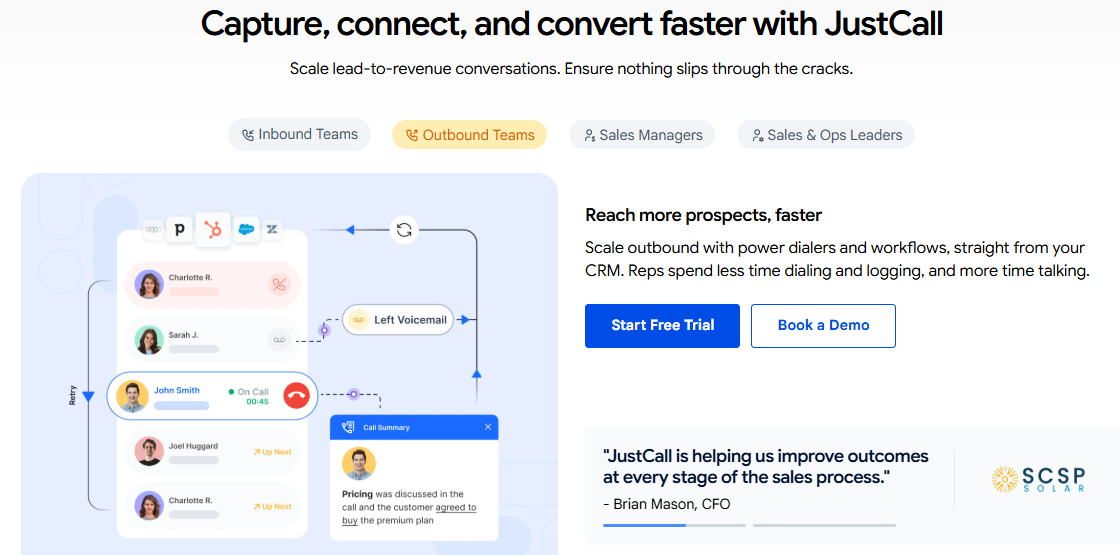
As noted above, JustCall is really geared more toward sales than support. It can still work for support teams, but probably not as well as a tool that was built with support in mind. Support is the more important function in eCommerce, in my view, so this may disqualify JustCall for a lot of you.
I should also note that there are some serious concerns about the general level of service JustCall provides to its users. There are plenty of reports swirling online about the platform being tricky when it comes to renewals and billing transparency, and its support infrastructure can be problematic as well. Issues like these are always bright-red flags for me, no matter how well a tool is built.
Gorgias integration | ✅ Yes |
Zendesk integration | ✅ Yes |
Shopify / order context | ❌ No direct Shopify focus |
SMS support | ✅ Yes (strong SMS + calling combo) |
Returns/refund workflows | ❌ No eCommerce workflows |
Seasonal scalability | ⚠️ Moderate (good for SMB scaling, not complex ops) |
Dialpad
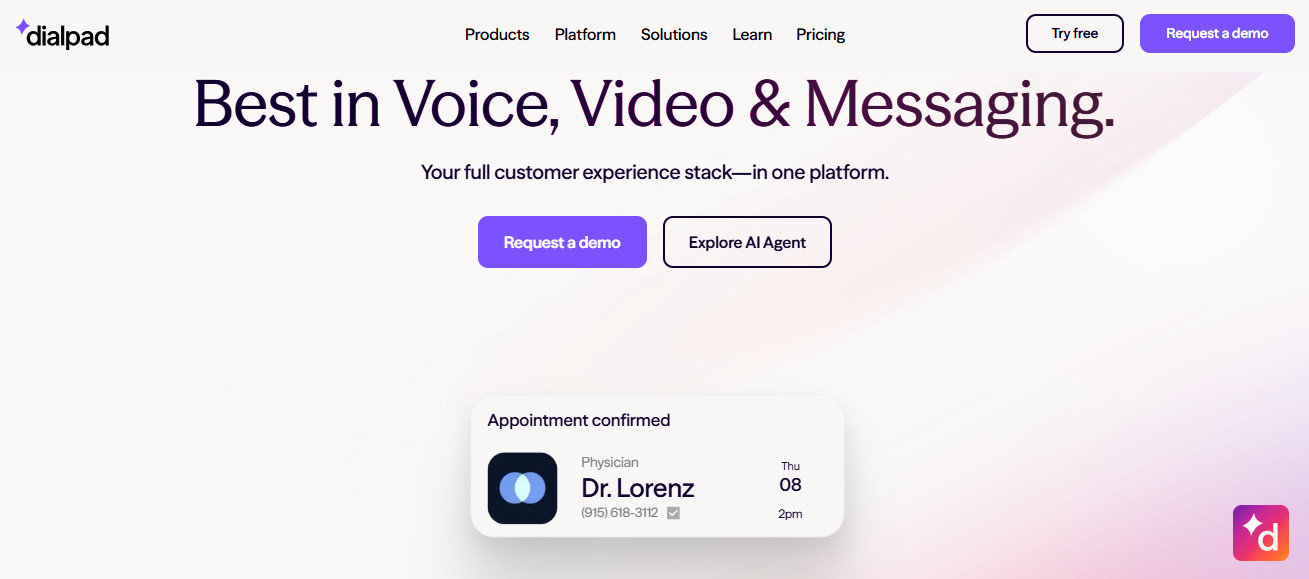
Dialpad works beautifully with Zendesk, but doesn’t offer a native Gorgias integration. If you’re using Gorgias, I wouldn’t even bother reading the rest of this entry; you simply won’t be able to make proper use of this platform.
If you are on Team Zendesk, though, there’s a lot to like here. Its Zendesk integration is as good as you’ll find on any platform, allowing agents to create tickets while making calls and view both open and closed tickets within Dialpad itself. The integration generally does a great job of allowing you to keep everything important in one place.
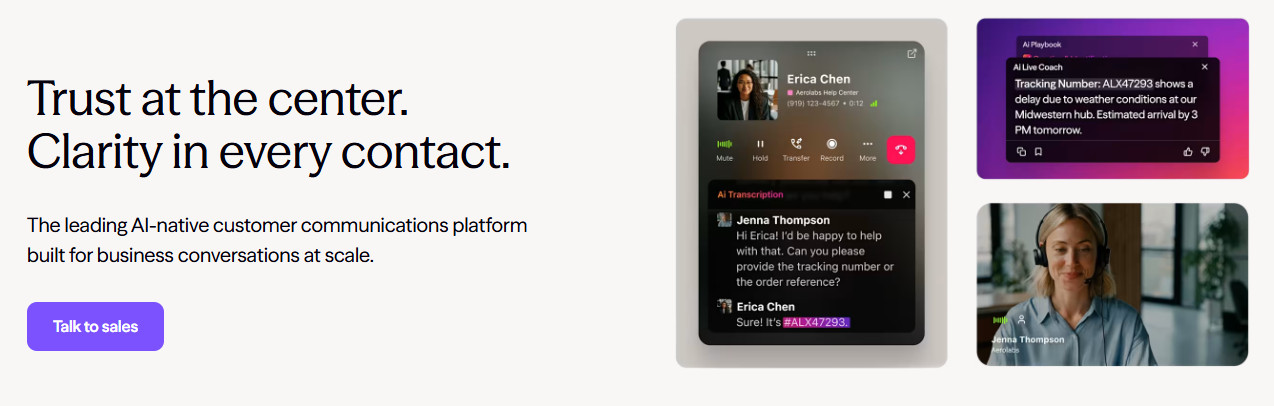
Dialpad also supports SMS and MMS messaging inside the app, and the broader platform is built around AI recaps, scoring, coaching, and analytics. If your agents use Dialpad, they won’t be short of high-quality guidance and call intelligence.
Aside from its failure to provide a Gorgias integration, my biggest gripe with Dialpad is its pricing. Dialpad Support starts at $80/month per user per month, and there are metered call charges for support usage on top of that. That’s fine if you really want the AI stack, but it’s not something I’d advise a lean operator to invest in.
Gorgias integration | ❌ Not native (API/custom only) |
Zendesk integration | ✅ Yes (CTI + integrations) |
Shopify / order context | ⚠️ Indirect (via integrations/API) |
SMS support | ✅ Yes (messaging + omnichannel) |
Returns/refund workflows | ❌ No native eCommerce workflows |
Seasonal scalability | ✅ Strong (easy to scale up/down) |
Talkdesk
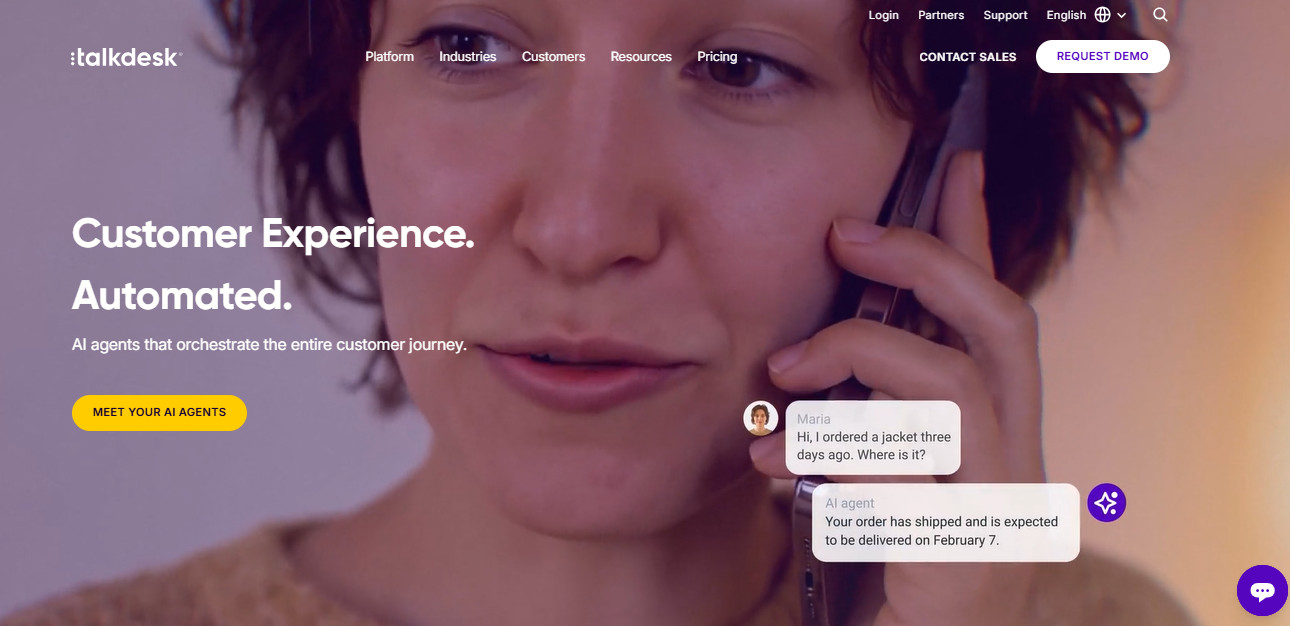
Talkdesk is the heavyweight in this list; this can be a benefit or a drawback, depending on the type of buyer you are.
Talkdesk’s Retail Experience Cloud integrates with Shopify and BigCommerce, and its Shopify integration offers real-time, bidirectional sync so agents can access customer, product, and order data (and even execute Shopify actions without re-entering said data). Its Zendesk connector features click-to-call, screen pops, ticket and user automations, and digital engagement coverage for SMS and other channels. That’s serious capability, and it can add a lot of value if you’re a larger retailer with a more complex queue design and a bigger digital support operation.
However, Talkdesk’s public pricing starts at $85/month per seat for its AI-powered contact center solutions. While Talkdesk Express offers a smaller-business path, the core platform still feels enterprise-led in terms of implementation expectations.
In the vast majority of cases, the burden of buying, configuring, and governing Talkdesk is simply too high for a 20-to-80-seat commerce support organization. It also doesn’t offer a native Gorgias integration, so it’s another nonstarter for teams built around Gorgias.
Gorgias integration | ❌ No |
Zendesk integration | ✅ Yes (native integration ecosystem) |
Shopify / order context | ✅ Yes (native integration ecosystem) |
SMS support | ✅ Yes (omnichannel contact center) |
Returns/refund workflows | ⚠️ Requires customization |
Seasonal scalability | ✅ Very strong (enterprise-grade scaling) |
What’s the Verdict?
Of the tools I’ve mentioned here, Aircall is my favorite. This isn’t because it has the longest feature list or the most advanced AI; it’s simply because it provides the best fit for the largest number of eCommerce companies. It feels entirely aligned with how eCommerce support teams actually work; it operates seamlessly inside both Gorgias and Zendesk, makes customer context visible during calls, separates returns from delivery issues, puts SMS in the same operational picture, and actually manages to reduce after-call admin with its AI features. UK teams can take a closer look at their eCommerce solution page.
That’s not to say Aircall is the best pick for absolutely everyone. If direct Shopify order context inside the dialer is your top priority, CloudTalk is well worth a look, while Talkdesk is probably the best fit for larger operations that genuinely need a heavy-duty contact-center platform.