


- EasyPost vs. Shippo: At a Glance
- Platform Overviews
- Shippo vs. EasyPost: How They Work in the Real World
- Ease of Use & Setup
- Integrations & Ecosystem
- Automations & Shipping Logic
- Carrier Support & Rates
- International Shipping
- Pricing
- Pros & Cons
- EasyPost
- Ideal Use Cases
- Final Verdict: EasyPost vs. Shippo
Last Updated on June 9, 2026 by Ewen Finser
FTC Disclaimer: We do make money from this blog and may receive compensation for this work in the form of commissions, fees and complimentary product access. Review our full FTC disclosure here.
Both Shippo and EasyPost provide multi-carrier shipping APIs that allow e-commerce brands to automate label creation, rate shopping, tracking, and returns directly inside their systems.
But despite looking similar on the surface, they’re built with slightly different philosophies.
Shippo focuses on providing a more complete shipping platform with built-in analytics, carrier management, and operational tooling. Meanwhile, EasyPost takes a developer-first approach, specializing in flexible API primitives that teams assemble into their own workflows.
So let’s break down where each platform performs best, especially for growing and high-volume e-commerce brands integrating shipping into their tech stack.
EasyPost vs. Shippo: At a Glance
EasyPost | Shippo | |
Primary Focus | Shipping API & infrastructure layer | Multi-carrier shipping API + operational tooling |
Developer Experience | API-first infrastructure for custom implementations | API with SDKs, docs, and operational tools |
Setup Time | More engineering-heavy and dependent on custom setup | Fast to test and integrate; most teams are live in 4–6 weeks |
Operational Visibility | Limited built-in visibility without additional tools | Built-in analytics and shipment visibility |
Automation | Shipping logic implemented through API | Shipping logic via API + optional dashboard rules |
Integrations | Primarily custom integrations | API + native e-commerce integrations |
Carrier Access | 100+ carriers | 40+ global carriers (1,000+ for tracking) |
International Shipping | Flexible international shipping via API | Built-in customs workflows |
Pricing Model | Usage-based pricing + BYO carrier account fee | Usage-based API pricing |
Best For | Developer-heavy teams building custom logistics | Growing and mid-market e-commerce brands |
Platform Overviews
What Is Shippo?
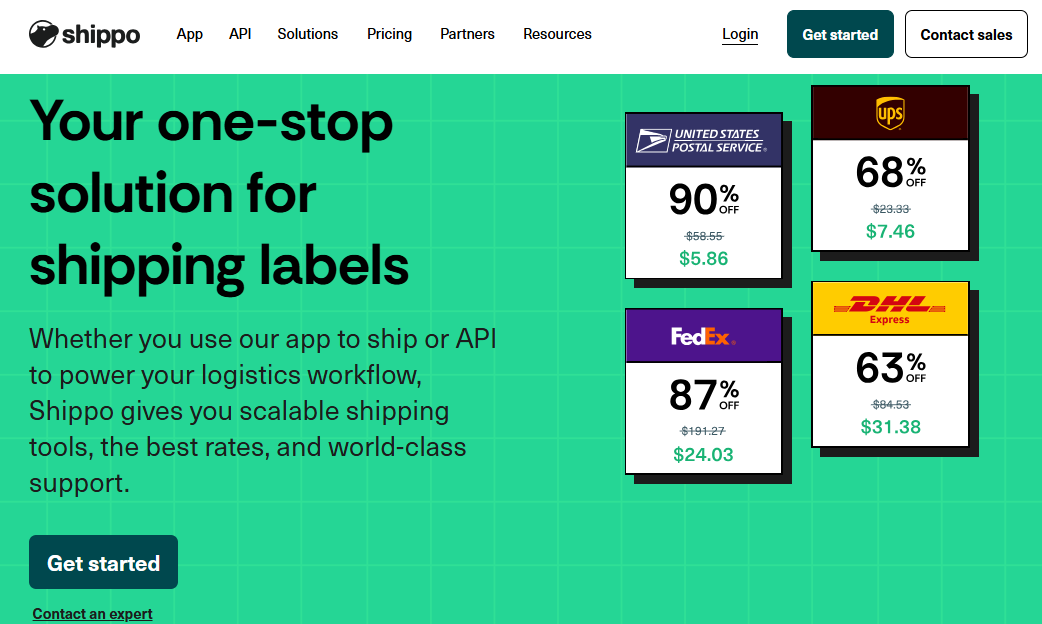
Shippo is a multi-carrier shipping API and infrastructure platform that lets e-commerce brands automate shipping within their own systems. Instead of integrating with individual carriers like USPS, UPS, or DHL separately, developers can connect to Shippo once and access normalized tracking data via a single webhook format. This makes it easier to get one consistent data structure and embed shipping directly into checkout flows, warehouse management systems, or order management platforms without maintaining multiple carrier integrations.
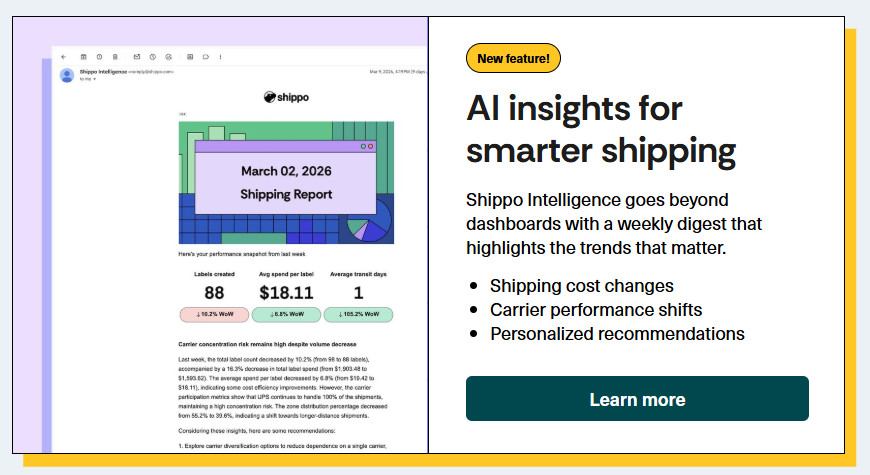
Shippo also provides operational tooling such as analytics, carrier performance insights, and support for international shipping workflows, which helps growing teams manage shipping at scale. Additionally, it includes an operational dashboard that teams can use to monitor shipments and performance alongside the API integration.
What Is EasyPost?
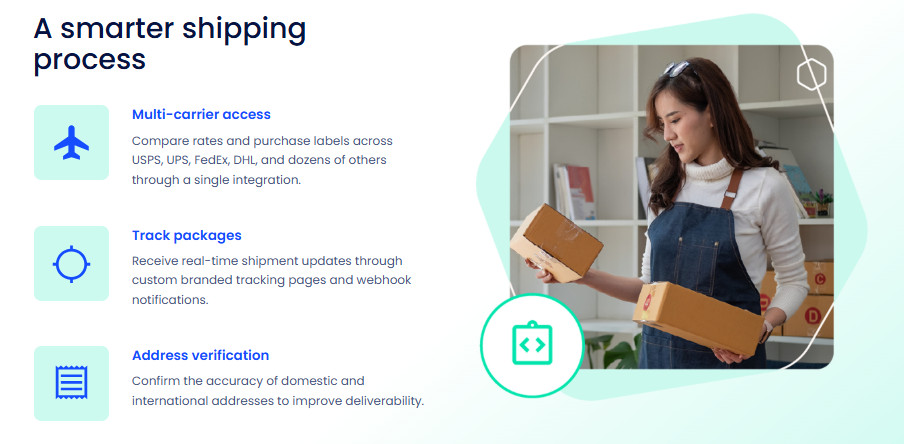
EasyPost is an API-first shipping platform designed for teams that want maximum control over how shipping works inside their systems. Rather than offering a full operational layer, it focuses on providing modular API endpoints for shipping functionality, such as label generation, address verification, shipment tracking, and carrier selection.
This approach gives developers flexibility to build custom logistics workflows, but it also means that more operational responsibilities (like analytics, reconciliation, and shipping logic) often need to be handled internally.
It’s incredibly powerful, but only if you have the engineering resources to maintain it. Without that, it can feel overwhelming.
Shippo vs. EasyPost: How They Work in the Real World
Even though Shippo and EasyPost both help you create shipping labels and connect to carriers, they’re built for slightly different types of shipping workflows.
Shippo gives you a complete shipping platform via API: rate shopping, label creation, tracking, address validation, and returns work out of the box without custom assembly.
EasyPost gives you the building blocks. The operational layer (automation rules, analytics, native store integrations) is either a separate add-on product or something your team builds on top of the API.
Shippo
The goal of Shippo is to automate shipping without making e-commerce brands build an entire logistics system themselves.
Developers can integrate the Shippo API to handle things like:
- Rate comparisons across carriers
- Label creation
- Tracking updates
- Address validation
- Returns and international shipping workflows
Shippo also provides operational tooling alongside the API, such as analytics, reporting, and shipping visibility. This means both engineering teams and operations teams can monitor shipping performance without needing to build internal tools from scratch.
EasyPost
EasyPost takes a more developer-first approach, providing the core shipping infrastructure through its API instead of offering a full operational layer.
This means that developers can use it to build their own shipping workflows directly inside their systems, including:
- Custom checkout shipping logic
- Marketplace shipping systems
- Proprietary warehouse software
- Custom order management platforms
This translates into a lot of flexibility, but it also means that your team is responsible for building and maintaining much of the surrounding workflow and operational tooling.
For companies with strong technical teams, this level of control can be extremely powerful.
Ease of Use & Setup
Shippo

For teams integrating via API, Shippo is designed to minimize the time between first call and production. API keys are available immediately after signup, and SDKs are available in Python, Node.js, Ruby, PHP, Go, and Java. The test environment mirrors production so teams can validate label creation, rate shopping, and tracking before going live, and most teams reach production in 4–6 weeks.
EasyPost

Before you get started with EasyPost, you’ll need your API keys, shipping carrier partner accounts, and a team ready to test. There’s no traditional “orders” dashboard, no store connection wizard, and no built-in workflow. In one project I worked on, EasyPost took several days to fully implement, and that was with a developer who already understood shipping concepts.
Integrations & Ecosystem
Shippo
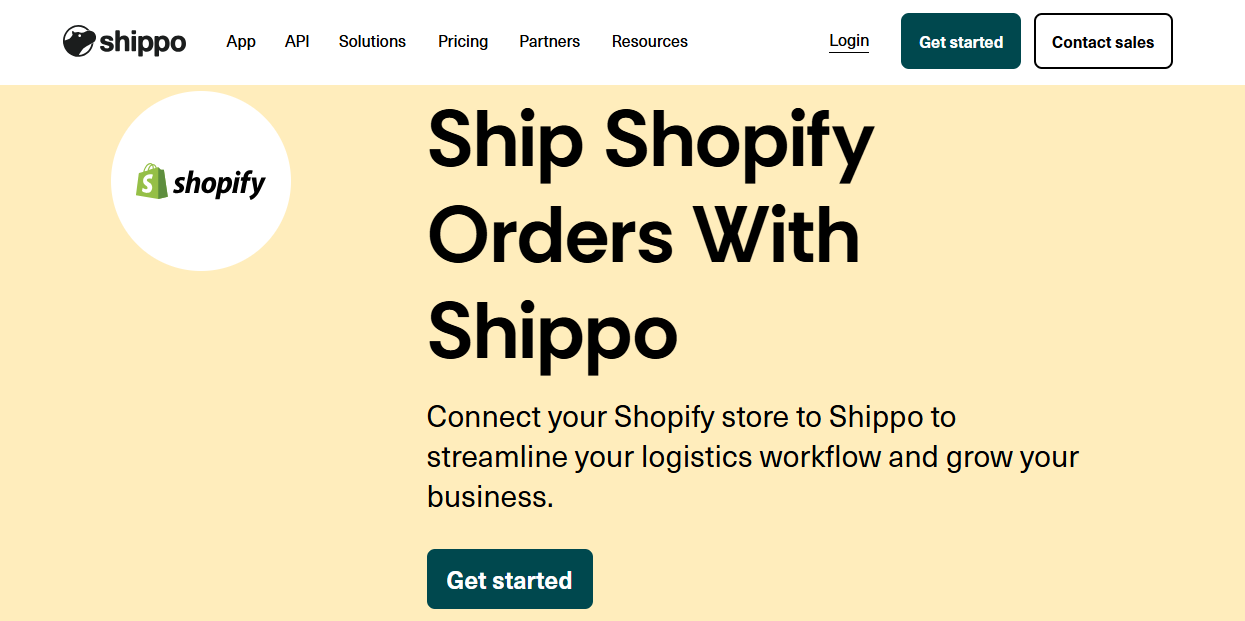
Shippo integrates natively with:
- Shopify
- WooCommerce
- Amazon
- Etsy
- eBay
- BigCommerce
- Wix
Shippo also integrates with order management systems, warehouse systems, and custom applications through its API. This allows shipping functionality to be embedded directly into operational workflows, allowing you to track and manage orders easily.
EasyPost
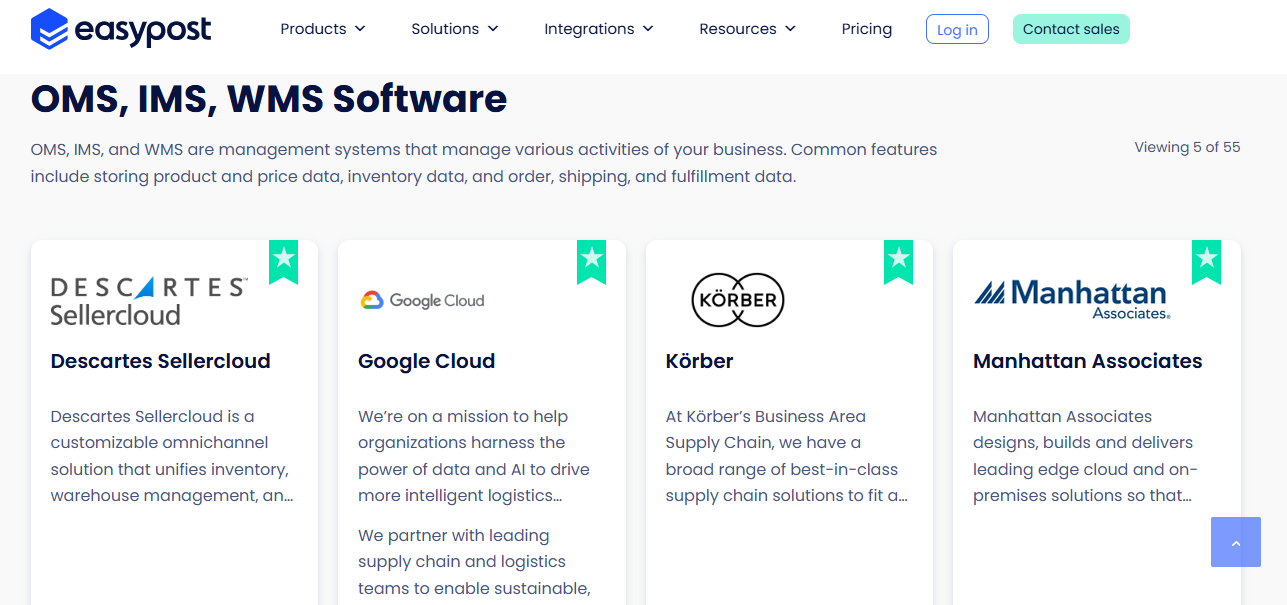
EasyPost doesn’t really have “integrations” in the same sense. It integrates with your code, rather than giving you an integration wizard, but this also means that it’s far more flexible.
You can connect it to:
- Custom checkouts
- Internal order management (OMS) systems
- Marketplaces
- Fulfillment centers
This is where EasyPost shines — but again, only if you’re building something custom.
Automations & Shipping Logic
Automation is one of the main reasons companies use shipping APIs, because it allows shipping decisions to happen automatically inside checkout, warehouse, or fulfillment systems.
Shippo
Shippo supports automation in two different ways: through its API and through its web app automation rules.
Through the API
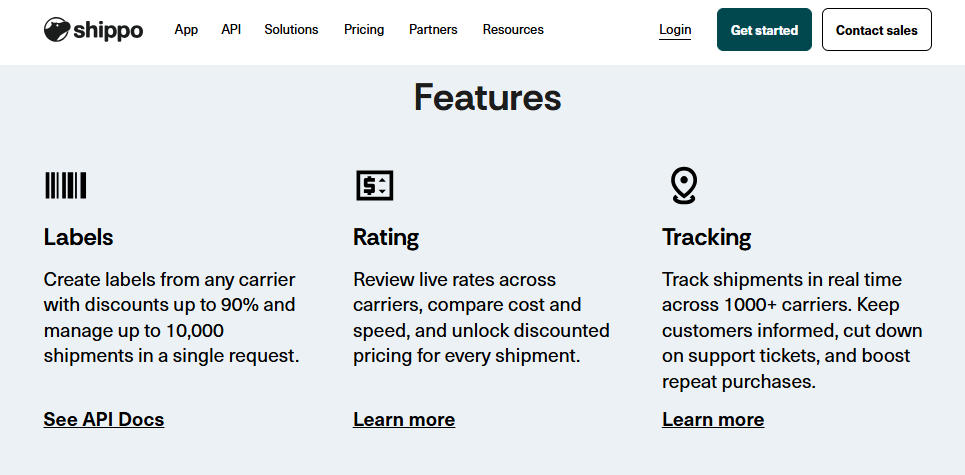
When using the API, automation is implemented in your own system’s code, which calls Shippo to retrieve rates, create labels, and manage tracking. Your system sends shipment data to Shippo, retrieves available rates, and then applies logic to decide which carrier or service to use.
For example, a developer might build rules like:
- If the shipment weight is under 1 lb → choose the cheapest available service
- If the destination is international → automatically include customs information
- If the order value is above $50 → add signature confirmation
In this model, Shippo acts as the shipping infrastructure while your system controls the shipping decisions. This approach allows very flexible workflows, especially when shipping is integrated into checkout systems, warehouse management tools, or custom fulfillment platforms.
Through the Web App
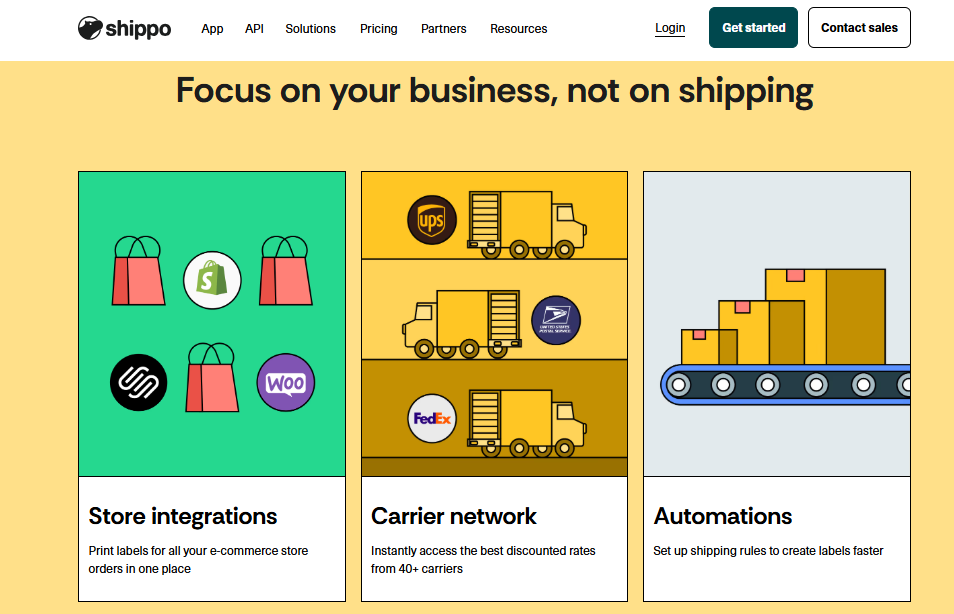
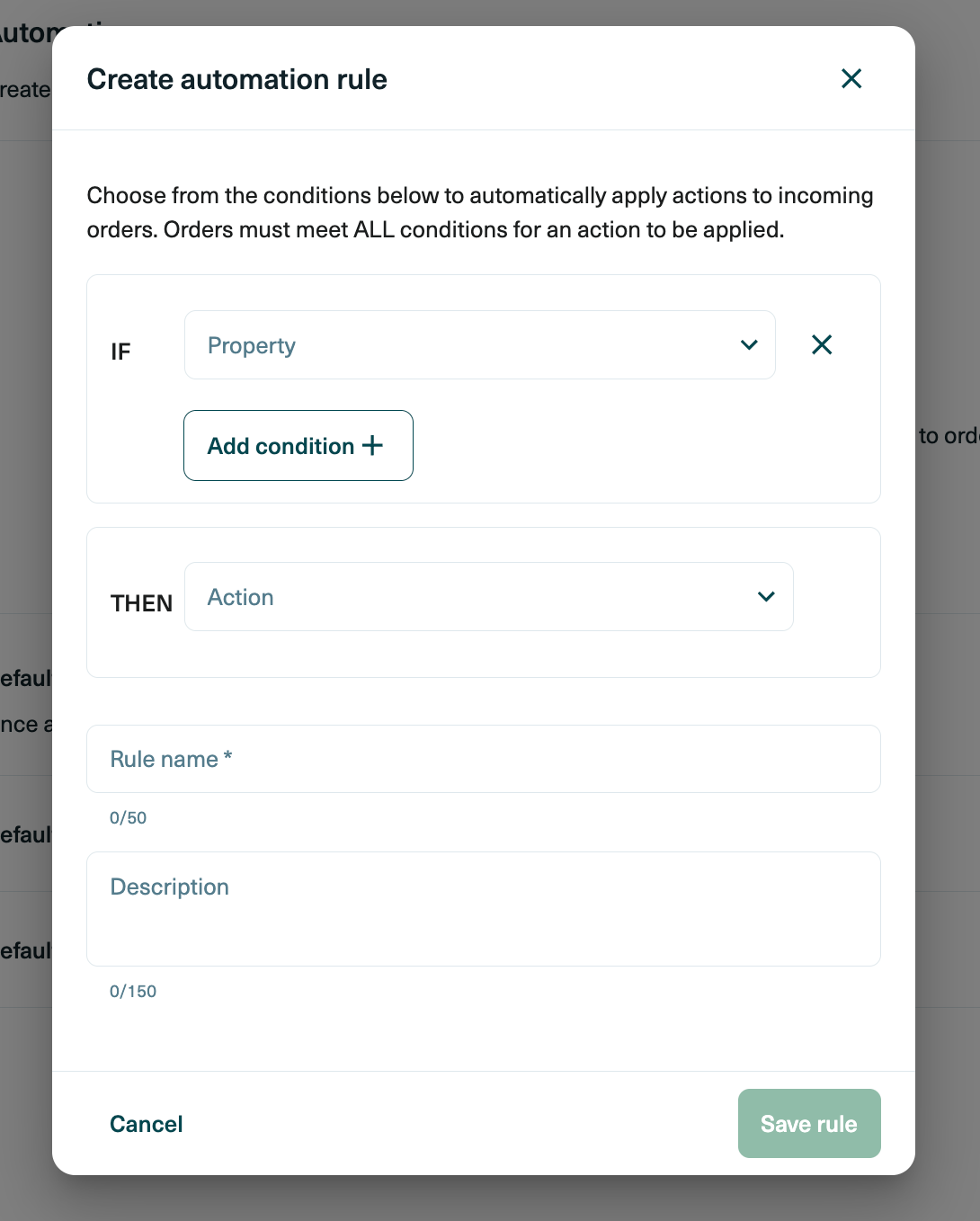
Shippo also includes a built-in automation rule builder in its web app, which allows operations teams to create shipping rules without writing code.
These rules follow a simple if-then format:
- IF total weight is under 2 lbs → THEN use the “Small Box” package template
- IF item name contains “poster” → THEN use “Tube Mailer” package template
- IF more than 3 items → THEN use the “Medium Box” package template
- IF weight < 1 lb → THEN assign the cheapest available rate
- IF weight > 2 lbs → THEN assign USPS Priority
- IF order value > $50 → THEN add signature required
These rules remove repetitive decisions and allow operations teams to adjust shipping logic quickly without needing engineering help.
In practice, many companies use a combination of both approaches: the API handles the core shipping logic, while web app rules allow operations teams to adjust workflows without needing engineering changes.
EasyPost
EasyPost approaches automation very differently from tools like Shippo. Rather than giving you pre-built rules in a dashboard, EasyPost lets you automate shipping by building logic into your own system using their API. That means automation is extremely flexible, but only if you’re willing to create it yourself.
With EasyPost, there’s no if-then rule builder you can click through. Instead, automation happens when:
- Your system sends shipment data to EasyPost
- Your code evaluates conditions (destination, weight, service level, cost, etc.)
- Your system tells EasyPost which carrier, rate, and options to use
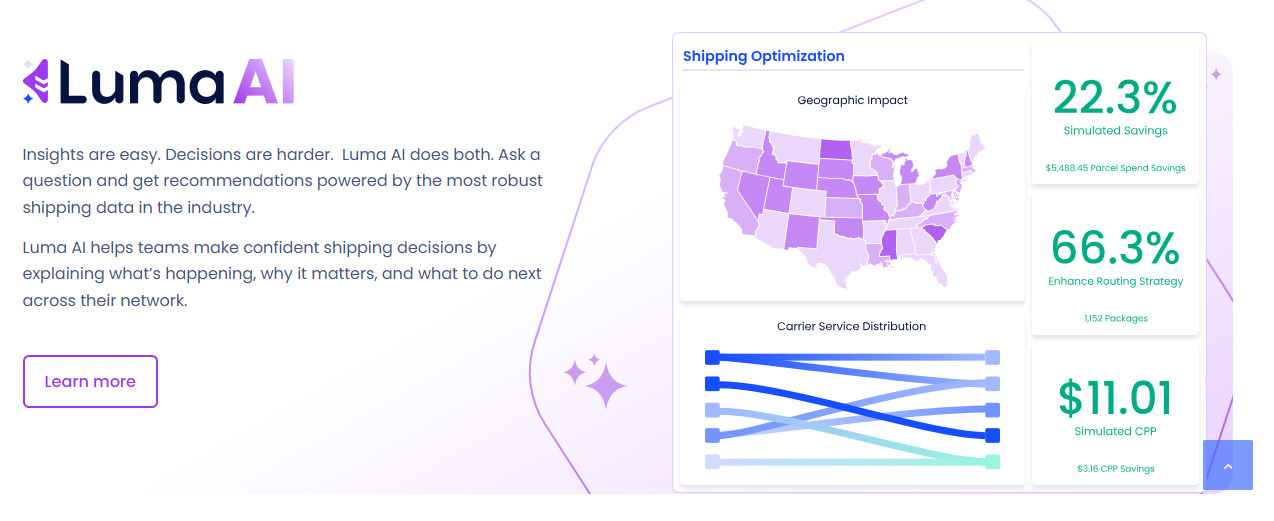
EasyPost has also introduced an AI-driven product called Luma, which focuses on providing insights and recommendations around shipping data. But while it can help teams analyse shipping performance and optimise decisions, it’s not a built-in rule builder like Shippo’s dashboard automation system.
Carrier Support & Rates
Shipping costs depend heavily on carrier contracts, negotiated rates, and how the API is implemented, so pricing differences usually depend more on volume and carrier agreements than the platform itself.
However, both platforms are excellent here, and the rates are generally cheaper than you can get by going direct to the carriers (unless you have your own pre-negotiated rates).
Each platform also supports a large number of carriers, including:
- USPS
- UPS
- FedEx
- DHL Express
- Royal Mail
- Evri
- Many regional carriers
EasyPost supports using your own negotiated carrier rates, but it still charges per-shipment platform fees, which can add noticeable overhead compared to tools like Shippo. Plus, it charges a monthly $20 fee. Meanwhile, Shippo allows you to use either your own negotiated rates or Shippo’s without an additional cost.
International Shipping
Both Shippo and EasyPost handle international shipments fairly well. The difference is how much control you want vs. how much work you want to do.
Both platforms:
- Automatically generate required customs forms
- Support HS codes for international products
- Work with major international carriers
- Support shipping to most countries worldwide
- Handle international label creation without manual paperwork
However, Shippo focuses on making international shipping easy and low-friction. They have in-depth, step-by-step help to make sure that your products don’t get held up in customs.
- Customs forms are auto-generated during label creation
- HS codes are supported and easy to apply
- Duties and taxes are handled by the carrier, depending on the service level
- International workflows feel very similar to domestic shipping
For most shipments, this means that the workflow won’t look that different from shipping locally, so there isn’t much additional learning curve.
Pricing
Shippo
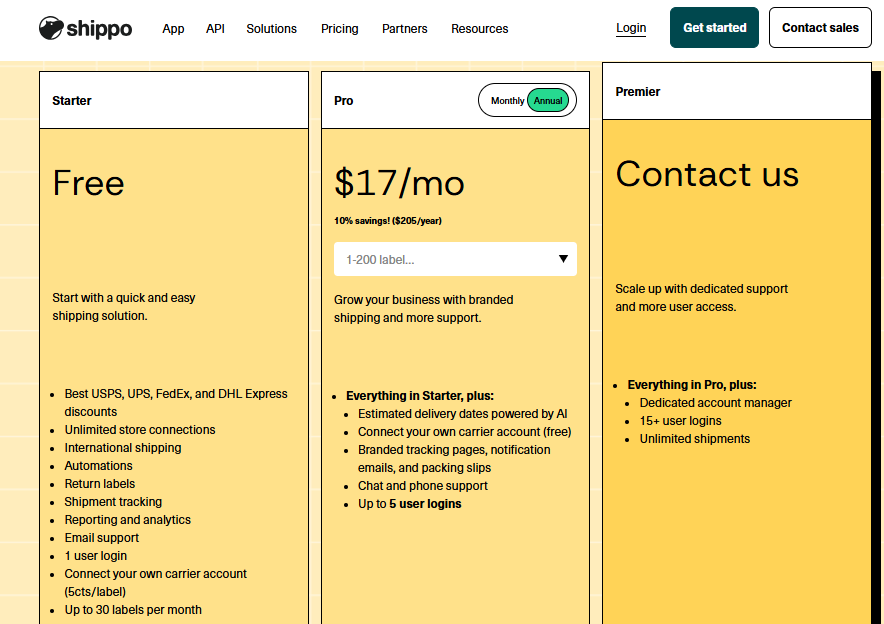
- Free plan supports up to 30 labels/month
- Paid plans scale with volume, starting at $17/month and scaling to $199/month
- Clear, predictable monthly cost
- Annual and monthly plans available
EasyPost
- Pay-as-you-go pricing — you only pay per-label fees up to 3,000 orders per month.
- Additional costs for features, such as Luma AI and tracking
- $20/month to use your own carrier rates
- Additional engineering work may be required depending on how the API is implemented
Pros & Cons
Shippo
Pros:
- Easy, fast setup for the web app
- Great automations for non-technical users in the web app
- Strong integrations with a wide variety of partners
- Strong multi-carrier shipping API
- Built-in operational visibility and analytics
- Combines API functionality with operational tooling
Cons:
- Opinionated workflow structure that’s less flexible than a raw API
- Limited deep customization
EasyPost
Pros:
- Extremely powerful API
- Total control over shipping logic
- Scales to very complex businesses
- Allows for vast customization
Cons:
- Requires developers
- No out-of-the-box workflow
- Slower time to value
Ideal Use Cases
Choose Shippo If:
- You want a shipping API plus operational visibility tools
- Your engineering and operations teams both need access to shipping data
- You want to automate shipping without building the full infrastructure layer yourself
- You run a growing e-commerce brand with increasing shipping volume
Choose EasyPost If:
- You have an in-house dev team
- You’re building a custom platform
- You need full control over shipping logic
- You operate at the marketplace or enterprise scale
Final Verdict: EasyPost vs. Shippo
EasyPost is a strong choice for developer-first teams that want full control over custom logistics workflows. Meanwhile, Shippo provides a more complete shipping infrastructure layer, combining multi-carrier APIs with operational tooling like analytics, monitoring, and support.
So for most growing e-commerce brands evaluating shipping APIs, Shippo is often the more practical choice because it combines multi-carrier API infrastructure with strong operational tooling and visibility. You’re getting the best of both worlds at a fraction of the complexity.