


- Phone Plan Comparison for Digital Nomads
- Toe-to-Toe Technical Comparison of the Best Phone Plans
- The Best Phone Plans for Digital Nomads (by Use Case)
- 1. Visible — Best Overall for Solo Digital Nomads
- 2. Total Wireless — Best Budget Option on Verizon’s Network
- 3. Google Fi — Best for International Travel
- 4. T-Mobile — Best for Urban Nomads with Heavy Hotspot Needs
- 5. AT&T — Best for Certain Rural Regions
- What Digital Nomads Should Prioritize When Choosing a Plan
- Digital Nomad Life and Situations Where Visible Helps Most
- FAQ
- Final Thoughts
Last Updated on March 25, 2026 by The Digital Merchant Team
Working as a digital nomad means your internet connection has to work wherever you do. You might be changing cities every few weeks, relying on short-term rentals, or splitting your time between coworking spaces and cafés. In all of those situations, your phone plan quietly becomes a core piece of your work setup.
The best phone plan for digital nomads isn’t the one that touts flashy perks or bundled entertainment. Instead, the best fit ensures coverage consistency, usable hotspot data, and flexibility, crucial if you’re working solo and moving often. This guide compares several popular U.S. options and breaks down which plans tend to work best for different nomad lifestyles.
Phone Plan Comparison for Digital Nomads
Provider | Network | On-device data | Hotspot access | Contracts | Best for |
Verizon | Unlimited | Included (speed-limited) | None | Solo, data-heavy U.S. nomads | |
Verizon | Unlimited | Included (lower speed cap) | None | Budget-focused Verizon coverage | |
T-Mobile + US Cellular | Flexible or unlimited | Included (plan-dependent) | None | Frequent international travel | |
T-Mobile | Unlimited | Large high-speed allotments | None | Urban nomads, heavy hotspot users | |
AT&T | Unlimited | Tier-based hotspot | None | Rural coverage in some regions |
Note: All plans are subject to network management during congestion; real-world speeds vary by location and time.

Try Visible for FREE with their 15-day offer before you switch. No commitment or credit card needed. Terms apply.
Toe-to-Toe Technical Comparison of the Best Phone Plans
Feature / Carrier | Visible (Verizon MVNO) | Total Wireless (Verizon MVNO) | Google Fi (T-Mobile/US Cellular MVNO) | T-Mobile (Major carrier) | AT&T (Major carrier) |
Network | Verizon 4G/5G International + Wideband on higher tiers | Verizon 4G/5G | T-Mobile + US Cellular 4G/5G | T-Mobile nationwide 4G/5G | AT&T nationwide 4G/5G |
Typical Price (1-line) | ~$25–$45/mo across plans | ~$20–$50/mo (varies by promo) | ~$35–$65/mo for unlimited tiers | ~$45–$100+/mo depending on tier | ~$35–$85+/mo for postpaid unlimited plans |
On-device Data | Unlimited (varies by tier; premium tiers have prioritized data) | Unlimited (Verizon network) | Unlimited (throttles after high-speed allotment) | Unlimited on postpaid plans | Unlimited on most unlimited plans |
Priority Data / Throttling | Deprioritization on base plans; premium tiers offer premium data access | Always deprioritized compared to main postpaid traffic | High-speed data caps (e.g., 50–100GB) before slowing | Premium plans include priority access; lower tiers may be deprioritized during congestion | Postpaid unlimited plans typically include priority data until heavy usage; data may slow in congestion |
Mobile Hotspot | Unlimited included; speed caps vary by plan (5–15 Mbps) | Unlimited included, lower speeds | Hotspot included with caps (e.g., 25–50 GB) | Generous high-speed hotspot allowances on premium plans (60–250 GB+) | Hotspot (tiered GB) included on many unlimited plans (e.g., 30 GB+); speeds slow after threshold |
Hotspot Speed Cap | 5–15 Mbps depending on plan tier | Lower speed cap plans | Up to plan cap, then slower | Up to 250 GB high-speed, then slow | Up to plan cap (e.g., 30 GB), then slowing afterward |
International Roaming Data | Mexico/Canada included (talk & text); daily global pass add-ons available | Limited roaming; Canada/Mexico commonly included | Strong international support with Google Fi Unlimited plans | Roaming included on some plans; speeds and access vary by country | Unlimited talk/text + data in Mexico & Canada; global roaming via Day Pass $12/day or add-on |
Contracts / Flexibility | No contract; month-to-month | No contract; month-to-month | No contract; flexible plans | Nomads in certain regions, high coverage, and roaming add-ons | No contract on postpaid; add-ons for roaming |
Best Fit For | Solo nomads needing flexible unlimited data and simple setup | Budget-focused Verizon network users | Travelers craving seamless global coverage and flexible plans | Nomads in urban areas need heavy hotspot and premium perks | Solo nomads needing flexible, unlimited data and simple setup |
Note: Speeds, caps, and add-ons are subject to network changes and region-specific in most cases.
The Best Phone Plans for Digital Nomads (by Use Case)
1. Visible — Best Overall for Solo Digital Nomads
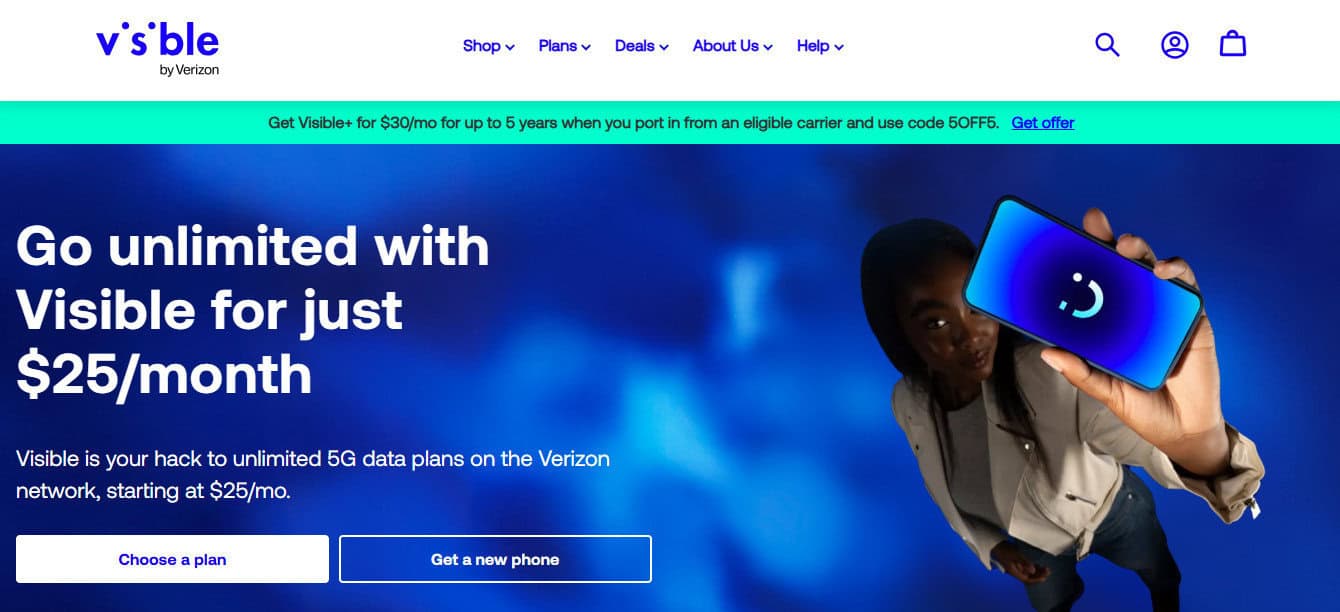
Visible is often a strong default choice for U.S.-based digital nomads who work alone and rely heavily on mobile data. It runs on Verizon’s nationwide network, which tends to perform well not only in major cities but also in suburbs, highways, and smaller towns.
What makes Visible appealing is how little effort it requires. Setup is online, eSIM is supported on compatible devices, and there’s no contract tying you to a fixed location. For nomads bouncing between rentals or cities, that simplicity removes a lot of friction.
Best For
- Solo remote workers
- Frequent movers within the U.S.
- Nomads who rely on hotspot as backup internet
2. Total Wireless — Best Budget Option on Verizon’s Network
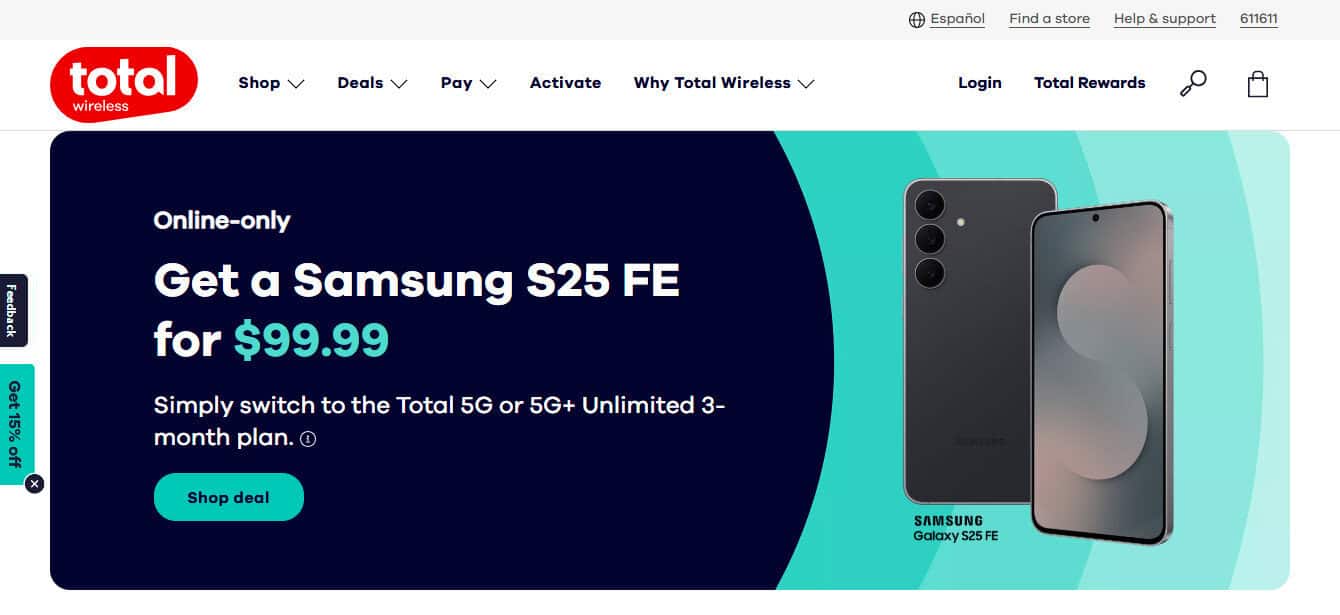
Total Wireless also runs on Verizon’s network and can be a more affordable alternative. Coverage is similar, but hotspot speeds are typically lower, and the overall experience feels more traditional.
For nomads who don’t rely on hotspots as often and want to minimize monthly costs, Total Wireless can be a reasonable option. It’s less flexible than Visible, but still avoids contracts and long-term commitments.
Best For
- Cost-conscious nomads
- Light hotspot usage
- Staying mostly in one region
3. Google Fi — Best for International Travel
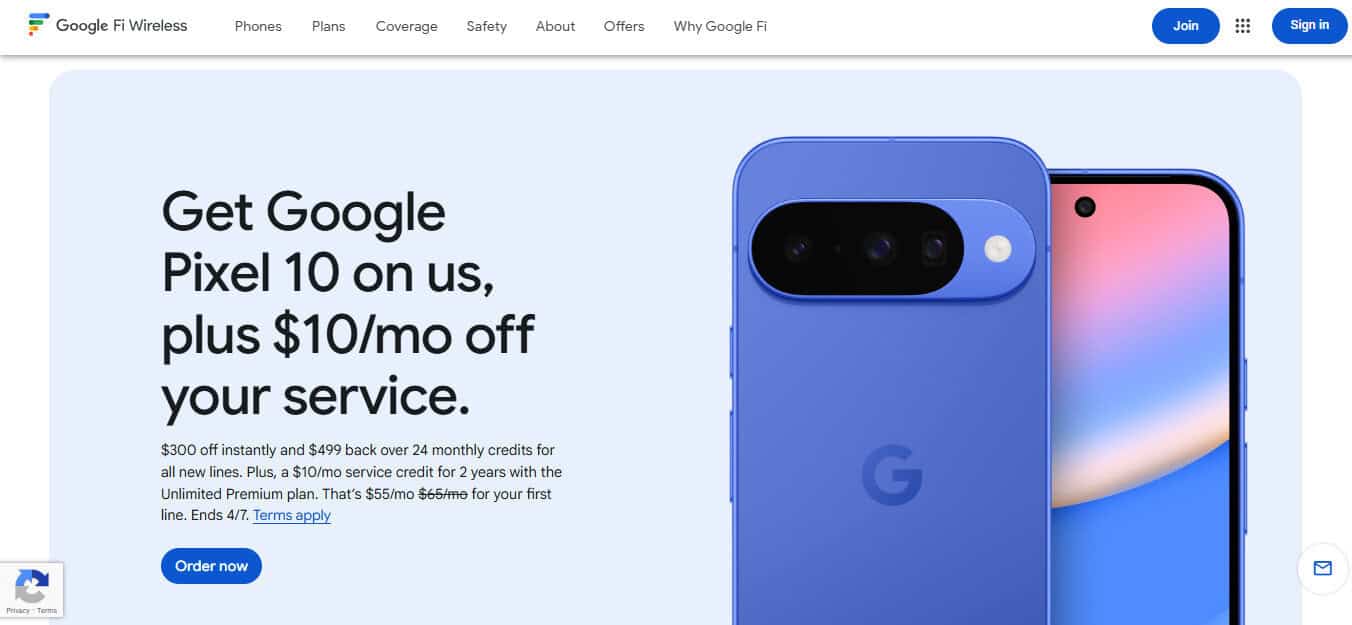
Google Fi is popular with digital nomads who spend significant time outside the U.S. It works seamlessly in many countries and doesn’t require switching SIMs every time you cross a border.
Domestically, performance can be mixed depending on location, and hotspot limits depend on the plan you choose. It’s excellent for international flexibility, but not always ideal for data-heavy U.S.-based remote work.
Best For
- Frequent international travel
- Short-term overseas stays
- Nomads who prioritize global roaming
4. T-Mobile — Best for Urban Nomads with Heavy Hotspot Needs
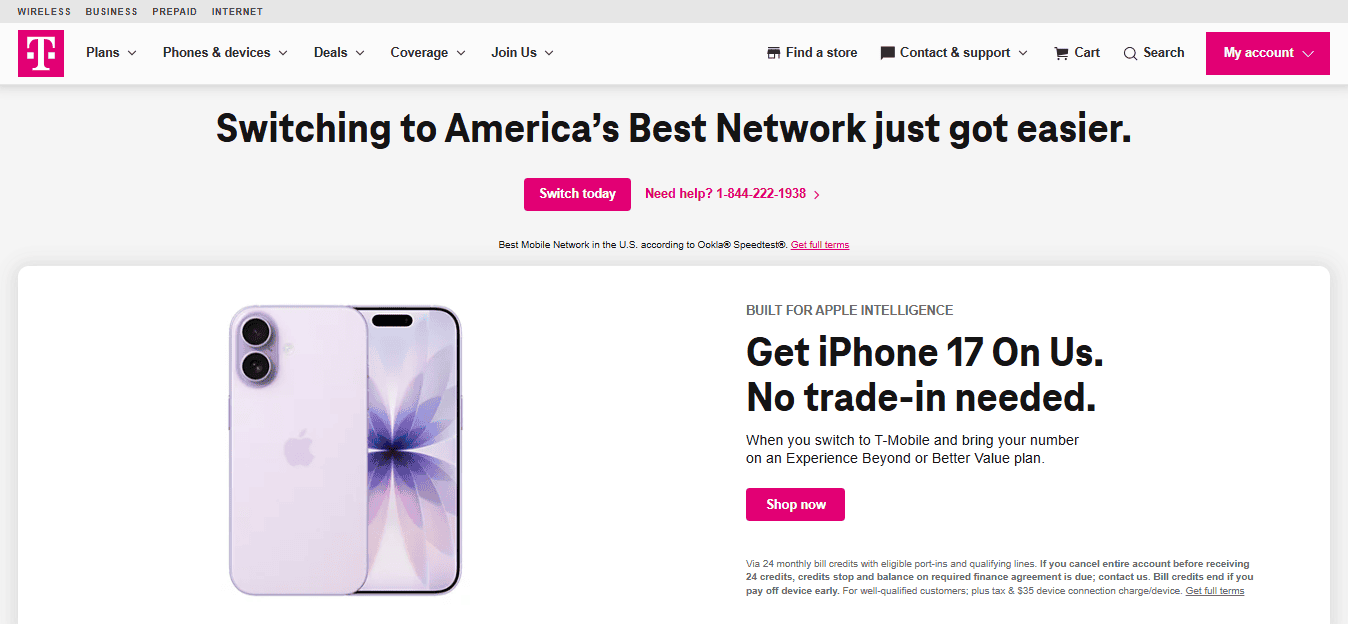
T-Mobile offers generous high-speed hotspot allowances on higher-tier plans, which can be useful if you regularly work from hotspot for long stretches.
Performance tends to be strongest in cities and metro areas. Outside urban centers, coverage can be less consistent than Verizon-based options. These plans are also more expensive, but they offer premium features.
Related read: The Best T-Mobile Alternatives in 2026
Best For
- Big-city digital nomads
- Heavy hotspot usage
- Users who want premium plan features
5. AT&T — Best for Certain Rural Regions
AT&T remains a solid option in parts of the U.S. where its network performs better than others, particularly in some rural or southern regions.
Plans often include tiered hotspot allowances and may appeal to nomads who know they’ll spend extended time in AT&T-strong areas. Flexibility is good, but pricing tends to be higher than prepaid alternatives.
Also read: Visible by Verizon vs AT&T Cell Phone Plans
Best For
- Rural or regional travel
- Longer stays in one area
- Nomads who prioritize specific coverage zones
What Digital Nomads Should Prioritize When Choosing a Plan

Rather than focusing on advertised speeds or perks, most nomads benefit from looking at a few practical factors:
- Coverage consistency across regions, not just cities
- Usable hotspot, especially in short-term housing
- No contracts or address lock-in
- Easy activation and plan management, ideally with eSIM
- Predictable costs, even during heavy workweeks
These are the areas where many traditional phone plans fall short for location-independent work.
Digital Nomad Life and Situations Where Visible Helps Most
Visible is the overall leader for the digital nomad lifestyle, providing sustainable connectivity in hard-to-reach regions. Here’s where it really shines:
Temporary Housing (and Unreliable Wi-Fi)
Short-term rentals are where phone plans get stress-tested fast, especially when “fast Wi-Fi” slows down the moment everyone logs on. Visible’s hotspot isn’t flashy, but it’s predictable enough for calls, cloud tools, and normal workdays when Wi-Fi doesn’t cooperate.
Coworking Spaces, Cafés, and Security Realities
Coworking and café Wi-Fi can be convenient, but speeds dip during busy hours, and public networks aren’t always ideal for work. Having your own mobile connection lets you switch to hotspot quickly and keep working without scrambling or relying entirely on shared networks.
Solo Digital Nomads Need Different Plans
Most phone plans are built around families and shared data pools, which can feel like unnecessary overhead when you’re working alone. Visible’s single-line setup keeps things simple: one plan, one bill, no extra logins or features you’ll never use.
Activation, eSIM, and Flexibility on the Road
Activation only feels boring until you’re dealing with it from an Airbnb, airport, or temporary address. Visible’s online setup and eSIM support make it much easier to activate, manage, or change plans without store visits or shipping logistics.
What Usually Matters Less Than Expected
Perks like streaming bundles and international calling sound nice at first, but they rarely affect day-to-day work. What ends up mattering is whether your internet works when you need it and whether your phone plan quietly removes friction instead of adding it.
FAQ
Question: Is Unlimited Data Really Unlimited for Digital Nomads?
Answer: Unlimited plans can still slow down during congestion or after heavy usage. For nomads, consistency matters more than raw speed. Plans that stay usable across locations are often more reliable than those with higher peak speeds.
Question: Can Hotspot Replace Home Internet While Traveling?
Answer: Hotspot works well as backup or short-term primary internet, especially for calls and cloud work. It’s not a perfect replacement for fiber, but it’s essential when rental or coworking Wi-Fi is unreliable.
Question: Is a Prepaid Plan Reliable Enough for Remote Work?
Answer: Yes, for many digital nomads. Prepaid plans running on major networks often perform similarly to postpaid plans, with the main difference being prioritization during peak congestion.
Final Thoughts
The best phone plan for digital nomads depends less on brand loyalty and more on how you actually live and work. If you move frequently, work solo, and rely on mobile data to keep things running, flexibility and reliability matter far more than bundled extras.
For many U.S.-based digital nomads, plans like Visible strike the right balance between coverage, simplicity, and cost. Others may benefit from international-focused or premium plans depending on travel patterns.
The goal isn’t to find the “perfect” plan; it’s to choose one that quietly supports your work, wherever you happen to be next.