


Last Updated on July 5, 2026 by Ewen Finser
The digital media landscape looks nothing like it did decades ago. What once began as a collection of personal passion projects and casual hobbyist email blasts has become one of the most lucrative, high-margin business models in the digital economy. High-performing newsletter businesses are no longer viewed as content feeds. Instead, modern investors see them as media companies with proprietary subscriber data and a direct line to customers that competitors can’t easily replicate.
When a newsletter operator builds an audience to thousands of highly engaged subscribers, establishes multiple revenue streams, and generates predictable cash flow, the business becomes a valuable (and sellable) asset. Eventually, every successful creator faces a milestone: choosing between scaling further or cashing out on years of building the business.
Choosing the right platform in order to exit your newsletter shouldn’t be taken lightly. The venue you select can directly determine your final multiple, the structure of your deal, the security of your trade secrets during due diligence, and the quality of the buyer you attract. To make an informed decision, you need to evaluate the marketplace based on transaction size, fee structures, operational processes, and buyer networks.
The real key here is information and expertise. The process of selling a newsletter business or any business for that matter is very serious and should not be taken lightly. You’ve spent years, in most cases, plus the effort and capital to build it, and by choosing the wrong marketplace you could jeopardize everything you’ve worked so hard for.
Understanding Newsletter Marketplace Options

The digital asset sales ecosystem features a wide variety of transactional environments. These spaces range from uncurated micro marketplaces to full-service investment-level brokerages. Understanding where your specific brand fits along this spectrum prevents you from overpaying in fees or grossly under selling.
Duuce and LetterTrader: The Early Stage Micro Marketplaces
For newsletter operators who have validated a niche but have not yet achieved significant financial scale, specialized micro marketplaces offer a clear entry point. Platforms like Duuce and LetterTrader were built specifically to cater to newsletters with smaller lists that are proven but not yet at enterprise-level revenue.
- Deal Size Fit: These platforms are optimized for pre-revenue, low-revenue, or early-stage newsletter lists. Most transactions on these spaces sit below $25,000, often serving creators who want to offload a project they no longer have time to grow.
- Fee Structure: Fees are generally lower to accommodate smaller deal volumes. They often run as flat listing fees or a modest percentage of the final transaction price, typically staying between 5% to 10%.
- Listing Curation: These platforms operate primarily on a self-serve model. The seller creates a profile, hooks up basic metrics, and writes their own copy. There is minimal formal brokerage intervention or financial vetting performed by the platform.
- Buyer Network: The buyer profile consists mostly of solo entrepreneurs, indie hackers, and content creators looking to buy a pre-built audience to jumpstart a new project. Institutional capital and private equity groups do not frequent these micro exchanges.
Flippa: The High-Volume Open Marketplace
As one of the oldest and largest digital asset sales spaces in the world, Flippa handles a massive volume of website, application, and e-commerce transactions. Newsletters are just one category among many, but Flippa gives them their own dedicated section.
- Deal Size Fit: Flippa can accommodate a wide variance in transaction value, ranging from a few hundred dollars for a starter template up to mid-six-figure assets. However, the platform remains heavily weighted toward the lower to mid market tiers.
- Fee Structure: Flippa utilizes a dual fee structure. Sellers pay an upfront listing fee to launch their auction or classified ad, followed by a success fee upon closing that scales based on the size of the deal, generally between 3% to 10%.
- Listing Curation: This is a self-serve marketplace. While Flippa offers premium visibility packages and basic automated data verifications, the responsibility of creating the prospectus, answering buyer inquiries, and navigating escrow rests squarely on the shoulders of the business owner.
- Buyer Network: The network is vast and highly global, but it is notoriously fragmented. Sellers on open marketplaces often find themselves sorting through hundreds of casual tire kickers, low-ball bargain hunters, and unverified buyers before finding a serious one.
Acquire.com: The Tech-Focused Startup Exchange
Acquire.com has grown rapidly as a modern, software-focused marketplace designed to connect startup founders with corporate and private buyers. While heavily focused on SaaS assets, it still lists monetized content like newsletters.
- Deal Size Fit: The platform targets early to growth-stage startups, making it an appropriate fit for newsletters generating anywhere from $50,000 to several million dollars in implied enterprise value.
- Fee Structure: Acquire.com charges a clear success fee upon a closed transaction, which typically runs between 6-8% percent for standard transactions, alongside premium membership options for buyers looking for early access to deal flow.
- Listing Curation: The model is an assisted self-serve environment. The platform offers automated financial integrations and standardized templates to build your listing. They do provide baseline curation to make sure a listing meets minimum data requirements, but you won’t get a dedicated advisor to negotiate the deal for you.
- Buyer Network: This is a concentrated group, made up of corporate development executives, search funds, angel investors, and venture-backed operators. It is an excellent fit for tech-savvy buyers, though they often look at newsletters through the lens of a customer acquisition tool rather than a standalone media business.
Empire Flippers: The Managed Asset Marketplace
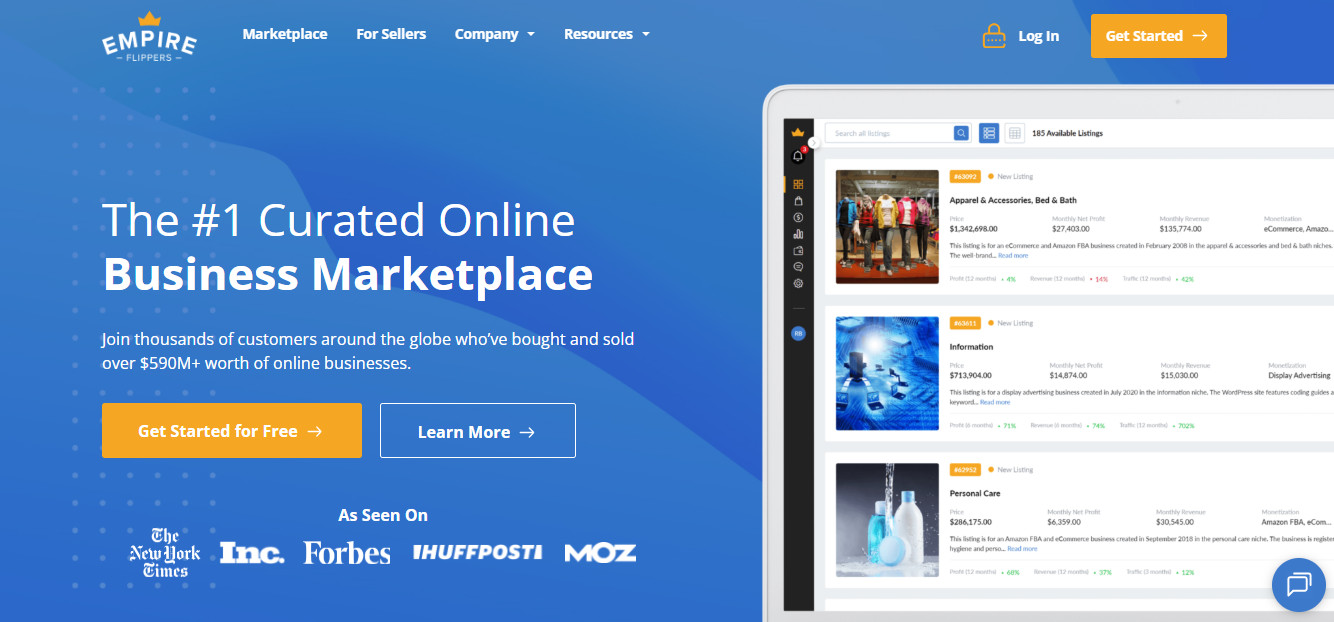
Moving away from self-serve directories, Empire Flippers introduces a fully managed marketplace model. They handle the public presentation and vetting of mid-market online businesses, including content sites and large newsletters.
- Deal Size Fit: This marketplace strictly handles established, cash-flowing businesses. They enforce minimum profit requirements, meaning listings generally range from $100,000 dollars to several million dollars in transactional value.
- Fee Structure: Empire Flippers operates on a commission-only success model, charging a tiered percentage of the final sales price. This fee starts at 15 percent for smaller assets and scales downward to lower single-digit percentages as the deal value reaches the multi-million-dollar mark.
- Listing Curation: This is a highly curated marketplace. The internal team handles financial vetting, builds a structured public profile, and filters initial buyer questions. However, communication is largely systemized through their proprietary online platform but at times does offer advisor support when necessary.
- Buyer Network: The buyer pool features experienced digital investors, mid-sized portfolio managers, and aggregators all looking for steady cash flow generation. The screening process of the platform keeps casual browsers out, so you’re only dealing with buyers who mean business.
Quiet Light: Advisor-Led Brokerage

Quiet Light operates as an advisor-led brokerage rather than an open marketplace or automated listing platform. Every newsletter business goes through a manual vetting process with an experienced broker before it goes live. That broker verifies the financials and builds out the marketing materials on the seller’s behalf, rather than leaving sellers to self-list.
- Deal Size Fit: Established, profitable newsletters looking for a guided, high-touch exit process.
- Fee Structure: Commission-based success fee, typically ranging from 10% down to 3% depending on transaction size.
- Listing Curation: Manual, broker-led vetting rather than a self-service listing.
- Buyer Network: Higher barrier to entry; your metrics, subscriber data, and financial records must be clean and fully transparent to clear the initial advisory screening.
The Core Challenge of the Newsletter Asset Class
General digital asset marketplaces work well for e-commerce shops or basic content websites, but newsletters present a different challenge during a sale. Unlike a physical product brand or a software tool, a newsletter runs on a trust-based relationship between a publisher and an audience.
An automated spreadsheet or a self-serve listing algorithm cannot accurately communicate the true mechanics of a media asset. Buyers who do not specialize in media often look at a newsletter and see vulnerabilities where an expert sees value.
To achieve a top-tier multiple, you have to be able to explain a few operational metrics that self-serve platforms typically miss:
- Subscriber Quality vs. Quantity: A list of 50,000 subscribers with a 45% unique open rate is far more valuable than a list of 200,000 subscribers with an 11% open rate. Self-serve platforms can sometimes fail to weigh this distinction correctly in their baseline valuation tools.
- Monetization Diversification: A newsletter that depends entirely on programmatic ad networks commands a lower multiple than one with direct brand sponsorships or affiliate partnerships sustained over multiple quarters.
- List Health and Churn Dynamics: Explaining organic list growth, list cleaning habits, and the lifetime value of a subscriber requires a narrative approach that a static online posting simply cannot accommodate.
Market Platform Comparison at a Glance
Here’s how these marketplace options compare as you plan your exit.
Platform Name | Target Deal Size | Primary Fee Structure | Listing Model | Main Buyer Profile |
Micro (Under $25k) | Flat Listing Fees | Self-Serve Directory | Solo Hobbyists & Indie Hackers | |
Micro (Under $25k) | Low Percentage (Under 5%) | Self-Serve Directory | Starter Project Seekers | |
Broad ($10k to $250k) | Upfront Fee + 3% to 10% Success Fee | Self-Serve Auction | Global Generalist Investors | |
Growth ($50k to $5M+) | 6-8% Success Fee | Assisted Self-Serve | Tech Founders & Search Funds | |
Mid-Market ($100k to $5M) | Tiered Success Fee (Up to 15%) | Curated Managed Marketplace | Digital Asset Portfolio Managers | |
Premium ($250k to $20M+) | Competitive Tiered Success Fee | Direct Advisor-Led Brokerage | High Net, PE, Family Office |
Choosing the Right Route for Your Newsletter

Finding the right place to sell really comes down to where your business is at right now and how much help you want during the process. Here is a quick way to think about your options:
- Choose Duuce/LetterTrader if you have a smaller, newer newsletter and you just want a quick, low-friction place to list it without jumping through a dozen corporate hoops.
- Flippa is best if you are on the fence about selling, want to test the waters with a massive audience, and don’t mind handling the tire-kickers and negotiations yourself.
- Empire Flippers works well if you want a structured marketplace with a hands-off digital process, but you don’t necessarily need a dedicated broker holding your hand.
- Quiet Light is the best all-around choice if you have a larger, established newsletter and you want a real human advisor to help you clean up your numbers, deal with serious buyers, and guide you through the entire transfer.
Final Thoughts
Building a successful newsletter takes a ton of work. Between writing the content, keeping open rates high, and earning the trust of your subscribers week after week, you have built a real media asset.
When you are ready to move on to your next project, don’t rush the exit. Take a look at your traffic, check your revenue data, and pick the platform that matches your style. Whether you list it yourself on a self-serve site or partner with a professional advisor to do the heavy lifting, make sure you get the full value for the audience you worked so hard to build.