


- Why Financial Brands Need Fintech-specific Affiliate Software
- What Fintech Companies Should Look For in Affiliate Software Platforms
- The Best Fintel Connect Alternatives in 2026
- 1. Everflow: Best for Full Control and Scalable Partner Infrastructure
- 2. Impact.com: Best Enterprise-Grade Network Alternative
- 3. Partnerize: Best for Enterprise Brands with Global Programs
- 4. PartnerStack: Best for B2B SaaS Partner Programs
- 5. Tapfiliate: Best for Growing E-Commerce and SaaS Brands
- 6. Awin: Best for Broad, Multi-Vertical Reach
- Which Fintech Connect Alternative Is Best?
Last Updated on August 12, 2026 by Ewen Finser
Working in fintech comes with a host of challenges when it comes to affiliate partnerships. From compliance to first-to-last click attribution and fraud issues from customers to partnerships. There is no question financial companies need an affiliate marketing platform designed around compliance and approval-based attribution, not a general affiliate network retrofitted for banking.
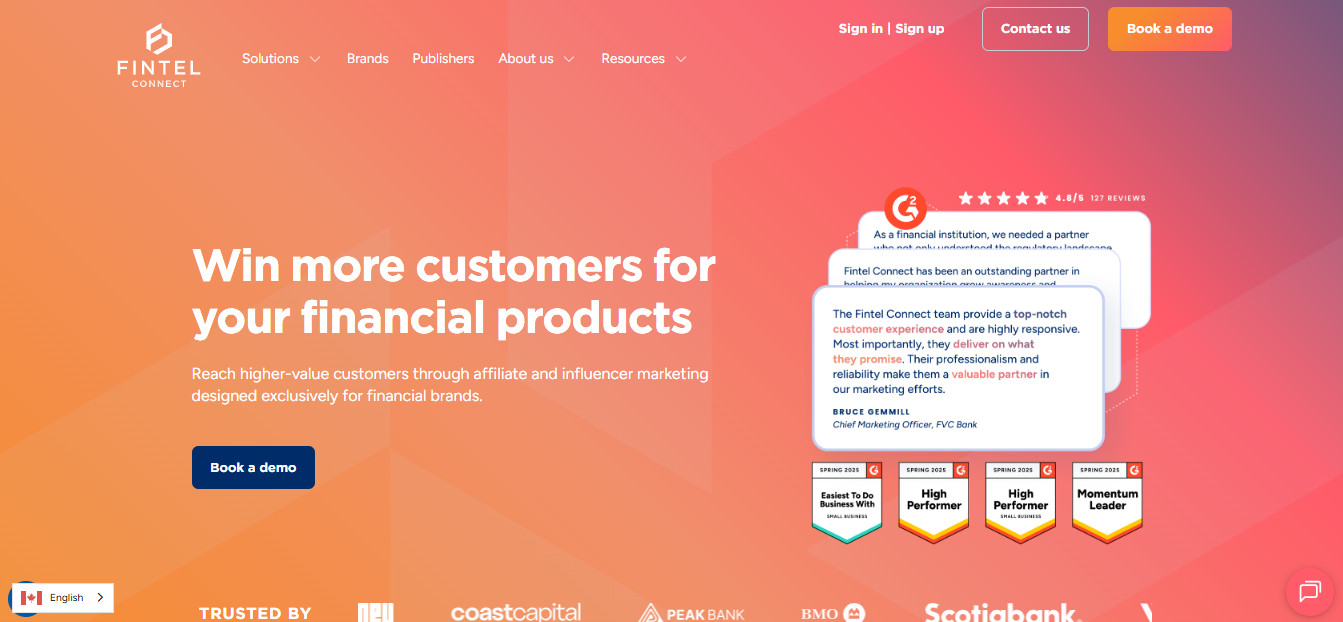
One such affiliate platform, Fintel Connect, was built with that in mind. For programs just getting their compliance processes off the ground, that basic functionality works. But the same specialization that makes Fintel Connect appealing on day one is often what financial marketing teams outgrow once their affiliate partnerships balloon into a thriving income stream made up of multiple functions and programs.
No matter how big your company is or how mature your affiliate strategy already is, the platform you choose needs to hold up under real regulatory pressure, covering everything from marketing claims and disclosures to how customer data gets tracked, stored, and used. On top of that, it needs to handle the messier financial realities of fintech products: multi-step funnels, layered payout structures, and partnerships that don’t fit a one-size-fits-all model.
This guide walks through the strongest Fintel Connect alternatives, with an emphasis on finding a more flexible, infrastructure-first platform designed to take on a finance-focused affiliate network.
Why Financial Brands Need Fintech-specific Affiliate Software
Compliance and regulatory tracking
Financial products (loans, credit cards, insurance, trading platforms) are heavily regulated. Generic affiliate products are not set up to take any of the needs of fintech compliance and regulations into account, such as disclosures, licensing requirements, or geographic restrictions needed to stay compliant (e.g., certain offers can’t be promoted in certain states/countries, or to certain audiences).
Complex, Conditional Commissions
An affiliate-driven “conversion” in fintech typically isn’t driven by a single click-to-sale. It looks more like: Discovery then application, followed by processing and verification with or without a credit check, followed eventually by that first transaction or conversion. Non-fintech affiliate platforms are built more for a ‘click then pay’ conversion. That is not going to work when you need multiple steps to verify if the lead actually will convert. Fintech affiliate software is built to handle these delayed, conditional payout structures, whereas generic tools assume an immediate transaction.
Fraud and bot prevention
The fintech sector is a hotbed for fraud across every facet, from fake leads to bonus abuse to dreaded bot-driven sign-ups and everything else in between. And since these fraudulent leads can often result in large payouts, there is a great deal of money to be lost. Fintech-specialized affiliate platforms include stronger fraud detection tuned to financial behavior patterns. Essentially, this is where these platforms can pay for themselves.
Higher-value, lower-volume relationships
Fintech affiliate programs often drive fewer, higher-quality partnerships through granular reporting showing which finance bloggers, comparison sites, or influencers are driving the biggest bang for your buck. Specialized software delivers better partner management, custom contracts, and tiered commission structures rather than a standard one-size-fits-all model.
Data security requirements
Personal financial information must be protected, and the software that handles it requires stricter security and compliance standards. Affiliate software built for the fintech sector takes that into account.
What Fintech Companies Should Look For in Affiliate Software Platforms

Here’s the thing about running an affiliate program in fintech: it’s just not like running one for, say, a clothing brand or a meal-kit subscription. You’re operating in a regulated industry, which means your affiliate platform has to do a lot more than track clicks and cut checks.
Here’s what to actually look for.
1. Fraud Protection
As mentioned above, affiliate fraud is real and rampant. Bot sign-ups, fake applications, and sketchy traffic sources can cause you to pay commissions on leads that were never going to convert. This not only eats away at your margins it can cause you to risk losing legitimate partners you actually want to keep.
A platform built for fintech should bake in protection like:
- Encrypted tracking and secure API integrations
- Lead deduplication
- IP tracking and restrictions
- Secure server-to-server delivery
2. Strong Compliance and Governance Tools
Again, strong compliance and governance tools are non-negotiable. Fintech operates under serious regulatory scrutiny, and if your affiliate software doesn’t reflect that, you can land in serious trouble, including inconsistent messaging from partners, potential fines, and overall brand name damage that’s hard to wind back.
Look for compliance and governance features such as:
- Creative governance
- Audit logs and exportable compliance records
- Approval process tracking
- Easily exportable reports and records
- Role-based permissions so legal, compliance, and marketing teams each see what they need
3. Multi-Event Attribution and Long-Cycle Tracking
Whether someone’s opening a new bank account, shopping for insurance, or buying crypto, that journey takes multiple clicks and verification steps between “interested” and “converted,” and you need visibility into every step.
Your platform should support:
- Custom event tracking
- Server-to-server updates
- First-click attribution mapping, not just last-click
4. Complex, Multi-Tiered Payout Structures
Because the customer journey has those multiple touchpoints, your payout logic likely needs to be customized from product to product. A lead that completes a milestone might earn a different payout than one that funds an account, drives a sign-up, or makes a deposit, and the best affiliate software for fintech keeps up with that nuance.
Look for platforms that support customizations for:
- Milestone payouts
- Tiered CPA
- Deposit- or purchase-based incentives
- Revenue share
- A blend of CPA and revenue share
5. Reporting and Analytics
Robust reports that show your partnerships are actually working is essential. More to the point, reports that show clear data that helps back decisions about which partnerships and programs to scale and which channels to cut loose will grow your bottom line.
That calls for granular reporting and real visibility, including:
- Partner performance measured against your actual KPIs
- Funnel conversion broken down by event
- Time-to-conversion insights
- Detailed payout tracking
The Best Fintel Connect Alternatives in 2026
1. Everflow: Best for Full Control and Scalable Partner Infrastructure
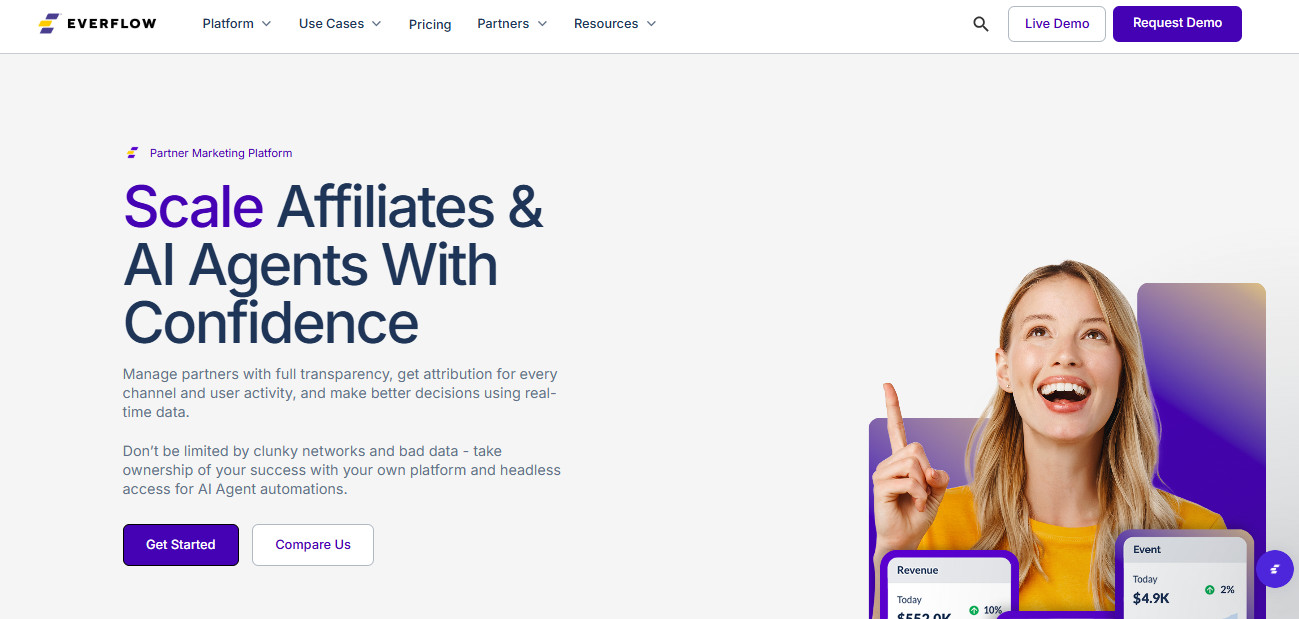
Everflow is built for brands that already have (or are building) an internal compliance review process and want full ownership of partner data, deeper real-time reporting, and the flexibility to run affiliate, influencer, and B2B programs in one place. It tracks the whole funnel, not just that first click so you can see what happened before and after a conversion, which is necessary for the multi-step conversions in fintech.
You also get reporting down to the individual placement level, not just the partner level, so you can actually tell which specific banner, blog post, or video drove the lead. The best feature might just be the fraud protection through a transparent, real-time view of traffic and domain activity, so you’re not finding out about a blacklist problem after the damage is done. Payouts are fully customizable too and if you run more than one kind of partner program (affiliates, influencers, B2B), Everflow lets you manage it all.
Pros:
- Full ownership of partner data and relationships instead of dependency on a vendors curated network
- Real-time, granular reporting
- Payout automation
- Flexible payout automations
- Supports range of partners: affiliate, influencer, B2B
Cons:
- No existing legal/compliance review process
- More infrastructure than a very small, newly formed financial marketing team may have the bandwidth for.

Everflow makes partner management simple, fast, and transparent. Real-time data, clean reporting, and tools built for affiliate managers who want to scale with confidence.
2. Impact.com: Best Enterprise-Grade Network Alternative

Impact.com is one of the most feature-complete partnership platforms on the market, with a unified dashboard for affiliates, influencers, mobile partnerships, and B2B relationships, backed by a large partner marketplace and AI-assisted partner discovery. The catch? To fully get the most out of a system this robust (and likely to justify the cost), you need to be a mid-market to enterprise-size financial brand with a dedicated team running a sizable affiliate strategy.
What really stands out with Impact.com is the size of its marketplace of more than 90,000 partners spanning affiliates, influencers, and commerce publishers, so finding new partners is a breeze. The granular tracking is a standout as well: phone calls, offline conversions, and cost-per-click activity.
Pros:
- Large partner marketplace with strong discovery tools, dwarfing Fintel Connect’s curated finance-only network
- Plugs into Shopify, Salesforce, and 300+ other tools
- Mature fraud protection with automated daily monitoring
Cons:
- General-purpose by design, so financial brands still need to build their own compliance workflows on top of it
- Pricing scales quickly; most mid-market brands land at $500+/month, with enterprise tiers requiring a sales conversation
- Steeper learning curve compared to other platforms on this list
3. Partnerize: Best for Enterprise Brands with Global Programs
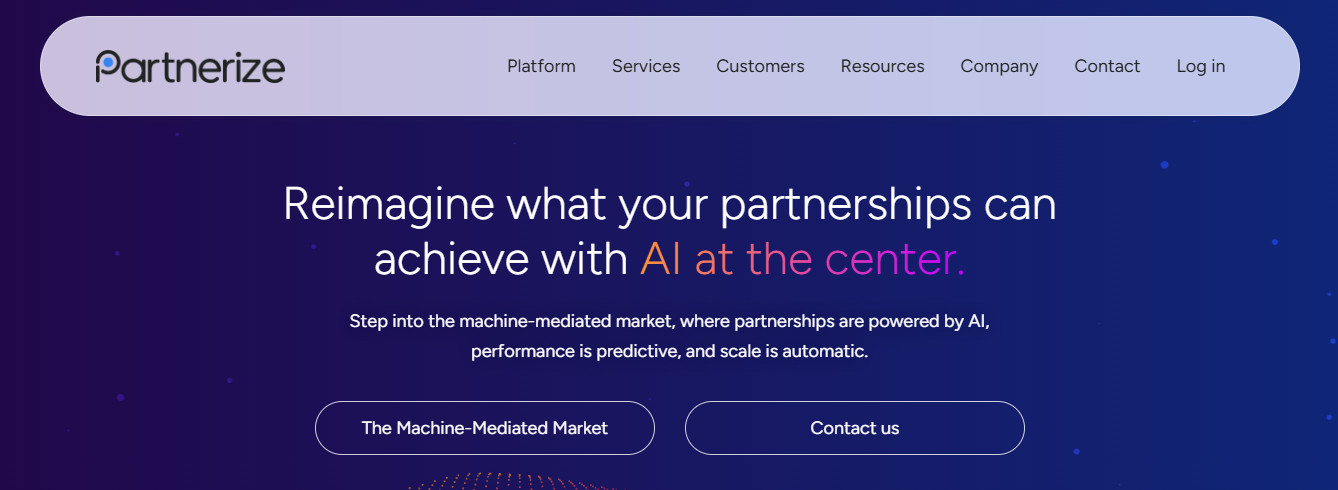
Large financial institutions running multi-region programs that need AI-driven automation and enterprise-grade compliance monitoring should take a closer look at Partnerize. The platform is setting itself apart by leaning heavily into its AI development to help you find new partners and see how your program stacks up against competitors, which is handy if you’re trying to benchmark performance rather than just guess at it.
If you’re running programs in multiple countries, it handles multi-currency and multi-regional support natively, so you’re not juggling separate systems for each market. From a fintech view, the software provides solid brand monitoring and compliance tooling.
Pros:
- Strong fit for large, multi-region financial programs that need centralized oversight
- Brand compliance monitoring is more developed than most affiliate platforms
- Flexible pricing structure (fixed license vs. percentage-based)
Cons:
- Expensive to run and adds up quickly for enterprise deployments
- Overbuilt for smaller or single-market financial programs
- Less specialized in consumer financial disclosure requirements
4. PartnerStack: Best for B2B SaaS Partner Programs
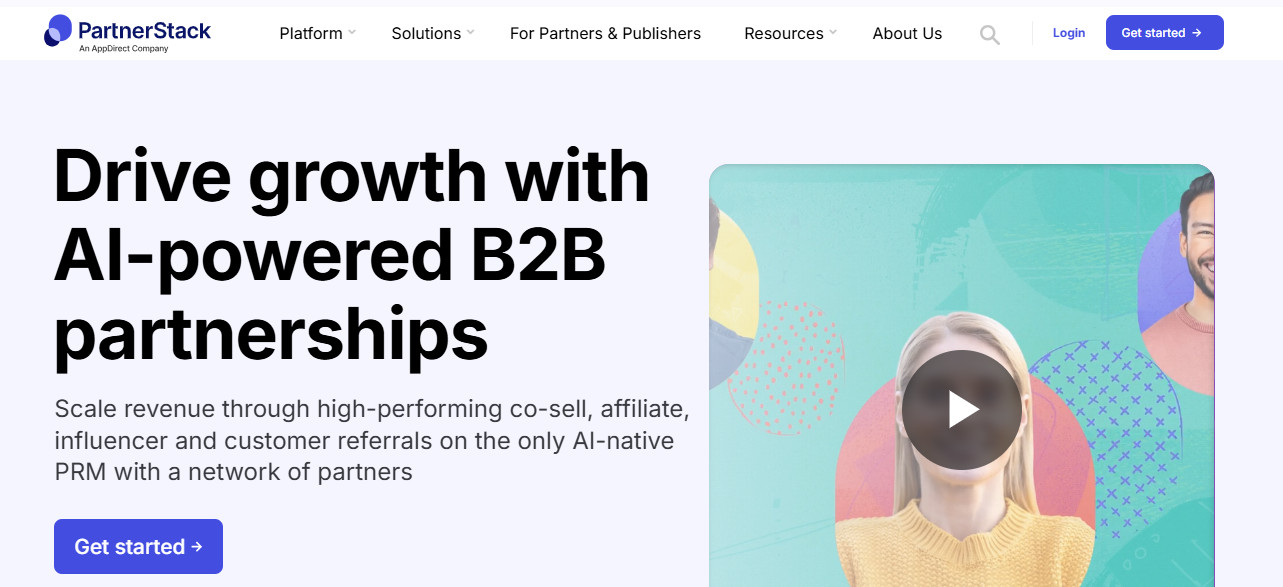
PartnerStack is built around an 80,000+ partner marketplace that’s specifically geared toward SaaS, so if you’re recruiting resellers or co-sell partners, you’ve found your people. B2B fintech companies running referral, reseller, or co-sell programs alongside or instead of a consumer affiliate channel will appreciate PartnerStack’s capabilities.
The platform covers the affiliate ecosystem from recruitment to enablement to tracking, reporting, and payouts. Commission structures are flexible too: flat fees, percentages, drip payouts over time, or event-based triggers, so you can shape the incentive to match the partner relationship rather than forcing every partner into the same payout logic.
Pros:
- Connects natively with HubSpot and Salesforce
- Automated payout infrastructure removes a lot of manual finance ops work
- Strong native CRM integrations
Cons:
- Not a great fit for consumer-facing financial products like deposits, mortgages, or cards
- Limited value if your program is purely consumer affiliate-driven
- Pricing is not transparent and typically involves a monthly platform fee plus commission percentage
5. Tapfiliate: Best for Growing E-Commerce and SaaS Brands
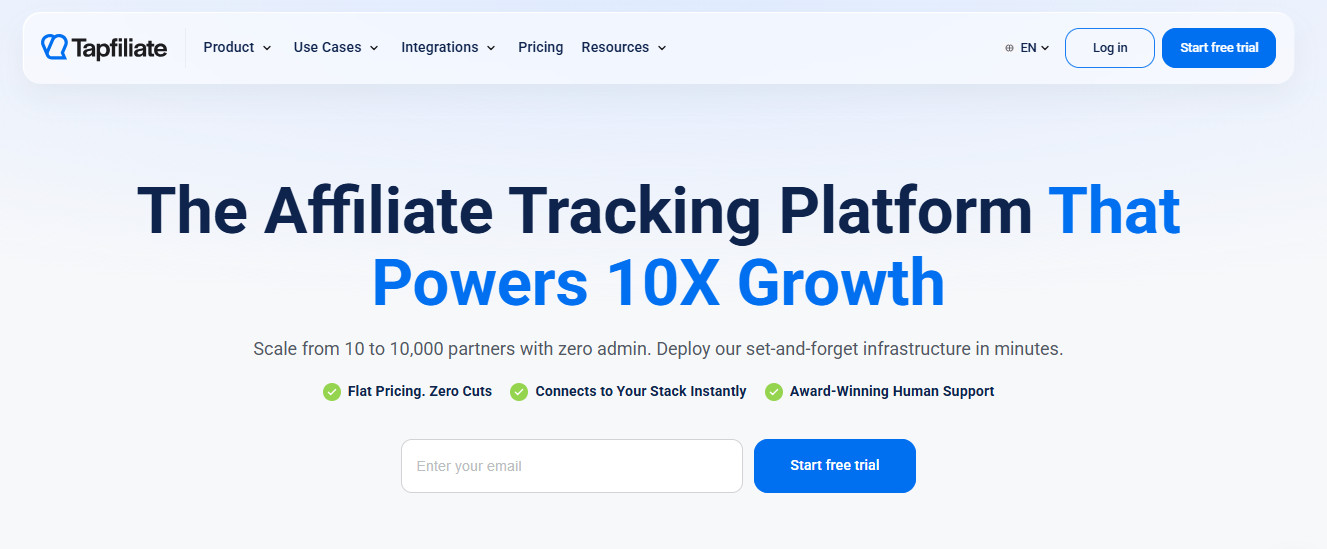
Tapfiliate is a mid-market affiliate platform best suited for smaller fintechs or financial SaaS tools in an affiliate strategy growth stage that want a clean, low-cost affiliate platform and don’t yet need dedicated compliance tooling. The platform gives you a white-label affiliate portal and sign-up pages you can customize, so the experience feels like your brand rather than a bolted-on third-party tool. Commission structures are flexible: flat, percentage, tiered, or recurring, which covers most of the common ways fintechs and SaaS companies want to pay partners.
Pros:
- 30+ integrations, including Stripe and Shopify
- Straightforward setup for teams without a dedicated partnerships function
- Low price-point compared to other platforms on this list
Cons:
- No financial-services-specific compliance or content monitoring
- Small partner network means you’ll need to stick to current recruiting methods
- Less suited to approval-based attribution (applications, underwriting, funding)
6. Awin: Best for Broad, Multi-Vertical Reach

Awin is one of the largest affiliate networks out there today, and it’s particularly good at generating incremental revenue once you tap into its publisher base. The platform gives you access to a genuinely massive global network of publishers, so if your affiliate strategy leans heavily on coupon sites, cashback platforms, and deal-driven traffic, Awin is a solid bet for reaching that audience at scale.
Pros:
- Huge global network of thousands of vetted partners
- Fast access to reach across multiple verticals at once
- Managed outsourcing for affiliate relationships
Cons:
- No compliance tooling built for financial disclosures
- Standardized single-event tracking that doesn’t map well to approval-based products
- Platform fee plus tracking fee stack on top of payouts
Which Fintech Connect Alternative Is Best?
Choosing the best platform for your business truly depends on your business size, model, and goals. From a fintech standpoint, infrastructure-first platforms like Everflow have become the natural upgrade path for programs ready to own their partner ecosystem outright. Everflow will also edge ahead if you want full ownership of your partner data, real-time placement-level reporting, and the flexibility to run affiliate, influencer, and B2B programs in one platform. But, you’ll still need to build out an internal process to handle compliance review yourself.
If you are a large, enterprise-sized brand, Impact.com offers top-tier enterprise-grade management across affiliate, influencer, and B2B partner types with the largest available marketplace, while Partnerize goes a step further to support the large, global financial programs that need AI-driven discovery and enterprise compliance monitoring. Awin is also a solid option for larger brands with a larger budget where financial products are only a small piece of a broader, multi-vertical affiliate strategy.
If you are on the smaller side, PartnerStack is easy to get up and running and supports B2B referral, reseller, or co-sell motion. Tapfiliate is also a great option for the smaller early-stage fintech that wants a clean, low-cost affiliate platform before your affiliate program complexity demands more infrastructure.