


Last Updated on July 12, 2026 by The Digital Merchant Team
Almost every DTC founder starts their journey by consuming and subscribing to everything. Six newsletters. Twelve podcasts. Ten Discords. Three mastermind groups. Two weeks later, you’re buried in content, your inbox is a nightmare, and you somehow know less than you did when you started.
More is not necessarily better. The most successful DTC founders are winning because they filter their attention effectively. When you know which resources consistently deliver practical, experience-backed insights and actionable materials, you can maximize your time, effort, and focus instead of reinventing the wheel.
Speaking of not wasting your time, let’s get to it, shall we?
Best Resources for DTC Founders (TL;DR Roundup)
Resource | Best For | Why It’s Worth Your Time | Cost |
Playbooks, frameworks, editable tools and templates | Experience-backed practical guidance with SOPs built around running a brand | Free & Paid | |
Performance marketing strategy | Deep ecommerce expertise and strategic education | Free & Paid | |
DTC Newsletter | Daily industry news and trends | Quick updates on what’s happening across ecommerce | Free |
Limited Supply Podcast | Founder stories and brand scaling | Honest conversations with ecommerce leaders | Free |
Nine Operators Podcast | Deep ecommerce discussions | Tactical discussions with people in the trenches | Free |
Growth marketing and acquisition | Sharp insights from a leading ecommerce advisor | Free & Paid | |
Ecommerce strategy and operator insights | Tactical perspectives from an experienced operator | Free | |
eComFuel Podcast | Scaling ecommerce businesses | Long-form conversations about growing brands | Free |
eComFuel Community | Networking and founder connections | Active founder community support | Paid |
My best advice: Don’t try to read (or listen to) everything under the sun. You’ll never be able to keep up on it all, and it can pull your focus away from what’s truly important. Pick a few high-quality sources that match where your business is right now.
Whether you’re launching your first product or scaling a brand that’s already shipping thousands of orders a month, these are the resources that can help you spend less time chasing advice (or hacks) and more time building a business.
Best Playbooks & Practical Resources

I think the very best DTC founder resources are the ones that bridge the gap between strategy and execution, helping you to solve real problems without starting (entirely) from scratch. These are the ones to consider when you need a template, a proven process, or a playbook you can put to work today.
The DTC Operator
Best for founders who want templates, frameworks, and systems they can actually use.
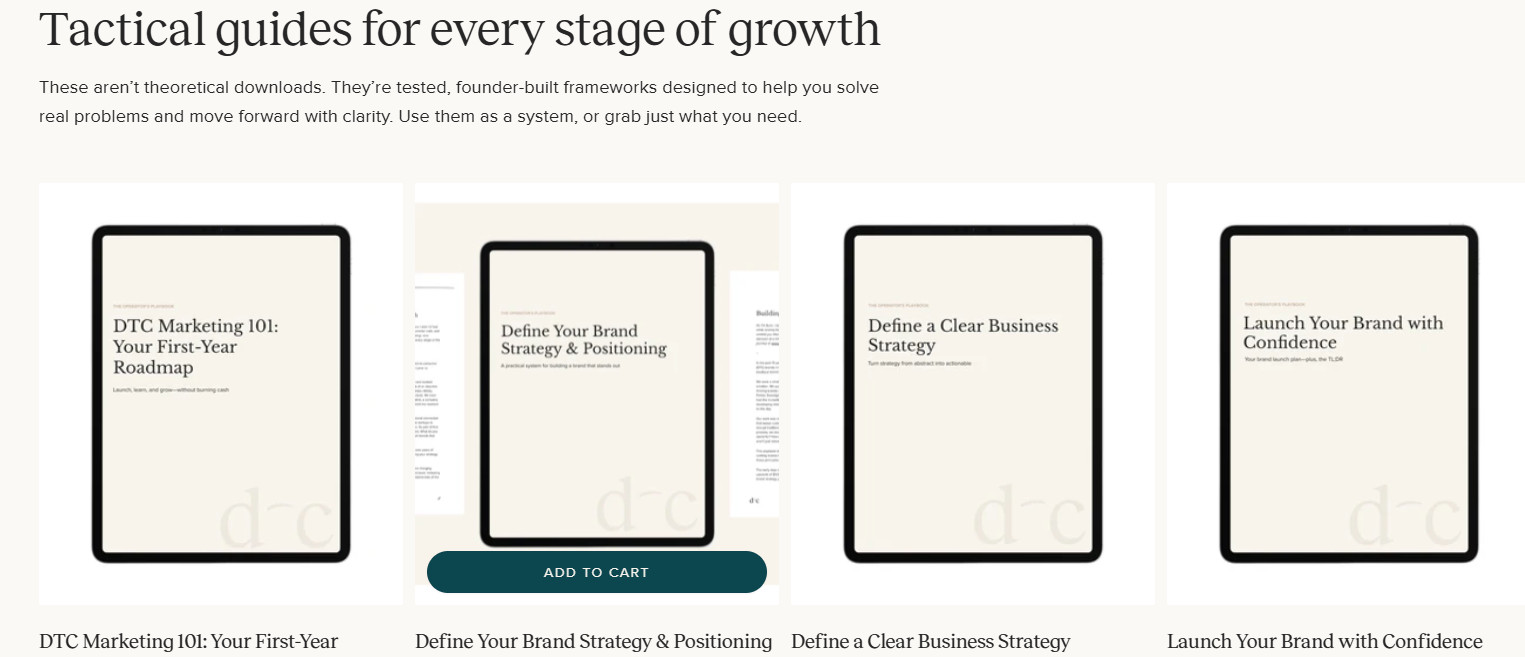
Plenty of DTC content will tell founders all about what they should do, but far fewer provide the resources that actually help them do it, and that’s why The DTC Operator stands at the top of my list.
Trends and high-level strategy have their place, of course, but The DTC Operator is built around practical operator resources: playbooks, frameworks, SOPs, templates, and tools designed to help founders build repeatable systems. This is especially valuable once you’ve moved beyond the beginning “figure everything out myself” stage.
At some point, every founder hits the exact same wall, and maybe you’re even there right now. You can’t scale a business that lives entirely inside your own head. Resources that help you document processes, refine and improve operations, and make better decisions are the ones that compound over time.
I like to think of The DTC Operator as the mentor who’s been there and done that. They’ve already made the spreadsheet, built the checklist, and figured out the process before you bother spending six hours creating one from scratch.
(And every founder knows that six hours spent formatting a Notion template is six hours you’re not spending growing the business.)
Common Thread Collective
Best for performance marketing strategy and ecommerce scaling.
Common Thread Collective has become a well-respected name in ecommerce education, particularly around paid acquisition, creative strategy, and scaling consumer brands. Their resources are a boon for founders trying to understand the bigger picture behind performance marketing and how creative, media buying, customer economics, and growth strategy work together.
For DTC founders managing rising acquisition costs (so… most founders), this kind of strategic thinking is way more valuable than chasing the newest ad platform trick.
Common Thread Collective offers digital guides and courses, but its ADmission subscription provides members with real-time training, biweekly coaching, over 100 guides and videos, and dozens of templates. And if you’re just looking for some free guidance, CTC’s YouTube channel is worth bookmarking.
Best Podcasts

Podcasts are one of the easiest ways to learn while doing everything else, and the best ones feel like you’re sitting in on interesting conversations between people who have actually built things.
Limited Supply
Best for founder stories and brand-building lessons.
Available on Apple Podcasts and Spotify, Limited Supply is hosted by Nik Sharma and Moiz Ali. The real value of this podcast is hearing the messy middle: the decisions that didn’t work, the mistakes founders made, and the lessons learned while scaling.
A polished success story is nice and all, but the “we almost broke everything into a million pieces and here’s what we learned” story is a lot more useful. Weekly content includes thorough analyses of industry shifts, post-mortems on unsuccessful DTC brands, and guest experts answering the hard questions.
If you’d rather watch and learn, you can also catch Nik and Moiz on YouTube.
Nine Operators Podcast
Best for tactical ecommerce discussions.
Nine Operators Podcast is built around conversations with ecommerce professionals and founders about what’s actually happening inside their businesses. This is a good fit for D2C founders who prefer practical discussions over generic entrepreneurship inspo.
Lots of podcasts will tell you to “think bigger” but motivational theory won’t take you nearly as far as tactical playbooks will.
eComFuel Podcast
Best for experienced ecommerce operators.
The eComFuel Podcast, as its name might suggest, is really geared toward ecommerce entrepreneurs looking for conversations around scaling, operations, and business challenges.
I think this is a good resource for D2C founders who are past the early startup phase and dealing with more complex questions around teams, profitability, and growth.
Best Newsletters

Newsletters are effective, but this is where a lot of founders get into trouble. Or rather, where their inboxes get into trouble.
The goal with newsletters is not to subscribe to every single one with “ecommerce” or “DTC” in the name. Ideally, stick to the few that consistently make you smarter.
DTC Newsletter
Best for keeping up with ecommerce news.
DTC Newsletter is a great “morning coffee” resource Monday through Friday because it’s quick enough to consume regularly without turning your inbox into a second job.
This one is useful for staying current on industry trends, brand launches, funding news, and notable moves across ecommerce.
Nik Sharma Newsletter
Best for hyper-tactical actionable playbooks.
Yes, this is the same guy behind the Limited Supply podcast I mentioned earlier. Nik Sharma sends one weekly newsletter out on Sundays, and it’s packed with strategy breakdowns and real-world examples derived from his own experience.
Did I mention it only gets sent out once a week? If you’re protective of your inbox (as you should be), this newsletter provides a lot of insight with minimal risk of clutter.
In The Snow (Jonathan Snow)
Best for ecommerce strategy and operator perspectives.
Jonathan Snow is the cofounder and Chief Innovation Officer of Avenue Z; his newsletter, In The Snow, covers digital trends, growth, and “all things DTC.” This is another resource founders often turn to for ecommerce insights and strategic thinking.
If you’re looking for perspectives that go beyond surface-level marketing advice to better understand how successful brands approach growth, this is one to subscribe to.
Best Communities

Online communities give you access to people who understand the hurdles or concerns you’re facing as a D2C founder. Building a brand can feel lonely, and even though you might have employees, customers, vendors, or investors, you’re the person responsible for every major decision.
But you don’t have to go it alone.
eComFuel
Best for networking with ecommerce founders.
The eComFuel community isn’t free, but if you’re serious about connecting with other founders and having access to real subject matter experts, it’s a fantastic resource worth the price of membership.
Best for following operators and industry.
LinkedIn has become one of the strongest places for DTC founders to learn publicly, but the trick is curating your feed.
Follow founders, operators, marketers, and investors who share real lessons, not just screenshots of revenue charts with mysterious context.
Best for unfiltered conversations.
Reddit can be surprisingly useful because discussions are often less polished and more honest. Sometimes brutally so.
The only downside? The quality of advice you’ll encounter varies pretty wildly.
For every thoughtful person sharing a real lesson, there’s someone confidently explaining that your entire business problem can be solved by “just going viral” or “trying this new app I just made.”
Use Reddit as a source of perspectives, not as a substitute for expertise.
Best Books

Business books are a dime a dozen (especially if you’re at a thrift shop) but the right ones can really change the way you think about growth, marketing, positioning, decision-making, and even leadership. These books won’t give you a magic formula for scaling overnight, but they’ll help you think like a better founder.
- Building A StoryBrand: This book by Donald Miller gives founders a practical framework for clarifying their value proposition. I consider this a must-read.
- Obviously Awesome: Written by April Dunford, this book is all about positioning and shows D2C founders how to carve out a market position where their strengths become obvious (and much easier to sell).
- Founders at Work: This book by Jessica Livingston is a collection of real founder stories (and struggles) that, although it’s not a “blueprint” to follow, the stories, anecdotes, and lessons throughout are insightful and if you feel like you have no idea what you’re doing right now, you’ll feel “seen” by the end of it.
- The E-Myth Revisited: Yes, I’m well aware that Michael Gerber’s prose can be a little… over the top… but the principles and insights for growing a business still hold.
- Crucial Influence (Third Edition): Specifically for founders who need to hone or improve their leadership skills, this book has updated research, case studies, and insights.
How We Chose These Resources
There is no shortage of ecommerce and founder advice; the challenge is finding the stuff that’s actually useful.
For this roundup, we prioritized resources that consistently provide practical insights, rooted in experience, rather than recycled trends or generic motivational content. (Nothing against motivational content, but a nice quote won’t fix your organizational skills.)
We also considered each resource’s reputation within the DTC community, the consistency and quality of its content, and whether it offers something genuinely unique. Some are ideal for staying on top of industry news, while others excel at deep tactical guidance or connections to peers who have already tackled similar challenges.
Final Verdict
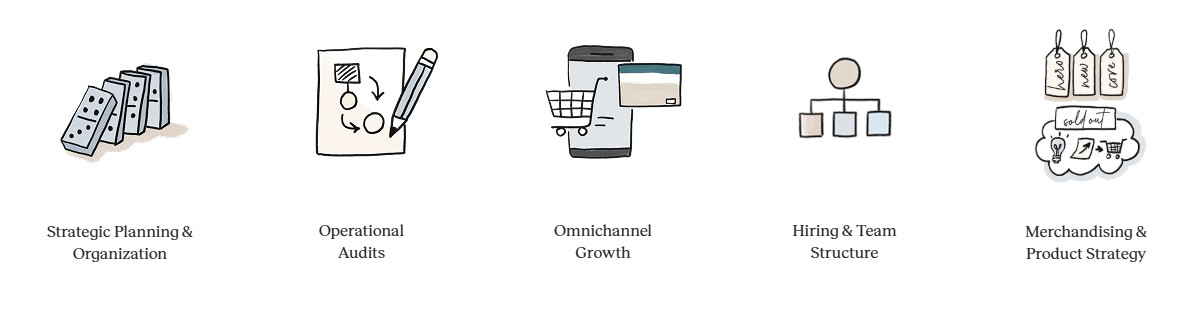
Ultimately, the best resources are the ones that help you make better decisions, avoid costly mistakes, and deal with problems as you encounter them. Build your own “operator stack” from a handful of resources that compliment one another. Maybe that’s a daily newsletter to stay current, a podcast for deeper strategic thinking, a community where you can ask questions, and a playbook or templates you can turn to as needed.
Over time, you’ll naturally refine your go-to mix based on the stage of your business and the challenges you’re tackling.
Whatever you do, don’t try to consume everything; that’s the fastest route to information overload, in my experience.