


Last Updated on September 24, 2026 by Ewen Finser
Inside sales teams live and die by call quality. If your reps are handling a large volume of prospect and customer conversations every day, then small mistakes can add up quickly: missed discovery questions, failing to handle objections well, talking for too long, and slow follow-up can all bring down conversion rates.
That’s why AI sales coaching software has become more than something that’s nice to have these days. With it, managers can review more calls, coach more consistently and help reps to improve in the flow of work.
The best software of this kind focuses on delivering a few core features well. It can score calls, flag keywords and objections, measure the talk-to-listen ratio, surface real-time prompts during live calls, and even generate post-call coaching summaries.
If your team’s already working from a cloud phone system, the key question isn’t, “Which tool has the most features?” but “Which tool’s approach creates the least friction for both managers and reps?”
This perspective matters, because inside sales isn’t just about listening to calls after the fact. It’s really about improving the next call, the next objection, or the next interaction as quickly as possible.
In a B2B environment with ten to one hundred reps in particular, the coaching quality can affect pipeline, conversion, ramp time, and manager bandwidth all at once.
Best AI Sales Coaching Software for Inside Sales Teams at a Glance
Platform | Best for | Standout coaching strengths | Potential drawbacks |
Inside sales teams already using a cloud phone system, including UK teams in regulated industries like finance and insurance | Native call scoring, live whisper, live monitoring, AI prompts, workflow-friendly setup | Deepest value hinges on using Aircall as the core phone layer | |
Teams that want enterprise-grade conversation intelligence | Strong analytics, call recording review, coaching insights, deal visibility | Separate platform, heavier rollout, more workflow switching | |
Teams focused on recorded call analysis and coaching | Conversation intelligence, call review, rep coaching data | Lives outside the phone system | |
Teams that want coaching inside a broader engagement stack | Sales engagement plus conversation intelligence and coaching | Best when Salesloft is already the operating system | |
Enablement-led organizations that want structured coaching and readiness | Formal coaching, practice, reinforcement, manager workflows | More enablement-heavy than phone-native |
The right choice when it comes to AI coaching software depends on how your specific team works.
If coaching sits far away from the call, adoption often suffers. On the other hand, if the coaching exists in the same environment that reps already use to sell, the process becomes a lot easier to monitor and repeat.
Why AI Coaching Matters for Inside Sales Teams

Inside sales is a volume game, but it’s also a quality game.
For example, a rep can be hitting call targets but still miss the necessary behaviors to actually move the pipeline: asking the right questions, confirming pain, handling pricing objections, and ending calls cleanly with a next step. AI coaching can help managers to see those moments at scale, instead of just relying on a handful of manual reviews.
AI coaching also matters for consistency. Managers are almost always busy, can be subjective and coach unevenly. However, AI tools make scoring and flagging more repeatable, which helps teams build a common standard for what good looks like.
AI coaching also helps with ramp. New reps generally need a lot more feedback than a weekly check-in with their manager offers. If an AI tool can surface flaws like objection handling gaps or missed next steps, it can provide managers with something concrete to coach against. This shortens the distance between bad habits and better performance.
What to Look for in AI Sales Coaching Software for Inside Sales Teams

The best AI coaching tools are more than just recording devices. They help managers to identify what actually happened on a call, the conversation topics that mattered, and what should happen next.
For inside sales teams, that usually means five things:
Call Scoring
This is the backbone of every decent AI coaching platform. The best scoring systems evaluate whether reps covered discovery, how well they handled objections, whether they confirmed next steps, and if they used the right talk patterns. The exact criteria will depend on your team, so a customizable scoring system is worth looking for. The overall score doesn’t need to be perfect, just consistent enough to help managers spot coaching trends across the team.
Keyword and Objection Flagging
A good tool doesn’t just flag generic transcript terms but also the moments that matter. This can include things like pricing objections, competitor mentions, buying signals, and stalled conversations. If the platform can automatically surface these, managers don’t have to work as hard sifting through recordings to find them.
Talk-to-listen Analysis
Analyzing the talk-to-listen ratio is one of the simplest ways to gauge conversation quality. It’s particularly crucial for inside sales motions, where reps sometimes talk too much because they’re trying to be persuasive, or preemptively overcome objections. If an AI tool can display talk patterns clearly, then managers can coach for better discovery and more balanced calls.
Real-time Prompts
In live sales calls, timing is everything. The best AI tools won’t wait until a call is over to offer help. The right prompt at the right moment can remind reps to ask a follow-up question, mention a feature, or stay on message while the conversation’s still going.
Post-call Summaries
Once a call ends reps still need to capture key data, summarize the next steps, and update the CRM. A reliable coaching platform will generate helpful post-call summaries to reduce admin work and simplify follow-up.
AI Sales Coaching Software for Inside Sales Teams: Red Flags

Too Much Setup, too Little Action
A coaching platform can have very advanced features but be too complex to get off the ground. For instance, if managers have too many custom rules, label too many calls manually, or keep switching between multiple tools for coaching reps, then usage is likely to drop. This is a big concern for inside sales teams where managers need speed.
Insights Without Workflow
A platform can produce reams of useful data but still fall down when it comes to coaching. If managers can see what happened but can’t act on it right away, insight becomes passive. For inside sales, that usually means an AI tool will be interesting, but not operationally sticky.
Disconnection From The Phone System
This is one of the most critical red flags for inside sales teams: if coaching sits in a separate platform, then managers typically end up with more tabs, more logins, and more steps. This can slow down adoption and transform coaching into a laborious admin task, not part of the sales motion.
Lack of Real-time Support
Post-call review can be helpful, but if a tool can’t help reps during a conversation then you’re missing out on potential performance gains. Real-time prompts, live whisper, and call monitoring are especially useful to managers who want to influence live execution, not just review it later.
Aircall
Pros:
- Coaching can happen inside the same phone system reps already use
- Native features (call scoring, whisper, live monitoring) make coaching easier
- Practical AI that fits the call workflow
- Newer AI features combine automated CRM and conversation intelligence into a single platform
- Reduces manual CRM data entry and improves visibility into pipeline activity
- Uses MEDDIC, BANT & SPICED qualification frameworks
- Proven fit for UK regulated industries, like the FCA-compliant transcript search used by finance brokerages
Cons:
- Not as specialized as standalone conversation-intelligence platforms
- Better suited to mid-size teams that value adoption and simplicity.
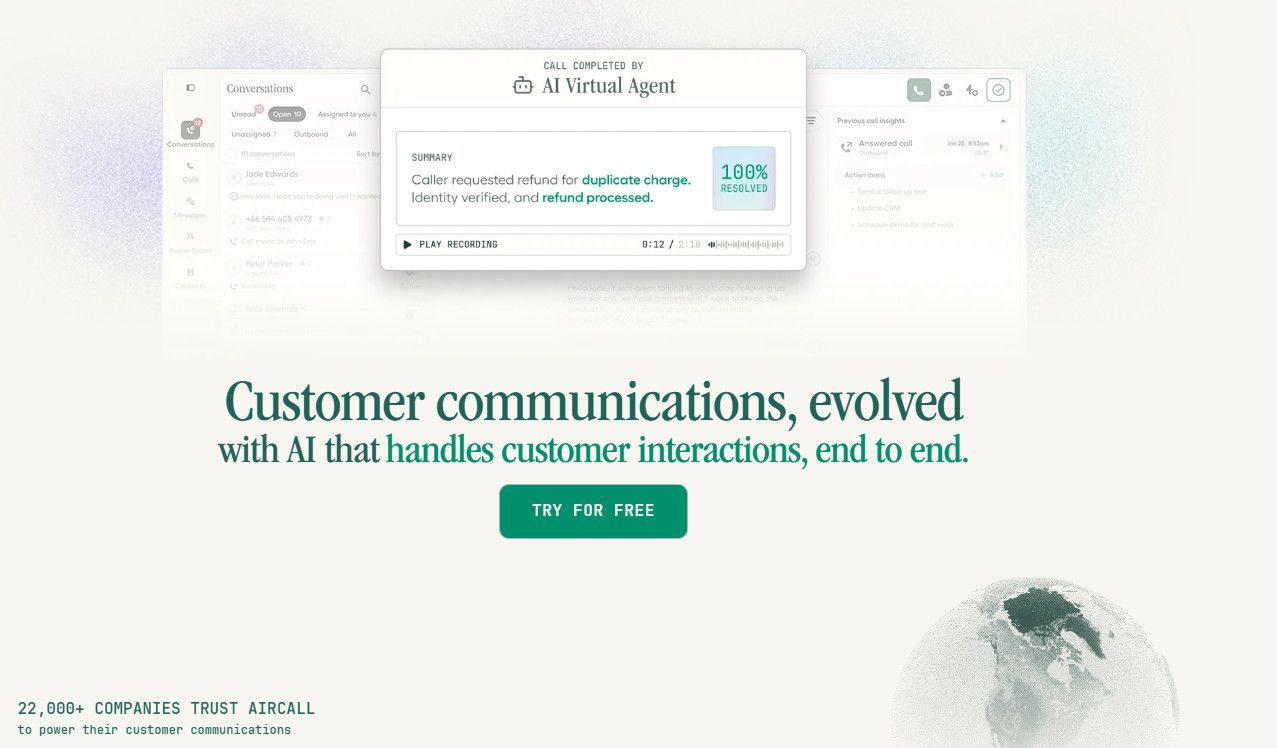
Aircall’s coaching features are built around the actual call workflow. This is one of its main strengths, as it can reduce friction before, during, and after calls.
With Aircall’s recent acquisition of Piper AI, this goes a step further by offering managers and inside sales team advanced visibility into the platform enabling them to coach reps, review information and monitor activity within a single tool.
This helps managers gain a clearer view across the full sales cycle across multiple touchpoints, allowing improved visibility into the sales pipeline and sales rep activity.
The ‘Professional’ tier includes advanced analytics and live monitoring for growing sales teams.
The AI Assist Pro add-on adds live prompts, real-time transcription, playbooks, call scoring, and custom summaries.
For inside sales teams that means the manager doesn’t have to leave the platform to coach a rep. That makes adoption easier, and feedback is more likely to turn into action.
Aircall combines standout features such as calling, workflow automation, and a coaching layer; however, it isn’t as specialized as a dedicated conversation-intelligence platforms.
This trade-off makes Aircall a better fit for mid-size teams than for very large revenue organizations.
It offers enough coaching depth for growing teams, and operational simplicity with added features such as coaching workflows without needing to stitch on additional tools.
Aircall also has a London office and is registered with the ICO under UK GDPR, so your compliance team isn’t left digging for answers when they’re vetting the platform. Astmoor Finance, a commercial finance brokerage operating under FCA regulation, is a useful reference point here: they cut call review time from 20 minutes to about five using AI Assist Pro’s transcription and scorecarding, while keeping every conversation searchable for compliance purposes. UK teams evaluating this can look at Aircall’s sales solution directly.
Gong
Pros:
- Deep conversation intelligence and call analysis
- Useful for spotting trends across reps, teams, and deals.
Cons:
- Not phone-native (adds another layer to workflow)
- Heavier than simpler coaching tools for smaller teams
- Value depends on strong adoption across revenue org.
Gong is one of the most well-known and established conversation-intelligence platforms. That’s where much of its value comes from.
One of its main strengths is that it gives sales leaders a detailed view of what happened on calls, which objections came up, and how top performers handle conversations.
For inside sales teams, that can be useful when the goal is to study behavior at scale and build a stronger coaching process around real call data. It’s particularly relevant for teams that have the maturity to act on those insights consistently.
The downside is that Gong sits outside the traditional phone workflow, so managers and reps have to work on separate systems. The platform is powerful, but it is not the most friction-free option for teams that want coaching close to the call.
Salesloft
Pros:
- Combines engagement and coaching into a broader workflow
- Supports repeatable sales processes across reps
Cons:
- Works best when Salesloft is already the OS
- Less specialized in live in-call coaching vs. dedicated conversation intelligence platforms
- Broader scope than needed if coaching is the main goal
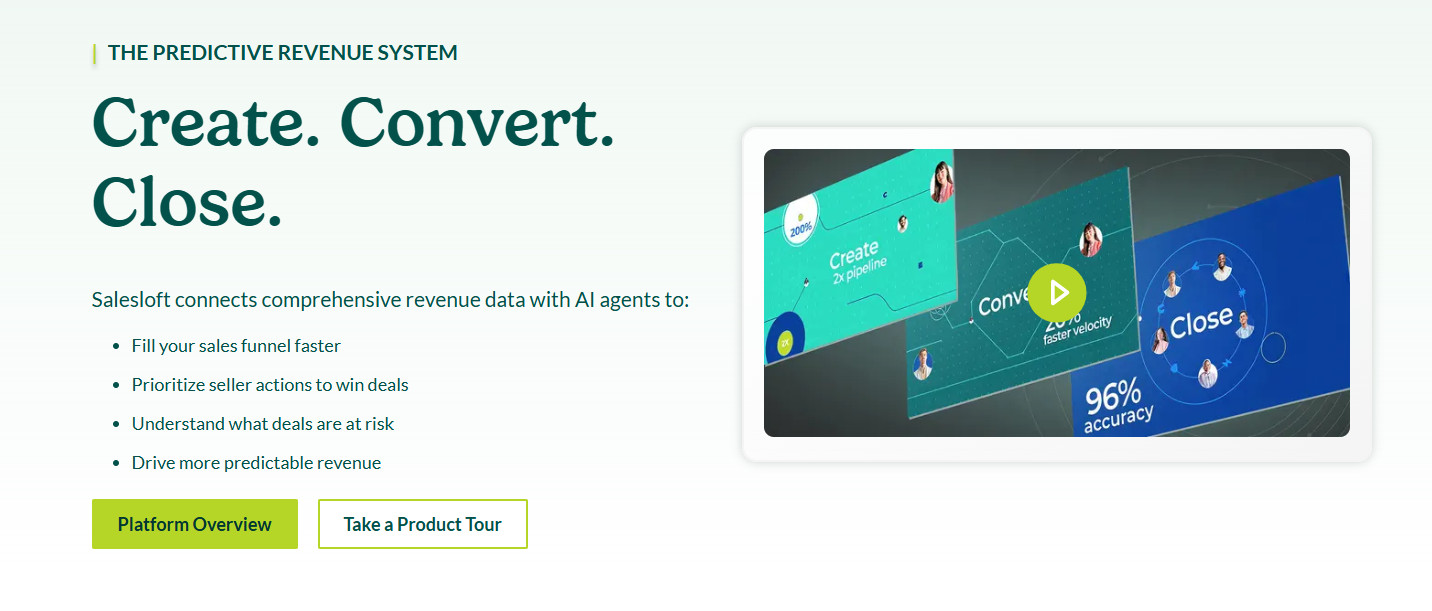
This platform works best if coaching is tied closely to outbound execution. It can give inside sales teams a place to manage engagement, track activity, and review conversations, all without splitting the sales motion across too many systems.
That makes it a good choice for teams that already use Salesloft day-to-day. However, it’s less compelling if your primary requirement is deep, call-by-call coaching delivered directly within the phone workflow.
Salesloft also makes it easy to standardize messaging, sequences, and follow-up across growing teams, which can level the playing field between new and experienced reps. That kind of consistency can simplify onboarding and make performance much easier to manage, particularly for organizations running structured outbound programs at volume.
Salesloft’s main value lies in being a good fit for process-driven teams that want coaching as part of a larger outbound engine. If, on the other hand, you want a simple, immediate coaching layer then this platform may add unnecessary complexity.
Mindtickle
Pros:
- Good at formal enablement and rep development
- Useful for structured coaching and reinforcement
Cons:
- Less phone-native than competitors like Aircall
- More enablement-oriented than live sales coaching
- Can feel heavier to deploy and adopt for teams seeking a lightweight solution
Mindtickle is built for teams that want coaching as part of a broader enablement system. It doesn’t just let sales leaders review calls. Instead, it can create a repeatable program for skill development, reinforcement, and manager-led coaching.
The platform also offers powerful tools for tracking skill progression and measuring readiness across teams. That means managers can use assessments, certifications, and past performance data to spot gaps and reinforce key behaviors. That makes Mindtickle a strong fit for situations where coaching is linked closely to formal training and performance standards.
These strengths can be useful for larger or more structured organizations. But if you’re running an inside sales team that needs coaching to happen close to the call itself, then Mindtickle is less tightly integrated into the phone workflow than dedicated telephony platforms like Aircall.
The platform is much better suited for formal development than fast, lightweight coaching inside daily sales workflows. It’s a good fit for enablement-led organizations, but not the right choice for teams that mainly want immediate feedback and faster rep adoption.
Chorus by Zoominfo
Pros:
- Strong at call review and conversation analysis
- Helps managers find coaching moments after calls
Cons:
- Not embedded directly within the phone system itself
- Better for post-call review rather than live coaching
- Can introduce an additional review step into busy sales workflows
Chorus is a solid option for teams that want to listen back, analyze, and coach, based on recorded conversations.
Managers can easily review calls and pull out moments that matter in a structured way, especially those that focus on discovery, objections and follow-up. That makes it very useful for inside sales teams that are a) already disciplined about coaching and b) want better visibility into rep performance.
The platform can also track conversations across teams so managers can identify things like messaging gaps and recurring objections, as well as coaching opportunities, at scale. This kind of aggregated insight can be valuable if your organization wants to standardize sales behaviors across multiple regions.
Its main practical limitation lies in timing. Because Chorus works as a separate layer, feedback usually comes after a call instead of when it’s ongoing. This can be a real drawback for teams that want faster adoption with minimal moving parts. It’s a capable platform, but is much better-suited for retrospective analysis than in-the-moment sales coaching.
How to Choose the Best AI Coaching Software for Your Inside Sales Team
Start by identifying where coaching friction actually lives.
For instance, if your biggest problem is getting managers to review calls consistently, then a standalone platform like Mindtickle that’s mobilized for enablement operations may help. However, if the bigger issue is rep adoption and day-to-day usage, then phone-native coaching will usually win out.
Gong and Chorus are both strong options when the goal is deep post-call intelligence. Aircall and Salesloft are better choices if your aim is to make coaching part of the call experience itself.
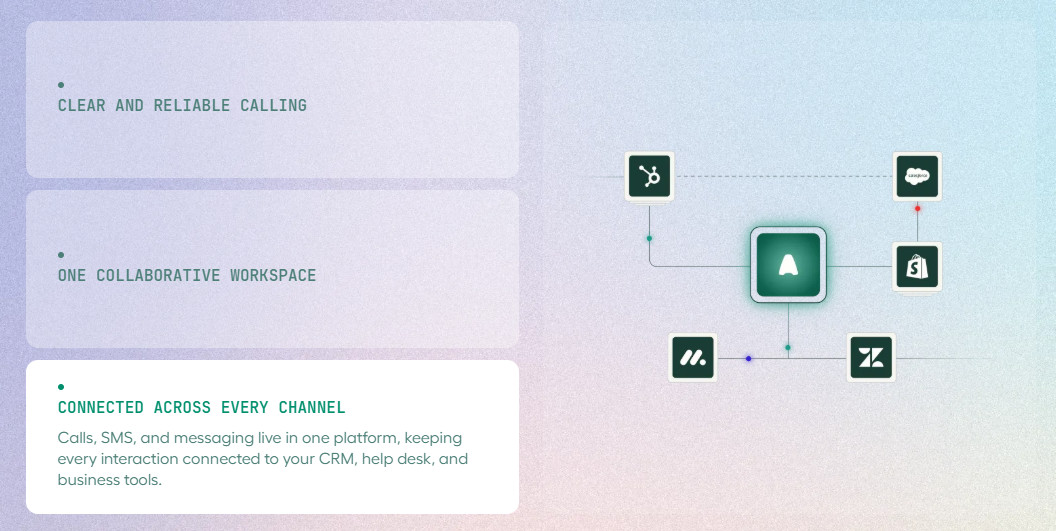
If your team already runs calls on a certain platform, like Aircall, then the case is clearer. If call scoring, whisper, monitoring, AI prompts, and summaries can all sit in the same environment, coaching is easier to adopt and operationalize. UK teams get the same AI coaching tools with local support behind them, more on Aircall’s sales solution page.
For a B2B sales team, that kind of simplicity offers real value. It reduces tool sprawl and makes coaching feel like a natural part of selling instead of an extra step.
In a category where many AI tools promise intelligence, the real advantage often belongs to the one that removes the most friction.