


Last Updated on September 18, 2026 by Ewen Finser
Gone are the days of tracking simple conversions when a customer clicked an ad, landed on your page, and bought something. One click, one sale, one clean attribution payout.
Today’s customer journey can get complicated. Someone might first discover your brand through an influencer’s Instagram or TikTok Story, research your product through Google a few days later, and then click an affiliate coupon site a week after that. They might abandon the purchase, only to come back a week later and convert through an email reminder. And that’s before you add loyalty programs and subscriptions into the mix.
Bottom line: If you still measure performance with just last-click attribution, are effectively catching the last five minutes of a movie and think you’ve seen it all. What’s the fix? Multi-event tracking.
What is Multi-Event Tracking?

Multi-event tracking records every step of your customer’s complicated multi-event journey and answers the questions that matter: Which touchpoints actually move people toward a purchase? Which ones just take credit for conversions that would have happened anyway? Where in the funnel are we losing people, and to what?
Multi-event tracking records every touchpoint:
- Micro-conversions: Newsletter sign-ups, app installs, free trial starts, add-to-cart actions
- Macro-conversions: Purchases, subscriptions, loan approvals, bookings
- Post-conversion events: Upgrades, renewals, churn, refunds, repeat purchases
- Partner-driven events: Affiliate clicks, influencer codes, coupon redemptions, referral signups
- Offline and delayed events: Phone sales, in-store visits via QR codes, conversions that complete days or weeks after the initial click
How Multi-Event Strategies Make Sense Of Your Customer’s Journey

1. Ends Last-Click Attribution
Last-click attribution systematically overvalues the bottom of the funnel (branded search, retargeting, and coupon/deal sites) while discounting the touchpoints that happen in upper-funnel channels (content, influencer, and social of credit).
A multi-event strategy better reflects your customer lifecycle reality, including touchpoints such as:
- Linear: equal credit across all touchpoints
- Time-decay: more credit to touchpoints closer to conversion
- U-shaped or W-shaped: extra weight on first touch, lead conversion, and final touch
- Data-driven/algorithmic: credit assigned based on actual incremental contribution, learned from your own conversion data
Still, no single model is universally correct, so you will need to test a few attribution models to find the right match for your needs. You’ll need to track several models side by side to see how budget allocation shifts under each.
2. Track Events, Not Just Clicks
A solid multi-event setup captures each step: event type, timestamp, device, source, and any custom parameters (order value, product SKU, subscription tier, coupon code used). By drilling down this deep, you can fully breakdown performance across affiliate channels, for example, isolating which partners drive high-value customers versus one-time discount buyers.
3. Delayed Cross-Device Conversions
Multi-touchpoint journeys, especially high-ticket purchases, rarely happen on one device in one session. Your customer may research on mobile during a commute then ultimately make a purchase later that night on their laptop.
Tracking cross-conversions shows:
- Server-to-server (S2S) postbacks so conversions firing outside the browser (app installs, backend CRM events, offline sales) are still captured reliably, without relying on cookies that browsers increasingly restrict
- Extended attribution windows long enough to match your actual sales cycle
- Deterministic and probabilistic matching to stitch cross-device sessions back to a single customer journey wherever possible
4. Transparent Partner Visibility
Since multiple partners can touch the same customer journey, and each will understandably want credit, a mature strategy needs transparent, auditable logic for how credit is split or assigned. You need the ability to show partners exactly which touchpoints counted, so disputes over commissions don’t break down trust in the program.
5. Post-Conversion Event Tracking
The purchase is not always the end of the story. Having the ability to track renewals, refunds, subscriptions, upsells, and churn opens a window into seeing whether a channel or partner brought in customers who stick around versus discount shoppers who disappear.
How To Implement Multi-Tracking Strategies
Multi-event tracking isn’t a single feature you switch on. It’s a shift in how a marketing team thinks about attribution. It’s also not a shift you want to take on by stitching together spreadsheets, ad-platform dashboards, and a web analytics tool, tends to break down fast; if it even gets off the ground.
Getting there requires:
- Capturing every meaningful event, not just conversions
- Testing multiple attribution models instead of trusting one
- Supporting cross-device and delayed conversions with server-side tracking
- Giving partners transparent, auditable credit
- Following the customer past the first sale
The easiest (and fastest) way to close the gap and build a solid multi-tracking strategy is to implement a platform specifically built for multi-touchpoint partner tracking. As customer journeys become more complex, having a platform that can connect those touchpoints and give marketers a unified view becomes especially valuable.
Affiliate management platforms, such as Everflow, make it easy to manage all stages of the affiliate partnership from onboarding to payouts to campaign reports. These platforms offer real-time views into “which channel gets the last click” to “which combination of touchpoints actually creates value, and how much is each one worth.” The brands that do this well aren’t guessing, they’re making decisions based on the full shape of the customer journey, not just its final frame, and they are doing it with ease!
How affiliate tracking platforms manage multi-event tracking
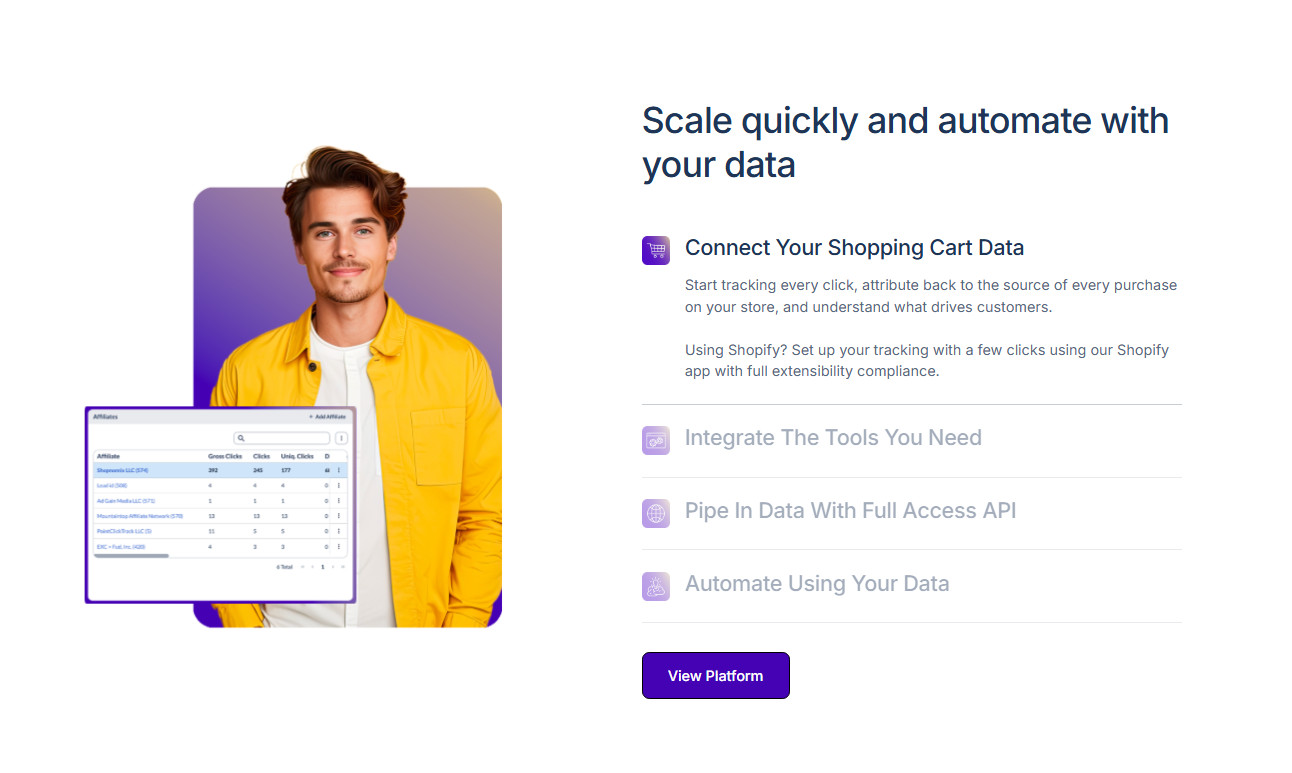
- Full-journey visualization: Attribution mapping shows every touchpoint a customer passed through,from the very first interaction to the final conversion and beyond. This may include coupon codes, email campaigns, delayed conversions, and partner postbacks, all in one visual path rather than isolated channel reports. Programs like Everflow provide a flowchart-style dashboard with real-time touchpoints.
- Flexible attribution modeling: Track first-touch, last-touch, and multi-touch models side by side, so teams aren’t locked into a single, potentially misleading view of what drove a sale.
- Reliable event capture across sources: Click, conversion, and custom event tracking via pixel and server-to-server postbacks capture conversions that happen outside a browser session, whether that be app installs, delayed sales, offline redemptions via QR code, all without depending solely on cookies.
- Partner-level accountability: Postback visibility lets advertisers verify what partners report and reconcile discrepancies directly, which is incredibly valuable when multiple affiliates or influencers want credit for overlapping parts of the same journey.
- Post-conversion and lifecycle data: Beyond the initial sale, affiliate platforms like Everflow support tracking downstream events, giving programs a way to evaluate which partners and channels bring in customers who actually stay.
Final Thoughts

If you are running a lean, single-channel funnel, this level of infrastructure may seem like overkill. But if you’re managing dozens or hundreds of partners across affiliate, paid, and organic channels where a single customer might be influenced by five or six different touchpoints before converting, a platform purpose-built to track and visualize that complexity can be instrumental for making sound budget decisions. That’s the layer of visibility an affiliate platform such as Everflow is designed to provide.