


- Profit does not equal cash
- You don’t need a CFO’s model
- The inputs that drive a cash flow forecast
- The two timing traps: inventory and ad spend
- What cashflow forecasting shows you
- Keep it up with a simple 13-week rolling view
- When a template might beat a blank spreadsheet
- Next step: create your first forecast
Last Updated on August 10, 2026 by Ewen Finser
Your business is profitable on paper; so why do you keep running into a cash crunch when a PO or invoice drops unexpectedly and you’re left scrambling to pay a bill you can’t skip?
The problem isn’t profits, it’s cash flow, and that’s why it’s so important — especially for ecommerce businesses — to build a simple cash flow forecasting process to prevent those kinds of surprise cash problems.
But, if you’re like a lot of ecommerce founders, you’re not a finance person, and your company isn’t big enough to need a CFO yet. That’s OK. You don’t need EBITDA, cohort curves, or a balance sheet (or even need to know what those things mean) to see a cash crunch coming.
You don’t need to be a CFO to figure out how to forecast cash flow for ecommerce. You just need to be able to see when and where your cash moves.
Profit does not equal cash

When I started my business, the very first thing I outsourced was my bookkeeping and accounting, because I knew then as now that I’m a creative person, not a numbers person. It stressed me out and I was anxious about making a mistake.
But the types of reports that accountants and bookkeepers produce are looking backwards. They show you what happened in the past and whether you made money or didn’t.
What they can’t tell you is whether you’ll have cash in the bank in the future when a big expense comes due.
In ecomm, you have to pay cash for inventory, packaging, shipping, duties, etc. that you don’t see back until you have weeks or months of sales. Sometimes the different selling platforms hold on to your money for days or weeks before it pays out. And those big expenses and invoices land on their own schedules that don’t take any of that into account.
So to solve this problem, you need a simple tool that lets you look ahead instead of concentrating on what happened in the past.
You don’t need a CFO’s model
A lot of the advice out there about cash flow forecasting is aimed at the people who do it for a living, which means it’s wildly overcomplicated for a founder who doesn’t have a degree in finance or accounting.
You don’t need the kinds of models CFOs rely on. In fact, that approach is massive overkill for the decisions most founders actually face and the questions you need to answer. What you need is a short list of real inputs and a way to look ahead to see what’s coming.
It has to be simple enough that you’ll use it, too. So let’s define exactly what you need to track.
The inputs that drive a cash flow forecast

There are really only four main inputs you need to create a cash flow forecast (and one of them you only need to put in once):
- Starting Cash: this is what you truly have on hand, minus anything that’s already committed (unsettled payouts, credit card payments, uncleared checks, etc.). You only have to determine this number once, the day you get started.
- Money In: You want to record this by channel (Shopify, Amazon, etc.) and when it lands. The timing is the key attribute: any payout lags, settlements, terms, etc. This is actual cash received, not sales made.
- Money Out: List this by category, starting with things you know are coming up like supplies or inventory, POs, packaging costs, shipping and duties, payroll, subscriptions, rent, etc. and the date it will be due.
- Financing: This includes anything like credit card balances, loans, or Shopify Capital-style payments. Again, the key is when the payments are due.
The two timing traps: inventory and ad spend

For ecommerce brands, your two biggest timing traps that could trip you up revolve around things that you pay upfront for and revenue trails: inventory and ad spend. Because of that, these two could make it feel like you have a spending problem when you really only have a timing problem. A founder who thinks they have a spending problem automatically tries to cut costs, but a founder who understands that it’s all about timing can reach for the right solution by re-timing the outflow or maintaining a cash buffer to cover the in-between.
Inventory and ad spend are often the two biggest cash outflows in a product-based business, and they move in a rhythm that’s opposite to the revenue they generate. With inventory, you pay for your stock before you sell it, and often piecemeal with a deposit here, a PO balance when it ships, freight and duties charged separately, and so on. Then it might sit in a warehouse for weeks or months before it sells. With ad spend you pay the platform up front, but the revenue is again a long-tail lag. The real danger is when these two stack, as often happens right before your peak season.
With both of these line items, growth itself becomes a cash risk, and a profitable, growing month on paper can still be a cash-negative month in reality. That’s the scenario when founders who think they did everything right can still run out of money, and the one that cashflow forecasting can help you avoid.
What cashflow forecasting shows you

OK, so we’ve established that timing problems can be a real thorn in your ecommerce business’s side. But once you’ve started collecting the right inputs, the forecast is grounded in some real outputs that can make everything run more smoothly.
Net cash flow (weekly)
The simple formula here is money in minus money out, every week. A positive number just means that more cash came in than went out that week, and a negative number means the opposite. Remember though: this is not profit. A week that’s net-negative in cash because of a big inventory payment does not mean that your business isn’t making money.
Ending cash
This is your running bank balance carried over week to week, and it’s the big one to watch. Each week’s ending cash becomes next week’s starting point. This is the number that keeps founders up at night, but remember what we’re looking at is the trends, not a single week’s dip.
Ending cash sliding down week after week, on the other hand, is a structural problem, and it means that the business is consuming cash faster than it takes it in. There’s no clever re-timing move that can fix that.
Runway in weeks
Your ending cash divided by your money out number (or the average money out number over many weeks) tells you how much runway you have, or how many weeks your money will last at your current spending rate. This turns a number that might feel big into a countdown and tells you how much time you have to act to bring in more cash or change your outflow. As a rule of thumb, anything less than around eight weeks of runway needs immediate attention,
The numbers by themselves aren’t the point. The point is that spotting and understanding them early changes the decisions you make and the actions you take moving forward. For example, you might:
- Spot a cash crunch weeks out instead of the day you get a text from your bank. That makes the difference between planning ahead and panic scrambling.
- Re-time a purchase or payment. If you can shift an inventory purchase by a few weeks, or split a big PO into multiple payments, you can avoid a cash crunch in the first place.
- Hold an owner draw until the cash is safely there. That’s not sexy, but this unglamorous move can keep a tight month from becoming a crisis month.
The forecast makes the timing visible so that it’s not a surprise, and you can make decisions accordingly.
Keep it up with a simple 13-week rolling view
The key to making cash flow forecasting work well for your ecommerce business is to keep it updated regularly. A “rolling forecast” sounds like one of those technical CFO terms, but really it just means that you’re keeping things current.
If you just sat down at the beginning of the year or quarter and made a forecast, it would be static, and frankly, out of date pretty quickly. A rolling forecast never ends, because it’s always looking into the future from the day you update it.
The standard horizon for a rolling forecast is 13 weeks: a business quarter. It’s far enough out that it gives you enough time to realistically do something when you see a cash crunch coming, but not so far out that the forecasting starts to be meaningless guesses.
Remember: The cash crunch you see coming a few weeks out is just a planning problem; the one you don’t foresee until it hits is a crisis. The only way you get that early warning is if you’re regularly checking your forecast and moving the window forward by a week every time. Here’s how it works in practice:
- Daily: glance at your bank balance. No big moves required, just visibility.
- Weekly: update your cash in and cash out numbers with what really happened, then roll the “window” forward by one week and look for where your cash and runway are headed. This is the discipline that matters most.
- Monthly: the big picture view. Update your inventory plans, sales estimates, ad budgets, and reset the next 13-week view against reality.
The real key here is consistency over complexity. You don’t need a super complex system, but you need one that you’re looking at regularly.
When a template might beat a blank spreadsheet
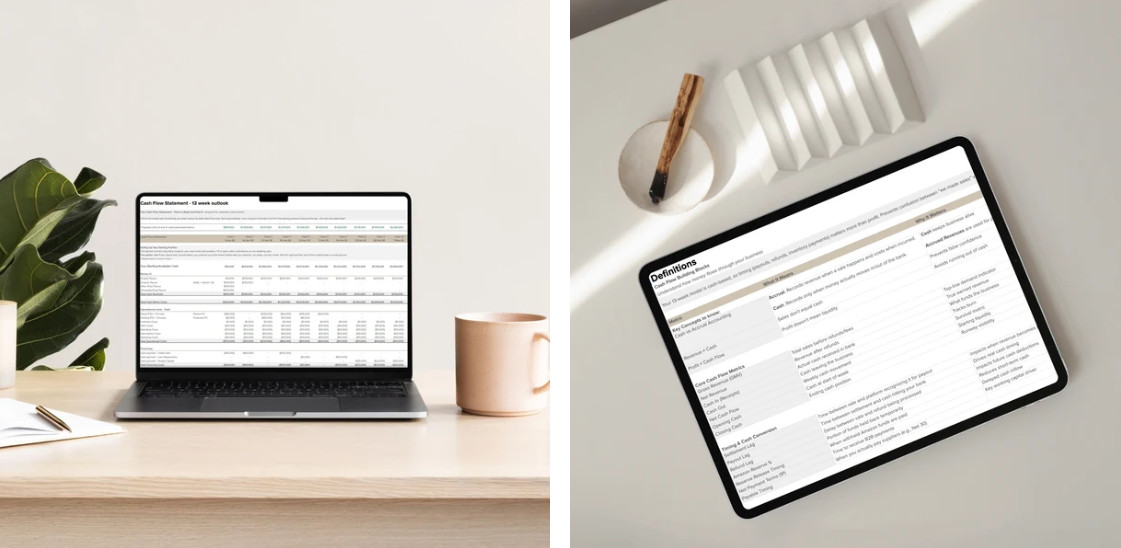
If the idea of building this whole thing from scratch still feels daunting, there’s a solution: a template built for exactly your situation as a spreadsheet-phobic, non-finance founder who wants a simple system.
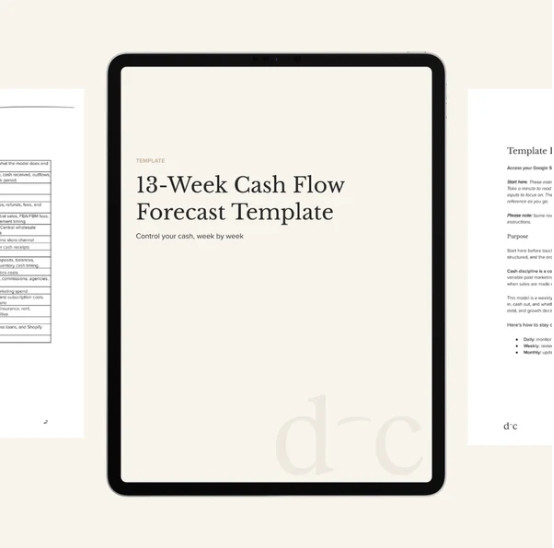
The DTC Operator has a 13-Week Cash Flow Forecast Template designed specifically for founders like you, created by someone who helped launch brands like Harry’s, Hims/Hers, and Sweetgreen, among others. It’s already set up to give you a clear, operator-level view of your cash position across a 13-week rolling window based on when cash enters and leaves your bank account, not when sales are made.
Even better, it comes with full instructions so you can just plug in your numbers and get the answers you need quickly and without a finance degree.
Just remember: even the best tool isn’t a crystal ball, and it’s only as good as the information you give it.
Next step: create your first forecast

You don’t have to become a finance expert to stop getting surprised by your own bank balance when big expenses hit. You just have to shift your mindset to pay attention to cash flow timing, not just profit.
Create your spreadsheet (or grab a template), set it up with your real numbers, and start making more educated decisions about where and when your money is going. Your stress levels will thank you.