


Last Updated on August 10, 2026 by Ewen Finser
When new businesses and founders start to think about branding, they almost always think about the visible stuff first: the logo, the website, the packaging, the product photography. But what they can miss is all the invisible stuff that goes first to ensure that the visuals tell a compelling story.
Experienced businesses know they need a brand strategy that incorporates the visible and the invisible, but it can be a daunting prospect. Agencies want anywhere from $5,000 to more than $100k for a full brand strategy, but if you try to wing it, your entire launch could be a flop.
The good news is, there’s a middle way.
What is a Brand Strategy?

Brand strategy isn’t just an agency deliverable; it’s a concrete process that you can run yourself if you have a framework to guide you through the right steps in the right order. It explains exactly what to think about at each stage of the process, where DIY works and where it starts to get tricky, and resources you can access to make it even easier and less risky.
As I alluded to above, your brand strategy doesn’t boil down to your colors, your logo, or your tagline. That’s your branding and it’s a result of your brand, which is a result of your brand strategy.
Here’s how I like to think of it:
- Brand = the product or business’ identity, values, characteristics, and purpose
- Branding = the visual representation of your product or business (logo, fonts, colors, etc.)
- Brand Strategy = the path you take to figure out the previous two.
A brand strategy is a connected system of questions and answers that reinforces itself and compounds as you build it. You’ll think about things like customer needs and desires, customer understanding of the market, your product’s positioning in the market, your product messaging, and then how all of the previous will inform and drive your strategy and execution.
Most founders don’t lack ideas when it comes to brand and brand strategy, but they don’t have a system, and so they often tackle the foundational pieces in the wrong order.
If you want to DIY your brand strategy, you need to follow a framework that will help turn your good instincts and ideas into informed decisions that compound over time.
The 4 Core Phases of a Good Brand Strategy
The key framework for a brand strategy breaks into four stages, and they need to be done in order so that each one informs the next. If you jump around or jump ahead you’ll end up with problems in the future, because each decision isn’t rooted in the foundational piece that undepins it.
Think of a house: nobody walks into a beautiful home and compliments the foundation, but the interior decorating won’t make a lot of difference if the walls are falling down. Just like building a house, you have to construct the foundation of your brand strategy in the right order.
Phase 1: Understanding Your Customer

Every product solves a problem. Unless and until you understand that problem at every level and from all angles, you won’t succeed in selling very much. Understanding the problem your product solves starts with understanding your customer.
Start by gathering and synthesizing information and insights about your customer including their motivations, objections, rituals, beliefs, buying habits and context and so on. This goes way beyond demographics into real buyer behavior.
The DIY move is to talk to actual ideal customers yourself. Surveys, interviews, and researching the market will go a long way here.
From this research you want to build a buyer persona from real data and behavioral markers, not guesses.
And one quick note: While building an “AI persona” of your buyer can help you pressure test copy and test your assumptions, I would only rely on AI in any format after you’ve talked to real humans. After all, humans are the ones that will be buying your product, not a chat bot.
You’ll know you’re done when you have a clean, detailed description of your core customer that explains why they would choose your product — in their own words.
Phase 2: Define Your Market Position
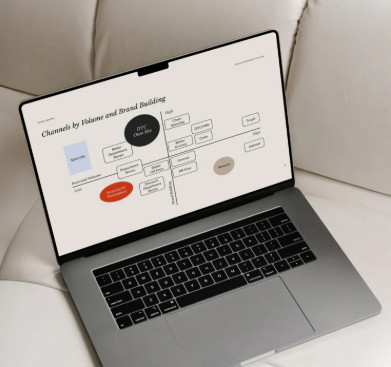
Once you’ve defined your customer and their problem, you want to start thinking about your position in the market. This helps you move beyond “what we do” to a more specific reason why a customer would choose you over any competition.
In order to figure that out, you need to research the competition. Ask things like:
- What other brands, products, and companies are out there trying to solve the same problem your product is solving?
- Who exactly are those competitors trying to reach with their product or messaging? Is it the same person you identified?
- What are the key differences between the different solutions on the market?
- What emotion is each solution playing into?
Once you have a survey of the competitive landscape, you can start to think about where your product fits in. Look for the white spaces around the edges, or as the bestselling book of the same name called it, your “Blue Ocean.” Where is there space for a new solution?
Often the key is not to try to compete directly with the other products in your market, but to solve a slightly different problem, target a slightly different consumer, or appeal to a slightly different emotion.
A common DIY mistake to avoid: You don’t want to position yourself around the same features and benefits that your competitors are positioned around. Find your own angle.
You’ll know you’re done when you can articulate exactly where your product fits into the competitive landscape and how it’s different from the other solutions available.
Phase 3: Build Your Brand Identity
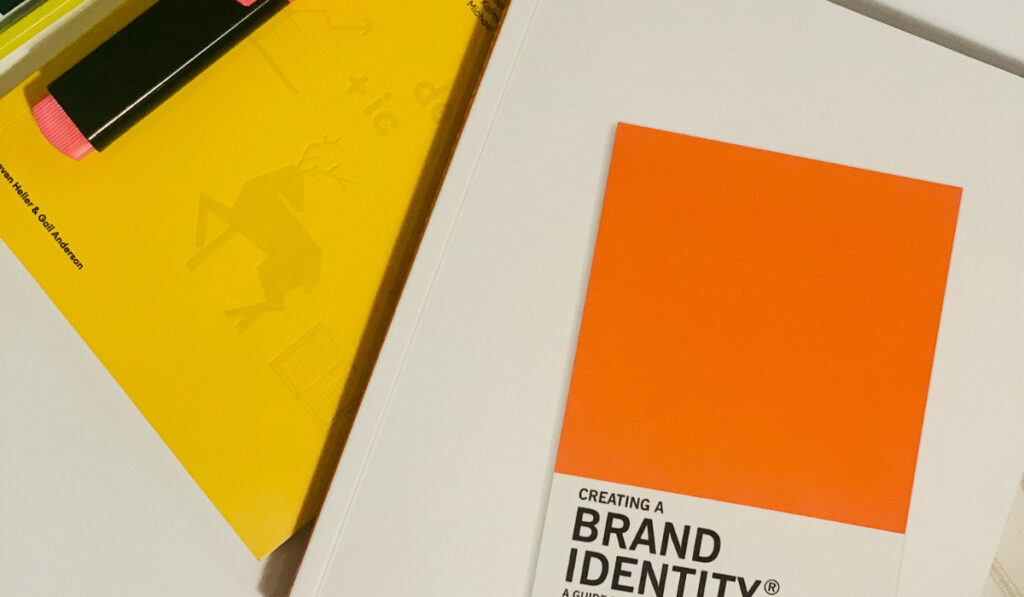
Now that you’ve done the research and answered the foundational questions around who your product is for and how it fits into the competitive landscape, you can start to translate those findings into creative.
This is the fun part and it can cover a lot of different territory from your brand visuals (logo, colors, fonts, etc.) to the voice and tone of your brand on your website, packaging, social media, and so on.
You’ll want to think about:
- What’s your brand’s heart and soul? (For example: Fancy Feast isn’t selling cat food, they’re selling love for your cat that means feeding them the very best.)
- What are your brand’s values? (For example: Dr. Bronner’s values environmental activism, progressive business values, and ethical sourcing.)
- What is your brand’s promise? This is the functional benefits of your product and how you solve your customer’s problem. (For example: Quince produces luxury-quality products without the brand name markup.)
Once you understand these pillars of your brand, you can start to think about how you’re going to express them through your visuals and voice. This may also be where you decide what you’re going to name your new product, business, and brand.
Heads up: if you’re not a designer or copywriter, this may be where you want to add an expert (or two) to your DIY plans. But because you’ve done the foundational work, you should be able to communicate your vision well.
You’ll know you’re done when you have a brand strategy document or deck that documents your visual brand and your brand voice and tone and you understand how those elements communicate your brand’s heart, values, and promise. It should be complete and detailed enough that anyone you hire to work with you could act on it.
Phase 4: Go to Market Messaging and Calendar
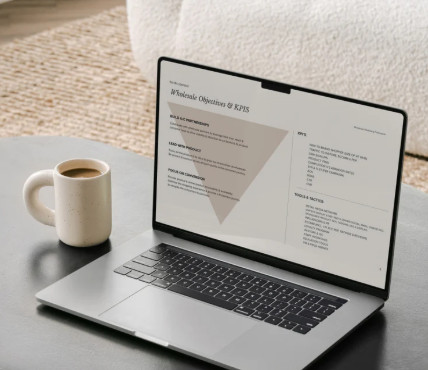
Now that you understand your market and your place in it and have a well-defined visual and tonal brand, you can start to create the actual messaging and content that will launch your brand.
If Phase 3 was about how you’re going to communicate the brand, Phase 4 is literally what you say and do to execute.
This is the phase where you’re going to define what your product’s core message is and how you’re going to communicate it to the world. These decisions feed everything that comes after: website copy, product descriptions, packaging copy, social media posts, blog posts, advertising copy and so on.
That means you also need to decide on a schedule and a cadence for your launch. In other words: what are you going to publish and when?
The marketing calendar specifics are what keep you showing up consistently week after week and not just tweaking the strategy document.
You’ll know you’re done when you have a clear message that can be repeated and iterated across all your marketing channels, and a schedule of when, where, what, and how you’re going to publish it.
Where is DIYing Your Brand Strategy Realistic?

If you’re a cash-strapped start-up, you may be wondering if it’s actually realistic to do all of this brand strategy work yourself. But as a founder, you have something no agency can replicate: proximity to the customer and passion for your product.
Customer insight gathering, competitor research, and the foundational decisions about brand identity are all things a founder can do on their own as well as or maybe even better than an agency because of that proximity and passion.
I worked on branding with a SaaS founder who built an affiliate referral software because she was working as an affiliate manager for brands and couldn’t find a program that did exactly what she needed. No branding agency could possibly replicate the level of unique insights she had from being her own ideal customer for years before she created the product.
Where DIYing Brand Strategy Gets Hard
Of course, there are limits to where DIY can take you. As I mentioned above, once you get to the execution of your brand, you may want to hire expert practitioners who can help you with design, copy, art direction, photography, and so on. If something is outside your particular skillset, it’s a good idea to hire a pro.
Another risk of DIYing your brand strategy is a lack of objectivity. You’re so deep in the forest with your product, you may not be able to see the trees. A framework helps, but outside perspective is the real gap, and you may want to rely on a trusted network of colleagues, mentors, or advisors who can help you see what you might be missing.
Finally, the hardest part isn’t actually building the strategy, it’s executing the plan once the excitement has faded. The discipline to stick to your go-to-market plan when you’re incredibly busy with other things, fighting the urge to change up the messaging when it looks like it’s not immediately working, or second-guessing your decisions is a real risk when you’re doing everything yourself.
Having a Structured Framework from an Expert Guide Removes Some of the Risk
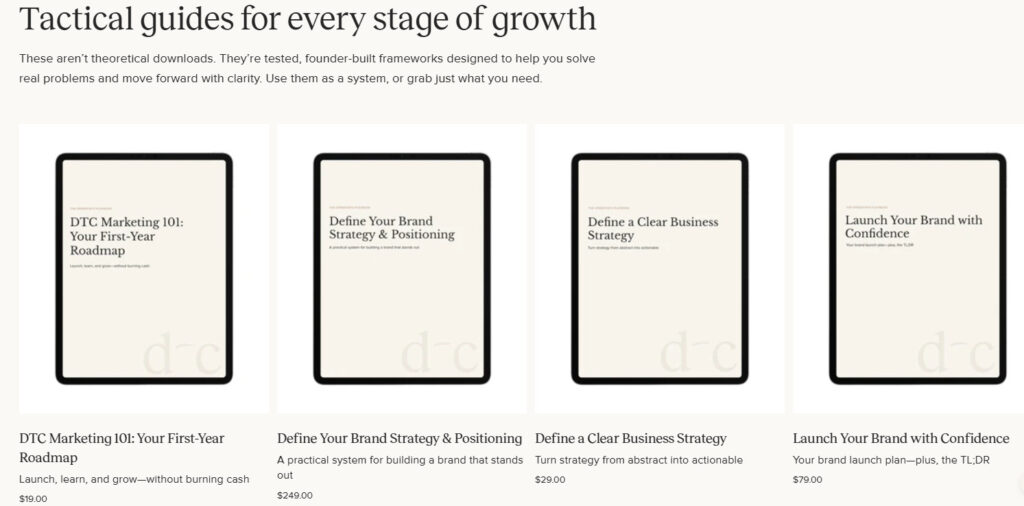
If you want a little more support to DIY your brand strategy without going the full agency route, check out the DTC Operator’s playbook, Brand And Branding: The Complete Toolkit. Inside it, you’ll find complete descriptions of all the phases of building a brand strategy, exercises, worksheets, AI prompts, templates, way more than I can cover in a single blog post, all created and tested by a senior brand strategist, and all designed so that you can skip the expensive agency, but still end up with a brand you can be proud of.
Should You DIY Your Brand Strategy?

If you’re a founder trying to figure out how you’re going to build your brand so that it’s go-to-market ready, you already know whether you can or want to invest in a pricey agency, and you know you’re not willing to just “wing it” for something this important.
So the question is really whether you’re going to do the work of building your brand strategy with a framework to follow… or without one.
There’s nothing wrong with branding and marketing agencies. I ought to know; I ran one for a decade. But as a founder, you don’t need to outsource your passion and convictions about your own brand. You just need to borrow the framework and the discipline that will help you get the best outcome.