


Last Updated on August 20, 2026 by Ewen Finser
Think about the last time you bought something online.
Maybe you first saw a high-quality water bottle in a TikTok ad, and then later watched a YouTube review to see if it was actually worth buying. Then you searched Google for comparisons, read a few customer reviews, and eventually ordered the water bottle from Amazon – but only because you already had a Prime subscription.
Today, that’s how customers move between social media, AI search, search engines, blogs, online marketplaces, and brand websites before they decide to buy. They choose whatever feels easiest and most trustworthy to them.
The moment that interest in a product sparks, customers will go digging to find real reviews, the best price, and the easiest way to get that product to their doorstep.
The 2015 style of affiliate marketing assumes someone clicks a link, visits your website, and buys from there. While that can happen, if you’re only tracking sales on your own website, you’re missing valuable data about how customers actually discover and buy your products.
As more ecommerce brands expand beyond Shopify into Amazon, Walmart Marketplace, and other sales channels, affiliate marketing has to evolve too. Which is why omnichannel affiliate marketing has become a prominent tactic for a modern online business.
What Omnichannel Affiliate Marketing Really Means

When people hear the term “omnichannel,” they often assume it just means selling on multiple platforms, but that’s actually “multichannel” marketing.
Omnichannel affiliate marketing means that instead of treating Amazon, Shopify, Walmart, and other marketplaces as separate programs, it connects them into one strategy. Your creators can promote your products wherever their audience prefers to shop, while your team manages everything from one place.
For growing ecommerce brands, that means better reporting, stronger creator partnerships, and smarter marketing decisions.
When everything works together, you can recruit creators once, launch campaigns across multiple channels, track performance in one dashboard, and understand how every partnership contributes to your overall growth.
So, instead of asking influencers to join multiple affiliate programs for the same brand, you give them one place to manage campaigns, commissions, and performance. That makes partnerships simpler, encourages long-term collaboration, and lets creators focus on what they do best: creating content that helps customers make buying decisions.
Omnichannel visibility means that you can finally see which creators are driving revenue across every channel instead of measuring success one marketplace at a time. That gives you the confidence to invest more in partnerships that work and improve the ones that don’t.
What Growing Ecommerce Brands Should Look for in an Affiliate Platform
Once you start selling across multiple channels, affiliate marketing focuses on managing creator relationships, measuring performance across marketplaces, and trying to understand which partnerships actually drive revenue.
Which is why you’ll want to find the right affiliate platform which makes those jobs easier and doesn’t create more work for you or your team. Here are some things that a good omnichannel affiliate marketing platform should be able to do:
Manage Creators From One Place
Your creators don’t think in terms of Shopify, Amazon, or Walmart. They simply want to recommend your products where their audience is most likely to buy.
You shouldn’t have to manage separate relationships with the same creator just because they promote different marketplaces.
A modern affiliate platform brings those relationships together in one place, making it easier to recruit creators, launch campaigns, and measure results.

Look Beyond Last-Click Attribution
Customers rarely buy the first time they discover a product. They might see it on TikTok, research it on Google, watch a YouTube review, and eventually purchase it on Amazon.
If your affiliate platform only tracks one part of that journey, you’re missing valuable insights that can help you invest in the creators driving the most revenue.
Save Time With Automation
Managing applications, approvals, payments, tax forms, and reporting manually can quickly overwhelm your team. Automating those repetitive tasks gives you more time to build creator relationships and improve your campaigns instead of handling administrative work.
Keep Every Channel Connected
Most importantly, your affiliate strategy should connect every sales channel instead of treating them like separate businesses. Your customers don’t think that way, and your marketing shouldn’t either.
Why Creator Relationships Matter
Creators introduce new audiences to your products through videos, reviews, newsletters, blogs, and social media. Many customers discover a brand through a creator long before they’re ready to buy.
That’s why the best affiliate programs focus on long-term partnerships instead of one-time promotions. When creators have a positive experience working with your brand, they’re more likely to recommend your products again and become genuine advocates.
But which affiliate platform should you use, and what features should it have?
How Levanta Makes Omnichannel Affiliate Marketing Easier
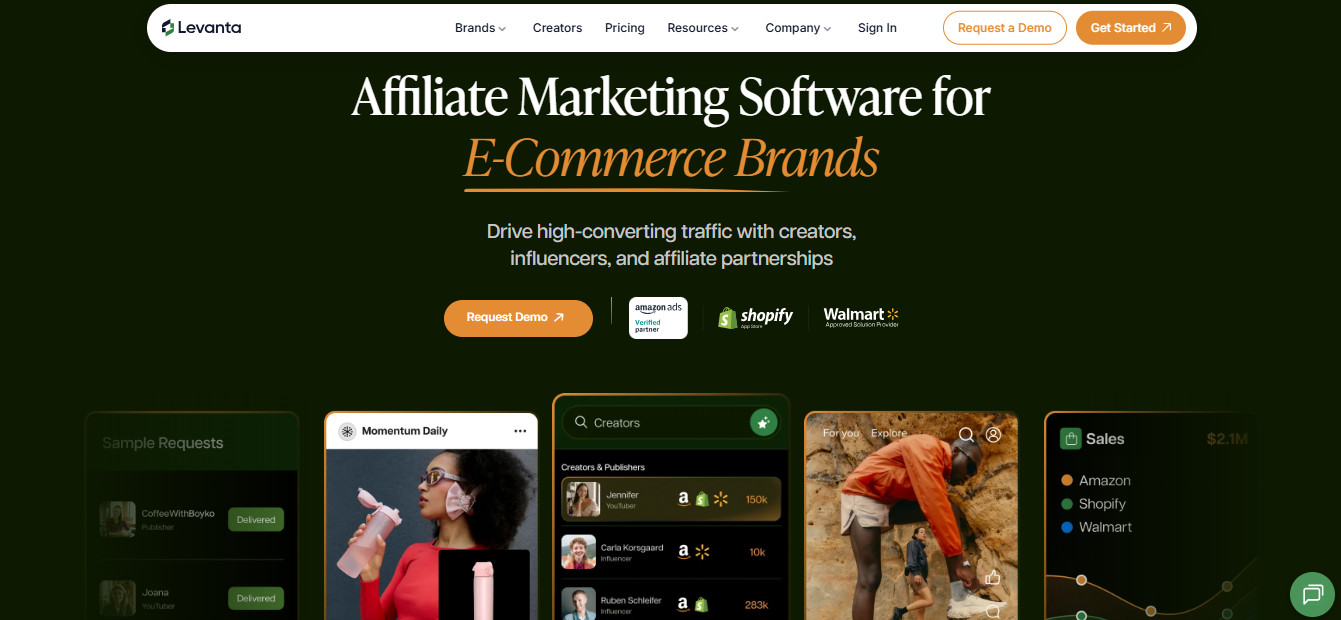
Levanta was built for ecommerce brands that want one place to manage their affiliate program, whether they sell through Amazon, Shopify, Walmart, or all three.
Instead of running separate affiliate programs for each marketplace, Levanta brings everything together in one platform. Your team can recruit creators, launch campaigns, manage commissions, and track performance without jumping between different systems.
That means you can:
- Manage creators across Amazon, Shopify, and Walmart from one dashboard.
- Launch and monitor campaigns without duplicating your work.
- Track marketplace attribution to better understand which creators drive sales.
- View unified reporting across your entire affiliate program.
With a complete view of your performance, it’s easier to identify your top creators, invest in the partnerships that generate results, and make smarter marketing decisions.
Find the Right Creators Faster
Building a successful affiliate program starts with finding creators who already connect with your target audience.
Levanta gives brands access to a network of more than 80,000 vetted creators, making it easier to discover partners who create authentic content for your product category. Instead of spending weeks searching for influencers, you can quickly connect with creators who are ready to promote your products across multiple sales channels.
The platform also includes modern creator management tools designed to help you build stronger partnerships, not just generate affiliate links. Features like Levanta’s Social Discovery make it easier to discover creators across Instagram, Facebook and TikTok who may not already be in Levanta’s network.
New tools, including the Levanta iOS app, also help brands and creators stay connected and keep campaigns moving from anywhere.
Spend Less Time Managing Things on Every Level
As your affiliate program expands, administrative tasks can quickly become a bottleneck. Levanta helps reduce that workload by automating many of the day-to-day tasks involved in running a successful program.
With Levanta, you can:
- Simplify creator onboarding.
- Automate commission tracking and payments.
- Keep reporting and performance data in one place.
- Spend less time on manual tasks and more time building creator relationships.
Whether you’re a Shopify-first brand looking for more modern creator tools or an established ecommerce business selling across Amazon, Walmart, and your own website, Levanta gives you the flexibility to manage one connected affiliate strategy.
Instead of treating every marketplace as a separate program, you can focus on growing your business while reaching customers wherever they choose to shop.
How to Get Started with Omnichannel Affiliate Marketing
Building an omnichannel affiliate strategy doesn’t have to happen overnight. The goal is to create a program that reflects how your customers already shop while giving your team the tools to measure what actually drives growth.
Here are three steps you can take to get started!

1. Evaluate Where Your Customers Are Buying
Start by looking beyond your website. Are customers also purchasing through Amazon, Walmart Marketplace, or other retail channels?
If they are, ask yourself whether your affiliate program gives you visibility into those sales. Understanding where customers complete their purchases is the first step toward building a strategy that reflects their real shopping journey.
2. Focus on Long-Term Creator Partnerships
The strongest affiliate programs aren’t built around one-time promotions. They’re built around creators who genuinely connect with your audience and consistently recommend your products.
Invest in partners who create valuable content, communicate with them regularly, and give them the flexibility to promote your products wherever their audience prefers to shop.
3. Choose a Platform That Can Grow With Your Business
As your ecommerce business expands, managing separate affiliate programs across multiple marketplaces becomes increasingly difficult.
Choosing a platform built for omnichannel affiliate marketing can simplify creator management, improve attribution, automate time-consuming tasks, and give you a clearer picture of what’s driving revenue across every sales channel.
That’s where Levanta can help. By bringing Amazon, Shopify, Walmart, and creator partnerships together in one platform, Levanta makes it easier to manage your affiliate program without the complexity of disconnected tools.
Instead of piecing together reports from multiple systems, you can focus on building stronger creator relationships and making smarter decisions that support long-term growth.

Levanta assembled this report to help digital merchants navigate the new AI-shaped buying journey. Discover why creators now drive the clicks AI can’t and how to turn that into revenue.