


Last Updated on June 29, 2026 by The Digital Merchant Team
In my years as a CPA, I’ve seen firsthand that B2B payments are a completely different beast than B2C. You’re typically dealing with five-figure invoices, net-30 terms, and multi-layered corporate approval chains.
Ditching paper checks and wire transfers means finding a platform that understands complex financial workflows, like handling ACH seamlessly, automating Level 2 and 3 data to lower card rates, and plugging directly into your ledger.
Trust me, the right processor isn’t just a utility; it’s the foundation of your cash flow.
Today’s B2B buyers expect their procurement process to feel as smooth as buying something on Amazon, complete with quick payment links and automated billing. But from an accounting perspective, my mind immediately jumps to the risks: high-ticket fraud and month-end reconciliation nightmares.
Your payment setup needs to balance a frictionless front-end customer experience with bulletproof back-end financial accuracy. So, to save you the headache, I’ve broken down five of the top processors that can handle the operational and financial weight of B2B e-commerce.
The Best Payment Processors for B2B (At a Glance)

Selecting the best B2B payment processor depends heavily on your transaction volume and reliance on unified data, but processors that combine payment gateways with deep operational tools offer the highest value.
Platforms that prioritize transparent pricing, automated Level 2 and 3 data processing, and native ERP capabilities will ultimately provide the most efficient path for scaling your business operations securely.
Processor | Best Use Case | ACH Support | Native ERP Layer | Recurring Billing | Key Differentiation |
Luqra | Unified B2B Operations | Yes | Yes | Yes | Combines payment processing with a built-in financial ERP. |
Stripe | Custom Developer Needs | Yes | No | Yes | Highly customizable APIs for complex developer environments. |
Helcim | Volume-Based Scaling | Yes | No | Yes | Automatic volume discounts via transparent interchange-plus pricing. |
Stax | High-Volume Processing | Yes | No | Yes | Flat monthly subscription model instead of percentage markups. |
Braintree | Global Enterprise Scaling | Yes | No | Yes | Seamless integration with the extensive PayPal global network. |
1. Luqra
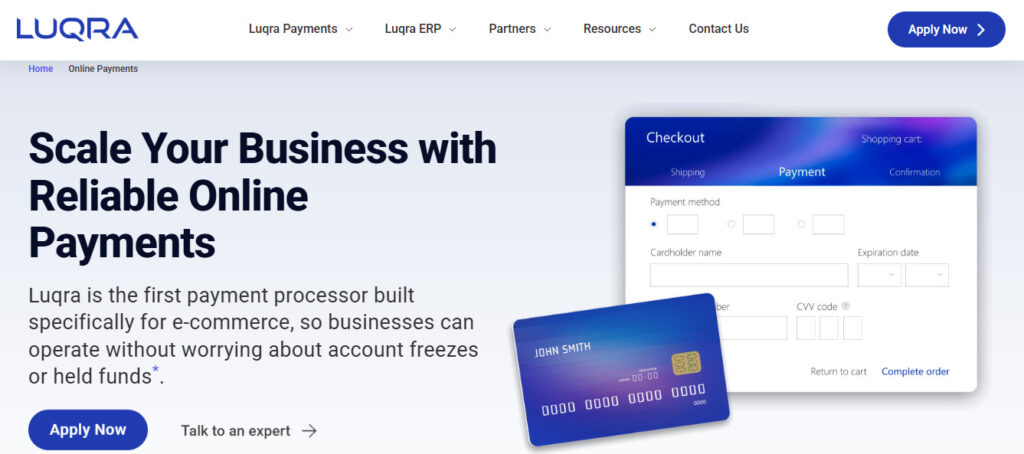
Luqra is a United States-based fintech company that approaches payment processing from a uniquely operational perspective.
Rather than serving solely as a traditional gateway for moving funds, the platform is designed to unify disparate endpoints and data silos into a single, comprehensive interface.
This approach makes it a strong choice for B2B merchants who want to streamline their technology stack without sacrificing power.
It blends high-speed merchant services with robust back-office tools and allows businesses to manage everything from compliance to direct processing under one roof.
The B2B Features
- The platform provides built-in chargeback and dispute management, which is critical for protecting revenue on high-ticket B2B invoices. I cannot overstate how important this is for high dollar transactions.
- Merchants benefit from proactive, in-house underwriting, a process that significantly reduces the likelihood of arbitrary account holds or frozen funds during large promotional periods.
- Uncapped scaling and quick deposits ensure that as your business processes larger volumes, your cash flow remains uninterrupted and liquid.
- The system supports a wide array of payment methods necessary for B2B operations, including ACH transfers, digital wallets, and secure payment links for easy client invoicing.
- Users have access to real-time Visa Acquirer Monitoring Program (VAMP) data, allowing finance teams to adjust operations instantly to remain within network compliance allowances.
Pricing & Fees
Luqra heavily emphasizes rate transparency and long-term cost stability for its merchants.
The company operates on a model that promises complete visibility into pricing structures, explicitly stating that they do not tack on hidden fees or implement unexpected rate increases as your business grows.
They offer highly competitive interchange-plus options and advertise “meet or beat” rates, which is beneficial for B2B companies looking to optimize the costs associated with processing commercial credit cards.
Integrations & Reporting
- I think one of the standout features is the native Luqra ERP, a financial hub that operates alongside the payment gateway to manage your entire business operation.
- Because the ERP and payment processor are integrated by design, businesses gain access to analytics tracking churn, recurring revenue, and inventory without needing third-party middleware.
- The unified dashboard provides a single pane of glass for all financial operations, making the month-end reconciliation process significantly faster for accounting teams. I’ll always welcome that where I can!
- Every transaction flowing through the ecosystem can be custom-tagged, allowing users to generate highly specific reports that accurately reflect the financial health of the business.
2. Stripe
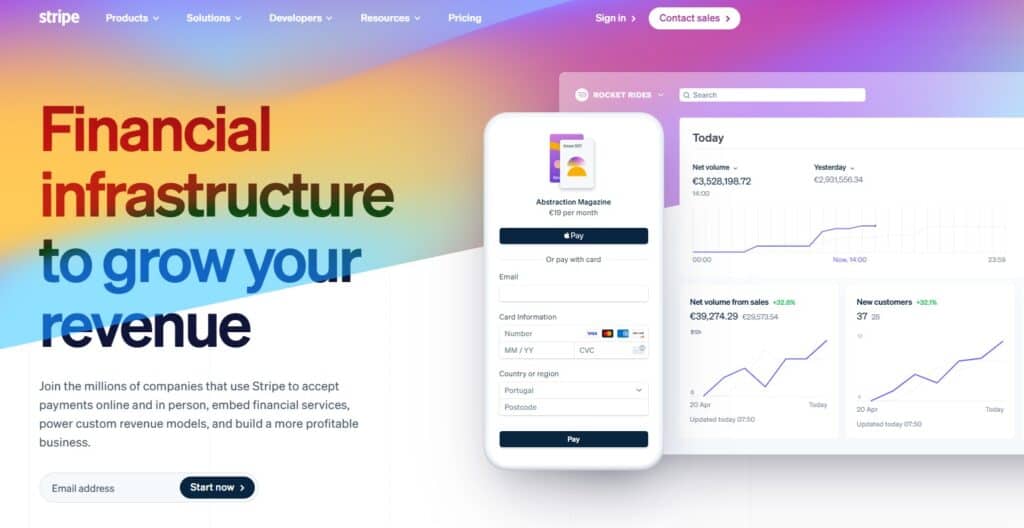
Stripe has established itself as a titan in the payment processing industry, and is known for its developer-first philosophy and immensely powerful infrastructure.
It provides an online payment platform that allows businesses to build custom checkout experiences and highly complex financial workflows from the ground up.
For B2B companies with dedicated engineering teams, Stripe offers unparalleled flexibility to design a payment architecture that perfectly fits their specific procurement and billing requirements. It is a foundational technology designed for scale and adaptability in the digital economy.
The B2B Features
- Stripe Invoicing allows merchants to generate and send customized, professional invoices that include embedded payment links for faster client remittance.
- The Stripe Billing engine is exceptionally robust, making it easy to establish and manage complex recurring revenue models and subscription tiers.
- The platform fully supports B2B-centric payment methods, including ACH direct debits, wire transfers, and localized payment options for international clients.
- Advanced security is provided through Stripe Radar, a machine-learning-driven fraud prevention tool that evaluates risk across the entire Stripe network. It does cost extra though, so make sure you’re accounting for that cost.
- Features like automated payment retries and smart dunning campaigns help B2B businesses recover revenue from failed transactions efficiently.
Pricing & Fees
Stripe utilizes a standard pay-as-you-go pricing model, which provides predictability for businesses without requiring long-term contract commitments.
Credit card processing typically follows a flat-rate structure, while ACH direct debits are offered at a significantly lower percentage rate with a transaction cap, making it highly cost-effective for large B2B payments.
While the base rates are transparent, businesses should be aware that advanced features like customized billing or the automated tax calculation tools often require additional per-transaction fees.
Integrations & Reporting
- The platform features an extensive library of application programming interfaces (APIs), allowing it to connect with virtually any third-party software environment.
- Pre-built integrations are readily available for major B2B platforms, including Salesforce, NetSuite, and specialized accounting software like QuickBooks.
- Stripe Sigma enables finance teams to write custom SQL queries directly within the dashboard to extract highly specific data sets and build tailored financial reports. This is super powerful if you’re dealing with massive datasets.
- The dashboard provides real-time financial tracking, allowing businesses to monitor authorization rates, dispute statuses, and global revenue streams at a glance.
3. Helcim
Helcim is widely recognized for its merchant-centric approach, prioritizing pricing transparency and exceptional customer support above all else.
It is an ideal payment processing solution for mid-market B2B companies that are outgrowing flat-rate consumer processors and are looking for a more sustainable, long-term financial partnership.
Helcim focuses on providing high-quality, built-in tools that help businesses facilitate transactions professionally without requiring complex developmental setups. The platform is designed to be accessible, intuitive, and ultimately focused on lowering the cost of taking payments.
The B2B Features
- The platform includes a comprehensive invoicing tool that allows businesses to track when clients view an invoice and accept payments directly through a secure gateway.
- Helcim offers a self-service customer portal where B2B clients can log in, view their payment history, manage their saved credit cards, and update billing details securely.
- The system automatically requests and processes Level 2 and Level 3 data for corporate credit cards, ensuring merchants always qualify for the lowest possible interchange rates.
- Secure payment links can be generated and sent via email or SMS, providing flexible payment collection options for custom orders or unique contract terms.
- An easy-to-use virtual terminal is provided for businesses that need to manually key in payment details received over the phone from their corporate clients.
Pricing & Fees
Helcim differentiates itself entirely on its pricing structure by exclusively offering an interchange-plus pricing model to all its merchants. There are no monthly subscription fees, no PCI compliance fees, and no long-term contracts to worry about.
Most importantly for growing B2B businesses, Helcim applies automatic volume-based discounts; as your transaction processing volume increases, the platform automatically lowers your margin markup, ensuring your processing costs scale efficiently with your growth.
Integrations & Reporting
- The platform synchronizes seamlessly with leading accounting tools like QuickBooks Online and Xero, ensuring that invoice payments are automatically reconciled in your ledger.
- Helcim provides a clean, user-friendly dashboard that focuses heavily on cost transparency, breaking down exactly what you are paying in interchange fees versus platform markups.
- Developers can utilize the Helcim API to build custom integrations for specialized software that falls outside the standard pre-built options.
- The system allows for easy exporting of transaction histories, batch settlements, and fee structures to simplify the auditing process for financial controllers.
4. Stax
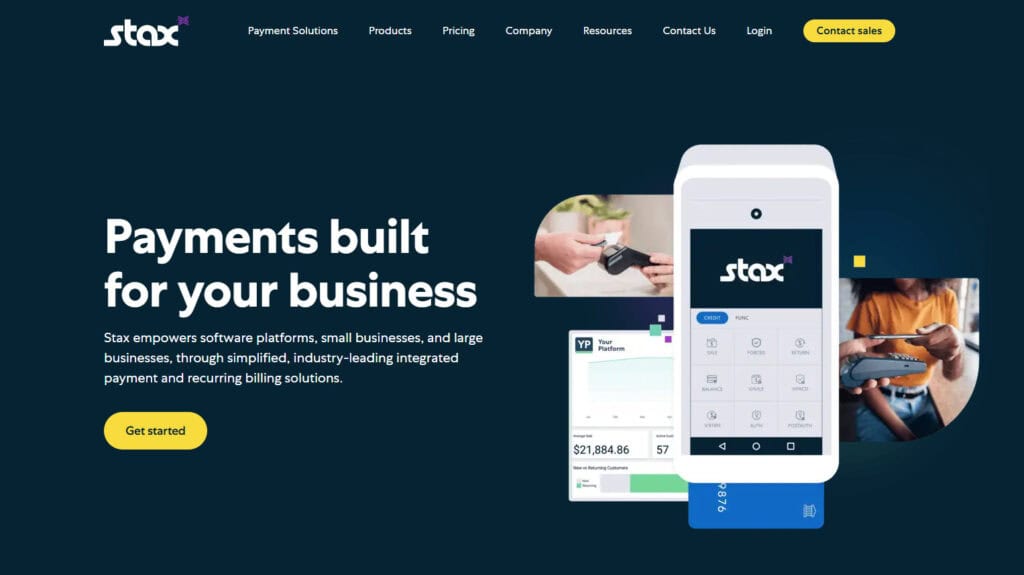
Stax, formerly known as Fattmerchant, is one of the interesting ones on this list.
They disrupted the standard payment processing industry by introducing a subscription-based pricing model designed specifically for high-volume merchants. It targets established B2B businesses that process significant monthly revenue and that are losing substantial margins to percentage-based processing markups.
By treating payment processing as a software-as-a-service (SaaS) expense rather than a variable tax on revenue, Stax provides a scalable solution for large enterprises looking to optimize their operational overhead.
The B2B Features
- The Stax Pay platform provides a versatile digital invoicing system that supports recurring billing schedules and automated payment reminders for late invoices.
- Merchants have access to an advanced virtual terminal, which is essential for B2B environments where payments are frequently negotiated and finalized remotely.
- Secure data tokenization ensures that sensitive client payment information can be stored safely on file for future billing without violating PCI compliance standards.
- The platform supports omnichannel processing, allowing businesses to accept payments online, over the phone, or via traditional point-of-sale hardware seamlessly.
Pricing & Fees
The defining characteristic of Stax is its membership-style pricing model, which eliminates the traditional percentage markup entirely.
Instead of paying a variable rate based on the size of the transaction, merchants pay a flat monthly subscription fee, the direct wholesale interchange cost set by the card networks, and a tiny flat cent fee per transaction.
For B2B companies processing large-ticket items or high monthly volumes, this structure can result in significant annual savings compared to flat-rate alternatives.
Integrations & Reporting
- Stax features a robust, two-way synchronization capability with QuickBooks Online, ensuring that invoices created in either system are mirrored and reconciled automatically.
- The platform offers an open API, allowing enterprise-level B2B companies to integrate the payment gateway directly into their custom CRM or proprietary ERP systems.
- The Stax analytics dashboard provides deep insights into sales trends, customer payment behaviors, and overall business performance metrics.
- Detailed batch reporting and transaction filtering tools allow finance departments to easily isolate specific data points required for complex internal audits.
5. Braintree
Braintree, a service provided by PayPal, is a highly sophisticated payment gateway designed to serve the needs of large enterprises and global commerce platforms.
It provides the infrastructure necessary to accept payments in almost every country, making it the premier choice for B2B companies operating internationally.
Braintree is engineered to handle massive transaction volumes with minimal downtime, offering a secure and reliable network that leverages the global trust and reach of its parent company to facilitate seamless cross-border business.
The B2B Features
- The platform provides access to the extensive PayPal network, allowing B2B merchants to offer PayPal, Venmo, and PayPal Credit as payment options alongside traditional cards and ACH.
- Braintree supports transactions in over 130 different currencies, automatically handling the complex routing and settlement processes required for international trade.
- Enterprise-grade fraud protection is built into the system using specialized third-party integrations like Kount, which analyzes risk factors across millions of global transactions.
- The Braintree Vault securely stores customer payment information, enabling frictionless recurring billing models and easy one-click repeat purchases for returning B2B clients.
- Account updater features automatically refresh expired or replaced credit card information on file, preventing involuntary churn on subscription accounts.
Pricing & Fees
Braintree generally operates on a transparent, flat-rate pricing model for its standard integrations, which includes a percentage fee and a per-transaction cost with no hidden monthly minimums.
However, because Braintree heavily targets enterprise-level clients and high-volume B2B merchants, they frequently negotiate custom interchange-plus pricing agreements.
These tailored pricing structures allow businesses processing significant global revenue to achieve economies of scale and maintain healthy profit margins.
Integrations & Reporting
- As an enterprise solution, Braintree provides pre-built integrations for massive global platforms like Salesforce Commerce Cloud, SAP, and Magento.
- The platform’s reporting tools are designed for international scale, providing macro-level insights into global settlement times, currency conversion rates, and regional authorization successes.
- The dashboard allows finance teams to track and manage complex dispute resolution processes across multiple countries and regulatory environments.
- Webhooks and advanced developer tools ensure that every stage of the transaction lifecycle is communicated in real-time to the merchant’s backend server architecture.
Choosing the Right B2B Payment Processor for Your Team
Selecting the ideal B2B payment processor is ultimately about finding a partner that aligns with your specific operational needs and growth trajectory.
To be honest, there isn’t a single processor on today’s list that’s a slouch, they’re all ubiquitous for a reason. Whether your priority is international expansion, developer-friendly customization, or minimizing interchange fees on large-ticket invoices, the right platform will do more than just process transactions. It will actively streamline your back-office workflows.
While developers might lean toward highly customizable APIs and volume-heavy merchants might seek subscription-based pricing, in my opinion, businesses looking to consolidate their financial stack may find the most value in unified systems like Luqra that bridge the gap between payment processing and native ERP management.