


- What Is Dedicated Shipping Software and How Can It Help Ecommerce Businesses?
- How To Choose the Best Shipping Solution for Your Ecommerce Business
- Five Popular Shipping Platforms Compared (At a Glance)
- 1. Shippo: Best Way To Ship a Package For Overall Simplicity and Savings
- 2. ShipStation: Best for high-volume scaling and automation
- 3. Easyship: Best for International Shipping:
- 4. ShippingEasy: Best for US Based Sellers
- 5. Pirate Ship: Best Free Shipping Platform for Basic Needs
- What's The Best Way To Ship A Package?
Last Updated on June 1, 2026 by Ewen Finser
FTC Disclaimer: We do make money from this blog and may receive compensation for this work in the form of commissions, fees and complimentary product access. Review our full FTC disclosure here.
As your ecommerce business grows, shipping can start taking up more time, money, and mental energy than you expected. More orders mean more labels to create, more tracking updates to manage, more chances for shipping mistakes, and more customer complaints when something goes wrong.
Built-in shipping tools can work well when your order volume is still manageable. But as your business grows, you may start running into limits, especially if you sell across multiple platforms, ship internationally, or spend too much time handling shipping tasks manually.
A lot of smaller businesses also start out shipping directly through the post office or carrier retail counters. The problem is that buying labels one package at a time at the counter is often one of the most expensive ways to ship. Retail postage rates are usually much higher than the discounted commercial rates available through shipping software platforms, and those costs add up quickly as order volume grows.
The best way to ship a package for growing eCommerce stores is to build a shipping process that helps you save time, stay organized, and keep orders moving without turning fulfillment into a daily headache.
For some businesses, built-in tools may still be enough, but if shipping is starting to slow you down, dedicated shipping software or third-party fulfillment solutions can give you more control.
What Is Dedicated Shipping Software and How Can It Help Ecommerce Businesses?

Dedicated shipping software is a third-party platform that connects with your ecommerce store, online marketplace, or fulfillment system to centralize and automate your shipping operations.
Instead of manually checking rates across different carriers, creating labels one at a time, and updating tracking information yourself, shipping software streamlines the entire fulfillment workflow from one dashboard.
For growing ecommerce businesses, this can help solve two major problems: rising shipping costs and the amount of time spent managing fulfillment manually.
Most dedicated shipping platforms allow businesses to:
- Import orders automatically from ecommerce platforms and marketplaces
- Compare real-time shipping rates across multiple carriers
- Purchase and print labels in bulk
- Automatically send tracking information to customers
- Manage returns, reporting, and shipment tracking in one place
- Access discounted carrier pricing through pre-negotiated rates
How To Choose the Best Shipping Solution for Your Ecommerce Business

There is no single “best” shipping carrier for every ecommerce business. The right solution depends on what you sell, how often you ship, where your customers are located, and how much time your team can realistically spend managing fulfillment.
For most growing online stores, the real challenge is balancing three things at once: keeping shipping costs under control, delivering orders quickly, and avoiding fulfillment workflows that become impossible to manage as order volume increases.
Shipping Volume
The way a business ships 20 orders per week looks very different from the way it ships 200 or 2,000.
As shipping volume grows, manually comparing carrier rates, purchasing labels individually, updating tracking information, and managing returns can quickly become a bottleneck.
Higher-volume sellers may also qualify for discounted carrier pricing, though negotiating those rates directly with carriers often requires minimum shipping thresholds and ongoing volume commitments.
This is one reason many ecommerce businesses eventually adopt dedicated shipping software. These platforms often provide access to pre-negotiated carrier discounts while also centralizing shipping operations into a single dashboard.
Delivery Location Impacts Cost and Speed
Depending on your order’s final destination, the carrier you use can make a huge difference in cost and time-to-destination. Even if you ship locally, having access to multiple carrier options can be a cost and time saver.
The bottom line is making sure you are reviewing rates and time tables for all available carriers in the area or carriers that can safely get your package overseas and across borders. Again, a dedicated shipping partner can be a huge help here as well.
Product Size, Weight, and Delivery Expectations Matter
Not all products are equally easy or affordable to ship.
Heavy products, oversized boxes, fragile items, and expedited shipping requests can dramatically increase fulfillment costs. In some cases, the cheapest carrier option may create longer delivery times or higher risks of delays and damaged shipments.
Choosing the right shipping setup means finding a balance between affordability, reliability, and delivery speed without cutting too deeply into profit margins.
Automation Becomes More Important as You Scale
Many ecommerce platforms include built-in shipping tools, but those systems are often designed for smaller sellers with relatively simple fulfillment needs.
As order volume increases, businesses frequently need more automation to reduce manual work and improve operational efficiency. This can include:
- Automatically importing orders from marketplaces and storefronts
- Comparing live carrier rates
- Bulk printing shipping labels
- Sending tracking updates automatically
- Managing returns and reporting from one dashboard
Dedicated shipping software helps consolidate these tasks into a single workflow, making it easier to scale fulfillment operations without dramatically increasing labor or administrative overhead.
Five Popular Shipping Platforms Compared (At a Glance)
Platform | Carrier Access | Pricing Model | Key Features |
40+ carriers (USPS, UPS, FedEx, DHL, and a large number of regional and international carriers) | A free starter plan of up to 30 labels/month Tiered pricing depending on how many labels you need/month, starting at ~$17/month (or ~$205/year) for up to 200 labels/month. | Discounted rates with no contractsFast, intuitive setupStrong integrations (incl. Etsy partner)Easy rate comparison across many carriers | |
USPS, UPS, FedEx, DHL, and GlobalPost, etc. | A monthly (tiered) subscription. Basic pricing through their Starter Plan starts at ~$14.99/month for up to 50 monthly shipments. | Advanced automation (rules, batch processing)Strong reporting & analyticsMulti-warehouse supportTeam workflows & permissions | |
USPS, UPS, FedEx, DHL confirmed plus hundreds of regional global couriers | A free plan with up to 50 monthly shipments Tiered pricing starting with their Plus plan at ~$29/month for up to 500 monthly shipments. | Huge global carrier networkBuilt-in duties & tax calculationsTransparent international pricing at checkout | |
USPS, UPS, FedEx, DHL | Free Starter Plan for up to 25 shipments/month Growth Plan starting at ~$19.99/month for up to 200 shipments. | Very easy to useBuilt-in basic email marketing toolsSimple rate comparison | |
USPS and UPS only | Free | No cost, no hidden feesDiscounted USPS & UPS ratesExtremely simple interfaceNo automations or business rules |
1. Shippo: Best Way To Ship a Package For Overall Simplicity and Savings
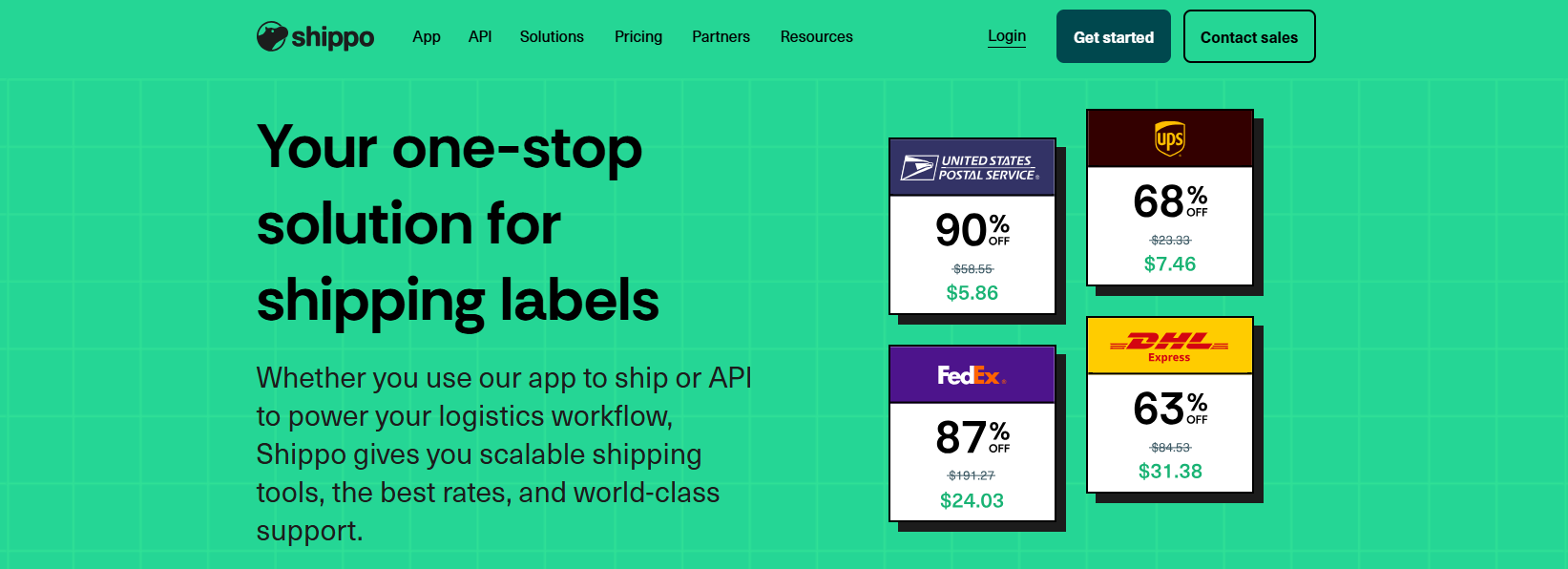
Shippo is one of the easiest shipping platforms for small and growing ecommerce businesses to use. It helps online sellers compare shipping rates, print labels, track packages, and manage orders all in one place.
One of Shippo’s biggest strengths is that it gives businesses access to discounted shipping rates from more than 40 carriers, including USPS, UPS, FedEx, and DHL. You do not need a large shipping volume or special contract to get those discounts, which makes Shippo a great choice for smaller businesses trying to save money on shipping.
Shippo also connects with many popular ecommerce platforms and marketplaces like Shopify, WooCommerce, BigCommerce, Amazon, eBay, and Etsy. In fact, Shippo is one of Etsy’s official shipping partners, which has helped make it popular with independent sellers and small online stores.
Pros:
- Access to 40+ carriers including USPS, UPS, FedEx, and DHL
- Discounted shipping rates with no minimum volume requirements
- Fast setup and beginner-friendly dashboard
- Strong integrations with major ecommerce platforms
- Good for both domestic and international shipping
Cons:
- Reporting tools are fairly basic
- Some advanced features require higher-tier plans
- Not ideal for very large enterprise operations
- Costs can increase as shipping volume grows
2. ShipStation: Best for high-volume scaling and automation
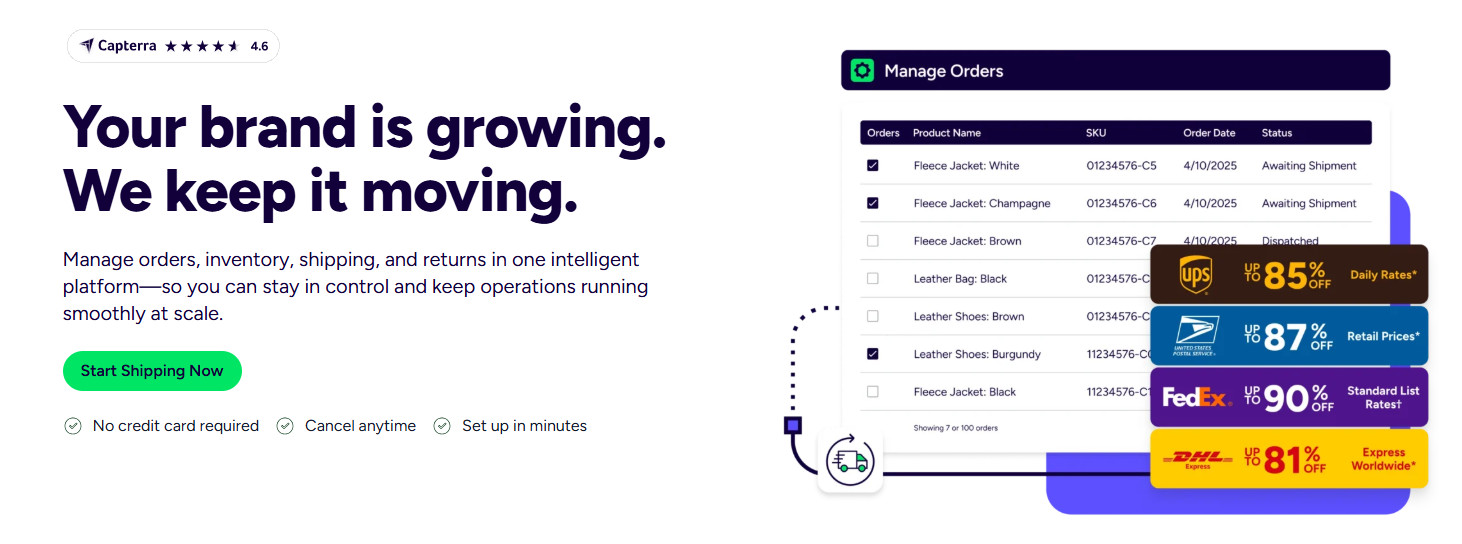
ShipStation, the other verified Etsy partner, is a great choice for sellers who are shipping at high volumes or manage multiple sales channels and even warehouse fulfillment. It offers strong automation features, like rules-based label creation and batch processing, which can save significant time once your order volume grows.
That said, it comes with more complexity. There’s a monthly subscription, and the interface can take some time to implement and learn. For sellers who just want quick rate comparisons and label printing, it may feel like overkill. But for teams that need workflow control and integrations, it’s a powerful option.
Pros:
- Advanced reporting and analytics for tracking spend, carrier performance, and delivery times
- Built for multi-warehouse operations, including split shipments and location-based routing
- Strong support for team workflows (user permissions, roles, audit trails)
- Scales well for high-volume shippers with complex needs
Cons:
- Extremely steep learning curve
- Tier pricing can get very expensive, very quickly
- Requires dedicated resources for regular configuration and maintenance
- Can be overwhelming for small-to-mid-size teams
3. Easyship: Best for International Shipping:
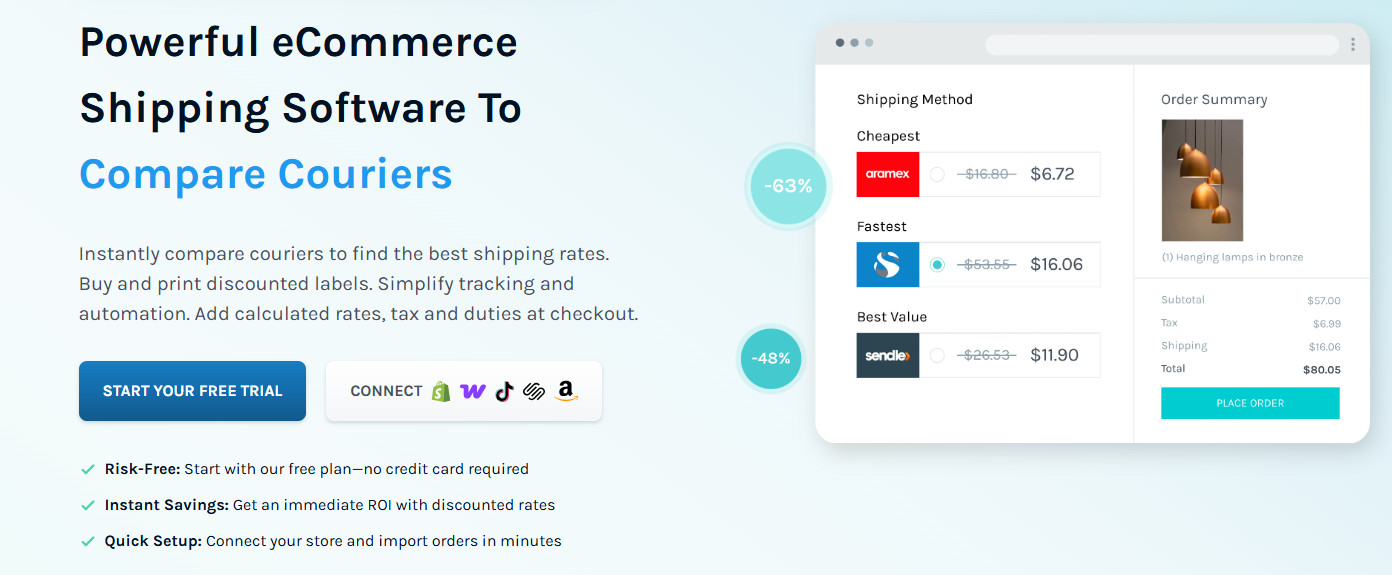
If you’re mainly selling internationally across borders, Easyship is a globally focused shipping platform that connects you to a large network of international couriers. What I especially like is how it takes the guesswork out of duties, customs, and tax calculations, which can cause confusion for both you and your customers.
It’s important to understand if international shipping is not a large part of your business operations, this is not going to be a great platform for your business due to its focus on international carriers.
Pros:
- 550+ global carrier options
- Duties and tax calculation included in rate shopping view
- Buyers see all international shipping costs at checkout
Cons:
- Not a great fit for US based sellers
- Shipping rates are often higher than other platforms
- Must subscribe to paid plans to access all available features
4. ShippingEasy: Best for US Based Sellers
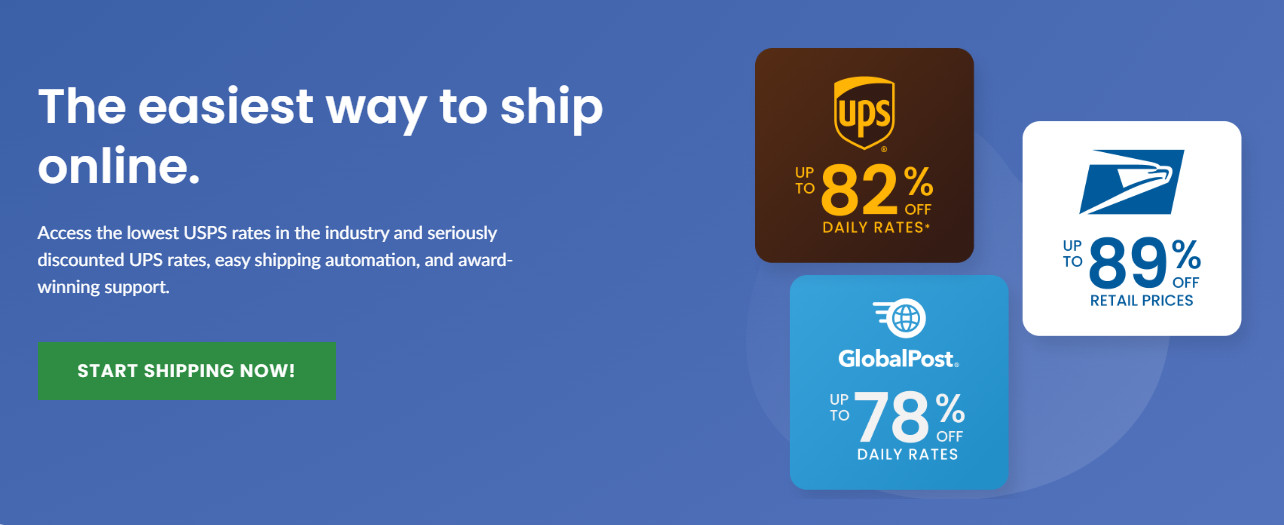
ShippingEasy is built for US-based sellers only, which is not a bad thing if that is your business model, and it’s relatively easy to use! Another bonus with this platform is the built in basic email marketing tools and customer segmentation tools. In a way you are getting two platforms for the price of one, but that does come with one major issue: both sides of the platform’s tools (shipping and marketing) are extremely basic.
Keep in mind, you only have access to four shipping carriers: USPS, UPS, FedEX, and DHL. So, if you want to consider regional carriers, explore better rates through other carriers, or expand international shipping beyond DHL, you will feel very limited.
Pros:
- Extremely easy set up and intuitive to use
- Built in basic marketing tools
- Quick rate comparison for four major carriers
Cons:
- Carrier options are limited compared to other platforms on this list
- Does not scale very well with a growing operations
- Ad-on features can eat into your budget quickly
5. Pirate Ship: Best Free Shipping Platform for Basic Needs
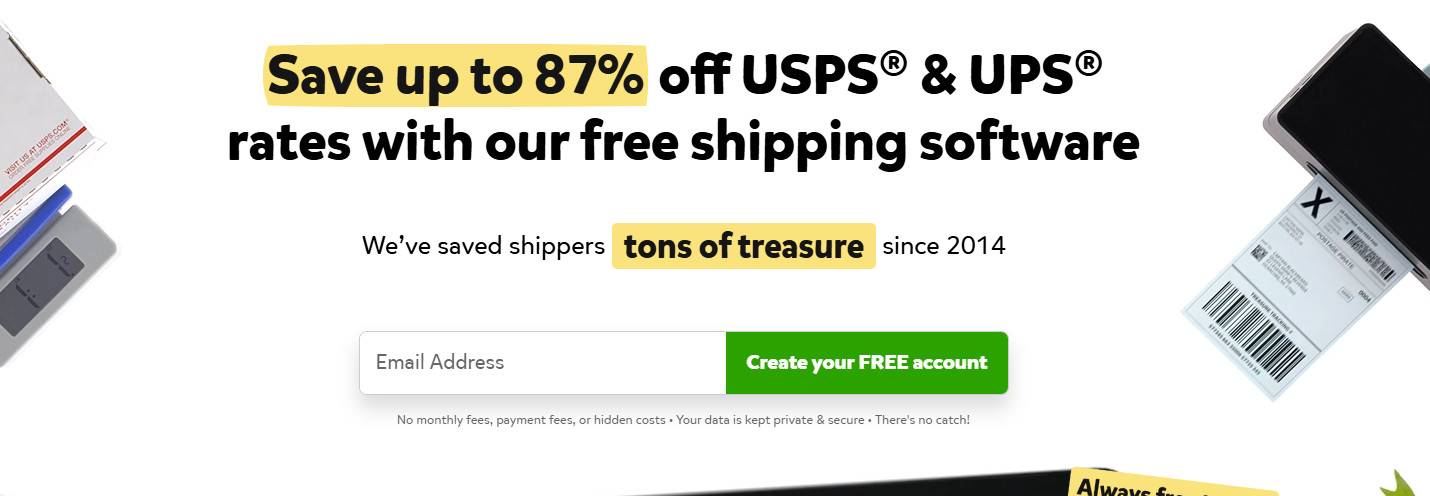
Pirate Ship is a great starting point for newer or low-volume sellers who have outgrown their selling platform’s native shipping tools, or those looking for easier rate comparison options. That said, Pirate Ship only provides rate comparisons for USPS and UPS, but the rates are often discounted, and label automation is available too.
Keep in mind, this is a very basic option, limited to two carriers and offers even more limited automation. If you are scaling your business, you will likely outgrow this fast, if not already.
Pros:
- Completely free with no hidden costs
- Discounted USPS and UPS rates
- Ultra simple to use
Cons:
- Limited to two carriers
- Scaling businesses will quickly outgrow the platform
- Very little integrations and automations
What’s The Best Way To Ship A Package?
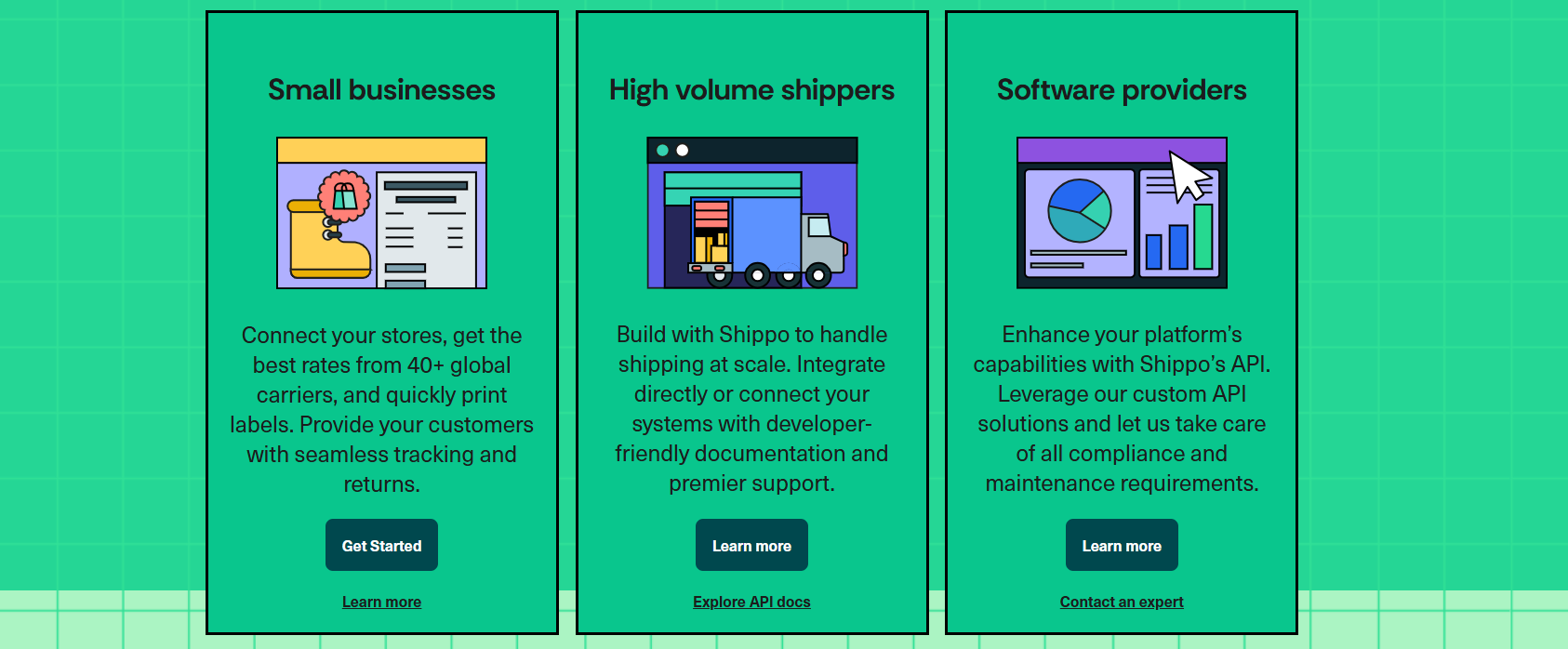
If your goal is to consistently get the cheapest rate with minimal effort and a few extra bonus features like easy customizations, reports and tracking info, Shippo stands out as the most practical choice for most ecommerce sellers.
If your business is growing at an extremely fast rate, and needs automation to help manage automation logic and repeat shipping needs, ShipStation can get the job done, but that comes with budget busting cost and integration complexity. For heavy international shipping needs, Pirate Ship has you covered.
On the other side of the coin, if you are only US-based, EasyShip can fit the bill, but you may end up being nickel and dimed to use all the features you need. If you don’t have the budget for a dedicated shipping partner, Pirate Ship can fit the bill, but you will be limited to only two carriers, USPS and UPS.
The key takeaway here is that it’s not about choosing the best carrier, it’s about choosing a platform that lets you compare all available carriers in one easy-to-read dashboard.