


Last Updated on May 25, 2026 by Ewen Finser
Evaluating the “best value” in startup accounting software requires a reassessment of how founders and finance operators calculate cost. In the early stages of building a company, it is incredibly tempting to navigate to a software provider’s pricing page, sort from lowest to highest, and select the platform with the cheapest monthly subscription fee (a mistake that will accrue thousands of dollars of technical debt later).
To accurately assess value, modern operators must calculate the Total Cost of Ownership (TCO). This equation includes the software subscription fee, the hourly or monthly cost of the bookkeeper required to categorize transactions, the internal founder hours wasted chasing down receipts, and the invisible but massive cost of delayed financial visibility. If you are paying $40 a month for software but spending $800 a month on a bookkeeper to manually reconcile your corporate cards, your accounting stack is not a value; it is a financial burden.
This Best Value Accounting Software for Startups guide evaluates the most prominent accounting platforms in the startup ecosystem, QuickBooks Online, Xero, Wave, Zoho Books, and Digits, by looking past the marketing materials and breaking down their true operational costs for modern founders.
QuickBooks Online (QBO)
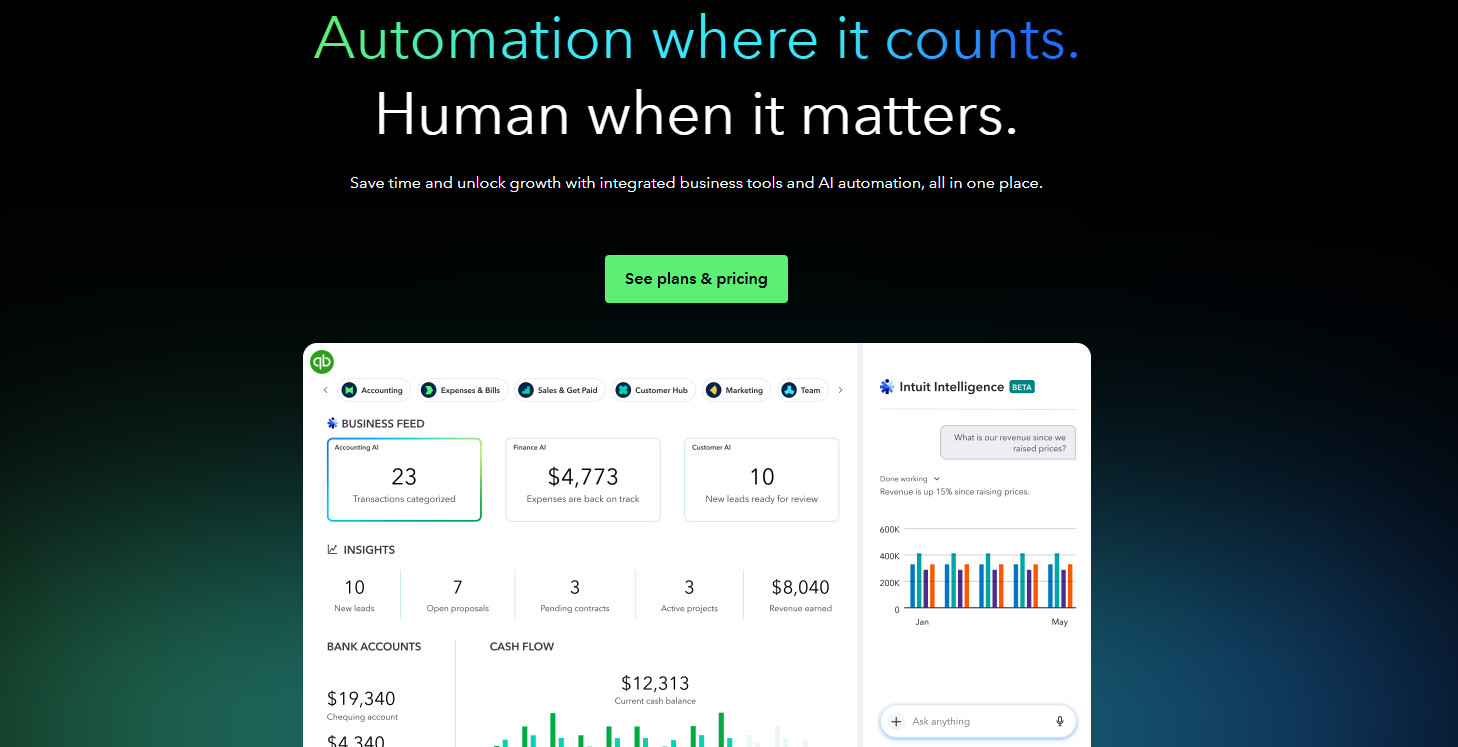
QuickBooks Online (QBO) is the undisputed legacy heavyweight and the most ubiquitous accounting platform in the United States. For decades, it has served as the default recommendation from nearly every traditional CPA, tax professional, and outsourced finance firm in the country. Its primary advantage is its universal adoption; practically every financial tool on the market integrates with QBO, and every accountant knows how to navigate its chart of accounts. QBO offers a familiar, traditional double-entry accounting structure that scales effectively from a pre-seed startup to a late-stage company preparing for a migration.
The True Cost Equation
The sticker price for QuickBooks Online generally ranges from $45 to $300 per month, depending on the tier and the need for advanced features like class tracking or inventory management. However, the software itself is essentially an empty digital filing cabinet. To extract any value from QBO, a startup must have a human operator. Most venture-backed startups immediately pair QBO with an outsourced book keeper, which typically adds a minimum of $500 to $1,500 to the monthly costs. Therefore, the true starting cost of running QuickBooks Online is rarely less than $600 per month, making the advertised software price largely irrelevant to the actual cash outflow.
The Operational Realities
- Because QBO relies on a traditional, manual architecture, your financial data is only as current as the last time your human bookkeeper logged in to process the bank feed.
- Founders are consistently forced to wait until the second or third week of the following month to review their finalized burn rate and cash runway.
- The mapping interfaces required to connect modern corporate cards often require rigid, static rules that break entirely when an employee uses the card at a new, unrecognized vendor.
- When complex, multi-currency international payroll data flows in from platforms like Deel, you may find yourself doing tedious manual untangling.
- Paying the monthly QBO subscription fee is ultimately just paying a mandatory tax for the privilege of giving an outsourced accountant a place to do their manual data entry.
Ultimately, QuickBooks Online is the safest choice a startup can make, but safety should not be confused with value. When evaluated through the lens of total cost of ownership, QBO reveals itself as an incomplete solution that merely shifts the operational burden onto your payroll.
Xero
Xero has aggressively positioned itself as the cloud-native, modern alternative to QuickBooks Online, capturing massive market share outside of the United States and gaining significant traction among global startups. Xero was built for the cloud from day one, giving it a slightly cleaner user interface and a more intuitive approach to basic bank reconciliations. Its defining feature is its robust, native multi-currency handling, making it the preferred choice for startups that manage international subsidiaries, sell to a global customer base, or operate across multiple international banking jurisdictions.
The True Cost Equation
Xero’s pricing structure is competitive, typically ranging from $15 to $80 per month for growing businesses. Yet, the TCO equation for Xero mirrors the reality of QuickBooks Online almost exactly. While the interface is friendlier, Xero still fundamentally requires a trained bookkeeper or accountant to manage the chart of accounts, process complex journal entries, and execute the month-end close. Startups utilizing Xero must still budget hundreds or thousands of dollars monthly for human accounting services. The total cost of ownership easily eclipses $500 a month when factoring in the mandatory human middleware required to keep the ledger compliant and up to date.
Operational Realities
- While Xero excels at managing multiple currencies, tracking categories and tax rates require meticulous manual configuration to ensure international liabilities do not conflict with domestic reporting.
- Finance teams consistently report that bulk-syncing historical data or attempting to adjust previously closed pay runs in Xero is an incredibly cumbersome and time-consuming process.
- The platform’s reconciliation screen gamifies the matching process, but it still relies heavily on the user manually clicking “OK” on hundreds of transactions every month.
- Similar to QBO, relying on Xero means accepting a fundamental delay in financial visibility, as reporting is entirely dependent on the speed of your human accounting team.
- If your startup requires strict departmental budgeting, Xero’s tracking categories can quickly become overloaded and complicated to manage without professional oversight.
Ultimately, Xero is a beautifully designed platform that elegantly solves the multi-currency problem, but a sleeker interface should not be confused with better operational value. Much like QuickBooks, evaluating Xero through the lens of total cost of ownership proves that it is still fundamentally reliant on expensive human intervention to function.
Wave
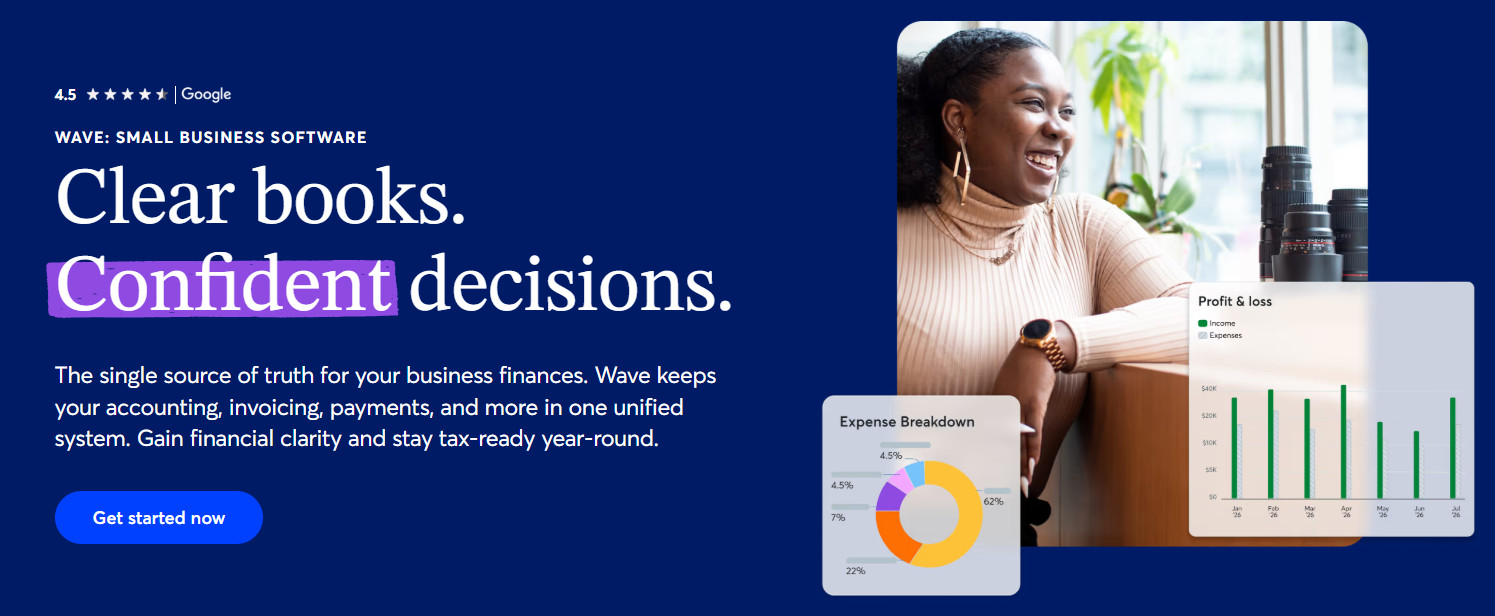
Wave is widely known in the early-stage ecosystem for its disruptive pricing model: the core accounting software is entirely free. Built primarily for freelancers, solopreneurs, and lean bootstrapped businesses, Wave provides basic income and expense tracking, simple invoicing, and a rudimentary dashboard. The platform generates revenue by charging processing fees on its built-in payments network and offering optional payroll add-ons. For a founder who has just incorporated and needs to send a single invoice to a consulting client, Wave provides an immediate, frictionless entry point into business accounting.
The True Cost Equation
While the sticker price is $0 per month, Wave is frequently the most expensive software a startup can adopt when measured by the cost of the founder’s time. Because it lacks sophisticated bank feed rules, automated categorizations, and deep integrations with the modern fintech stack, the software demands an exorbitant amount of manual data entry. A startup founder whose time is valued at hundreds of dollars an hour will find themselves spending an entire weekend manually categorizing software subscriptions and matching bank deposits.
Operational Realities
- The platform lacks the necessary audit trails, deep reporting capabilities, and departmental tagging required to pass a due diligence process.
- Because Wave does not integrate cleanly with modern spend management tools like Ramp or Brex, every corporate card transaction must be exported to a CSV and manually uploaded.
- Founders are forced to act as their own data-entry clerks, severely distracting them from core business objectives like product development and fundraising.
- The software does not handle complex revenue recognition or multi-currency accruals, meaning SaaS companies will immediately outgrow its fundamental capabilities.
- Attempting to save fifty dollars a month on software by using Wave will inevitably cost thousands of dollars in forensic accounting fees when it is time to transition to a scalable ledger.
Ultimately, Wave offers the undeniable appeal of a free price tag. When evaluated through the lens of total cost of ownership, Wave reveals itself as a massive liability that extracts its hidden fees directly from the founder’s available time. You aren’t adopting a cost-effective finance function; you are simply volunteering to become your own unpaid data-entry clerk.
Zoho Books
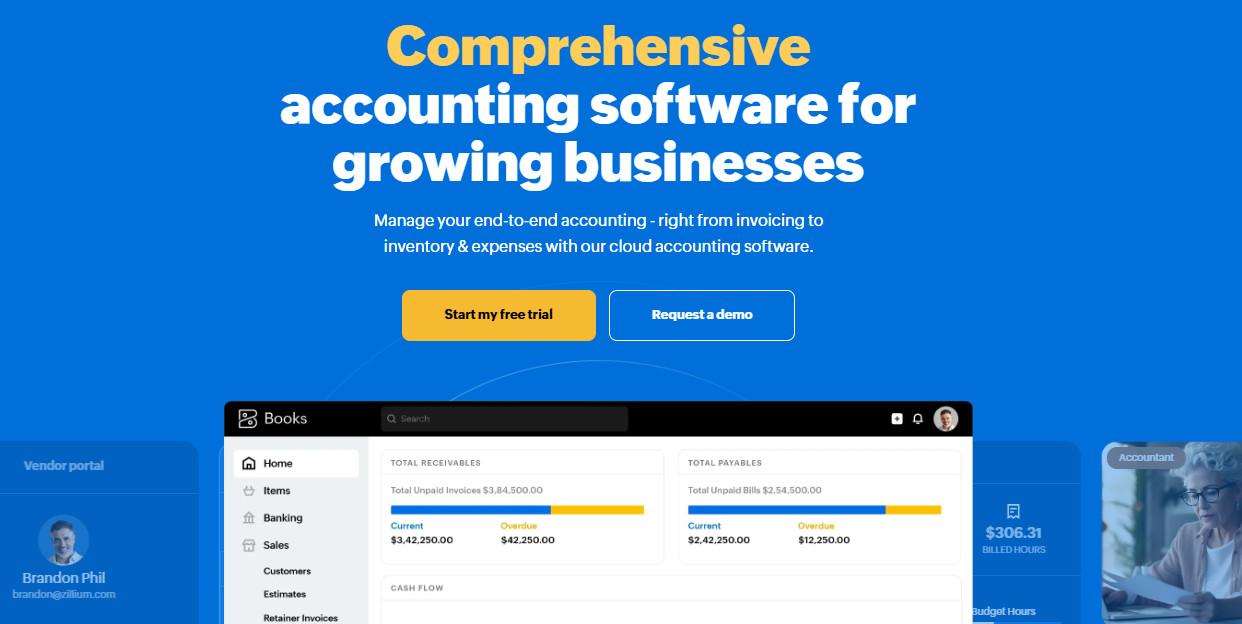
Zoho Books is a highly capable accounting platform that exists as a core pillar within the massive Zoho One software ecosystem. For companies that already utilize Zoho CRM, Zoho Projects, or Zoho Inventory, the accounting module provides deep, seamless data sharing across the entire organization. The software is feature-rich, offering automated workflows, robust inventory tracking, and highly customizable invoicing templates.
The True Cost Equation
Zoho Books offers a free tier for micro-businesses, but scaling startups will quickly graduate to its paid plans, which range from $20 to $275 per month. The hidden cost of Zoho Books lies in its implementation and its closed-ecosystem nature. Properly configuring Zoho’s automated workflows requires significant upfront time and, often, the hiring of a specialized Zoho integration consultant. While the software fee is reasonable, the total cost of ownership spikes when you factor in the implementation fees and the ongoing cost of an outsourced bookkeeper who must be specifically trained on the nuances of the Zoho platform.
Operational Realities
- While Zoho integrates flawlessly with its own proprietary apps, establishing seamless connections with external modern finance tools often requires API workarounds.
- The user interface is dense and highly technical, creating a learning curve for founders who simply want to check their cash runway.
- Startups that rely on standard, industry-accepted reporting structures frequently have to customize Zoho’s default reports heavily to appease institutional investors.
- Finding an outsourced accounting firm that specializes in Zoho Books is more difficult than finding one that supports QuickBooks, potentially limiting your options for financial support.
- The platform’s immense customization capabilities often lead to over-engineering, resulting in an overly complicated general ledger that slows down the month-end close.
Ultimately, Zoho Books offers a deeply customizable environment that works flawlessly within its own ecosystem, but immense customizability should not be confused with value. When evaluated through the lens of total cost of ownership, Zoho reveals itself as a highly technical platform that demands expensive implementation consultants to properly configure and maintain. You aren’t adopting a streamlined, agile finance function; you are simply locking yourself into a closed loop that struggles to communicate natively with the external tools favored by modern startups.
Digits
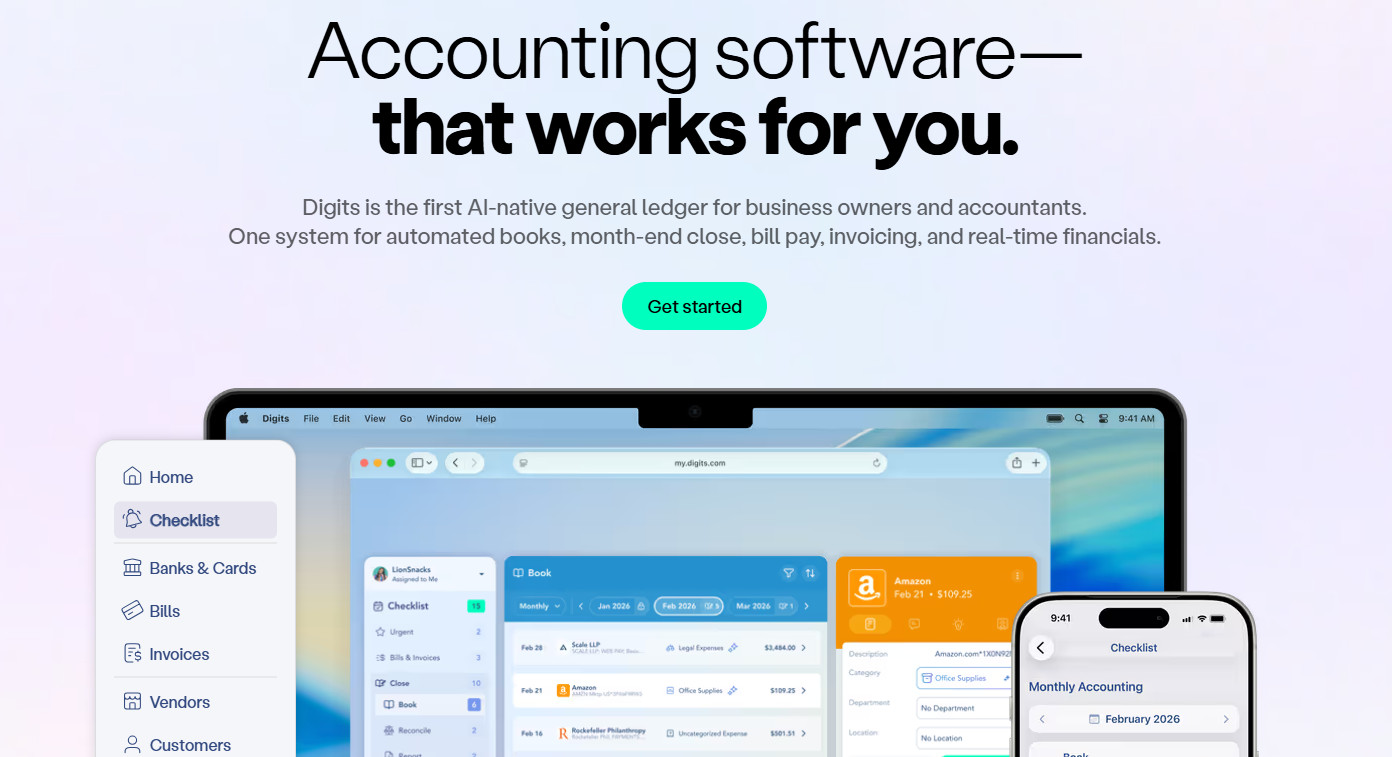
While legacy platforms treat accounting software as a workspace for a human bookkeeper, Digits represents a paradigm shift. Digits is an AI-native accounting platform built around an agentic general ledger that automatically categorizes transactions, runs reconciliations, and drafts financial reports continuously. Its machine learning models handle the manual data entry that previously required a human workforce.
The True Cost Equation
Digits is the clearest example of how automation drastically alters the total cost of ownership. The software pricing is transparent: the Essentials plan starts at $65 per month for early-stage companies, while the Core plan is $100 per month for growing businesses. Scaling companies with internal finance teams can upgrade to the Pro tier for $250 per month, unlocking advanced features like AI Close Agents and auto-updated amortization schedules.
Operational Realities
- By utilizing advanced, custom-trained machine learning models, the platform categorizes the vast majority of transactions automatically without requiring the user to build rigid, manual bank rules.
- Founders gain access to customizable dashboards that display cash runway, burn rate, and financial health in real-time, eliminating the three-week wait for month-end reports.
- The system features native integrations with essential startup infrastructure, pulling data directly from Mercury, Brex, Ramp, Stripe, and Gusto without requiring CSV exports.
- Built-in bill pay and invoicing workflows allow operators to manage their accounts payable and accounts receivable directly within the ledger, eliminating the need to pay for secondary routing software.
- When a transaction is flagged as an anomaly or requires human context, the platform isolates it in a streamlined review inbox rather than burying it in a suspense account.
Ultimately, Digits carries a slightly higher monthly subscription fee than the entry-level legacy tiers, but a higher sticker price should not be confused with a higher financial burden. When evaluated through the lens of total cost of ownership, Digits reveals itself as a platform on the market actively engineered to eliminate the human middleware tax.
The Final Assessment
For a venture-backed startup, optimizing the finance function is a critical operational mandate. Evaluating accounting software based solely on its monthly subscription fee is a fundamental error that ultimately leads to bloated back-office expenses and delayed strategic decision-making. The true value of a financial platform is measured by its ability to reduce human labor, accelerate the month-end close, and deliver accurate, real-time visibility into the company’s cash position.
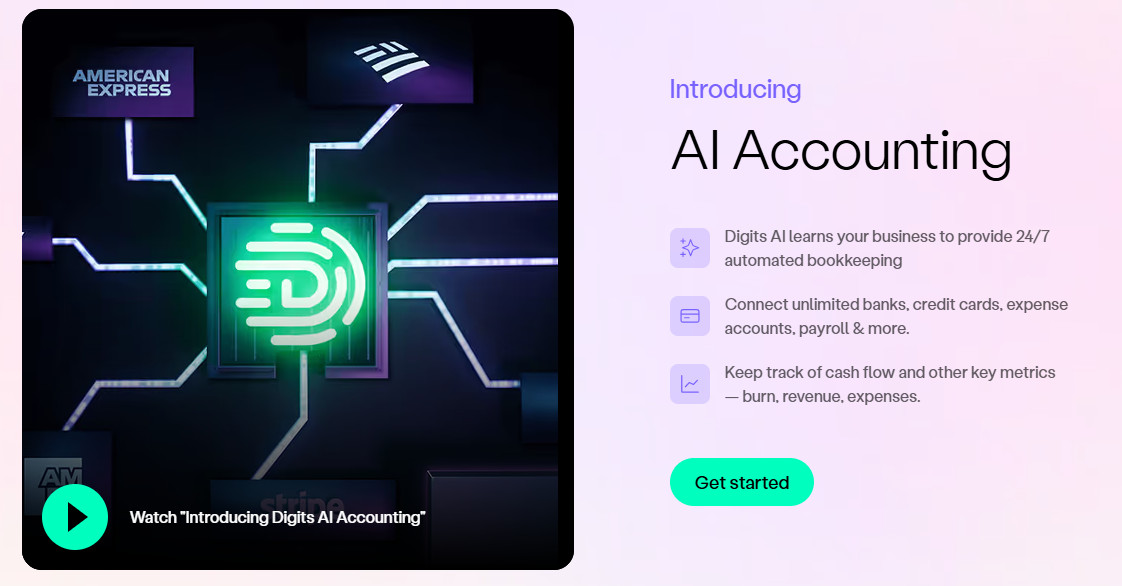
While QuickBooks Online and Xero provide scalable infrastructure, they permanently burden startups with costly human bookkeeping fees, just as Wave’s free tier extracts a hidden toll in wasted founder time and Zoho Books demands heavy, isolating customization. For startups looking to maximize efficiency, Digits presents the strongest total cost of ownership on the market by treating artificial intelligence as the core engine of the general ledger rather than a bolted-on gimmick. Paying $65 to $100 a month for an autonomous platform that categorizes transactions 24/7 and replaces the baseline functions of a traditional bookkeeping firm is the definition of operational value.