


- What is Email Deliverability?
- Why Ecommerce Faces Unique Deliverability Challenges
- The Infrastructure Problem
- How Inboxally Supports Deliverability
- List Quality: When Growth Hurts Deliverability
- Authentication Protocols: Non-Negotiable for 2026
- The Shared IP Reputation Problem
- Content Decisions That Impact Deliverability
- Engagement Patterns: What ISPs Actually Track
- The Unsubscribe Paradox
- Segmentation: The Most Overlooked Strategy
- Double Opt-In: Quality Over Quantity
- Building a Sustainable Deliverability Strategy
- Why InboxAlly is Essential
Last Updated on May 6, 2026 by Ewen Finser
What is Email Deliverability?
Email deliverability measures how successfully your promotional emails reach customer inboxes instead of spam folders or bouncing back. For ecommerce businesses, this directly impacts revenue; a 40%-off flash sale is worthless if customers never see it.
Unlike transactional emails (order confirmations, shipping updates) that typically achieve high deliverability, promotional emails face intense scrutiny from inbox providers. Your Black Friday campaign competes with thousands of other retailers for inbox space, and ISPs (internet service providers) aggressively filter commercial messages.
The challenge: You need frequent promotional emails to drive sales, but high-volume sending triggers deliverability problems.
Why Ecommerce Faces Unique Deliverability Challenges
- Volume and frequency: Multiple weekly campaigns (new arrivals, sales, abandoned carts) raise ISP flags.
- Shared IP addresses: Most ecommerce brands use shared IPs, meaning your deliverability gets impacted by other senders’ behavior.
- Promotional content: Sale language and discount codes trigger spam filters more than neutral content.
- Seasonal spikes: November sending volume might be 10x higher than February. Sudden changes make ISPs suspicious.
- Engagement decay: One-time customers may ignore future emails, damaging your sender reputation.
These challenges are inherent to ecommerce. Success requires strategies that maintain deliverability despite them.
The Infrastructure Problem
The biggest deliverability is managing complex email infrastructure while running a business. Strong deliverability requires:
- Monitoring sender reputation scores
- Configuring authentication protocols (SPF, DKIM, DMARC)
- Understanding ISP algorithms
- Tracking engagement metrics
- Regularly cleaning email lists
- Timing campaigns strategically
- Adapting to evolving spam-filter technology
Most ecommerce teams lack dedicated deliverability specialists. Email infrastructure gets attention only after problems emerge or when sender reputation has already suffered.
How Inboxally Supports Deliverability
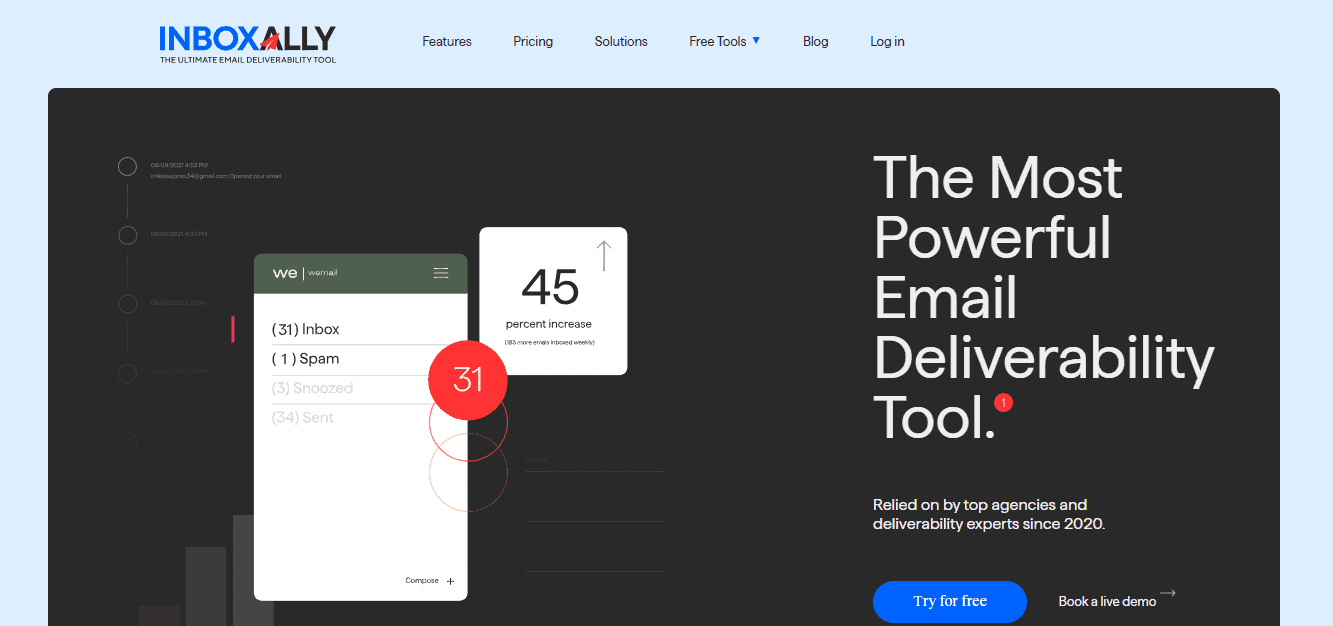
InboxAlly is an email deliverability platform designed to help businesses improve their inbox placement rates. Instead of requiring deep deliverability expertise in-house, it proactively strengthens inbox placement by generating positive engagement signals around your emails.
The platform works continuously in the background, helping ISPs recognize your domain as a trusted, valued sender. Think of it as having a deliverability team working 24/7, so you can focus on selling products and serving your customers while your sender reputation is actively supported.
List Quality: When Growth Hurts Deliverability
How you build and maintain your email list determines whether subscribers boost or undermine deliverability.

Questionable Growth Tactics that Backfire
Purchasing contact lists, scraping emails, or using deceptive subscription tactics floods your list with unengaged contacts who never open emails, which, in turn, destroys your sender reputation.
Even legitimate growth can create problems if you’re not strategic. An aggressive popup offering “20% off for your email” attracts deal-seekers. They’ll use the discount once, then ignore every subsequent email while poisoning your engagement metrics.
Many ecommerce brands also fall into the trap of never removing subscribers, believing bigger lists equal better results. Instead, a bloated list with poor engagement actively hurts deliverability more than a smaller, engaged audience helps it.
The Inactive Subscriber Crisis
Customers who purchased six months ago may have moved on entirely. They haven’t unsubscribed, but they’re not interested anymore. Every email they ignore hurts your sender reputation.
List cleaning is essential but psychologically difficult. Removing subscribers who haven’t engaged in 3 to 6 months shrinks your list, which feels like regression. But 10,000 engaged subscribers dramatically outperforms 50,000 contacts where 40,000 never open anything.
ISPs track engagement patterns closely. A list where 20% consistently engage, and 80% ignore you, looks very different from one where 60% engage and 40% ignore you, even if the absolute number of engaged users is identical.
A Better Approach:
Grow your list through value-focused lead magnets (size guides, style quizzes, and exclusive early access to new collections) that attract genuinely interested prospects. Implement double opt-in to filter out bots and typos while confirming real interest. Clean your list quarterly minimum, removing contacts who haven’t opened in 4-6 months.
Before removing inactive subscribers, consider a re-engagement campaign: “We’ve missed you! Do you still want to hear from us?” This gives lapsed subscribers one last chance to re-engage while identifying who should be removed.
InboxAlly helps by ensuring your engaged subscribers’ positive interactions carry maximum weight with ISPs, maintaining strong sender reputation even as you clean your list and navigate natural engagement fluctuations.
Authentication Protocols: Non-Negotiable for 2026
Email authentication is mandatory for commercial sending. Without it, your emails won’t reach inboxes.
- SPF (Sender Policy Framework) lists which mail servers can send email on your domain’s behalf. Receiving servers verify the sending server appears on your authorized list.
- DKIM (DomainKeys Identified Mail) adds a cryptographic signature proving emails originated from your domain and haven’t been tampered with.
- DMARC builds on SPF and DKIM by instructing receiving servers how to handle authentication failures and generates reports showing when problems occur.
Major ISPs like Gmail and Yahoo now require proper authentication. Unauthenticated promotional emails are increasingly blocked at the gateway.
Authentication isn’t “set it and forget it.” DNS records change, platforms update infrastructure, and new security standards emerge. While authentication proves you’re legitimate, InboxAlly ensures ISPs view you as a wanted sender by generating consistent positive engagement signals.
The Shared IP Reputation Problem

Most ecommerce brands send from shared IP addresses, which means dozens or hundreds of businesses use the same IPs your emails use.
If other senders on your shared IPs behave badly (purchased lists, spam complaints, blacklisting), their poor reputation impacts your deliverability. You can follow every best practice perfectly, but if someone else on your IP is spamming, ISPs may filter your emails based on that IP’s damaged reputation.
This is particularly challenging during peak retail periods. When you and hundreds of other ecommerce brands on your shared IP all send Black Friday campaigns simultaneously, the sudden volume spike from that IP can trigger ISP throttling, even if every individual sender is following best practices.
Why Dedicated IPs Aren’t Always the Answer
You might think, “I’ll just get a dedicated IP to avoid this problem.” But dedicated IPs come with their own challenges:
New dedicated IPs start with no reputation and require careful “warming” (gradually increasing send volume over weeks) or ISPs will flag the sudden activity as suspicious. They also need consistent high volume (100,000+ monthly emails) to establish a strong reputation. If you don’t send regularly enough, your dedicated IP reputation never stabilizes.
For most ecommerce brands under 100,000 monthly sends, shared IPs actually work better – assuming your platform manages them well and you’re not dragged down by other users’ poor practices.
How InboxAlly Solves This
InboxAlly builds strong positive signals around your specific domain and content. Even if your shared IP has reputation issues from other senders, InboxAlly’s engagement signals help ISPs recognize that your particular sends are valued by recipients, increasing inbox placement despite IP-level challenges.
This is particularly valuable during seasonal spikes when you’re competing with thousands of other retailers for inbox space.
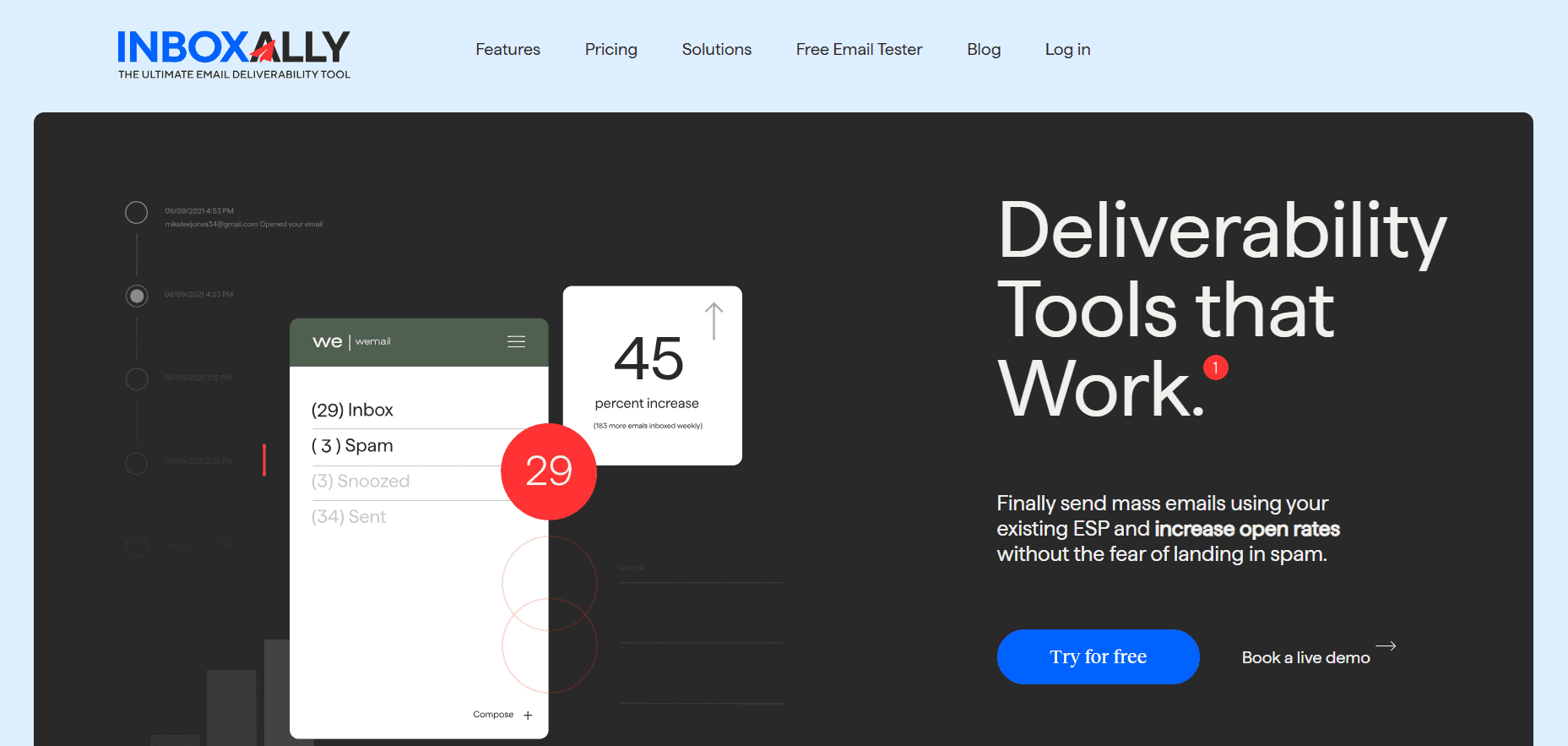
InboxAlly is the comprehensive suite I need to solve challenging deliverability problems across the board. It's like a triage hub for diagnosing and fixing email deliverability rates in one dashboard. I've tried a lot of tools, but this is the one I've stuck with.
Content Decisions That Impact Deliverability

Visual Content Balance
Ecommerce emails need product imagery, but image-heavy design triggers spam filters. Emails that are predominantly images with minimal text resemble spammer tactics.
Image-heavy emails also create practical problems: slow mobile loading, poor rendering when images are disabled, accessibility barriers, and larger file sizes.
A Smarter Approach:
Design emails where images enhance text content rather than replacing it. Product descriptions and calls-to-action should be HTML text, not embedded in images. Keep total file size under 2MB.
Sender Identity Matters
Sending from free email addresses (@gmail.com, @yahoo.com) is deliverability suicide. ISPs filter bulk commercial email from free domains, and you waste the brand recognition you’ve built.
Use a custom domain: [email protected], [email protected], or [email protected].
Subject Line Spam Triggers
Certain characteristics immediately flag messages as spam:
- Excessive capitalization (FINAL CLEARANCE SALE)
- Multiple exclamation points (Don’t miss out!!!)
- Deceptive prefixes (RE: or FWD: with no prior conversation)
- Heavy special characters ($$$SAVE BIG$$$)
Write honest subject lines that accurately represent content. “Last call: 70% off ends at midnight” is better than “FINAL HOURS!!! 70% OFF EVERYTHING”
Link Reputation
Link shorteners (bit.ly, TinyURL) appear in phishing campaigns, so ISPs scrutinize emails containing them. Your reputation gets evaluated based on domains you link to, and shorteners carry every spammer’s bad reputation.
Use full tracking links from your email platform’s native analytics instead.
Engagement Patterns: What ISPs Actually Track

ISPs track how recipients interact with your emails, and these behavioral signals heavily influence inbox placement.
Key metrics: Open rates, time-to-delete, spam complaints, engagement depth (clicks, forwards, replies), and consistency.
For ecommerce, this creates a challenge: promotional content naturally generates lower engagement than transactional emails. A 20% promotional open rate might be strong, but it means 80% of recipients aren’t opening, and ISPs notice.
How InboxAlly Transforms Engagement Signals
InboxAlly actively creates positive engagement signals with your emails, demonstrating to ISPs that recipients value your content.
This is crucial for ecommerce because it:
- Counterbalances naturally lower promotional engagement rates
- Maintains reputation during seasonal sending spikes
- Mitigates shared IP reputation problems
- Strengthens your position during peak shopping competition
The Unsubscribe Paradox
Many brands make unsubscribing difficult: hiding the link, requiring login, or forcing preference centers.
This backfires. Subscribers who can’t easily leave will delete emails without opening (hurting engagement) or mark messages as spam (devastating reputation).
Critical truth: Unsubscribes are far less damaging than spam complaints or chronic non-engagement.
Make unsubscribing effortless. One click should complete the process. Subscribers who want your emails are infinitely more valuable than those who stay subscribed only because leaving is difficult.
Segmentation: The Most Overlooked Strategy
Sending identical messages to your entire list generates poor engagement because most recipients get irrelevant content.
Segmentation Strategies
- Purchase history: Send recommendations based on what customers actually bought.
- Engagement level: High-engagement subscribers can receive more frequent sends. Lapsing subscribers need re-engagement campaigns.
- Browse behavior: Follow up on viewed products or abandoned carts.
- Lifecycle stage: New subscribers need different content than VIP customers or lapsed buyers.
Segmented campaigns generate 30% higher open rates than generic sends. Better engagement directly improves sender reputation and deliverability.
Double Opt-In: Quality Over Quantity
Single opt-in maximizes list growth but sacrifices quality. Double opt-in requires email confirmation before adding subscribers, which filters out typos, bots, and low-intent users while confirming genuine interest.
Yes, fewer people complete confirmation. But those who do are significantly more valuable, and they’ll actually open your emails.
A smaller, highly-engaged list with strong open rates outperforms a bloated list full of dead addresses dragging down sender reputation.
Building a Sustainable Deliverability Strategy
Deliverability requires ongoing optimization and monitoring.

Essential foundations:
- Implement proper authentication (SPF, DKIM, DMARC)
- Use custom sending domains that identify your brand
- Build lists organically through value-focused lead magnets
- Deploy double opt-in to ensure subscriber quality
- Clean lists quarterly to remove unengaged contacts
Content optimization:
- Balance images with substantial text content
- Write honest subject lines that match email content
- Avoid spam trigger language and excessive formatting
- Use native platform links instead of third-party shorteners
- Make unsubscribing effortless with one-click process
Strategic sending:
- Segment campaigns based on purchase history and engagement level
- Match send frequency to subscriber interest (your most engaged customers can handle more emails)
- Send re-engagement campaigns to lapsing subscribers before removing them
- Test different send times to find when your audience is most responsive
Ongoing monitoring:
- Track inbox placement rates, not just delivery rates
- Monitor bounce rates and remove hard bounces immediately
- Watch spam complaint rates (should stay below 0.1%)
- Analyze engagement metrics (opens, clicks, time-to-delete)
- Check domain reputation with major ISPs regularly
The difference between delivery rate and inbox placement rate matters. A 95% delivery rate sounds good, but if 40% of delivered emails land in spam folders, your actual inbox placement is only 57%.
Why InboxAlly is Essential
You can implement every best practice and still struggle with deliverability due to shared IP reputation challenges, ISP algorithm changes, seasonal inbox competition, natural engagement decay affecting all promotional content, and the high-volume requirements of ecommerce business models.
InboxAlly addresses these at a fundamental level by proactively creating positive engagement signals ISPs use to evaluate sender reputation. The platform continuously demonstrates that recipients value your content, giving legitimate ecommerce messages the best chance of reaching customers who want them.
For ecommerce brands managing high-volume promotional sends, seasonal sales pushes, and constant competition for inbox space, InboxAlly provides the consistent deliverability performance your revenue depends on.
Email drives revenue for ecommerce brands, but only when messages reach customers. With the right foundation and ongoing optimization through InboxAlly, you can build an email program that consistently delivers inbox placement and business results.