


- Test the Network Where You Actually Lose Service
- Why I’d Pay for Visible+ Instead of Stopping at $25
- The Lower Bill Comes With More Self-Service
- Mint’s Price Does Not Fix My Coverage Problem
- US Mobile Almost Changed My Answer
- T-Mobile Prepaid and AT&T Prepaid Need a Clear Local Advantage
- What I’m Doing With My iPhone 17 Pro Max
Last Updated on August 20, 2026 by The Digital Merchant Team
I kept my iPhone 13 Pro long enough that replacing it felt more overdue than impulsive, even though the old phone still worked. The battery was manageable, and I could have talked myself into another year, but I use my phone constantly for photos and video, so the camera was what finally pushed me.
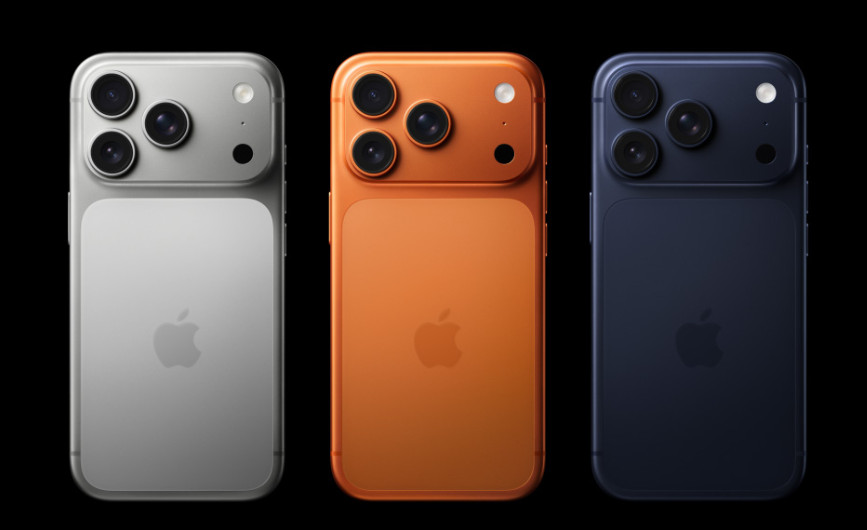
I bought a 512GB iPhone 17 Pro Max in Deep Blue at a local Verizon store, partly for the camera upgrade and partly because I know myself well enough to stop pretending I will clean out my camera roll every weekend.
I changed carriers during the upgrade because T-Mobile service around our rural Michigan home had become something I worked around without realizing how irritating it was. There were rooms where messages stalled and parts of the property where data disappeared, while walking toward a window had become a normal part of trying to send a photo. Verizon has been noticeably better here, which affects my prepaid recommendation more than any introductory price does.
For a paid-off, unlocked iPhone 17 on a single line, Visible+ is the prepaid plan I would test first. The regular price is $35 per month with taxes and fees included, and it runs on Verizon’s network, which has already proven more reliable where I live. It includes unlimited premium data on Verizon’s 5G Ultra Wideband network and unlimited hotspot data at speeds up to 10 Mbps. Visible’s detailed plan disclosure says customers receive 50GB of premium data on regular 5G and 4G LTE, after which service may be temporarily slower than other traffic when the network is busy.
My own phone is staying on Verizon for now because I financed it and received a strong trade-in offer through monthly promotional credits. Verizon’s current policy says a financed device purchased from Verizon remains locked until the balance is paid, while paying the balance early stops any remaining promotional credits.
Before moving a new iPhone to prepaid, check the payoff amount, lock status, and remaining credits because a lower service bill loses its appeal when it also means giving up several hundred dollars in trade-in value.
Test the Network Where You Actually Lose Service
A coverage map can narrow down the options, although it cannot recreate the back bedroom, the road where calls usually drop, or the far end of a rural property. T-Mobile was not terrible everywhere I went, but it was poor where I spent most of my time, and someone living a few miles away could have a completely different result. I would copy the testing process rather than my network preference.
Visible’s free trial lasts 15 days, uses eSIM, gives the phone a separate trial number, and does not require a credit card or automatically renew. The current carrier and number can remain active during the trial, giving an iPhone 17 owner time to use Visible before transferring anything important.
The trial uses the base Visible plan, so it will not demonstrate every premium feature, but it will show whether the Verizon network reaches the places where the old service struggled. U.S. iPhone 17 models activate through eSIM rather than a physical SIM card.
I would spend those 15 days doing more than checking the bars at the top of the screen by calling from inside the house, sending a video from the part of the property where service fades, using maps on regular routes, and trying the hotspot during a normal workday. A trial can look excellent in town and still fail the one test that caused the carrier search.
Why I’d Pay for Visible+ Instead of Stopping at $25
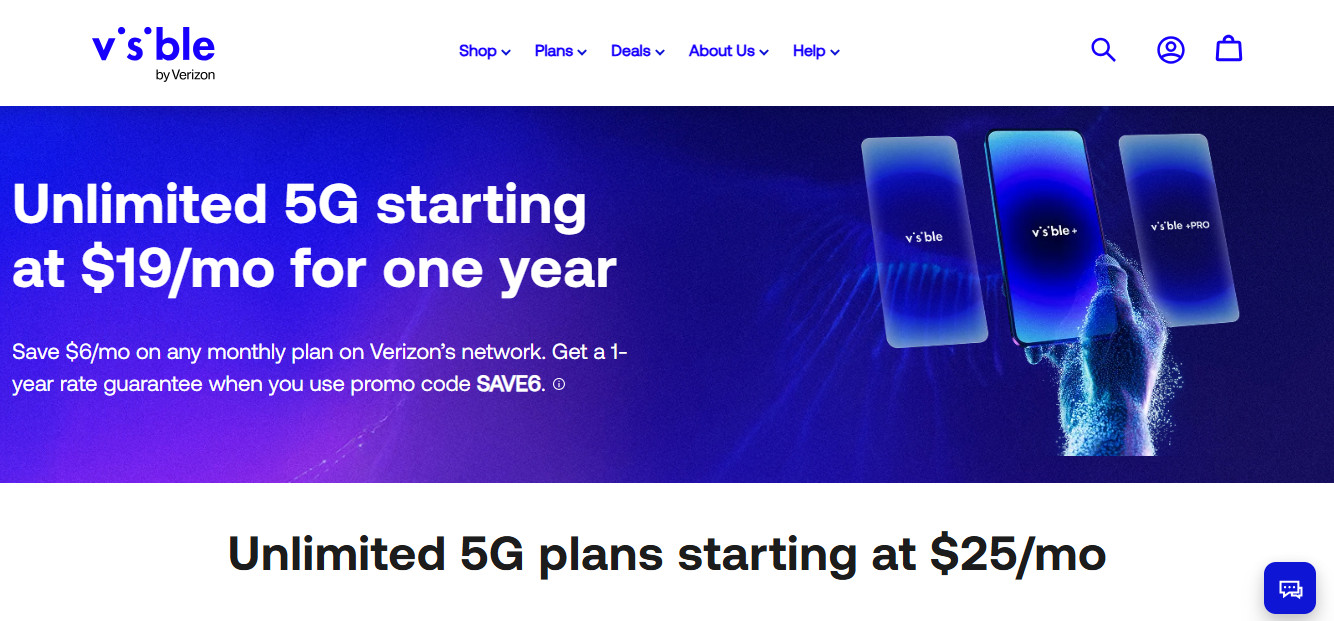
The base Visible plan costs $25 per month and includes unlimited talk, text, data, and hotspot service, with taxes and fees included. Its hotspot is capped at speeds up to 5 Mbps, and data can be temporarily slowed during congestion. Visible+ raises the hotspot ceiling to 10 Mbps and adds higher-priority data, which is where the extra $10 becomes useful for the way I use my phone.
The camera was the reason I upgraded, and larger photo and video files eventually do leave my phone. I upload content away from home often enough that I do not want the cellular plan to feel mismatched with the device, especially when I also use the hotspot for a laptop if normal Wi-Fi is weak.
A 10 Mbps hotspot is modest compared with home internet, although it can handle email, browser work, document uploads, and many video calls when the connection is stable. Large video uploads will still take patience, but the hotspot is useful rather than something I would avoid unless I was desperate.
The $25 plan remains sensible for someone who spends most of the day on home or office Wi-Fi and only needs a hotspot occasionally. I would pay the additional $10 because my use includes video and work away from dependable Wi-Fi. Visible+ Pro costs more and raises the hotspot cap to 15 Mbps while adding broader international and smartwatch benefits, but I would not keep climbing tiers for features I am unlikely to use each month.
Visible currently lists hotspot speeds of up to 5 Mbps on Visible, 10 Mbps on Visible+, and 15 Mbps on Visible+ Pro.
The Lower Bill Comes With More Self-Service
Buying the phone at a local store reminded me why some people stay with a traditional carrier after seeing a cheaper prepaid rate. I handed over my iPhone 13 Pro, asked questions as they came up, and left with the new phone working while someone else handled the transfer details that would have made me wonder whether I had deleted the wrong eSIM.
Visible handles activation, account management, and support primarily through its app and online channels, which is a different experience from buying a phone at a local carrier store. I would make the switch at home on reliable Wi-Fi, keep the old line active until the transfer was complete, and avoid starting right before a work call, appointment, or trip. Even when an eSIM setup is supposed to be quick, I would rather leave myself enough time to work through it without needing the phone immediately.
Before considering the transfer finished, I would test calls, text messages, cellular data, visual voicemail, iMessage, and the hotspot. The account number and transfer PIN would stay somewhere other than the phone being activated until everything worked. The lower bill also means there may not be a nearby counter where I can place the phone in front of someone when the setup goes sideways.
Mint’s Price Does Not Fix My Coverage Problem
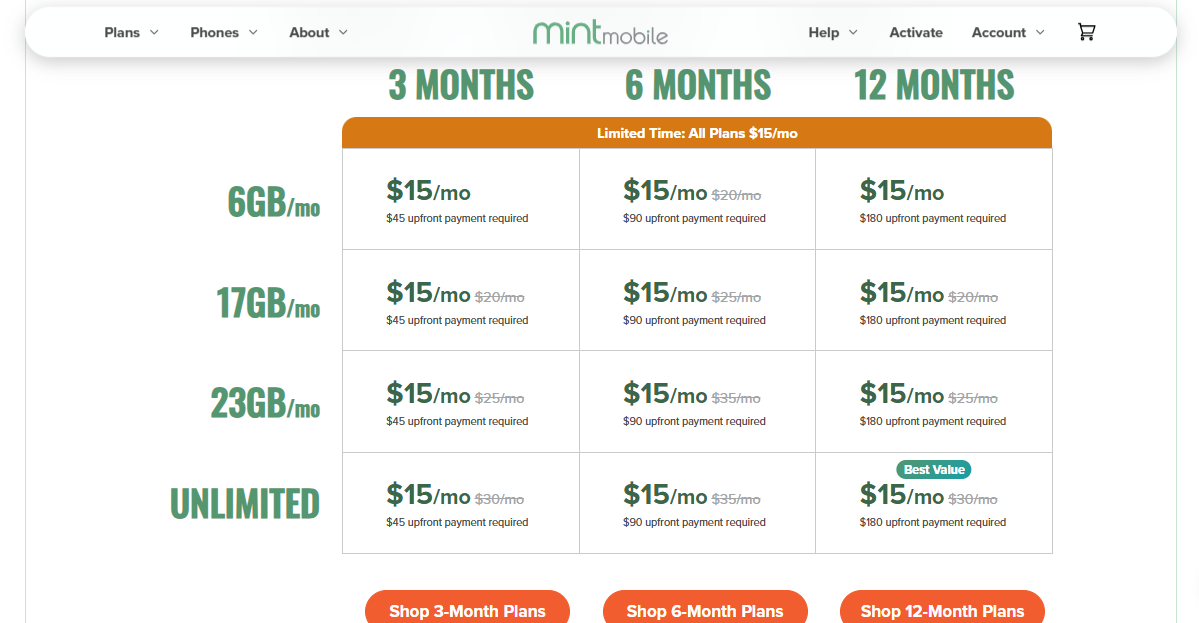
Mint Mobile’s Unlimited plan costs $30 per month on the regular 12-month rate, requiring $360 upfront, and current new-customer pricing can reduce the introductory cost. The plan includes 50GB of data before customers may notice reduced speeds in busy areas, up to 20GB of hotspot data, and standard-definition video, with taxes and fees charged separately.
The price is attractive for someone who has confirmed that T-Mobile’s network performs well at home and along regular routes. Mint runs on that network, so it carries the same local problem that caused me to switch carriers. I already spent years finding the dead areas around our house, and paying several months in advance would not make them less annoying. Mint could save another person a good amount of money, but after my experience here, I would not pay upfront to repeat the test.
The monthly price sounds pretty reasonable, but $360 coming out of the account all at once makes it feel like more of a commitment. Some people would rather pay once and not think about another phone bill for the rest of the year. I would only choose that option after testing the network and making sure the service works well everywhere I normally use my phone.
US Mobile Almost Changed My Answer
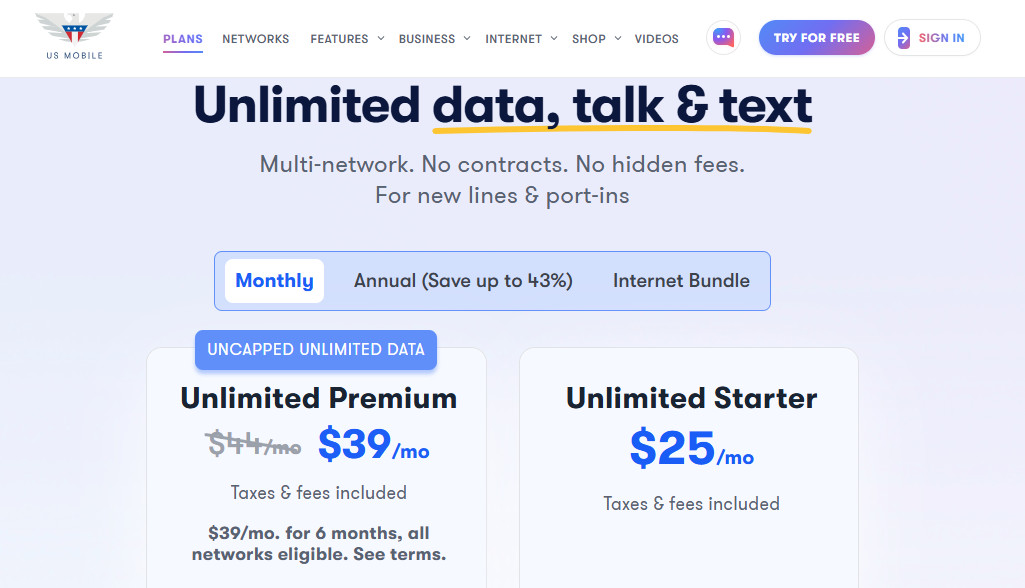
US Mobile took longer to understand because it gives the customer more control over the underlying network.
Unlimited Starter is $25 month-to-month, $22.50 per month when paid annually, or $199 for the first year under the current introductory annual offer. It includes up to 20GB of hotspot data (depending on the selected network), taxes and fees are included, and customers can choose among the three major national networks, with transfers available later if coverage needs change. The introductory price renews at the normal annual rate after the first year.
That flexibility is more practical than it first sounds. Someone could have strong Verizon coverage at home and discover that AT&T works better around a family member’s house, a job site, or a seasonal property. US Mobile allows the line to move rather than forcing the customer to rebuild the account elsewhere, and Unlimited Premium includes free network transfers, while Unlimited Starter currently charges $2 each time the line moves to another network.
I still lean toward Visible+ because I already know which network I want here, and the unlimited 10 Mbps hotspot fits my use better than a fixed 20GB allowance. US Mobile could make more sense for someone who travels through very different coverage areas or wants the freedom to change networks later. I would probably make those changes sparingly, though, and only when I had reliable Wi-Fi and enough time to deal with the account if something did not transfer as quickly as expected.
T-Mobile Prepaid and AT&T Prepaid Need a Clear Local Advantage
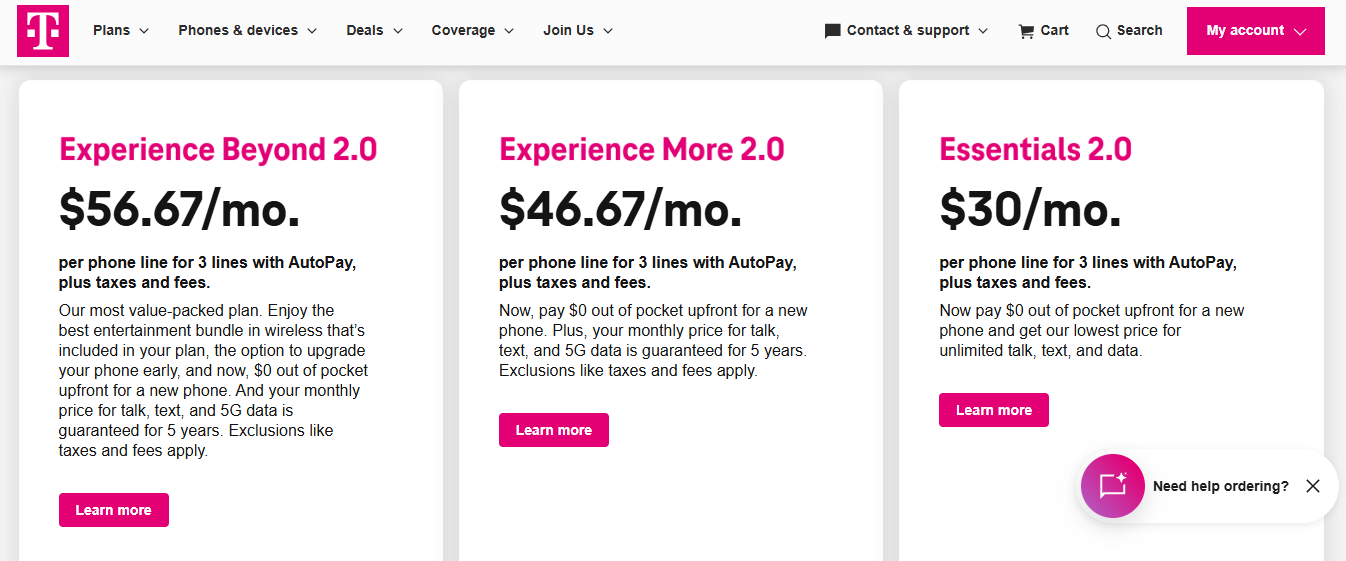
T-Mobile Prepaid is hard for me to justify after leaving T-Mobile because of the coverage around our home. Its Unlimited Monthly plan costs $45 with AutoPay after a $50 first month, plus taxes and fees, and includes 50GB of premium data along with unlimited hotspot use at 3G speeds.
After using more than 50GB in a month, customers may notice slower speeds when the network is busy, and video streams in standard definition. I would only pay more than Visible+ if T-Mobile were clearly stronger where I needed it, and that has not been my experience.
I’d only give AT&T Prepaid a serious look if AT&T worked better at my house or along the roads I drive most. Its current online annual plan costs $240 upfront, which works out to $20 per month, and includes 10GB of hotspot data. After 16GB of phone data, speeds slow to a maximum of 1.5 Mbps.
AT&T also offers a $25 monthly plan with the first 30GB capped at 3 Mbps before speeds drop to the same 1.5 Mbps maximum. Those limits would get in my way with the amount of video I use, though someone who spends most of the day on Wi-Fi may care more about the lower price.
What I’m Doing With My iPhone 17 Pro Max
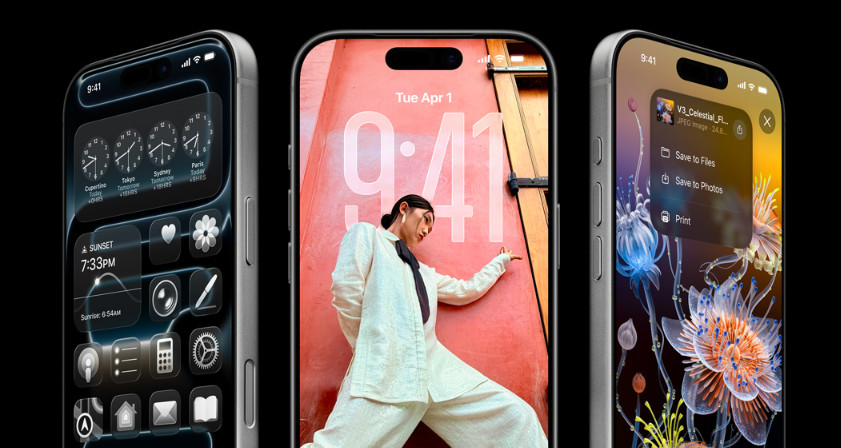
For now, I am leaving the phone where it is. The trade-in credits are still doing their job, and paying it off early just to lower the service bill would erase part of the savings.
Once the balance is gone, Visible+ is the first prepaid option I would revisit because it keeps me on the Verizon network that has already been much better around our house.
I would still use the free trial before moving my number, but not to find out whether Verizon reaches the property. I already know that it does. I would be paying more attention to what changes when the store and traditional carrier account are gone, including whether the app is easy to deal with, whether the base-plan trial feels noticeably slower when the network is busy, and whether I actually miss having somewhere local to go when something is not working.
Also, since the trial runs on Visible’s base plan, I recommend treating it as a test of the service experience rather than a perfect preview of Visible+.