


Last Updated on March 25, 2026 by Ewen Finser
Affiliate tracking for lead-gen is not what it used to be. And honestly, that’s the problem.
In today’s campaigns, a “conversion” isn’t a sale. It’s a form fill. A booked call. A half-finished application that closes two weeks later in a CRM. If your tracking stops at the click, you’re already missing the point.
I’ve spent years working alongside performance marketers who live and die by lead quality. We’ve tested tools in demos, live campaigns, and real client environments. Some platforms look great on the homepage. Then reality hits. Leads don’t match the CRM. Attribution feels off. And suddenly, everyone’s arguing over numbers.
Most affiliate tools say they support lead-gen. Very few were actually built for it. eCommerce-first platforms tend to struggle when you introduce multi-step funnels, delayed conversions, and offline sales teams. That’s where cracks start to show.
I’m not here to crown a “winner” based on feature lists alone. I’m breaking down what really matters when you’re running lead-generation campaigns at scale. What works. What breaks. And what I personally look for before trusting a platform with real budget.
If you’re choosing affiliate tracking software for leads, or questioning whether your current setup is telling the truth, this will help you make a smarter call.
What Actually Matters in Lead-Gen Tracking (Spoiler: It’s Not the Feature List)
Let’s clear something up first.
Affiliate tracking for lead-gen is not the same as affiliate tracking for eCommerce. In eCommerce, the sale is the finish line. In lead-gen, it’s usually just mile one.
Here’s what actually matters.
1. Multi-Event Tracking (This Is Non-Negotiable)
One conversion pixel is not enough. I need to see:
- Form views
- Partial submissions
- Completed forms
- Booked calls
- Qualified leads
If I can’t track the full journey, optimization turns into guesswork. I’ve seen campaigns “look profitable” while quality quietly tanks.
2. Attribution That Matches Reality
Lead funnels are messy. People click. Leave. Come back. Convert later.
Good tools let me:
- Compare first-touch vs last-touch
- Use custom attribution logic
- Avoid affiliate payout disputes
Bad tools force one model and call it a day. That’s how trust erodes.

3. Fraud Detection That Actually Works
Lead fraud isn’t always obvious. It hides in:
- Bot traffic
- Duplicate submissions
- Incentivized junk leads
If a platform can’t flag suspicious behavior early, you’ll pay for it later—usually when sales teams start complaining.
4. CRM Integrations That Don’t Break
If leads don’t sync cleanly to Salesforce, HubSpot, or Pipedrive, the data is useless. I’ve walked into setups where tracking numbers looked perfect, but the CRM told a very different story. That’s not a reporting issue. That’s a platform issue.
5. Real-Time Reporting & Alerts
I don’t want to find problems two weeks later.
I want alerts when:
- Lead quality drops
- Conversion paths break
- Traffic spikes look suspicious
How I Evaluate Tools
When I test platforms, I focus on:
- Data accuracy over pretty dashboards
- Ease of setup (no duct tape solutions)
- Support that knows lead-gen, not just eComm
- Clear pricing without hidden limits
Because at the end of the day, the best tracking software doesn’t just collect data. It tells the truth, before the truth gets expensive.
Top Affiliate Tracking Software for Lead-Gen
There’s no universal “best” platform. Anyone who says otherwise is selling something. What does exist are tools that fit specific lead-gen realities better than others.
I’ve grouped these based on how they perform when leads (not purchases) are the primary outcome. That means delayed conversions, multi-step funnels, CRM dependencies, and the occasional fraud headache.
Let’s get into it.
Everflow: Built for Grown-Up Lead Funnels, Not Just Clicks
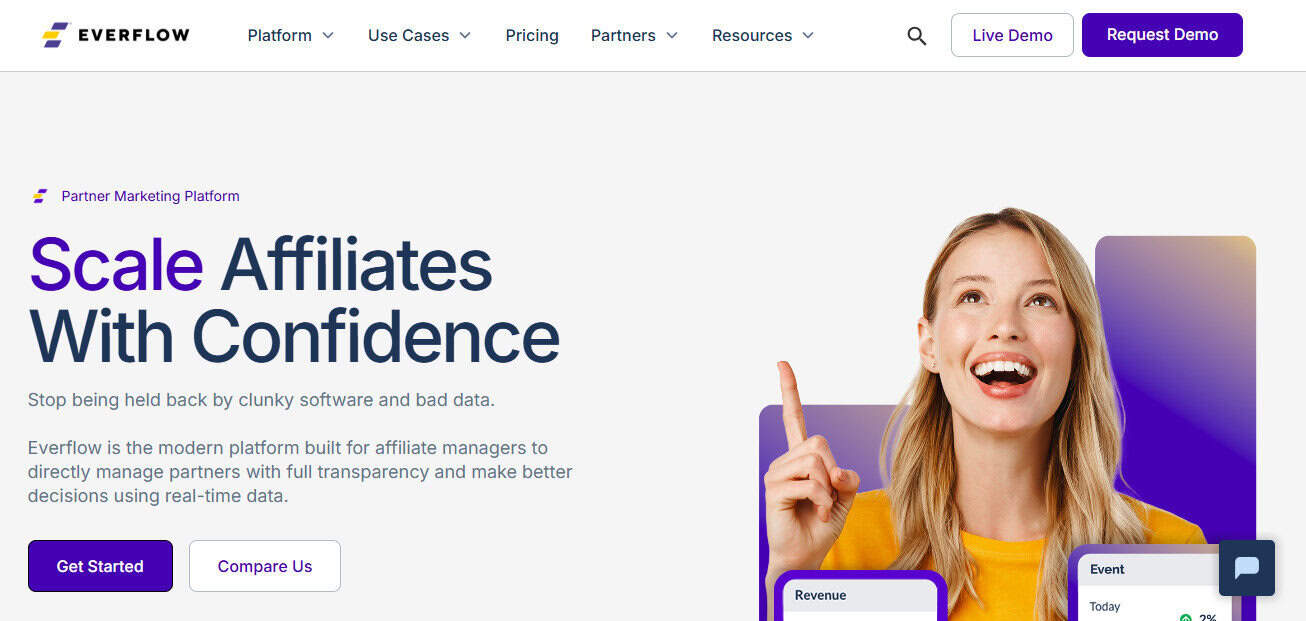
Everflow is one of the few platforms that felt intuitive from day one and held up once campaigns scaled. The setup is clean. The interface makes sense. And more importantly, it doesn’t fall apart when you introduce complex lead flows.
From my experience, Everflow treats lead-gen as a first-class citizen, not an afterthought bolted onto eCommerce logic.
Lead-gen strengths
- Multi-event tracking: This is where Everflow shines. Custom events are easy to define and flexible enough to track real funnels, form views, partial submits, qualified leads, and even downstream milestones.
- Attribution flexibility: First-touch, last-touch, and multi-touch models are all on the table. I’ve used this to settle affiliate disputes before they turn into Slack arguments.
- Fraud detection: Built-in tools help catch suspicious patterns early. It won’t replace common sense, but it saves you from obvious landmines.
- CRM integrations: Native integrations plus Zapier support make syncing to Salesforce, HubSpot, and others relatively painless.
Real-world use
I’ve implemented Everflow across lead-gen campaigns in SaaS and services where conversions didn’t happen instantly. Tracking held up. CRM numbers matched. And reporting stayed consistent even as volume increased…which is rare.
Pros
- Excellent event tracking
- Clean UI that doesn’t fight you
- Strong attribution logic
- Reliable CRM syncing
Cons
- Not the cheapest option
- Might feel like overkill for very small teams
Best for
Mid-to-enterprise performance marketers who care about accuracy more than shortcuts.
My take
If lead quality, attribution clarity, and scalability matter, Everflow quietly does its job without drama. That’s usually a good sign.
Voluum: Fast, Data-Heavy, and Loved by Optimization Nerds
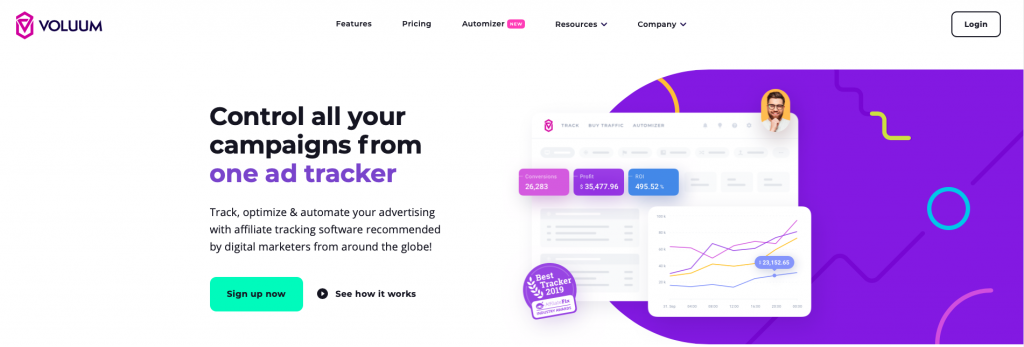
Voluum is fast. Like, noticeably fast. Dashboards load quickly, reports feel instant, and the UI is polished. For teams that live inside analytics all day, that matters.
It’s also been around long enough to earn trust in high-volume environments.
Lead-gen capabilities
- Multi-event tracking: Supports event sequences well, especially for structured funnels.
- Smart traffic distribution: Great for routing traffic based on performance rules. Useful when testing affiliates or offers at scale.
- Fraud prevention: Solid bot filtering and traffic quality indicators.
- CRM connections: Integrations exist, though some setups require extra configuration.
Pros
- Extremely fast reporting
- Strong analytics depth
- Reliable for large volumes
Cons
- Steeper learning curve
- Less “out of the box” friendly for non-technical teams
Best for
Data-heavy teams running high-volume lead-gen who want speed and granular control.
My take
Voluum rewards marketers who enjoy tinkering. If you love dashboards and optimization logic, you’ll feel at home.
ThriveTracker: Total Control for Teams Who Like to Build Their Own Engine
ThriveTracker appeals to marketers who want control. Real control. It’s self-hosted, which means you own the data, the setup, and the responsibility.
That’s either a dream or a nightmare, depending on your team.
Lead-gen strengths
- Custom event logic: You can build complex funnels with precise rules.
- Funnel visibility: Strong visualization of where leads drop off.
- Fraud Shield: Decent protection against bots and low-quality traffic.
- CRM integrations: Possible, but usually requires manual setup or middleware.
Pros
- Full data ownership
- Highly customizable
- No recurring SaaS fees
Cons
- Requires technical know-how
- Maintenance is on you
Best for
Agencies or privacy-focused teams with technical resources.
My take
ThriveTracker is powerful, but it’s not forgiving. If you like plug-and-play, look elsewhere. If you like building your own engine, it’s compelling.
ClickMagick: Simple, Affordable, and Honest About Its Limits
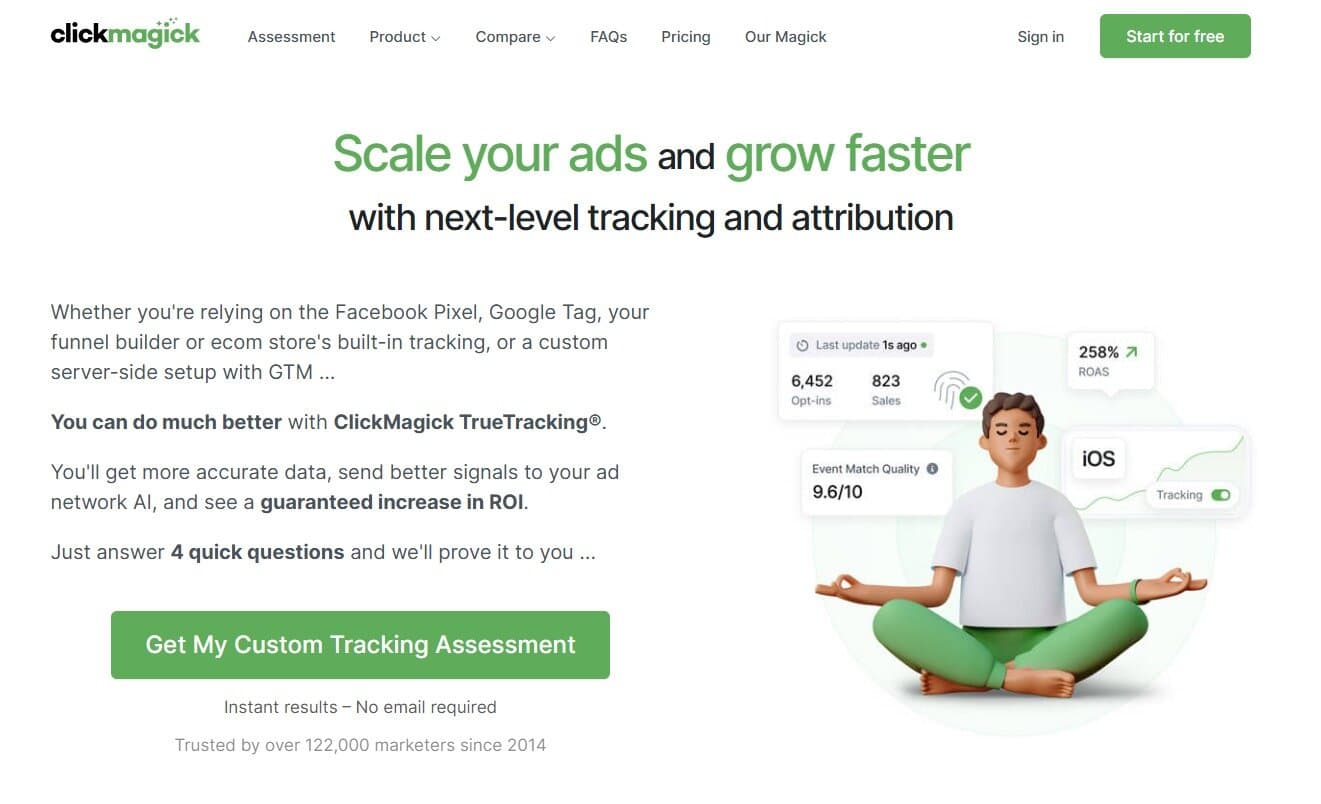
ClickMagick is simple, affordable, and honest about what it is. It’s primarily a link tracking tool, not a full affiliate management suite.
And that’s okay.
Lead-gen essentials
- Tracks clicks and conversions reliably
- Supports basic event tracking
- Includes bot and VPN filtering
Where it fits
ClickMagick works well when:
- You’re validating traffic
- Running smaller lead-gen campaigns
- Don’t need deep attribution models
Pros
- Easy to use
- Affordable
- Fast setup
Cons
- Limited affiliate management
- Not built for complex funnels
Best for
Solo marketers, small teams, or beginners testing lead-gen offers.
My take
It’s a solid entry point. Just don’t expect enterprise-level insights.
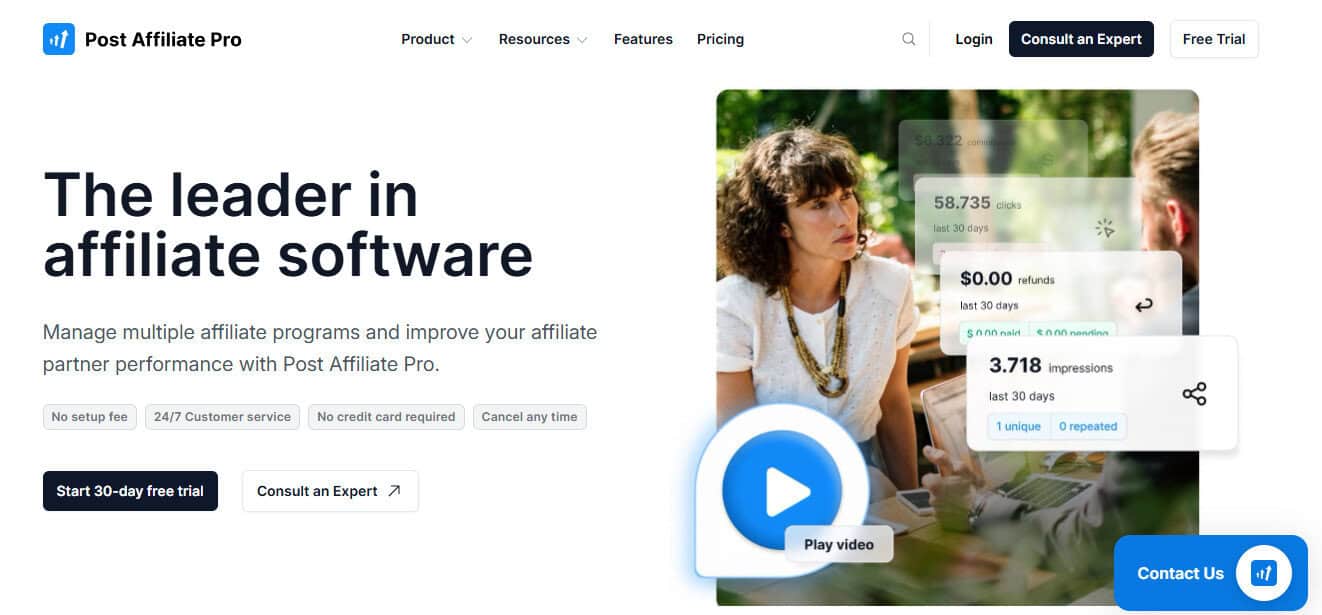
Post Affiliate Pro: The Veteran Platform That Still Gets the Job Done
Post Affiliate Pro has been in the game for a long time. That shows in its stability and feature breadth.
It’s not flashy, but it’s dependable.
Lead-focused features
- Goal and event tracking
- Flexible commission rules
- CRM integrations available
Pros
- Mature platform
- Broad feature set
- Good support documentation
Cons
- UI feels dated
- Some features feel bolted on
Best for
Brands running mixed programs, some eCommerce, some lead-gen.
My take
If you want a steady, all-purpose solution and don’t mind an older interface, it does the job.
Other Tools Worth Knowing (Depending on Your Setup and Sanity Level)
A few more platforms worth mentioning:
- HasOffers / Adjust: Enterprise-grade. Powerful. Expensive. Best for massive operations.
- Affise: Strong automation and reporting. Popular with networks.
- CAKE: Flexible and customizable, but requires careful setup.
Final Note
Every tool here can work. The difference comes down to:
- Budget
- Scale
- Technical resources
- How complex your lead journey really is
There’s no shortcut around that decision. The best platform is the one that tells the truth about your leads without making you fight for it.
What This Stuff Really Costs, and When It’s Worth Paying More
Affiliate tracking software isn’t cheap, but bad data is far more expensive.
Side-by-side cost expectations
- Entry-level tools: Lower monthly fees, limited features
- Mid-tier platforms: More flexibility, better attribution
- Enterprise solutions: Custom pricing, advanced controls
What you get at different price levels
- Cheaper tools track clicks.
- Mid-tier tools track journeys.
- High-end tools track outcomes.
For lead-gen, that distinction matters.
Value vs price for lead-gen
I don’t evaluate tools by monthly cost alone. I look at:
- Lead quality improvement
- Fraud reduction
- Time saved resolving disputes
- Sales efficiency gains
If a platform helps avoid even a few bad payouts or missed follow-ups, it often pays for itself.
How I justify the investment
I ask one question: “Do I trust this data enough to scale spend?”
If the answer is no, the price doesn’t matter.
Final Verdict: Pick the Tool That Tells the Truth, Not the Best Story
Great affiliate tracking software for leads does three things well:
- It tracks more than just clicks
- It tells the truth about attribution
- It integrates cleanly with how your business actually operates
From everything I’ve tested, the best platforms respect the complexity of lead-gen instead of fighting it.
My advice is simple. Don’t commit based on marketing pages. Test tools. Run real traffic. Compare CRM data. Ask uncomfortable questions early.
If you’re running serious lead-gen campaigns and want flexibility, visibility, and reliability, Everflow consistently checks the right boxes without forcing you into rigid workflows. It’s not the only option, but it’s a strong one.
Good tracking won’t fix a bad offer, but it will stop you from guessing why something works or doesn’t. And in lead-gen, that clarity is everything.