


- The Short Answer
- What Makes Affiliate Software Insurance Ready?
- Top Affiliate Software Options for Insurance Teams
- A Quick Snapshot of the Main Tools
- Best Affiliate Software for Insurance
- Everflow
- TUNE
- Impact
- Cake
- PartnerStack
- What This Means for Your Funnel
- How to Choose the Right Affiliate Platform for Your Insurance Organization
- My Verdict: Everflow Leads the Pack, But the Best Choice Aligns with Your Funnel
Last Updated on March 4, 2026 by Ewen Finser
I have worked in insurance marketing long enough to remember the old workflow. I tracked leads in cluttered spreadsheets. I sorted referral PDFs that never matched our CRM. I checked 5 different tabs just to confirm where a quote came from. The process drained hours from my week. It also left me with gaps that I could not explain to anyone.
Things shifted as performance-based acquisition grew. Teams wanted proof, not guesses. They wanted to know which partner offered real value. They needed a way to follow each step, from the first click to the issued policy. This is when affiliate software became vital. It did not make headlines. It simply fixed the things that ate up time and caused confusion. Once I started using these tools, I could see clear paths in my data instead of rough notes.
When I review software for insurance teams, I focus on stability, compliance support, accurate funnel tracking, reduced manual work, smooth partner management, and clear reporting that needs little training. These needs lead to one simple question: Which platform can handle insurance funnels with real strength and reliability?
The Short Answer
For my own work, Everflow has been the most reliable choice. It handled long insurance funnels with steady accuracy. It kept the data clean and helped me see partner credit with ease. It met almost all the standards I look for when reviewing tools. Still, no platform fits every team the same way, so I included other strong options for different needs.
Before I compare these platforms, let me explain what makes affiliate software truly fit for insurance. Not every tool can handle this space, and the reasons may surprise you.
What Makes Affiliate Software Insurance Ready?

When people ask me why insurance needs special software, I give a simple answer. Our funnel is longer and more sensitive than most industries. A click does not equal a sale. A lead does not equal a policy. I need to see each step in between. Many tools built for retail cannot handle this.
Insurance teams work inside strict rules. Every ad, landing page, and partner message must follow compliance standards. I have seen programs get flagged because a partner used old copy. Good affiliate software helps prevent that. It gives me controls, alerts, and clean records. These features protect the brand and keep my legal team relaxed.
Tracking is another area where insurance is different. I often need to link a quote request to an application, then to the final policy. That means the tool must allow multi-step tracking. It should let me score leads, credit partners, and compare quality. Without this insight, I end up paying for volume that has no real value.
Support matters more than most people think. When a lead flow breaks, I cannot wait days for help. I have seen campaigns stall because a pixel dropped or a form update confused the system. Good support means I get a real person who understands insurance funnels. That saves me time and prevents revenue loss.
Overall, the tools I will cover here are not just modern. They work for insurance because they respect the details. They track the full journey. They protect the program. They help me make smart choices with real data. That is what makes them stand out.
Top Affiliate Software Options for Insurance Teams
After many tests across real insurance funnels, several platforms stood out for steady tracking, clean reporting, and strong partner controls. Each tool brings a different set of strengths. Your ideal choice depends on your workflow, funnel length, compliance needs, and team structure.
A Quick Snapshot of the Main Tools
Let’s take a short moment before the next section. Many people ask me for a quick comparison because it saves time during research. That is why I built a simple view of how these platforms stack up.
Category | Affise | |||||
|---|---|---|---|---|---|---|
Ease of Use | Very easy | Moderate | Easy | Moderate | Easy | Moderate |
Compliance Tools | Strong | Strong | Basic | Basic | Basic | Strong |
Multi-step Funnel Support | Very strong | Good | Light | Good | Light | Good |
Reporting Clarity | Clear | Deep but complex | Simple | Technical | Simple | Clear |
Best Fit For | Large partner groups | B2B and software tools | Tech-driven teams | High-volume programs | Lead networks | |
Support Quality | Very strong | Strong | Good | Good | Good | Good |
Pricing | Mid-range | High | Mid to high | Mid | Mid | Mid |
Below is an in-depth look at the platforms that performed well in my work.
Best Affiliate Software for Insurance
Everflow
I first tried Everflow after a colleague suggested it might solve my tracking issues. I was not sure at first. Many tools struggled once I added insurance-style funnels. Everflow handled the full process without forcing workarounds, which impressed me early on.
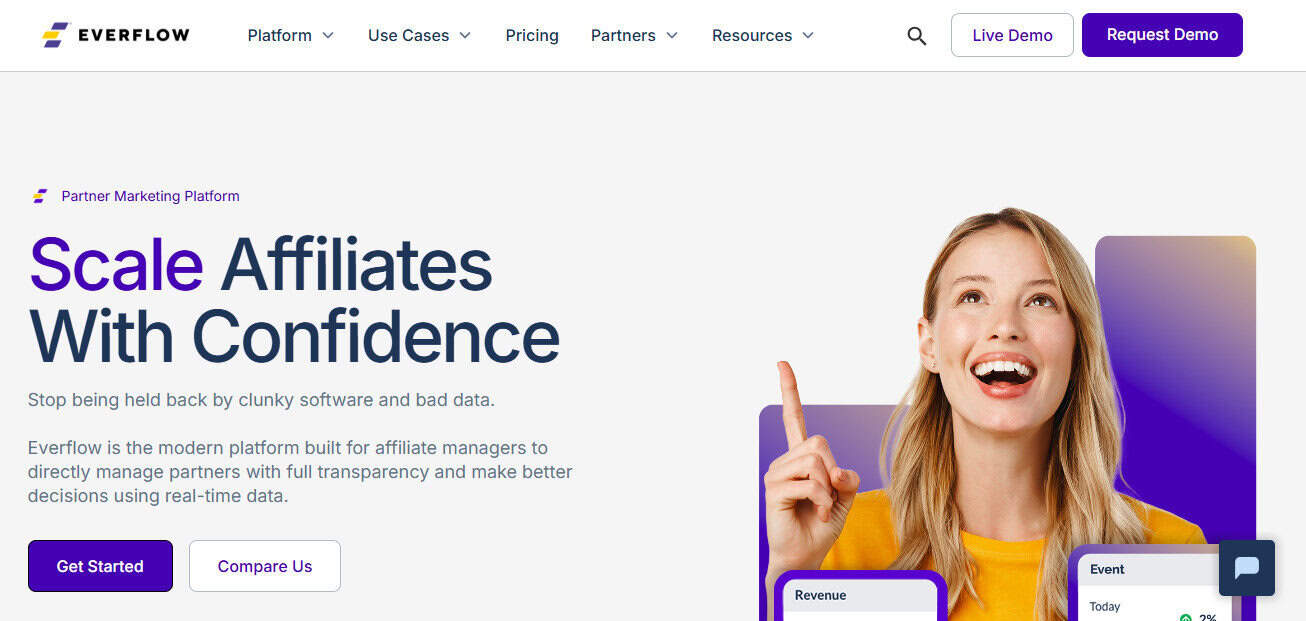
The layout made the setup simple. I could create events for quotes, applications, and final policies. Each step connected in a clear path, so I could see which partner drove each stage. Reports also had fewer mismatches, which saved my team hours each week.
Payout control was another strong point. I could pay more for deeper actions, adjust by region, and guide traffic toward the segments that brought the most value. The compliance tools helped me review partner activity, block unwanted traffic, and set rules to protect the program.
Support was a highlight. When I needed help, I reached someone who understood insurance funnels and explained each setup with care.
Keep reading: Everflow Review (2025): The Affiliate & Partner Management Platform That Goes Beyond Tracking
Pros
- Clean event tracking for long funnels
- Flexible payout rules
- Strong compliance controls
- Responsive support team
Cons
- Setup menus take time to learn
- May feel advanced for very small teams
Best For
Carriers, MGAs, agencies, and insurtech teams that run multi-step funnels or scale quickly.

Everflow makes partner management simple, fast, and transparent. Real-time data, clean reporting, and tools built for affiliate managers who want to scale with confidence.
TUNE
TUNE has been a steady choice for teams that want strong partner controls and clear performance tracking. It supports custom attribution paths, which helps when funnels vary by product line or region. I found its tracking accurate and its partner permissions easy to manage.

TUNE also works well with mixed traffic sources. You can set rules that limit risk and keep your funnel clean. Reports are simple to read, which helps teams that want fast insights without deep technical steps.
Pros
- Strong partner controls
- Custom attribution for complex funnels
- Clear and simple reporting
Cons
- Interface feels older in some areas
- Requires some training for advanced features
Best For
Teams that want stable tracking with flexible partner rules and simple reporting.
Impact
Impact offers a wide range of partner tools. It works well for teams that manage many traffic types, like referral partners, paid placements, and content publishers. The platform supports contract automation, which reduces back-and-forth emails.
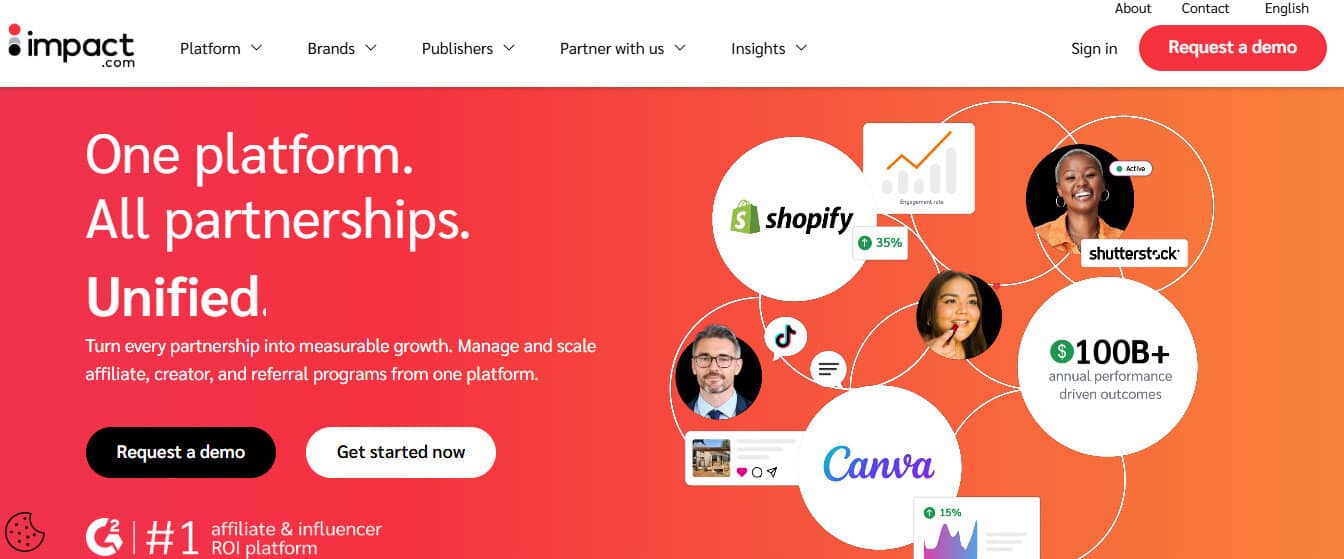
Its dashboards show clear performance trends, and the workflow tools help legal teams stay organized. Impact also supports strong fraud controls, which helps protect insurance funnels from low-quality traffic.
Pros
- Great for large partner programs
- Contract automation saves time
- Good fraud controls and clear dashboards
Cons
- Can feel heavy for small teams
- Onboarding takes time
Best For
Teams with many partners or complex onboarding needs.
Cake
Cake is a solid option for teams that want clean tracking and fast reporting. It loads quickly and handles large traffic volumes well. Cake works best when you want simple, reliable tools without too many extra layers.
Its funnel tracking is solid, and its basic fraud filters help protect your program. Cake also supports flexible routing, which helps direct traffic toward the best funnel paths.
Pros
- Fast reporting
- Strong routing tools
- Easy to manage traffic flows
Cons
- Fewer advanced features
- Interface feels limited compared to others
Best For
Teams that want a simple, fast platform that handles volume well.
PartnerStack
PartnerStack focuses on partner growth. It works well for agencies and insurtech groups that want a more structured partner experience. It offers built-in training modules, which help guide new partners. The payout system is easy to use and handles recurring commissions.
While it is not built only for insurance, it adapts well if your partners need a clear onboarding flow.
Pros
- Strong partner onboarding tools
- Simple payout setup
- Good fit for recurring commissions
Cons
- Less effective for deep funnels
- Limited customization for complex events
Best For
Teams that want a clear partner journey and simple commission tools.
What This Means for Your Funnel
No single tool fits every insurance team the same way. Each platform brings strengths that match different funnel styles, partner models, and team sizes. Everflow is strong for long funnels. TUNE offers tight partner control. Impact supports large programs with many partners. Cake handles heavy volume with speed. PartnerStack guides partners through structured journeys.
In my own work, Everflow aligned best with my needs. Its funnel tracking, payout flexibility, and support team matched the problems I needed to solve. Your needs may be different, so the best choice comes down to how your funnel works today and the way you want it to grow in the future.
How to Choose the Right Affiliate Platform for Your Insurance Organization
I use a simple method when I help teams choose a platform. Breaking it into steps makes the process clear and less stressful. These points reflect real work with carriers, agencies, MGAs, and insurtech groups.
1. Start with Your Funnel

Your funnel shape decides what you need.
Ask yourself:
- Do I track quotes?
- Do I track full applications?
- Do I track issued policies?
- Do I need all steps tied to one user?
If the answer is yes to more than one, you need strong multi-step tracking. Retail style tools usually fall short here.
2. Check Your Compliance Needs
Insurance rules are strict. Look for tools that offer:
- Partner approval
- Traffic review
- Content controls
- Clear activity logs
- Easy export for audits
If the platform cannot help with compliance, you will spend more time fixing issues later.
3. Match the Tool to Your Team Size

A small team needs simple screens. A bigger team with tech support can handle more advanced systems.
Think about:
- Who will set up tracking
- Who will manage partners
- Who will review reports
- How often changes happen
The right fit should feel manageable for your actual team, not your ideal one.
4. Check Reporting Clarity
Your reporting should answer basic questions fast. Look for:
- Quote to policy insight
- Lead quality reports
- True partner value
- Clean attribution
- Simple exports
If your team cannot read the reports without help, the tool will slow you down.
5. Consider Support Quality

In insurance, issues hit at the worst time. Good support should:
- Understand insurance funnels
- Respond fast
- Offer real fixes, not generic links
- Help with setup when needed
Strong support can save you hours and protect revenue.
6. Review Pricing for Value, Not Just Cost
Cheaper is not always better. Ask yourself:
- Will this tool save time?
- Will it reduce wasted spend?
- Will it help me reward partners correctly?
- Will it support compliance?
A tool with real value often pays for itself.
My Verdict: Everflow Leads the Pack, But the Best Choice Aligns with Your Funnel
Now that we have looked at all the platforms, I want to leave you with a simple and honest take. After years of working in insurance marketing and trying more tools than I can count, Everflow is the one that keeps proving itself. It handles the messy parts of insurance funnels. It keeps the data clean. And it makes life easier for teams who already have enough on their plate. For most insurance groups I have worked with, it checks the right boxes without becoming a burden.
That said, I never tell anyone to lock themselves into one choice without testing it. Your funnel might look different from mine. Your team might need fewer features or more hands-on support. The best setup is the one that fits your day-to-day work, not just what looks good on a features page.
If you can, try a small pilot. Even a short test will show you how each tool handles your leads, partners, and reports. You will feel the difference fast. Some platforms will click right away. Others will slow you down. Your funnel will show you the answer.
Everflow is the platform I recommend first because I have seen it work across carriers, MGAs, agencies, and insurtech teams. It handles the real-world parts of insurance, not just the ideal ones. But I also respect that every team has its own rhythm.
So take your time, look at your workflow, and pick the tool that makes things simpler. When you choose the right one, the whole process feels lighter. You get clearer insights. You spend less time chasing data. And you can focus on growing your program instead of fixing it.
Thanks for sticking through this guide with me. I hope it helps you find the setup that actually serves you and supports the work you do every day. If you manage partners in insurance, a solid platform is not just nice to have. It becomes the steady piece that keeps everything moving in the right direction.