


- How the Compliance Environment Changes Everything Most Teams Ignore
- How AI Improves Outbound Calling
- The Hybrid Model is no Longer a Theory
- Why the Fully Autonomous Approach Breaks Down at Scale
- What to Look for in Outbound AI Sales Tools
- Comparing Aircall, Orum, and Dialpad
- The Teams Having Success With AI Outbound Today
- The Conclusion
Last Updated on September 28, 2026 by Ewen Finser
Every BDR leader I speak with has the same question: how much of outbound calling should be delegated to AI? The industry pushes us in two directions: toward fully autonomous voice agents that seem ready to replace the entire dialing process, or back to the old way of doing things where every call depends on tired reps hoping for the best. Neither really works. Not at scale, not in 2026, not when the FCC is watching closely.
What actually changes results is AI that supports your team without removing the human judgment that closes deals. That is not a compromise. That is the model that is winning right now.
After 18 years working in VoIP, SIP, and cloud telephony, the pattern I keep seeing is this: the tools that succeed are the ones that fit naturally into how teams already work, not the ones that require a complete change in process.
How the Compliance Environment Changes Everything Most Teams Ignore

In February 2024, the FCC confirmed that autonomous voice calls using artificial intelligence are subject to TCPA and TSR protections. Cold outreach without prior written consent can result in fines up to $1,500 per call. That is not a theoretical risk. That is active federal enforcement.
Most of the AI sales tools for outbound you see promoted on LinkedIn are built around one idea: volume. Automated cold calls to purchased lists. The numbers do not work. A single compliance violation can erase months of pipeline. A complaint filed with a state Attorney General can cause serious problems for a long time.
This is where the market has split into different paths. You have conversation intelligence platforms like Gong that listen and analyze. You have AI dialers like Aircall, Dialpad, or Orum that handle the mechanics but keep the rep in the call. You have autonomous agents like Synthflow or Retell AI that run without a human involved at all.
Autonomous AI makes sense for appointment confirmation, warm follow-up, and post-demo communication. Cold outreach to new prospects? Both the compliance risk and the conversion data say no.
How AI Improves Outbound Calling
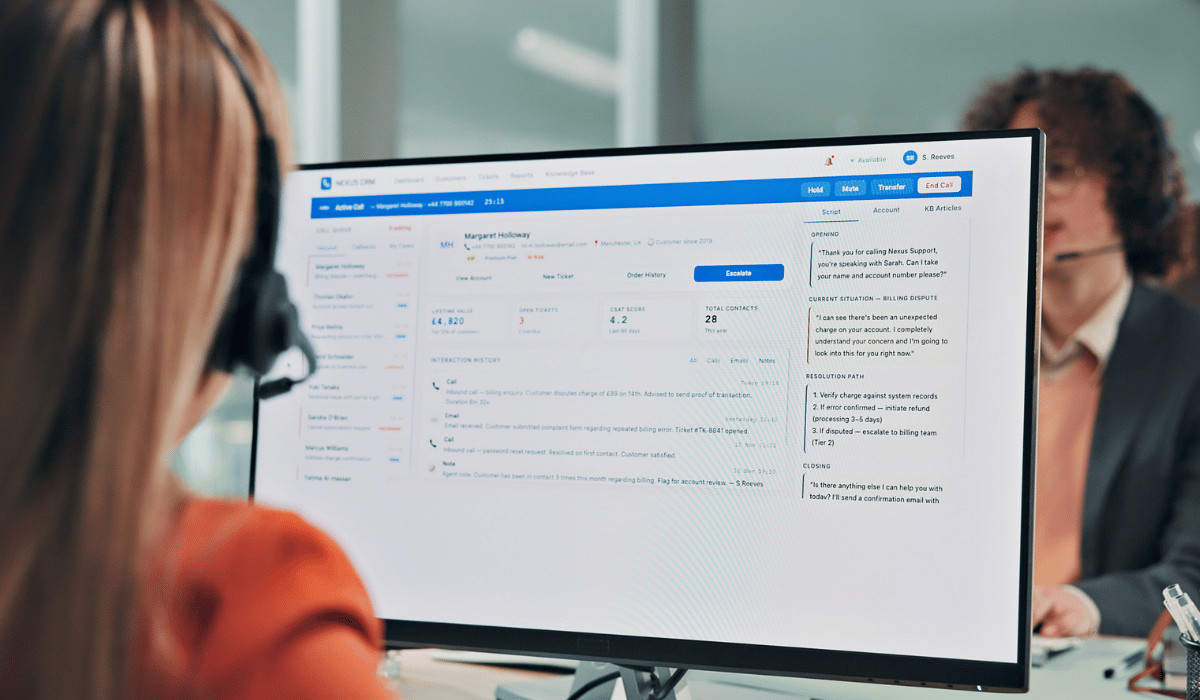
Outbound does not improve by making more calls. It improves by making better calls. The teams that get measurable results from using AI sales tools for outbound are not calling more often. They are removing the obstacles that reduce call quality before the rep even picks up the phone.
Three areas where AI reliably improves performance:
- Pre-call context. Before dialing, AI provides useful background: recent news about the prospect’s company, what has been recorded in the CRM, notes from previous interactions. A rep who knows that the company recently announced 50 new hires sounds very different from a rep reading a script without any preparation.
- Real-time call coaching. AI listens during the call, gives quiet suggestions to the rep, and provides hints at the right moment. New reps get up to speed faster. Senior reps get useful feedback on their habits. Several platforms also automate call scoring, so managers do not need to listen to dozens of recordings to find the ones that need attention.
- Post-call CRM automation. Logging activity, writing follow-up email drafts, updating records, summarizing conversations. The repetitive work that fills a BDR’s day is handled automatically. That time is now available for real selling.
None of these require the AI to make the call. They require the AI to make the rep more effective.
The Hybrid Model is no Longer a Theory
The results are clear: teams using AI-assisted outbound are both more productive and more consistent.
By removing scheduling tasks, lead qualification scoring, voicemail drops, and CRM data entry, reps can focus on the work that actually requires human judgment: handling objections, building relationships, managing complex negotiations, and working with multiple stakeholders.
The productivity gains are significant. The industry research shows that teams using AI for outbound consistently report time savings, with many reps recovering four to seven hours of selling time each week.
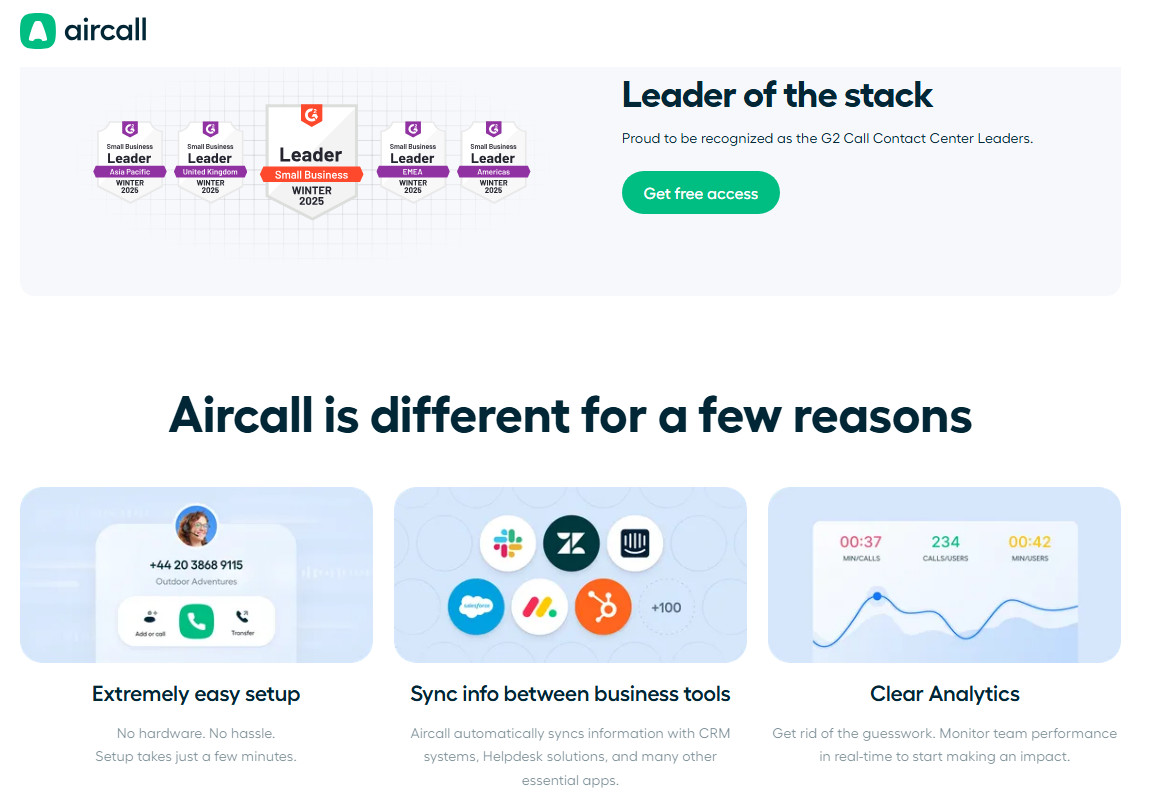
Several platforms now follow this model. Aircall’s AI voice agents keep the rep on the line while handling coaching, note-taking, and CRM updates. Dialpad does similar work with its AI Agent, adding live transcription and automated action items. Orum takes a different angle: parallel dialing with AI that detects gatekeepers and live answers, so reps only connect when a real conversation is possible. The common thread is that AI handles the work around the call while the rep handles the conversation itself.
Why the Fully Autonomous Approach Breaks Down at Scale
Fully autonomous outbound agents ask you to hand control of your brand, your compliance position, and your prospect relationships to a system you cannot fully see or manage. The promise is appealing: set it up, run it, and let it work on its own. But the reality is far more complicated.
Prospects can tell when they are talking to a machine. Voice technology has improved, but the natural flow of a real conversation is still difficult to replicate. Prospects who recognize they are not talking to a person are less likely to continue the conversation. Across all the reports I have reviewed, response rates on fully automated outbound are lower than those with a human in the call.
Compliance risk increases quickly. Every autonomous call is a potential TCPA violation if consent is not properly documented. When a rep makes a mistake, you can coach them. When an AI system makes thousands of mistakes in a short time, the consequences are much harder to manage.
Integration problems appear fast. Autonomous agents need deep access to CRM systems, calendars, and call routing. Most implementations run into problems when a prospect says something like “I need to check with my manager first” or “can you send me a proposal by email?”
The right question is not whether AI can replace outbound calls. It is where AI can make outbound calls better.
What to Look for in Outbound AI Sales Tools
For those evaluating tools in this space today, here is what should matter:
Does the AI keep humans in control? Look for products where reps stay in charge of the call, with AI support running in the background. The right tools will offer live coaching, context during the conversation, and automated next steps to make reps faster and better informed, not invisible.
Does it connect with your existing tools? Your outbound process needs to integrate with Salesforce, HubSpot, your email platform, and your analytics tools. The best platforms connect natively with hundreds of tools and offer API access for custom workflows.
Is compliance built into the product, or added as an afterthought? Ask vendors about consent management, do-not-call list handling, call disclosures, and recording practices. If a vendor cannot give clear answers on compliance, keep looking.
Does it support both inbound and outbound? Teams that use a single platform avoid the complexity of connecting multiple systems. Look for a unified interface that covers inbound, outbound, AI agents, automation, and analytics.
Can you start small and grow over time? Some products offer free trials or test minutes, giving you a practical way to carry out a short test. This will show you if there is a real improvement in calls per rep, and you can expand from there if so.
Comparing Aircall, Orum, and Dialpad
These are 3 leading options for AI outbound sales tools that can help make your team more efficient, compared on the key points mentioned above
AI keeps humans in control | ✓ Rep stays on the line, AI coaches in background | ✓ Rep stays on the line, parallel AI dialing | ✓ Rep in conversation, AI assists live |
Integrations | 250+ | ~6 (core CRMs and SEPs) | 300+ |
Compliance | SOC 2, GDPR, recording controls. TCPA/DNC requires vendor confirmation | Recording + consent prompts included. DNC scrubbing is optional | HIPAA, SOC 2, GDPR, PCI. TCPA/DNC tools not built in |
Inbound + Outbound | ✓ Both, but no inbound AI qualification agent | ✗ Outbound only | ✓ Both |
Getting started | ✓ 100 free minutes at sign-up, 50/month ongoing | ✗ No free trial, sales-led onboarding | ✓ 14-day free trial |
The Teams Having Success With AI Outbound Today

The BDR teams pulling ahead are not those with the largest headcount. They are the ones using AI to remove the low-value work that slows outbound performance.
They use AI during call preparation so reps enter conversations with useful context. They score calls to find coaching opportunities. They let AI handle voicemail drops and CRM updates so reps stay focused on live prospects. They use AI agents to follow up with warm leads quickly, where response time matters and the conversation can be guided.
They do not hand cold outreach to a voice bot and hope it works out.
That is the difference between AI as a tool and AI as a replacement. The organizations using it as a tool are getting results. The organizations using it as a replacement are paying a high price in compliance issues, brand damage, and lost prospect trust.
The Conclusion

The most effective AI sales tools for outbound are the ones that make your reps better, not the ones that make them unnecessary. That is what the data, the compliance rules, and the teams consistently hitting their targets all show.
If you are evaluating AI outbound tools, ask yourself: does this help my reps to perform better, with more speed, more accuracy, and more reliability? Or does it simply make them optional?
The answer to that question will determine whether AI becomes a real advantage for your team or your next compliance problem.