


- Determine what Tier 1 means for your brand
- Find publishers that are already converting your category
- Prepare the program before you pitch
- Find a platform that gives you the right publisher access
- Tier 1 publishers need a clear pitch
- Discussions beyond commission
- Understanding the difference between editorial and paid content
- Going live should be easy
- Look beyond the final affiliate click
- The verdict: Tier 1 publishers want Tier 1-ready programs
Last Updated on September 21, 2026 by Ewen Finser
There comes a frustrating point in affiliate growth when a program looks great on paper, but it struggles to move past mid-sized partners. New affiliates are coming in, they produce consistent revenue, and the program hits its monthly targets. Yet, the major publishers, trusted review sites, and large media companies are missing.
This is rarely due to a lack of emails. Let’s be honest, 200 generic invites will not suddenly get a major publisher in the door. The problem is usually that the affiliate program does not look like a strong enough business opportunity.
Tier 1 publishers have many brands seeking their attention and limited space to feature them. A decent commission is not enough; your product must be attractive to their audience, the numbers need to add up, and your team has to make the partnership easy to manage.
Determine what Tier 1 means for your brand

“Tier 1” is not an official category in affiliate marketing. It’s useful shorthand, but it’s not just a famous company name that looks impressive in a monthly report.
For one brand, the ideal tier 1 partner could be a national publication, but for another it’s a smaller review site that is highly trusted in fitness, parenting, or beauty. The reality is, a publisher does not need a large audience to be valuable in your category.
I would judge potential publishers by asking the following:
- Does the publisher reach an audience that is likely to buy the product?
- Are they trusted publishers in this product category?
- Are they regularly publishing reviews, comparisons, buying guides, or deals?
- Is their traffic useful, and do they bring in sales or wider brand awareness?
- Can your brand meet their product testing, stock, tracking, and payment needs?
The answers to these five questions stop the team from chasing a famous name and turn them towards a publisher customers can actually trust.
Find publishers that are already converting your category

Before starting outreach, look for publishers that are already appearing when customers research your type of product. Look at real customer searches, not just keywords that are included in your SEO/AEO plan.
Brands should browse the product category with both broad words plus its product category, like “best,” “review,” “versus,” “alternatives,” or “deals”. But it’s equally important to look for long-tail keywords like “best product for type of customer”. For example, a mattress brand should search beyond “best mattress” and look into more specific results such as “best mattress for side sleepers with back pain.” The second type of search may have a lower search volume, but it would uncover a smaller but more useful publisher and give a clearer idea to pitch.
It’s also beneficial to look across the rest of the buying journey by looking at YouTube channels hosting tutorials, newsletters covering new products, and publications mentioned in AI recommendations. And most importantly, top-ranking publishers that aren’t mentioning your brand yet.
Then review each publisher’s site. Check how often it updates its buying guides, whether its team tests products, which stores it links to, and if editorial content is separated from sponsored content.
By the end of this process, you will have a focused list instead of hundreds of random names. Record each publisher’s category, useful articles, featured competitors, content gaps, and preferred retail links. This targeted approach ensures your outreach builds a genuine connection with the publisher, and not just the generic “we love your content, and would like to collaborate” approach.
Prepare the program before you pitch

Large publishers evaluate the time required for a partnership against its potential earnings. If your program requires more work but offers less value than the next brand, excitement about the product will not be sufficient. Here’s a four-point checklist to go by prior to contacting larger publishers:
- Is your product ready?
Your product should have positive customer reviews, reliable stock, a solid conversion rate, and a product page that can handle extra traffic.
- Can you prove that people want your product?
You must have data to prove that there is demand for your product. Share sales growth, customer ratings, press coverage, and results from similar partners. It’s more effective to lead with strong facts, instead of hiding them in a long presentation.
- Are you prepared with financial metrics?
Know your margins, average order value, conversion rate, return rate, and highest possible commission. Conversations tend to slow down when every offer needs weeks of approval.
- Is your program ready to operate at a large scale?
Make sure your program works properly. Ensure your team can create tracking links, send samples, approve terms, answer product questions, and pay partners on time. A major publisher won’t be interested if they need to teach a brand how to properly run an affiliate program.
Find a platform that gives you the right publisher access
The platform you use for your affiliate program can either expand or limit the publishers you can reach. This becomes more important when the team has already reached out to the obvious names in its own network, and growth has started to slow.
Traditional affiliate networks can offer a wide range of partner types. For example, Awin says its network includes more than one million approved partners. But just because a network has a large user base doesn’t mean every partner will suit your brand. The real value comes from being able to filter and search by category, location, audience, and content type instead of starting every relationship from square one.
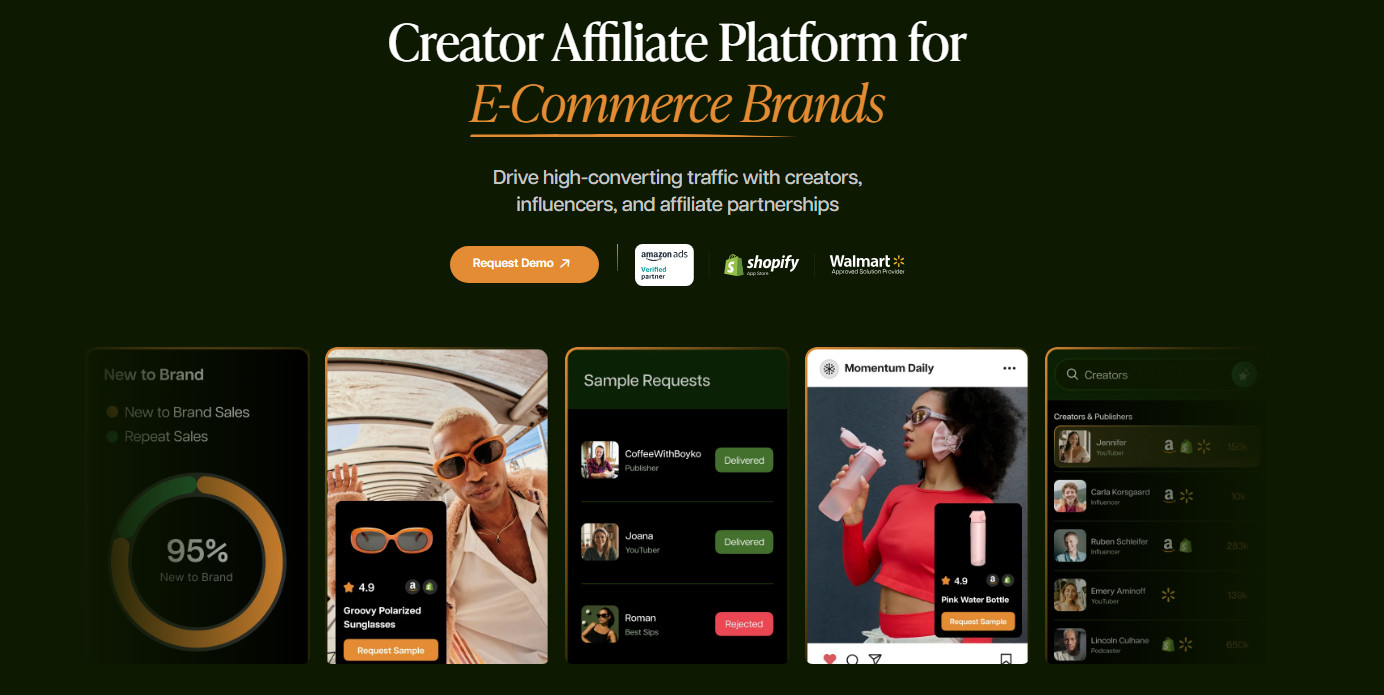
When looking for tier 1 publishers, platforms that focus more on ecommerce and the growing overlap between publishers, affiliates, and creators are preferable. Levanta is one example. In August 2026, they announced that their marketplace includes more than 90,000 vetted creators, with publishers, influencers, affiliates, and media buyers represented in the network.
This type of access is helpful for brands whose customers shop in more than one place, like when a publisher introduces someone to a product, but the purchase happens later on Amazon, Shopify, or Walmart. Levanta lets brands run those partnerships across all three channels, which makes it easier to see the wider result of the relationship instead of evaluating each store separately.
To be clear, the platform can’t build relationships for you. Network size does matter, but relevance matters more. Review platforms by looking at strong partners in your category, how easy it is to contact them, and whether it’s possible to track sales wherever your customers prefer to buy.
Tier 1 publishers need a clear pitch

A brand should have a strong publisher pitch that is easy to review and can easily be forwarded to someone else on the team. It needs to answer six simple questions:
- What is the purpose of contacting this publisher?
During your pitch, mention a specific article, audience, or missing topic. For example, “Your recent guide on portable espresso makers covers a wide range of brands, but it doesn’t include battery-powered options” is a more effective pitch than “we love your website.”
- Why should readers care about your product?
Explain what makes your product different in customer language instead of using words such as innovative or premium. Your vocabulary choice should tell the publisher why someone would choose your product over the options it has already featured.
- Why now?
If you connect the pitch to a launch, seasonal need, shopping event, new study, or missing content topic, it gives a clear reason to act now and not sit in an inbox indefinitely.
- What proof can you share?
Numbers help back up pitches, but don’t overdo it because large publishers know when it’s fluff. Include two or three numbers, like customer ratings or sales growth, check every figure, and state the period it covers.
- What are you offering?
Your pitch should include the starting commission, potential for higher rates, cookie window, retail options, and paid-content budget. If you can’t tell a large publisher exactly what’s in it for them, they won’t bother hitting reply.
- How will you support the publisher?
Large publishers want to work with brands that make their job easier, not harder. And I’m not just talking about communication. Explain how you will streamline their content creation: offering fast same-day delivery, providing high-quality imagery, or providing exclusive data to use in their story. A tier 1 publisher will not be chasing you down for basic assets, and the partnership could stall even before it starts.
Discussions beyond commission

Larger publishers evaluate a wider business package, unlike smaller affiliates that generally accept a base commission rate and start sharing links the following day.
While commission is core to affiliate marketing, the highest rate isn’t always the best deal. A smaller commission on a product that sells well can actually earn more. Experienced publishers take this into account and look at total earnings from their traffic, not only the headline rate.
The partnership agreement can include a flat fee, cost-per-click payment, bonus, exclusive code, higher launch rate, or a mix of guaranteed payment and commission. The terms need to match the work that the publisher puts in because adding a product to a guide is not the same as testing it and creating a dedicated article about it.
It’s also important to confirm tracking rules, returns, payment dates, content needs, links, usage rights, exclusivity, and how long higher rates will last before the work starts. For example, if the brand wants to use the content in ads or an email, pay for those rights separately.
For new partnerships, I suggest a limited test. Agree on a single placement, its timing, the fee and commission structure, and what results would lead to future work. That way, you’re not promising a long-term deal before you know if the partnership is worth the investment.
Understanding the difference between editorial and paid content

Well-known publishers care about this difference. The truth is, sending a sample or offering commission can make a product easier to consider, but it doesn’t automatically buy a positive review.
Notable publishers protect their readers’ trust and won’t do anything to jeopardize it. For example, InStyle’s commerce guidelines specify that brands can send products for consideration, but that doesn’t guarantee coverage. WIRED’s editorial policy also makes it pretty clear they will not compromise their standards for business partnerships: “Here’s the bottom line: We will not lie about products to sell them to you. We tell you what we like and what we don’t after testing it in our real lives.”
If your brand needs guaranteed coverage, you need to treat it as a paid placement with clear content requirements and disclosure. But a standard affiliate agreement may not be sufficient.
Some affiliate platforms can support both types of relationships. Through Paid Placements, for example, Levanta lets publishers share their rates and agree on the content, price, timeline, edits, and usage rights with a brand. Affiliate tracking can still be included, which helps teams compare the cost of the placement with the revenue it drives.
Paid content can kickstart a relationship when a new product has no past results. A sponsored article, however, is not a shortcut into an independent buying guide, and treating it that way can damage trust.
Going live should be easy

Recruitment does not end when a tier 1 publisher joins the program. Many affiliate programs have a ten-page list of approved partners, but very little active content because the process crumbles after approval.
Once a publisher shows interest, send a simple package with tracking links, priority products, stock, commission details, approved claims, images, sample information, offers, and a thank-you note with a direct contact. Make every available shopping option clear.
These types of publishers expect quick responses. They work around content calendars and shopping events, so a late sample or unanswered question can cost the brand its place in an article. Your brand’s partnership manager should be able to solve everyday problems easily.
Lastly, follow up when you have something useful to add. For example, inventory updates, new test results, or a stronger reader offer. It will give the publisher a reason to answer versus a follow-up that says “did you see my last email?”
Look beyond the final affiliate click

Tier 1 publishers have the ability to influence a sale before the final click happens. A customer may see the product in a buying guide first, search for it later, and finally purchase it on a marketplace. If a brand only measures the last visit to its Shopify store, it might underestimate the value the publisher is actually bringing in.
That’s where an affiliate platform that can track across multiple sales channels comes into play. With the right platform, a brand’s team can understand where the publisher introduced the product and where the customer eventually bought it.
With Levanta, that view can simultaneously include Amazon, Shopify, and Walmart. Its Amazon Attribution integration, for example, can show clicks, add-to-carts, conversions, and new-to-brand sales instead of reducing the partnership to one revenue number.
I’d give the partnership 30 to 90 days, and then look at the real data. Track metrics like qualified traffic, conversions, new customer sales, and content quality. Then, measure them against your total investment: upfront fees, commissions, product samples, and most importantly, your team’s time spent on the partnership.
Strong results could justify a higher commission, another placement, or a content package. And weak results can show that the offer, product page, or publisher choice needs to change. Either way, the team gains concrete proof for its next pitch.
The verdict: Tier 1 publishers want Tier 1-ready programs

Brands move past the mid-tier stage when they stop treating large publishers like regular affiliates with bigger audiences. They build a focused list, understand what each publisher covers, present strong numbers, and make the partnership easy to run.
The right affiliate marketing platform can support that work by helping the team find suitable partners, manage the relationship, and track what happens after the content goes live. Whatever platform you choose, it’s only valuable when the brand brings a clear and worthwhile offer to the publisher.
Success with tier 1 publishers requires a shift in perspective. Don’t solely focus on how to get them into your program; focus on why they should spend their time and audience attention on your product versus others. When your answer is clear, relevant, and backed up by solid numbers, recruiting tier 1 publishers shifts from being a challenging pitch to an easy win.