


Last Updated on June 9, 2026 by Ewen Finser
FTC Disclaimer: We do make money from this blog and may receive compensation for this work in the form of commissions, fees and complimentary product access. Review our full FTC disclosure here.
If you’ve been using Veeqo (or even just looked into it), you might have noticed it’s pretty much a full operations system.
I’ve used a huge range of shipping and ecommerce platforms, and the biggest thing that stood out to me was: most ecommerce businesses don’t actually need everything Veeqo offers.
Sometimes you just want to ship orders quickly and reliably, not manage inventory, warehouses, and fulfillment workflows at the same time.
Plus, a lot of businesses, especially established businesses, use specific software for their inventory and warehouse management.
So in this guide, I’ll break down the best Veeqo alternatives depending on what you actually need, whether that’s a full replacement or something much simpler.
A Quick Comparison of Veeqo Alternatives
Here’s a quick comparison of the main options before we dive into each one:
Tool | Ease of Use | Automation | Inventory Management | Carriers | Best For |
Very easy | Advanced workflows, more complex setup | Not included | Global with 40 + | Most businesses | |
Medium | Good – easy to set up for non-technical team members | Limited tools | Global | Scaling brands | |
Easy | N/A | This is one of the main functions of ShipBob | Global | Outsourced fulfilment | |
Complex | Very advanced, needs a technical team | Good tools included | Global | Enterprise | |
Medium | Medium – easy to set up for non-technical team members, but limited scope | Not included | Global | International | |
Medium | Medium – easy to set up for non technical team members, but limited scope | Not included | EU-focused | European stores |
What is Veeqo?
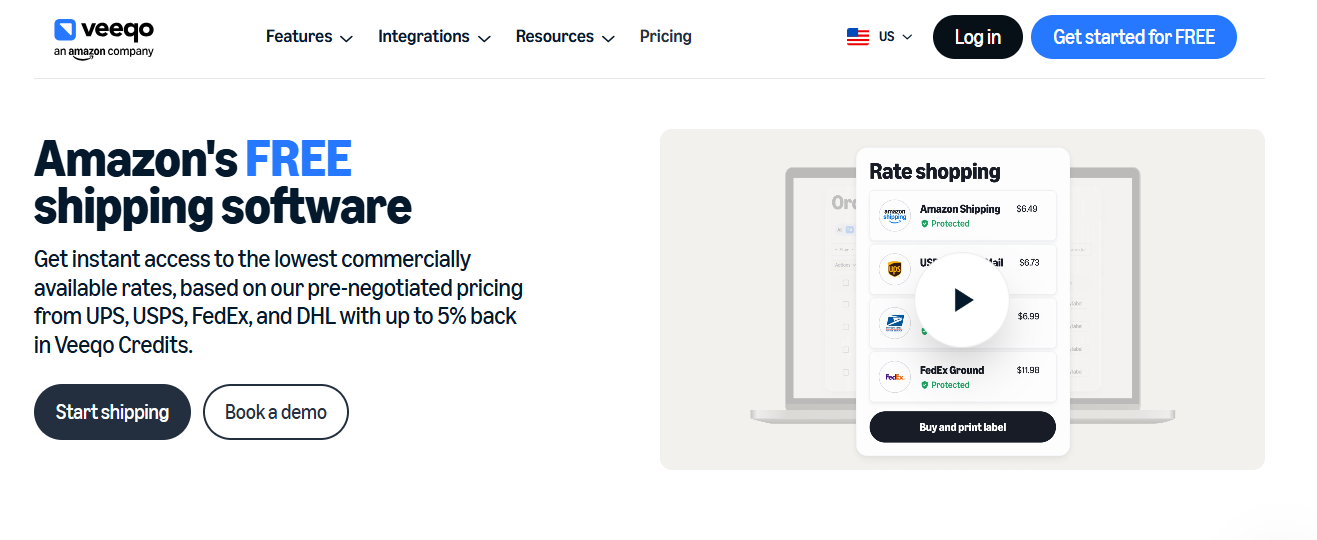
Veeqo is a fulfilment and operations platform that combines:
- Inventory management
- Order management
- Warehouse workflows
- Shipping
It’s especially popular with Amazon sellers, which makes sense because Veeqo is owned by Amazon. Many sellers use it for the Amazon shipping protections and integrations, although some businesses prefer not to share all their operational data with Amazon.
In practice, Veeqo feels more like a fulfillment control system than a simple shipping tool.
That’s great if you manage inventory and warehouse workflows, but it can feel like overkill if you just want fast, straightforward shipping.
Veeqo was previously known for offering most functionality for free, but the platform has recently introduced a Pro plan, meaning some advanced features and capabilities now require a paid subscription. That brings it more in line with many of the other platforms in this category.
Why Look for a Veeqo Alternative?
1. It is more complex than needed
Users frequently say that Veeqo’s interface can be “glitchy” and overwhelming because it forces shipping into a broader Warehouse Management System (WMS) framework. For a seller who just needs to “print and go,” the extra layers of stock control and digital picking are hurdles rather than helps.
2. It is overkill for small teams
Veeqo is designed for “growth phase” businesses that need to scale fulfillment operations. If you’re a solopreneur or a small team shipping from a home or small office, you won’t use features like tote picking or multi-warehouse tracking, making the dashboard feel cluttered.
3. It is very Amazon-focused
While Veeqo is a multichannel tool, its “unique selling points”, like A-to-Z claim protection and feedback removal, are exclusive to Amazon orders. Another thing that comes up a lot is “design flaws” that prioritize Amazon’s logic (like specific scan sheet requirements) over a more platform-agnostic approach.
There is also always the possibility that Amazon might have access to seller data, such as pricing, supplier, and profitability data. Veeqo states in their policies that they don’t have access to external data, but it is synced with your Seller Central account.
4. Setup takes time
Veeqo is an all-in-one operations system, so getting your inventory correctly synced, SKUs mapped, and warehouses configured takes significantly longer than the “plug-and-play” experience of a dedicated shipping tool like Shippo.
What to Look for in a Veeqo Alternative

Before switching from Veeqo, the biggest thing to understand is that not all alternatives are trying to do the same job.
Some are full fulfilment systems with inventory and warehouse management built in, while others focus purely on shipping. Which one makes sense depends on how your business actually operates day to day.
The main things I’d look at are:
- Inventory & warehouse management – If you actively manage stock across locations or run warehouse workflows, you’ll probably want a Veeqo-style platform. If you already have separate inventory software (or don’t need it), a shipping-first tool is usually faster and easier.
- Ease of use – Veeqo has a steeper learning curve because it’s built around operations. Simpler tools let you connect your store and start shipping almost immediately, which makes a big difference if you’re using it daily.
- Automation – Veeqo has advanced operational workflows, but many businesses only need basic automations like carrier selection, batch printing, and shipping rules.
- Carrier support & international shipping – If you ship internationally, check the carrier selection carefully. Some alternatives offer wider global carrier support, better customs handling, and built-in duties/tax calculations.
- Integrations – Make sure the platform works with your ecommerce store, accounting software, ERP, warehouse systems, or custom setup. This becomes especially important for established businesses.
- Scalability – If you’re growing into a warehouse operation, a more advanced system may make sense. But a lot of ecommerce brands actually benefit from staying lean and using simpler shipping-focused tools.
Now, let’s talk about the best Veeqo alternatives out there right now:
1. Shippo
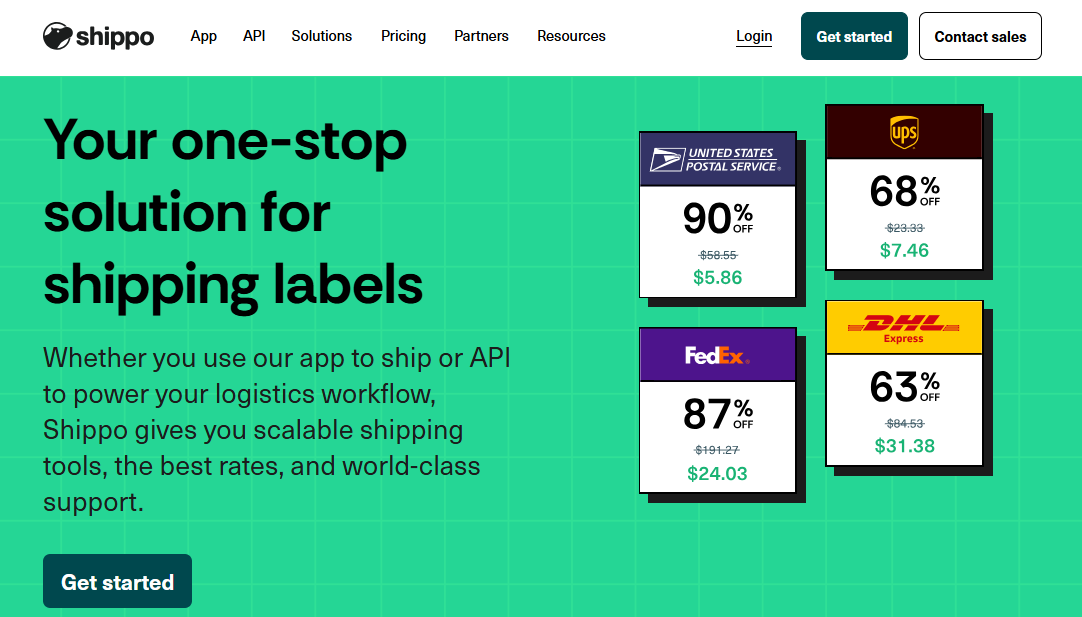
If you strip away everything you don’t need from Veeqo, you end up with something that looks a lot like Shippo.
It is probably my favorite shipping tool overall, and the biggest difference vs Veeqo is speed and simplicity. I connected my store, and within a couple of minutes, orders were already there, ready to ship. There’s no need to configure inventory workflows or warehouse steps first; you just connect and go.
That makes a big difference in day-to-day use. Instead of navigating through multiple layers, you’re focused on what actually matters: getting orders out quickly and choosing the best shipping option.
Shippo also has very easy-to-use automations, which even non-techy people can set up.
It has the biggest range of carriers compared to other equivalently priced tools, which means you get the absolutely best rates, especially for international shipments.
What I liked
- Very fast setup (minutes, not hours)
- Simple automation rules (IF/THEN logic)
- Multi-carrier support (UPS, DHL, FedEx, etc.)
- Clean, easy-to-use dashboard
- Batch label printing saves time
- Excellent API for custom set ups
What I didn’t like
- No inventory or warehouse management
- Reporting is fairly basic
Best for
Most ecommerce businesses that want a fast, scalable shipping solution without Veeqo’s complexity.
2. ShipStation
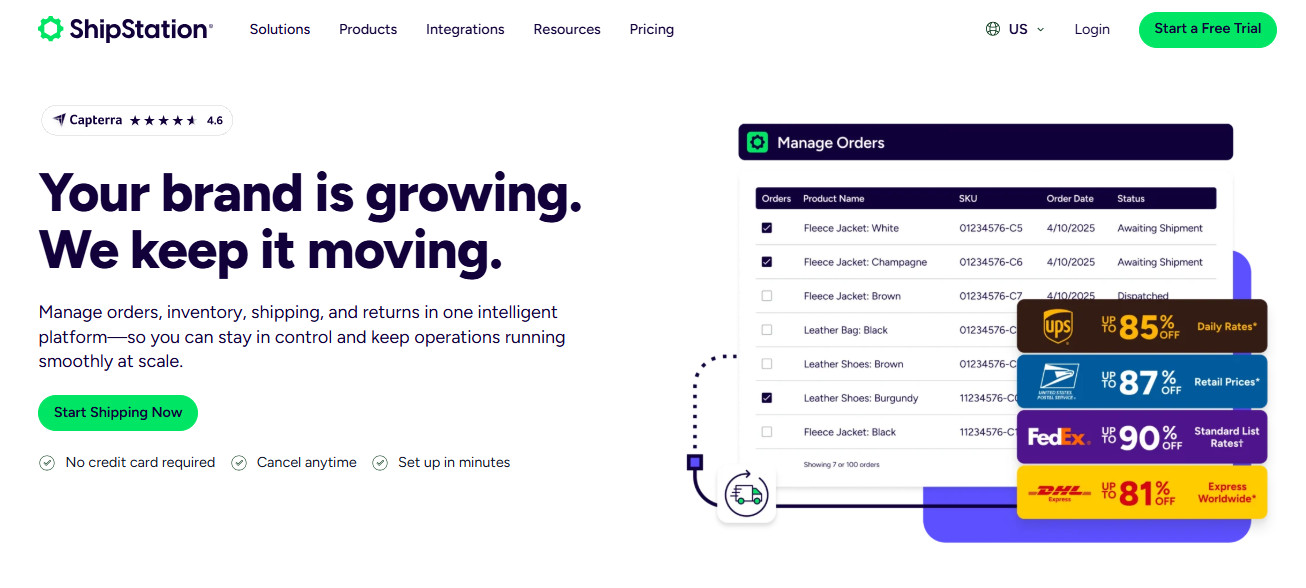
ShipStation is probably the closest mainstream alternative to Veeqo, but with a slightly different focus.
It’s still a powerful platform, but it’s much more shipping-first than inventory-first. Instead of trying to manage your entire fulfillment operation, ShipStation focuses on getting orders out the door as efficiently as possible.
With Veeqo, you’re often working through inventory, picking, and fulfillment steps before you even get to shipping. With ShipStation, the workflow starts with orders – everything is built around importing them, applying automation rules, and printing labels in bulk.
The trade-off is that ShipStation doesn’t try to be a full inventory or warehouse management system in the same way Veeqo does. It can handle basic stock tracking and multi-location shipping, but if you need deep inventory control, you’ll likely still need a separate system.
What I liked
- Strong automation (routing, batching, rules)
- Wide range of integrations (Shopify, Amazon, eBay, etc.)
- Handles large volumes well
- Detailed reporting compared to most tools
- Enterprise-level tools, for affordable price
What I didn’t like
- Setup still takes time
- Can feel complex at first, especially for newer sellers
- Whilst the pricing scales with you, it can get expensive
Best for
High-volume businesses that want powerful shipping automation without a full warehouse system.
3. ShipBob
ShipBob takes a completely different approach compared to Veeqo.
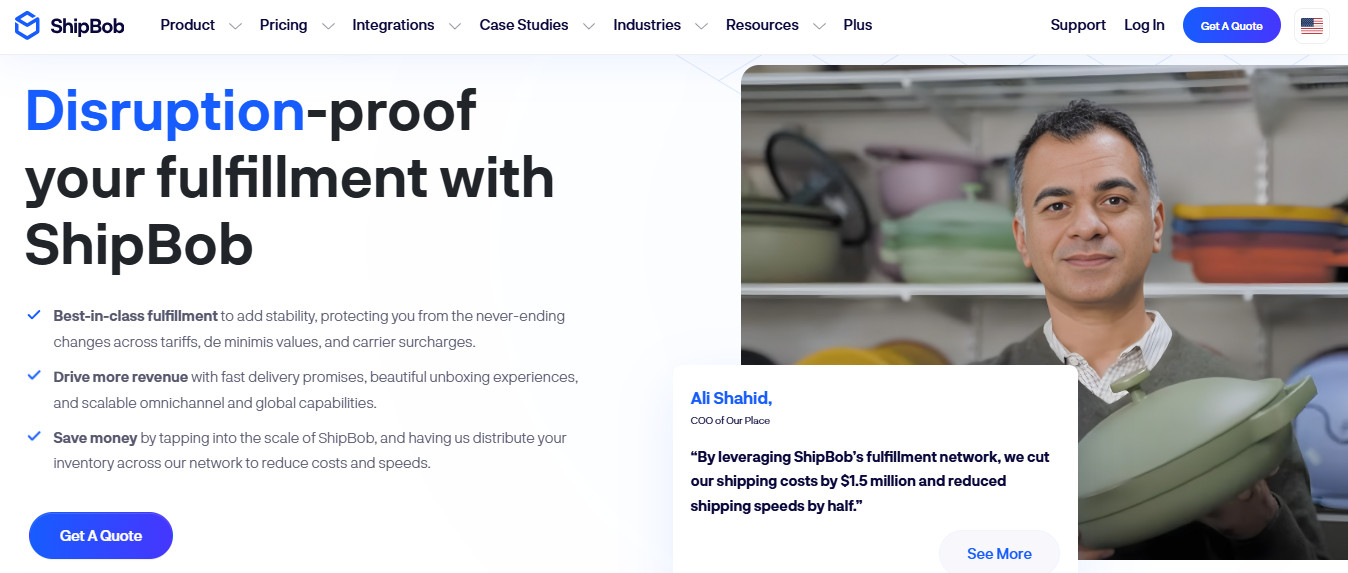
Instead of managing fulfilment yourself, you outsource it entirely. That means ShipBob handles storage, picking, packing, and shipping for you.
The biggest difference is how hands-off it is. With Veeqo, you’re still running your own operations. With ShipBob, you’re essentially plugging into their warehouse network and letting them take care of the logistics.
It’s a big shift, but for the right business, it can remove nearly all of your day-to-day operational work.
What I liked
- Takes fulfilment off your plate entirely
- Fast delivery via distributed warehouses
- Good visibility into orders and inventory
- Very scalable
What I didn’t like
- Less control compared to in-house systems
- Costs can add up, so your margins need to be solid
- Not ideal for smaller businesses
Best for
Brands that want to scale without running their own warehouse.
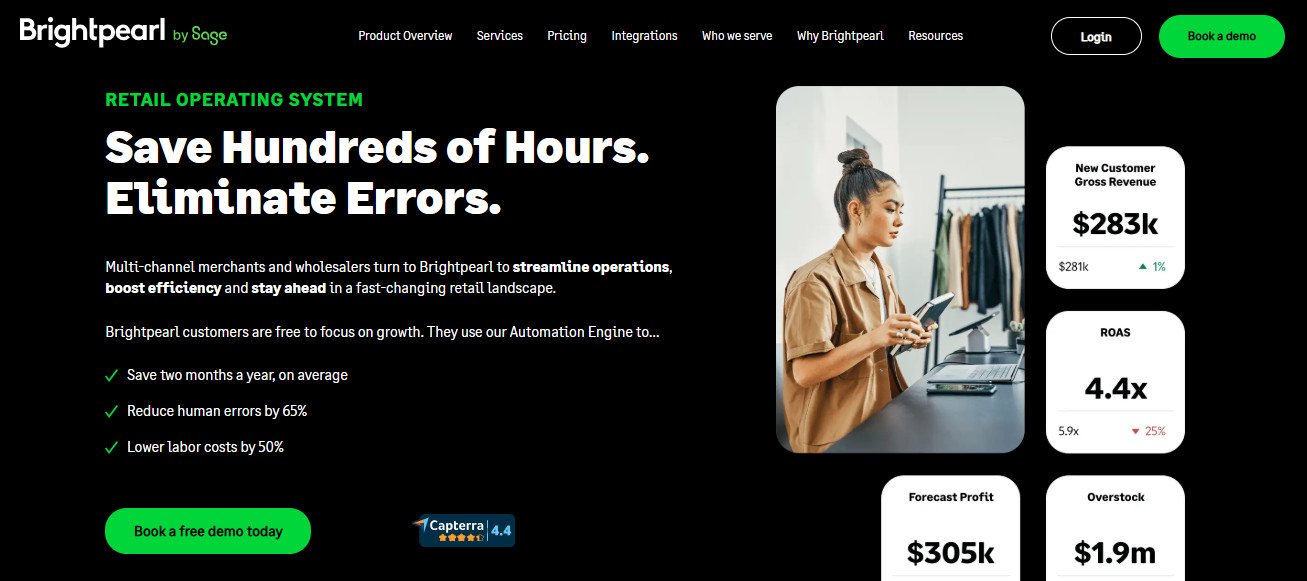
4. Brightpearl
Brightpearl is closer to a full ERP system than a shipping tool.
It goes even deeper than Veeqo in some areas, especially around things like financial reporting, inventory planning, and overall business operations. It feels less like a fulfilment tool and more like a central system for running the entire backend of your business.
That extra depth can be really powerful, but it also means it’s a much bigger commitment compared to typical shipping platforms.
What I liked
- Advanced inventory and order management
- Built for multi-channel businesses
- Strong reporting and financial tools
- Very scalable
- Highly customizable
What I didn’t like
- Expensive – minimum $1k per month
- Long setup process
- Complete overkill for most small to mid-sized stores
Best for
Established businesses with complex operations and multiple sales channels.
5. Easyship
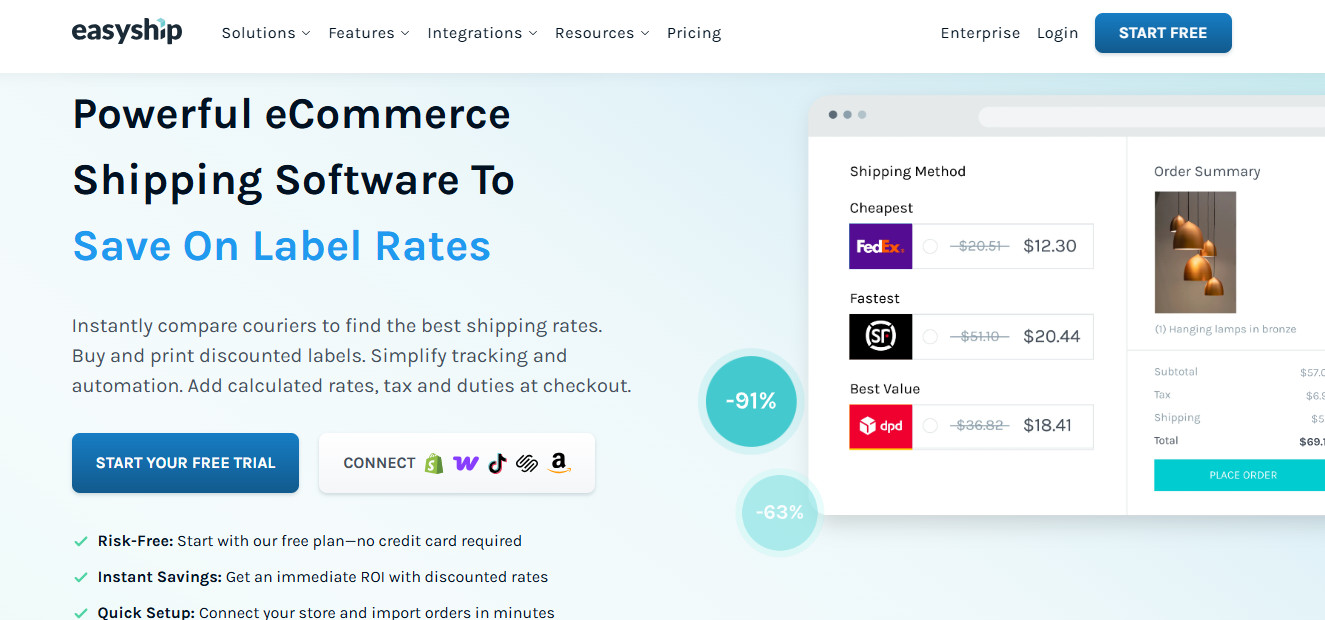
Easyship is designed with international shipping in mind.
If you sell globally, this is where it really stands out. When I looked into it, a lot of the features are built specifically to handle cross-border complexity, such as duties, taxes, and customs documentation.
Instead of treating international shipping as an add-on, Easyship makes it a core part of the workflow, which can save a lot of time (and headaches) if you’re regularly shipping overseas.
That said, I prefer Shippo overall for international shipping, as it has a better dashboard and wider range of carriers.
What I liked
- Shows duties and taxes upfront
- Strong international carrier coverage
- Automatically generates customs forms
What I didn’t like
- Interface feels slightly slower
- More expensive if you only ship domestically
Best for
International ecommerce brands.
6. Sendcloud
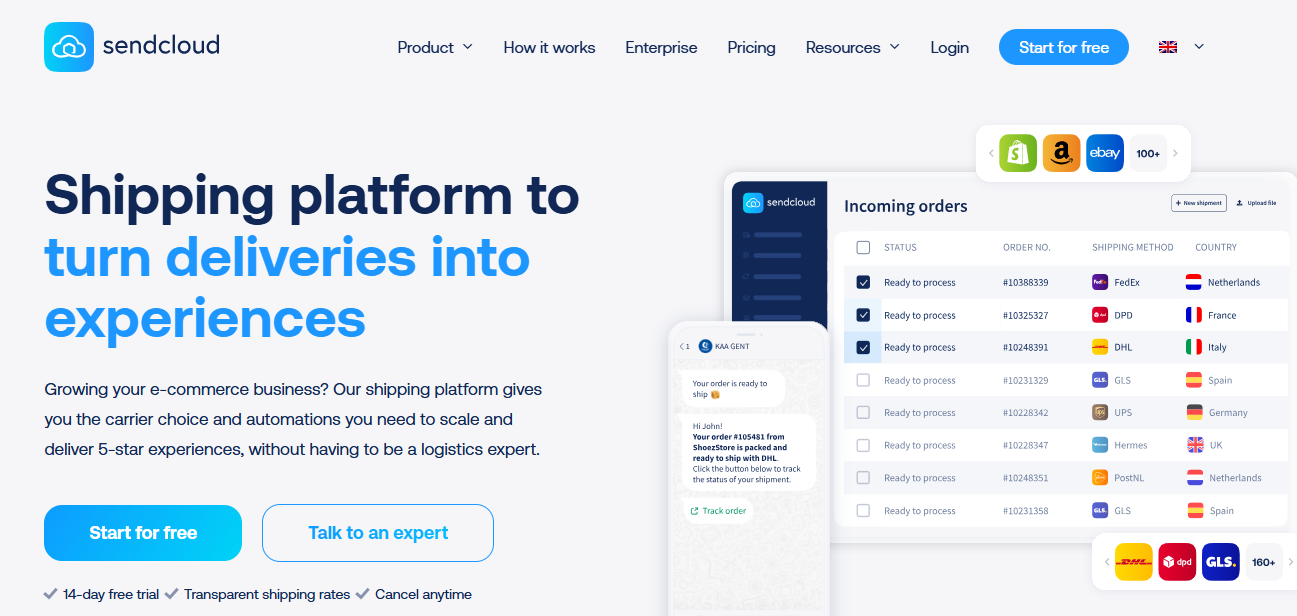
Sendcloud is one of the strongest options for EU-based stores.
It’s built specifically for European logistics, which makes a big difference if you’re dealing with cross-border shipping within the EU. When I looked into it, features like handling different regional carriers and navigating VAT requirements are much more built-in compared to global-first tools.
That focus makes it feel more tailored to European businesses, especially if you’re shipping across multiple EU countries and need something that understands the local complexity.
What I liked
- Strong local carrier support across Europe
- Branded tracking and returns pages
What I didn’t like
- Less useful outside Europe
- Slightly more complex setup than Shippo
Best for
EU-only based ecommerce businesses.
How to Choose the Right Alternative
Choosing which shipping tools to use is a big decision! Getting it wrong can take a lot of time and money to fix. If you’ve come this far, then you must be serious about choosing a tool other than Veeqo.
Here’s how I’d break it down:
- Want A Full Operations System: Shipstation or Brightpearl
- Want To Outsource Fulfilment: ShipBob
- Want Something Simple And Scalable: Shippo
- Ship Internationally: Shippo or Easyship
- Based In Europe Only: Sendcloud
- If you just want fast, efficient shipping, go for Shippo
For most ecommerce businesses, Shippo hits the sweet spot of functionality, price, and ease of use. You get automation, integrations, multi-carrier shipping, but without the overhead of running a full operations system.