


- Native Shipping vs. Dedicated Shipping Software
- How To Choose The Best Shipping Platform For Your Business
- Quick Comparison of The Best Shipping Platforms: At a Glance
- Best Shipping Software for Growing Ecommerce Brands In 2026
- Best Overall Shipping Software for Growing Ecommerce Stores: Shippo
- Best for Advanced Automation: ShipStation
- Best for Multichannel Sellers: ShippingEasy
- Best for International Growth: Easyship
- Best for Warehouse Operations: ShipHero
- Best Budget-Friendly Option: Pirate Ship
- Final Take
Last Updated on June 9, 2026 by Ewen Finser
FTC Disclaimer: We do make money from this blog and may receive compensation for this work in the form of commissions, fees and complimentary product access. Review our full FTC disclosure here.
If shipping has started to feel like the most frustrating part of running your growing ecommerce store, believe it or not, you’re right on schedule. This means your store is doing really well, your products are moving, and your business is on a great path to success! And the truth is, shipping is often the first thing that causes constant headaches for a growing ecommerce store. Thankfully, the fix is not only fairly easy, but with the right shipping software, you’ll find yourself saving time and money almost immediately.
The built-in native tools on many ecommerce platforms are limiting to say the least. Between the limited carrier options, manual label creation, inconsistent rates, and returns, you’re spending more time unraveling the confusion than actually shipping products.
This is where dedicated shipping software can be a game-changer for your sales and customer service headaches.
Native Shipping vs. Dedicated Shipping Software
Native (Built-In) Shipping Tools
Native built-in shipping tools provided by your ecommerce platform typically keep you tied to one or two carriers, like USPS or FedEx. The built-in software, while it’s meant to make your shipping process easier, once your store begins to grow, you simultaneously begin to outgrow the native shipping tools. As you grow, you need more out of your shipping tools than native shipping software can offer.
Dedicated Shipping Software
Dedicated shipping platforms open you up to a whole new, nearly limitless world of shipping options from carriers to rate comparisons to branded label creation, tracking, automation, and analytic reporting. The result is less manual work, minimal headaches, better cost control, and a smoother experience for both you and your customers.

How To Choose The Best Shipping Platform For Your Business
When it comes to finding the best dedicated shipping software for your growing e-commerce business, it’s not about finding the platform that fits how you ship today, but finding one that won’t have you facing frustrating bottlenecks again in six to 12 months.
When choosing the best shipping platform for your ecommerce business, consider a few important aspects of your shipping needs:
- How many carriers would you like to have access to? Are the three main ones enough (USPS, UPS, FedEx), or do you need international shipping or local carrier options?
- Do you want to negotiate contracts with the carriers once your volume hits their discounted rate thresholds, or do you want access to discounted rates immediately?
- How much automation do you need, and do you or your team have the skills to program that automation into your process?
- Are reporting, analytics, and branding options important to you?
Quick Comparison of The Best Shipping Platforms: At a Glance
Tool | Best For | Where It Shines | Where It Falls Short |
Best overall for growing ecommerce stores | 40+ carriers (USPS, UPS, FedEx, DHL), discounted rates without contracts, easy setup, clean interface, strong integrations, scalable pricing, reliable uptime | Not ideal for highly complex multi-warehouse or advanced reporting needs | |
Advanced automation & high-volume sellers | Powerful automation rules, multi-channel integrations, carrier optimization, workflow customization | Expensive at scale, steep learning curve, can feel complex or clunky | |
Multichannel sellers needing simple marketing + shipping | Marketplace syncing (Amazon, Etsy, eBay), basic CRM + email tools, consolidated dashboard | Dated interface, support issues, limited scalability, confusing pricing tiers | |
International ecommerce growth | Duties/taxes at checkout, landed cost transparency, global carrier options, strong cross-border tools | Complex setup, inconsistent reliability, weaker for domestic-only sellers | |
Warehouse & fulfillment operations | Full WMS system, inventory tracking, barcode scanning, AI picking/packing, advanced warehouse workflows | Very expensive, complex setup, overkill for small/mid ecommerce stores | |
Budget-friendly simple shipping | Free to use, USPS + UPS discounts, easy interface, no contracts or subscriptions | Only USPS/UPS, no FedEx/DHL, limited scaling, not ideal for international or complex logistics |
Best Shipping Software for Growing Ecommerce Brands In 2026
Best Overall Shipping Software for Growing Ecommerce Stores: Shippo
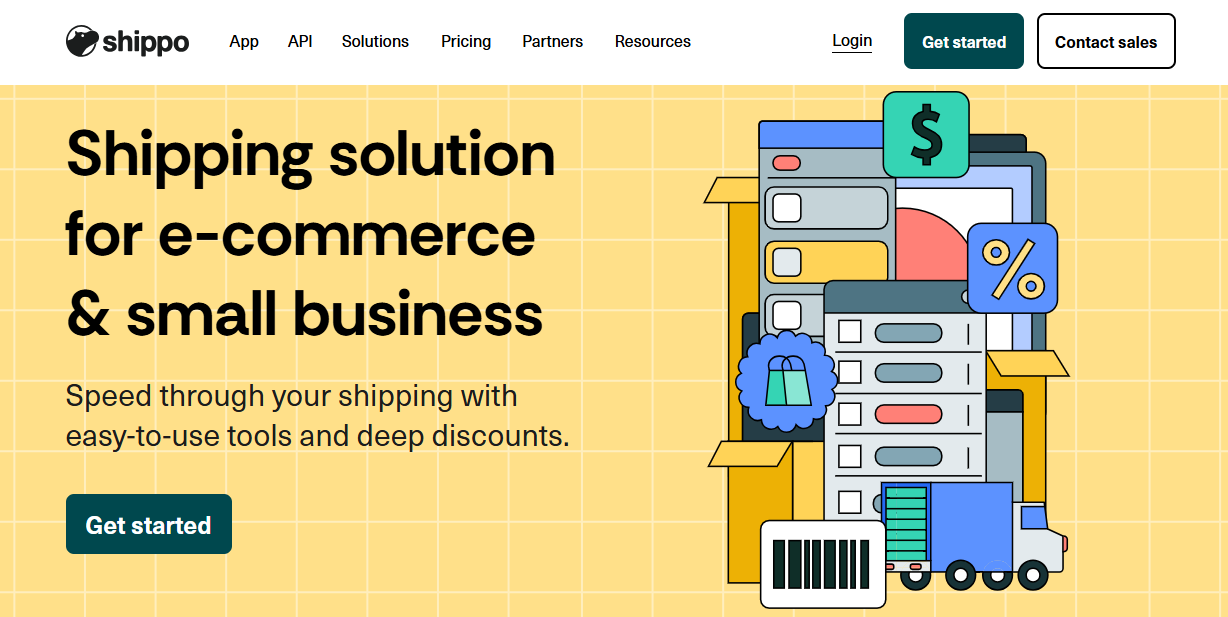
Once you’ve hit the point where the native tools stop working for you, and you need more carrier options, better rates, branded labels with bulk printing options, and better tracking and returns, Shippo tends to tick all the boxes, without being overly complicated to implement or use. This is a hit-the-ground-running dedicated shipping platform that will have your frustration-free almost instantly.
What I Really Like About Shippo:
You not only get immediate access to more than 40 regional, national, and international carriers (USPS, UPS, FedEx, DHL, and more), you also get to enjoy the benefits of Shippo’s negotiated contracts with many of the carriers that pass on deeply discounted shipping rates to you, without needing a high volume of sales. That alone removes a major operational headache for growing ecommerce brands since you don’t have to reach out to each carrier to negotiate better rates once you hit the required shipping volume.
The interface is clean, onboarding is quick, and, in most cases, you can go from setup to batch label printing the same day! Most of all, it seamlessly integrates with a wide range of ecommerce platforms and marketplaces from Amazon to Etsy to Shopify and WooCommerce. You also have the option to create beautifully branded shipping labels that make your company look as big and put-together as big box stores.
Reliability is another quiet advantage. Once shipping becomes mission-critical, uptime isn’t optional—and Shippo has a strong track record here.
If budget can make you feel apprehensive about moving to a dedicated shipping platform, this is another area where Shippo shines against its competition. Shippo uses tiered, volume-based pricing, which scales in a predictable way as your order volume grows.
- No minimum shipping requirements.
- No need for carrier contracts to unlock discounted rates.
- No surprise pricing jumps that force you to rethink your stack mid-growth.
Where Shippo Falls Short
Shippo is a fantastic option for growing small to mid-sized shops. It’s not really designed for super highly complex multi-warehouse operations or extremely high order volume. Though, in that case, you should really be looking at a more complex built-in automated system that needs a team to implement and monitor. Also, if you need intricate reporting or many individualized workflows, this might not be the platform for you.
Best for Advanced Automation: ShipStation
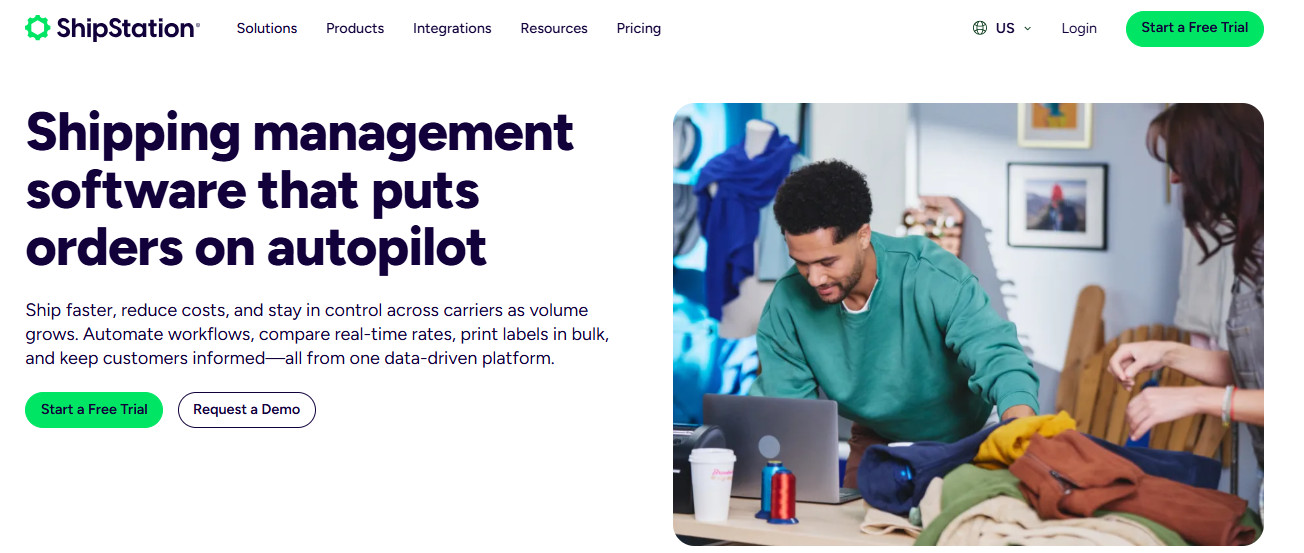
ShipStation is the system that powers shippers, multi-warehouse, high-volume companies use. While this is an incredibly advanced, heavy-hitting shipping system, you will need a strong budget and development team to make it work for you.
What I Really Like About ShipStation
Automation is where ShipStation shines above the rest. This is a sort of set-and-forget system that, once you build it into your system and design workflows, your shipping becomes mostly automated. ShipStation is a fantastic tool for high-volume sellers with complex shipping logic, teams that rely heavily on automation rules or those that need deep integrations across platforms.
With ShipStation’s advanced automation tools, you can design the system to:
- Auto-select carriers
- Split or combine orders
- Assign services based on conditions
It also integrates with a wide range of ecommerce platforms and marketplaces, making it great for multi-channel setup and automation across all your ecommerce stores.
Where ShipStation Falls Short
Pricing seems to scale as fast as your business, sometimes, faster. The recent constant price hikes have really put off users. Also, being that this is a highly automated system, it can feel very heavy or clunky at first, with a fairly steep integration process and learning curve. You need a team that knows what it’s doing to implement and use ShipStation. So if your workflows are not very complex and shipping volume is not large, this system may be overkill.
Best for Multichannel Sellers: ShippingEasy
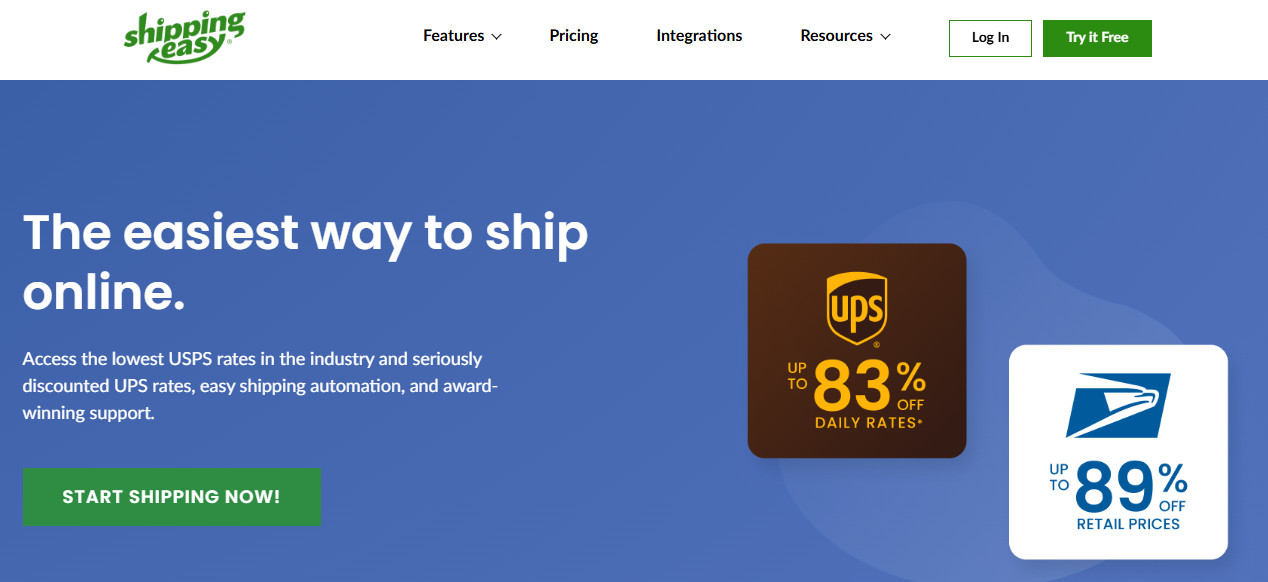
ShippingEasy takes a slightly different angle by blending shipping with basic marketing tools. So you will get a little of both, but not an extreme amount of either. Think of it as gaining a few extra hands to help with shipping and marketing, but at a fairly basic level.
What I Like About ShippingEasy
ShippingEasy also syncs well across marketplaces like Amazon, Etsy, and eBay to pull all your orders into one dashboard. The system also includes lightweight CRM and email features, which can be useful if you’re trying to consolidate tools. This system is also going to be a better fit for your business model if you are a marketplace-heavy seller with a large shipping volume. It’s also great for teams that are spread out and want to pull together shipping and basic marketing options in one place.
Where ShippingEasy Falls Short
ShippingEasy has a few drawbacks that can impact its effectiveness for growing ecommerce businesses. The platform interface can feel dated and less intuitive, with reliability issues that can disrupt your daily operations, from glitches with login verification to label printing. Also, many users report inconsistent customer support, with slow response times and difficulty resolving billing or technical issues. Most of all, the pricing structure can be confusing, with limited feature restrictions for those on lower-tier plans. If you are working with a tight budget, you may find the tiered plans limiting and frustrating.
Best for International Growth: Easyship
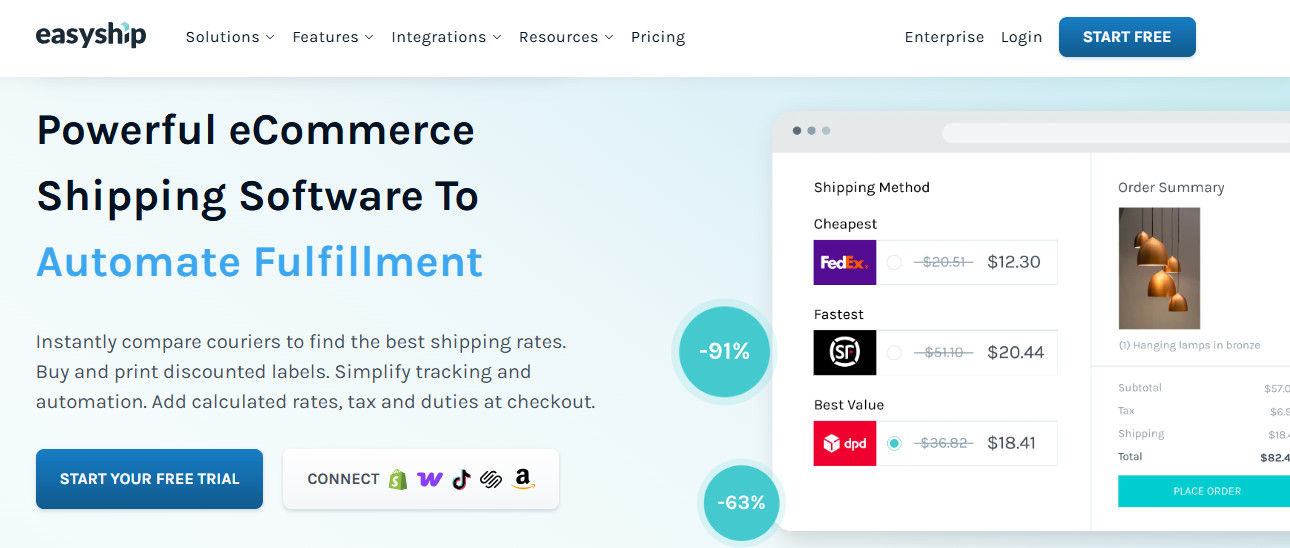
If International shipping makes up a large part of your ecommerce business, EasyShip is going to change your life. EasyShip takes the guesswork out of international shipping rates and even helps you with duties and cross-border customs labels.
What I Like About EasyShip
Easyship makes it easier to manage international and cross-border logistics without constantly worrying about unexpected fees or compliance issues, which goes a very long way toward protecting your bottom line, quoting the correct rates to your customers, and making sure everything arrives on time. Hands down, Easyship’s biggest strength is its transparency. It provides duties and tax calculations at checkout, shows clear landed costs, and offers localized shipping options across different regions, so both your and your customers don’t have unexpected costs. This level of clarity can improve the customer experience and even boost conversion rates, since international buyers know exactly what they’ll pay upfront.
Where EasyShip Falls Short
EasyShip is not for the domestic ecommerce business. Additionally, the user interface can seem complex and will take some time to learn, especially for new users. Reliability is another drawback. Users have reported delivery delays, lost packages, and tracking issues, which can create problems for customer satisfaction and order fulfillment. Another issue, especially for large volume businesses is the limitations in integrations and workflows, requiring manual workarounds or extra configuration to handle more advanced shipping setups
Best for Warehouse Operations: ShipHero
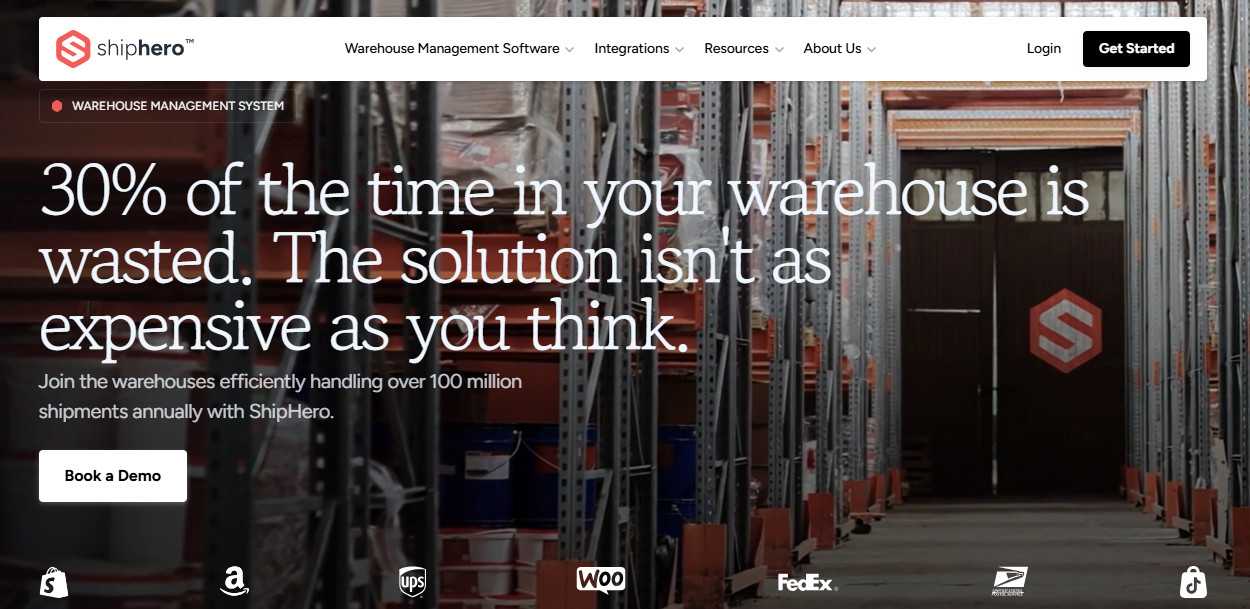
ShipHero goes beyond basic shipping and offers a full-blown fulfillment shipping infrastructure. Instead of just helping you print labels and track shipments, it combines warehouse management, inventory tracking, and multiple workflows into one system. This makes it a strong solution for teams running complex, hands-on warehouse environments.
What I Like About ShipHero
ShipHero is a great option for high-volume brands that handle heavy fulfillment in-house, as well as teams that need to manage warehouse staff and keep tight control over inventory. This is truly an all-in-one warehouse fulfillment system. I especially love it’s AI-driven automations, mobile barcode scanning, and optimized routing, which help teams pick and pack orders significantly faster while reducing errors. Another benefit is the robust inventory tracking, order management, and detailed reporting, that helps you have a real-time view of stock levels and even worker performance.
Where ShipHero Falls Short
It should come as no surprise that a system as robust as ShipHero has a heavy price tag. It’s one of the most expensive on this list. Speaking of heavy, this is an incredibly complex system to implement, automate, and learn, so getting it off the ground and running and your team trained to use it will take a fair amount of time. This is really more than a dedicated shipping software; it’s a full-on warehouse management system that handles your logistics as well.
Best Budget-Friendly Option: Pirate Ship
Pirate Ship is by far the simplest tool on this list. Consider it a step above your native shipping tools, but not something that will grow with your business very well, so if you are looking to scale out to mid-sized business, you may want to skip this option altogether. If not, keep reading.
What I Like About Pirate Ship
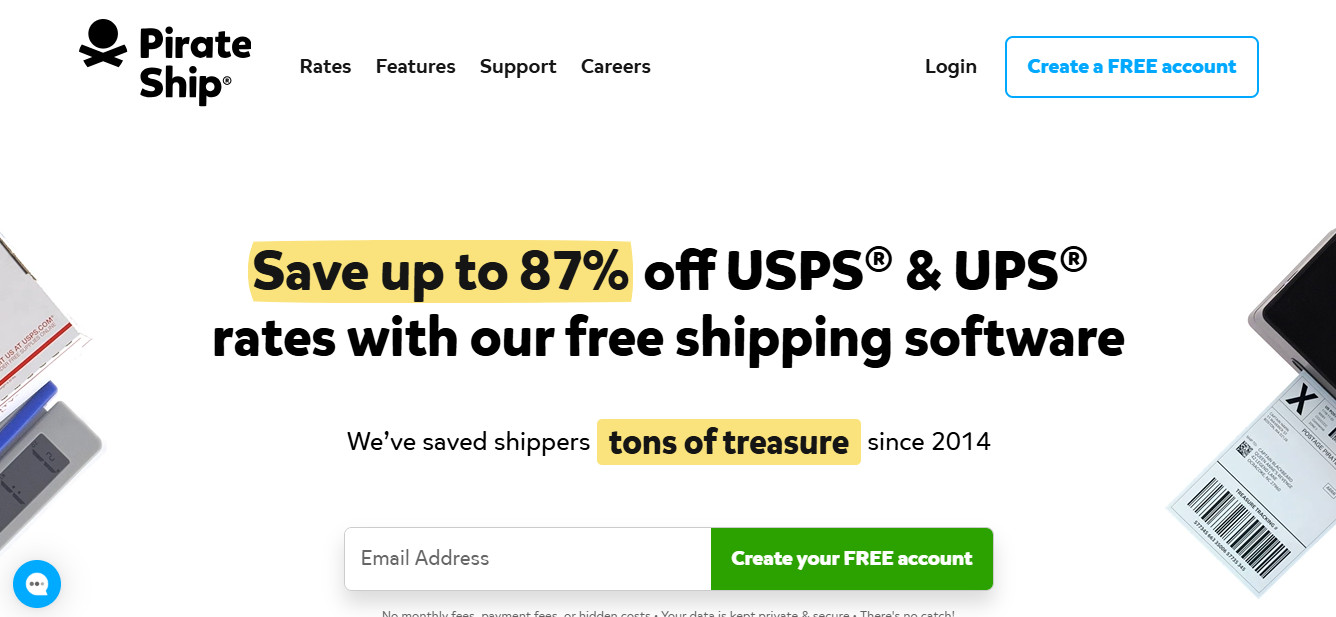
Pirate Ship gives you access to heavily discounted USPS and UPS rates without charging any subscription fees, markups, or minimums. In fact, the platform itself is completely free, so you only pay for the shipping labels you purchase. The interface is intuitive, allows you to quickly compare carrier rates, print labels, and track shipments with ease.
Where Pirate Ship Falls Short
While at first glance Pirate Ship may look like a great option, there are some drawbacks that will likely create the same friction you are already facing. First and foremost, you only have access to rates for USPS and UPS. Yes, just those two. This is not a great option if you want to use regional carriers or even FedEx, and certainly not going to be any help if international shipping is something you need. You also face last-minute carrier adjustments due to size and weight that will hit your bottom line and add up quickly.
Final Take
Now that your growing ecommerce business has outgrown your platform’s native tools, you have a few great options that will pick up your logistical needs and run with them.
If you need something that is intuitive, easy to set up, and offers loads of carrier options and discounted rates, Shippo has you covered and will scale well with your growing business. If you need automation and workflow control, ShipStation has you covered. But keep in mind, you’re trading simplicity and cost predictability for power.
If you want a step up from the native tools without cost, and are ok with only two carrier options, Pirate Ship will give you exactly what you need, but likely nothing more.
If international shipping is driving you mad, and the duties, taxes, confusing delivery costs are going to be your ruin, look no further than Easyship to control all that chaos.
If you are a massive operation and want to set and forget your entire shipping operation, ShipHero is where it’s at. But keep in mind, this will be a huge operational shift that will require the budget and operational resources to get it off the ground. everything all at once.