


Last Updated on August 20, 2026 by Ewen Finser
For an omnichannel brand crossing the $5M mark on Amazon, Shopify, or Walmart, the affiliate marketing conversation undergoes a fundamental shift.
You’re no longer just looking for a way to track a few coupon links or manage a handful of “friends of the brand” influencers. You need a scalable engine that can handle diverse traffic sources, complex attribution, and significant budget allocation without leaking margin.
At this stage, the decision often introduces a painful structural lag, where your revenue is scaling across multiple platforms, but your measurement data is vanishing into the “black hole” of marketplace attribution. Now you have to choose between an enterprise legacy platform that offers global scale at the cost of agility, or a modern, purpose-built tool designed to track every dollar from click to checkout.
As brands reach this scale, the search for a solution typically leads to two platforms that sit at opposite ends of the technological spectrum:
- On one side stands the established “safe bet” of the enterprise world – Partnerize, a platform built for global complexity and scale.
- On the other is Levanta, a newer, specialized platform designed specifically to address the marketplace attribution gap for modern eCommerce brands.
Understanding the choice requires looking at how these two platforms compare across critical areas.
Broad Partnership vs. Marketplace Mastery
The most significant gap between these two platforms is their foundational intent:
Partnerize
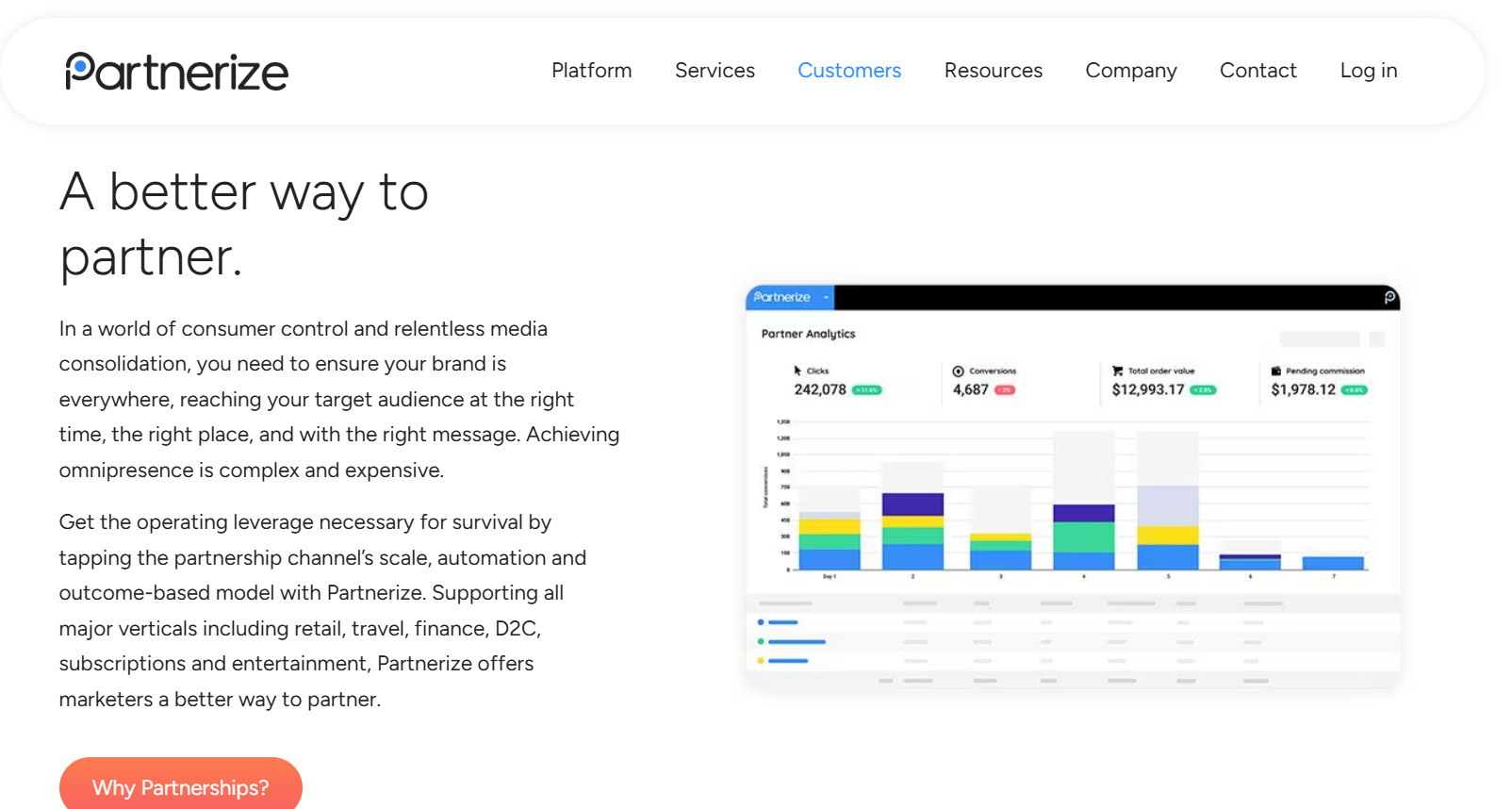
Partnerize is a horizontal, enterprise-focused platform.
Founded in 2010, it is built for large organizations that need scalable partnership infrastructure. If you are a global brand managing a wide network of partners across multiple regions, currencies, and agreement types, Partnerize is designed to support that level of operational complexity.
Its longevity means it has solved many of the challenges associated with global payments, compliance, and large-scale partner management. The platform is structured to support diverse partnership models, from traditional affiliates to media and brand-to-brand relationships, within a centralized system.
However, that breadth comes with tradeoffs. While Partnerize can integrate with Amazon Attribution and track marketplace-driven performance, it is not natively built around marketplace data structures like ASINs or SKU-level reporting.
As a result, brands often need to configure how marketplace data maps back to specific products and campaigns within their reporting workflows, especially when aligning performance across Amazon, Shopify, and Walmart in a consistent reporting structure.
Levanta
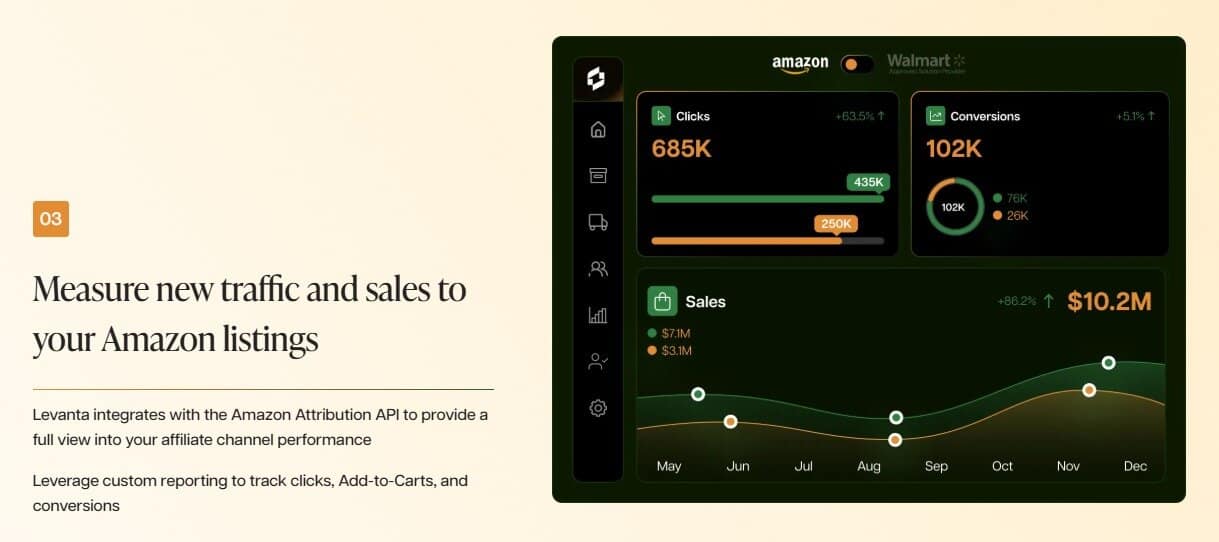
Levanta was built from the ground up to solve the attribution and creator discovery challenges facing modern eCommerce brands, especially those selling on Amazon, Shopify, and Walmart.
For a growing brand, particularly those doing $5M+ annually on Amazon or scaling across channels, Levanta is built around how marketplace revenue actually flows. It goes beyond basic link tracking by integrating directly with Amazon’s Attribution API and connecting performance across Amazon, Shopify, and Walmart within a single platform view. This allows brands to understand how their creator and affiliate efforts are influencing sales without stitching together multiple reporting systems.
It is designed for teams that want to move quickly, activate performance-based creator partnerships, and maintain clear visibility into product-level performance. Levanta also integrates with Amazon’s Creator Connections, allowing brands to manage both Attribution and Creator Connections programs from a single platform.
A key differentiator is that Levanta is designed to show exactly how much revenue each creator or affiliate drives. With ASIN- and SKU-level visibility, brands can understand which products are moving, which partners are responsible, and where to double down, all within a centralized dashboard.
Keep reading: My Honest Levanta Review
Attribution: The “ASIN-Level” Difference
In enterprise affiliate marketing, data is the currency, but not all data carries the same level of usefulness for marketplace brands.
Partnerize
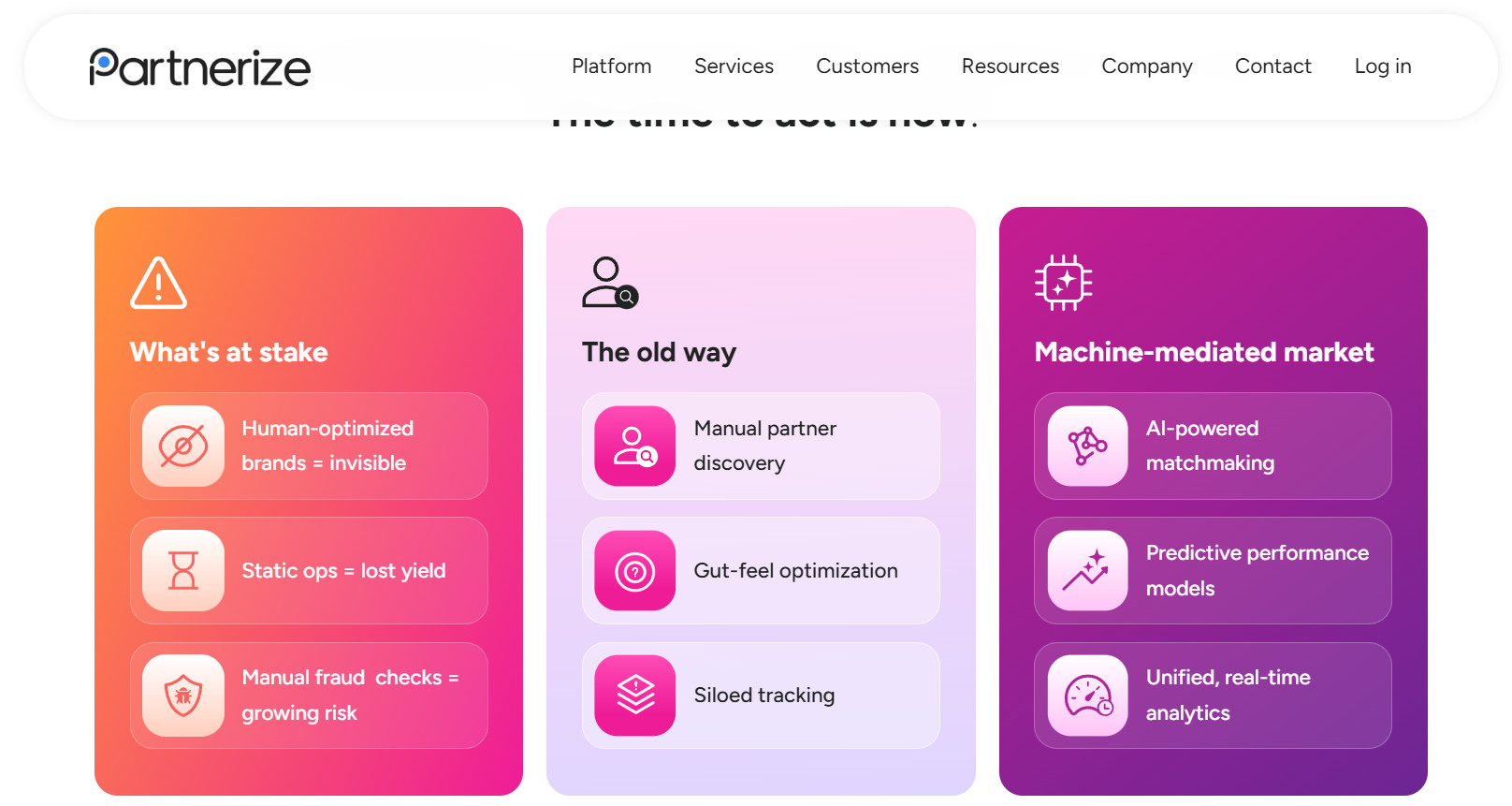
Partnerize uses a tracking pixel and API-based attribution model that is highly effective for last-click and multi-touch tracking within owned digital environments. For closed ecosystems like Amazon, reporting typically depends on Amazon Attribution links and related integrations.
In these cases, the level of granularity available is shaped by how campaigns are configured and by the limitations of Amazon’s Attribution framework, rather than being fully standardized or surfaced natively at a product-level within the platform.
Levanta
Levanta is designed ideally for marketplace-driven brands and focuses on surfacing performance in a more product-centric way.
By integrating directly with Amazon Attribution and connecting with platforms like Shopify, it allows brands to view performance tied to specific products within a centralized interface.
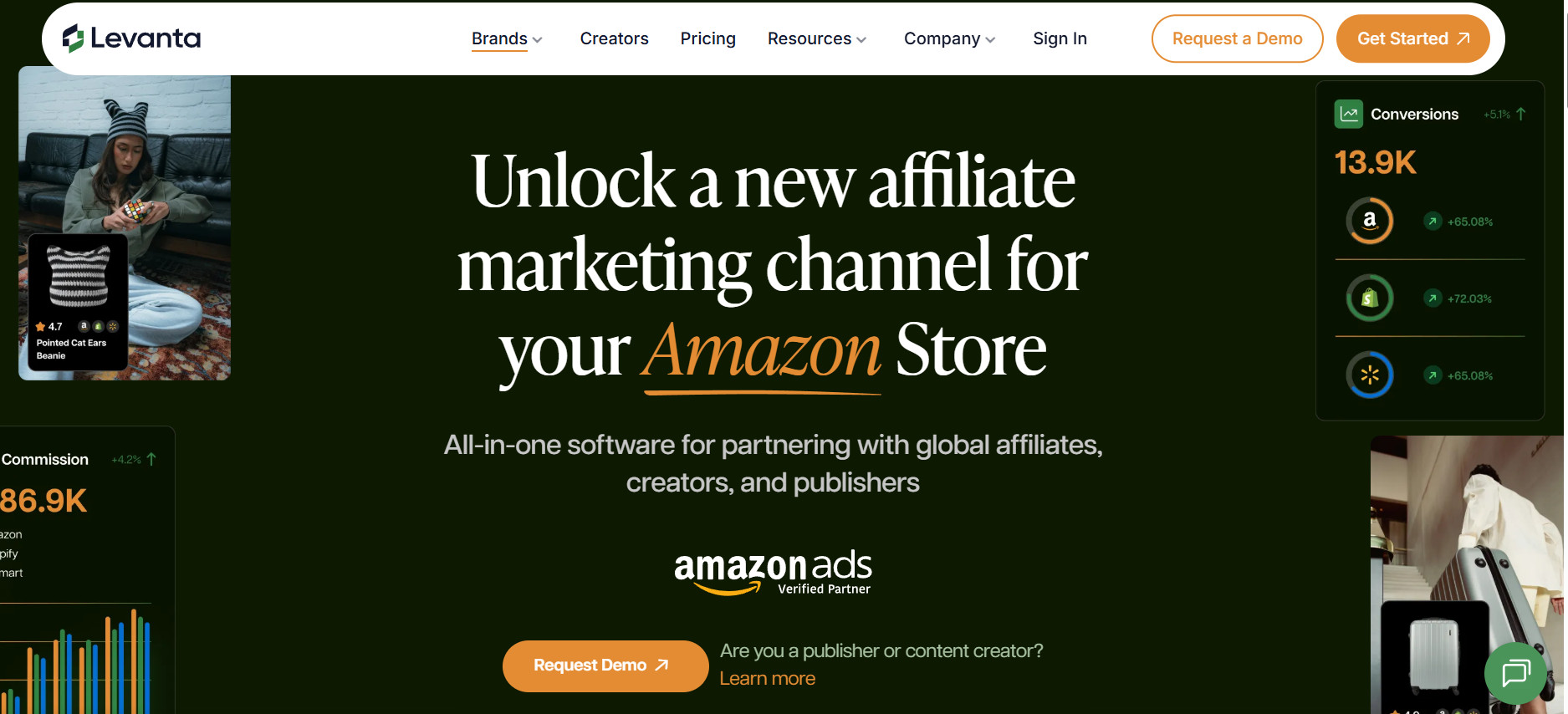
This gives teams clearer visibility into which creators and campaigns are driving sales at a more granular level, which can then inform more precise commission strategies based on product performance.
Brand Referral Bonus (BRB)
For many brands with meaningful Amazon revenue, the Brand Referral Bonus is an important component of overall unit economics.
Amazon offers an average credit on qualifying off-platform traffic that can help offset acquisition costs depending on category and performance.
Partnerize
Partnerize can support BRB-eligible traffic, but it typically requires manual configuration and careful ongoing management to ensure links are properly structured and attributed through Amazon’s systems.
This often places more responsibility on internal teams or agencies to maintain accurate tagging and compliance.
Levanta
Levanta automates this. The platform streamlines the creation of Amazon Attribution links and helps ensure campaigns are structured to take advantage of the Brand Referral Bonus.
For a brand doing significant volume, that bonus, which averages around 10% depending on category, can meaningfully offset marketing costs depending on conversion rates and commission structure.
Onboarding and Velocity
Enterprise software typically comes with a longer implementation cycle, and Partnerize is no exception.
Partnerize
Partnerize onboarding usually involves a structured sales process, legal review, and a multi-step implementation phase that can take weeks or months depending on complexity.
This reflects its enterprise positioning, where deployments are often tailored to large organizations with multiple stakeholders, regions, and partnership structures.
Levanta
Levanta operates on a modern “plug-and-play” model. For a brand already on Amazon or Shopify, the integration is often a “one-click” process.
Because the platform is built for these specific environments, you don’t need a team of developers to map your data fields. Brands can typically get up and running quickly and begin activating partners much faster than with traditional enterprise platforms.
Creator Discovery and Marketplace
The creator economy has shifted toward performance-driven partnerships, where brands increasingly prioritize measurable sales impact over upfront content deals.
Partnerize
Partnerize provides access to a broad global partner network that includes coupon publishers, cashback platforms, editorial sites, and media partners.
This scale is valuable for brands operating traditional affiliate programs, but identifying social-first creators who are actively focused on performance-based partnerships can require more manual filtering and outreach.
Levanta
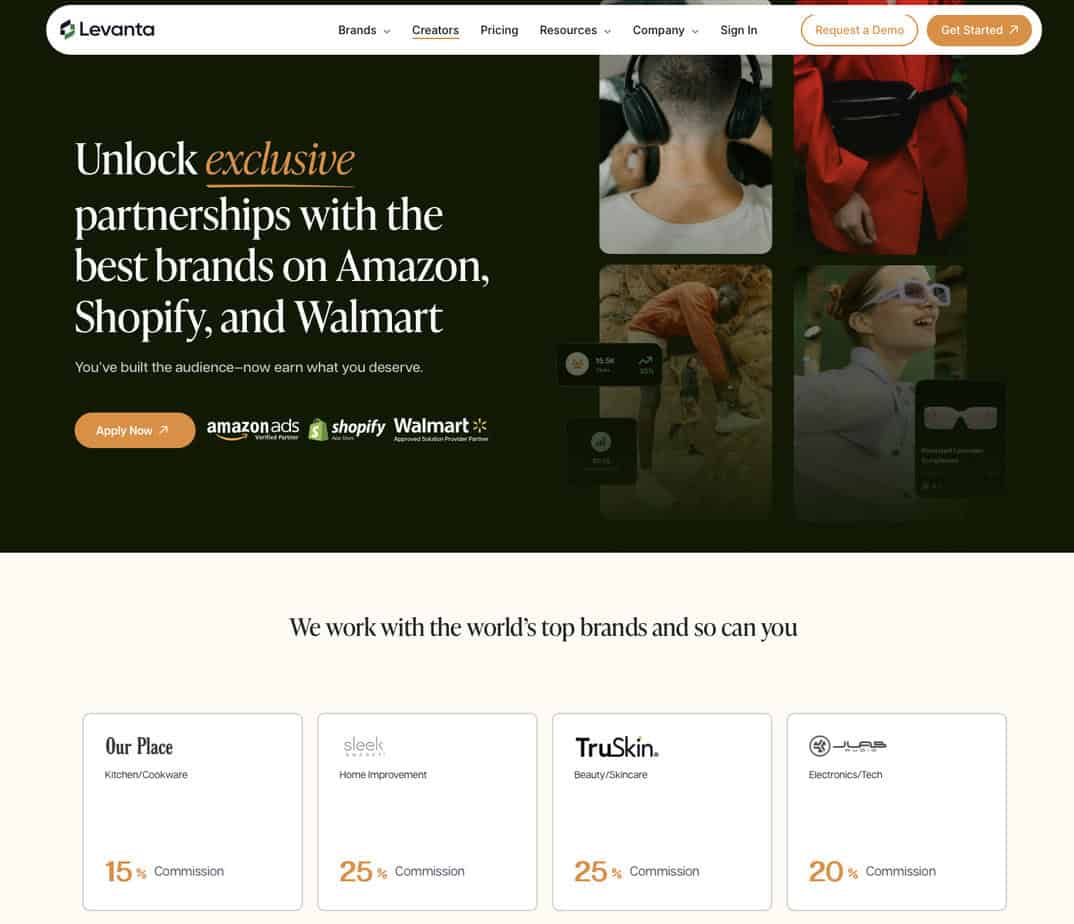
Levanta includes a built-in creator and affiliate marketplace designed specifically for commerce-focused partnerships.
It connects brands with creators such as bloggers, YouTubers, and TikTokers in addition to top tier publishers who already understand performance marketing and are actively looking for products to promote on a commission basis.
This reduces friction in activation and makes it easier for brands to move from discovery to live campaigns quickly.
The Resource Tax: Headcount vs. Automation
For $5M+ brands, the true cost of an affiliate platform is not just the software fee, but the operational overhead required to run it effectively.
Partnerize
The Partnerize “Power User” Model: Partnerize is built with an “enterprise-wide” logic that assumes the brand has a dedicated partnership team or a specialized agency.
The platform is customizable, such as allowing for bespoke tracking of everything from mobile app installs to cross-device conversions.
For an omnichannel brand, this often results in significant manual overhead: generating links, mapping data sources to a central ledger, and ensuring complex CPA rules don’t conflict across regions.
Levanta
Levanta is designed to reduce that operational burden through automation. Because it integrates directly with Amazon Attribution and commerce platforms like Shopify, much of the tracking and attribution work is handled within the system.
This allows lean teams to manage a large number of creator relationships without requiring proportional increases in headcount.
A single marketing manager can oversee thousands of creator relationships because the “plumbing” (such as identifying specific ASIN sales or triggering the Brand Referral Bonus) is automated.
For scaling brands, Levanta’s operational efficiency can become a meaningful advantage as partnership programs expand.

Levanta assembled this report to help digital merchants navigate the new AI-shaped buying journey. Discover why creators now drive the clicks AI can’t and how to turn that into revenue.
Where Partnerize Still Has Major Benefits
It would be inaccurate to suggest that Levanta is the right fit in every scenario. Partnerize maintains clear advantages in several enterprise-focused areas:
Multi-Territory Infrastructure:
If a brand operates across 20+ countries with localized tax requirements, compliance frameworks, and the need for 24/7 global support, Partnerize is built for that level of complexity.
It has the operational history and infrastructure to support large multinational organizations managing highly diversified partner ecosystems.
Complex Partnership Models:
If a strategy includes a broad mix of partnership types such as brand-to-brand collaborations or loyalty integrations, Partnerize provides the flexibility and tooling to manage those arrangements within a centralized system.
Enterprise-Grade Compliance and Fraud Tooling:
At the enterprise level, Partnerize supports integrations with third-party tools for fraud prevention, compliance, and brand protection (such as BrandVerity).
These capabilities are designed to support large global programs where risk management and oversight are critical.
So, What is the Ideal Choice for a $5M+ Brand?
Both platforms are good at what they do. The question is whether what they do matches where your business actually operates.
Levanta is best suited for high-growth, omnichannel brands (doing $5M to $100M+) where Amazon, Shopify, or Walmart are the primary revenue drivers. The platform is designed for teams that want faster onboarding, clearer creator-to-revenue attribution, and more direct control over marketplace performance.
With native integrations across Amazon Attribution, Shopify, and Walmart, ASIN-level visibility, and a built-in creator marketplace, Levanta enables lean marketing teams to activate and scale performance-based partnerships without the operational overhead of traditional enterprise systems.
Partnerize is better suited for global enterprises that view affiliate marketing as part of a broader partnership infrastructure across regions, categories, and business models. Brands with complex multi-territory operations or dedicated partnership teams, or agency-led structures, benefit from its depth in global tracking, compliance, and partnership flexibility. It is designed for managing large-scale, diversified partner ecosystems across markets, currencies, and compliance frameworks.
Ultimately, the decision comes down to structure. Partnerize prioritizes enterprise breadth and global partnership infrastructure, while Levanta prioritizes marketplace-native attribution, creator-led growth, and operational speed across Amazon, Shopify, and Walmart.
Levanta is often the stronger fit for marketplace-driven brands, while Partnerize remains the more complete solution for enterprise organizations with complex global partnership needs.