


Last Updated on April 2, 2026 by Ewen Finser
Access to freelance specialists alone no longer guarantees measurable growth. Modern marketing requires coordinated execution across channels, and disconnected fractional hires often fail to deliver integrated, revenue-driving outcomes. When I was serving as CMO inside a SaaS company, the breaking point came from shaky numbers. Performance across channels looked strong in isolation, but results didn’t reconcile at the business level.
This is the structural gap that reveals itself in many fractional marketing models. Today, marketing operates as a system of interdependent functions: paid media, lifecycle marketing, SEO, analytics, and creative all influence each other. Hiring individual specialists without coordination creates execution silos, where each channel may perform independently but fails to contribute to a cohesive growth strategy.
As a result, companies are starting to shift away from freelancer marketplaces toward models built around integrated teams, shared accountability, and revenue alignment. The focus is no longer just on placing talent, but rather on orchestrating performance across the entire marketing system.
The Bottom Line Up Front – Comparing the Models
When marketing complexity remains limited, marketplace models can be sufficient. As growth systems expand and integration becomes critical, structured fractional platforms often become more attractive.
- MarketerHire excels at connecting companies with freelance marketing specialists quickly. For organizations that already have strong internal coordination and need targeted execution support, this approach can work extremely well.
- Right Side Up addresses a broader structural need. The platform combines experienced talent, operator-led evaluation, proprietary matching technology, custom agency teams, and recruiting support within a coordinated framework.
Why Fractional Marketing Became a Permanent Strategy

For years, building a marketing team followed a predictable formula: hire a marketing leader, bring in an agency for acquisition channels, and gradually expand the internal team as revenue grew.
Today, the landscape is far more complex. Growth spans paid search, paid social, lifecycle automation, SEO, conversion optimization, product positioning, demand generation, ecommerce marketplaces, affiliate programs, analytics infrastructure, and marketing operations. Each discipline demands experienced operators who can execute strategy and adapt across channels.
Most companies cannot justify hiring senior full-time experts across every discipline early in their lifecycle. Even organizations that can afford it often struggle with coordination. Teams frequently optimize individual channels without fully integrating the broader growth system.
Beyond Hiring: Building a Cohesive Marketing Engine
Marketplace platforms primarily provide access to individual specialists. If a company needs a paid search specialist or a lifecycle marketer, the platform can match them with a qualified professional. For early-stage companies validating channels or refining positioning, this speed can be invaluable.
Challenges arise when coordination itself becomes a bottleneck. Marketplace hiring may deliver strong individual contributors, but it doesn’t necessarily provide the integration layer that turns those specialists into a unified growth engine.
One common misconception about fractional marketing is that it’s only temporary. In reality, the strongest organizations treat fractional talent as a permanent part of their operating model.
Right Side Up is one example of an agency that has built its platform around a hybrid approach, connecting organizations with vetted marketing operators across disciplines like growth strategy, paid acquisition, lifecycle marketing, SEO, product marketing, analytics, and marketing operations. Companies can engage individual specialists fractionally, assemble coordinated teams with shared ownership, or use the platform to recruit full-time marketing leaders.
This model is particularly common among Series B and C startups. At that stage, companies need senior expertise across multiple growth channels, but hiring a full executive team for every discipline is rarely practical. Fractional specialists allow them to scale expertise alongside revenue while maintaining flexibility as the organization grows.
Here’s a clear comparison of how MarketerHire and Right Side Up differ across key factors for scaling marketing teams:
MarketerHire vs. Right Side Up: Key Differences
Feature | MarketerHire | Right Side Up |
Talent Model | Individual freelancers | Marketers deployed as individual freelancers, agency teams, and FTEs through recruiting services |
Execution | Self-managed | Varies by engagement (from individual fractional contributors to coordinated teams with end-to-end execution ownership) |
Vetting | Marketplace screening | Operator-led evaluation |
Recruiting | Limited | Offers FTE recruiting services |
Best for | Channel-specific support | Multi-channel growth systems |
Stage fit | Early-stage / simple needs | Series B-C / scaling complexity |
Operator-Led Talent Evaluation

Marketplace platforms mainly provide access to freelancers, while structured platforms vet marketers more deeply to ensure they have real experience running growth programs and working inside complex marketing teams.
Evaluating marketing talent requires understanding how operators think about funnel economics, channel scaling, and attribution gaps. Right Side Up’s internal team stands out here, as their staff include former in-house growth marketers who have owned budgets, managed acquisition costs, and reported directly to executive leadership.
As a 20 year veteran CMO, I can spot a qualified candidate immediately, where someone without that background needs guidance. That dynamic becomes important when marketing budgets reach meaningful scale. A resume may show channel expertise, but real evaluation requires understanding how someone approaches growth strategy under pressure.
Companies evaluating MarketerHire alternatives often cite inconsistency as a concern – they do not question the freelance model itself, but instead they question variability in quality and alignment.
Operator-led vetting helps address that concern by evaluating talent through the lens of real marketing execution rather than generic credential checks.
Beyond Freelance Placement
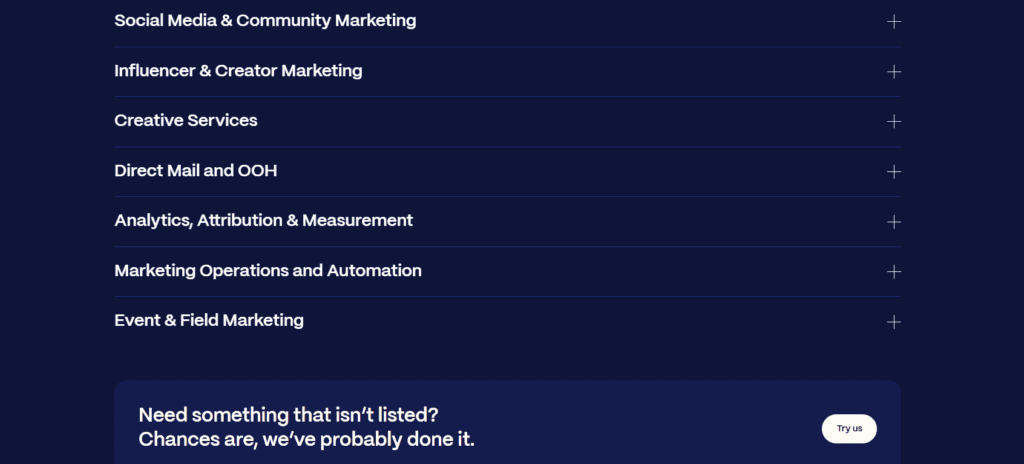
Right Side Up operates differently from simple freelancer marketplaces. As outlined above, the company is known for providing exceptional fractional marketing talent, but its model goes beyond just matching businesses with individual consultants. Instead, RSU supports multiple ways to add marketing expertise based on a company’s specific needs, starting with flexible access to experienced operators across key marketing functions, and extending into more structured support depending on how much coordination and ownership a company needs.
Another option is assembling coordinated marketing teams across disciplines such as digital advertising, B2B paid media, ecommerce marketplace advertising, affiliate marketing, creative production, and measurement strategy.
The platform also supports companies hiring permanent marketing leaders. In those cases it helps define roles, source candidates, and structure the interview process so companies can build internal teams as they scale.
Together, these options give companies more flexibility than marketplace models built primarily around individual freelance placements.
Speed and Flexibility

One reason companies turn to fractional platforms in the first place is speed.
Hiring cycles for senior marketing roles can stretch for months. During that time growth momentum slows and opportunities disappear. Right Side Up’s platform is designed to move quickly, often recommending talent within a couple of business days and launching engagements shortly afterward.
Flexibility remains a central advantage; companies can scale hours up or down, add specialists as strategy evolves, or convert fractional consultants into full-time hires when alignment proves strong.
Marketplace platforms provide flexibility around hours, and structured fractional platforms combine that flexibility with coordination and oversight.
Enterprise Validation
Another factor growth leaders examine when evaluating MarketerHire alternatives is enterprise credibility.
Right Side Up has supported companies across SaaS, ecommerce, consumer brands, and B2B organizations including Coinbase, Credit Karma, PayPal, Instacart, Google, Bonobos, Brooklinen, Compass, MongoDB, Stripe, Uber, and Yelp. Organizations at that scale require reliability, structured communication, and clear performance accountability.
Working within those environments signals that the platform can support complex marketing systems rather than isolated freelance engagements.
Final Perspective

Searching for MarketerHire alternatives usually signals that a company is thinking more deeply about how its growth engine is designed.
From my experience working inside growth organizations and advising leadership teams, the companies that scale successfully build modular marketing systems, combining strong internal leadership with external specialists who operate within a coordinated structure.
Platforms like MarketerHire can provide rapid access to talent. Platforms like Right Side Up focus on integrating that talent into a cohesive growth system.
For growth leaders trying to turn marketing activity into predictable revenue, that difference will only become increasingly important.