


- Why Shipping Infrastructure Matters in 2026
- Shipping API vs Shipping Management Platform (What’s the Difference?)
- Best Shipping APIs for eCommerce Brands
- Shippo - Best Overall for Most eCommerce Brands
- EasyPost - Best for Developer-First Teams
- ShipStation API - Good for Very High-Volume Operations
- Easyship API - Best for International Shipping
- Sendcloud API — Best for Europe-Focused Brands
- Scenarios for Different Ecommerce Brands
- FAQs
- Final Thoughts
Last Updated on June 9, 2026 by The Digital Merchant Team
FTC Disclaimer: We do make money from this blog and may receive compensation for this work in the form of commissions, fees and complimentary product access. Review our full FTC disclosure here.
The best shipping API for most ecommerce brands in 2026 is Shippo — it’s easy to integrate, connects to 40+ carriers in a single API call, and has no monthly minimums. For dev-first teams who want full infrastructure control, EasyPost is the stronger fit. For EU/UK merchants, Sendcloud leads on regional carrier coverage.
Why Shipping Infrastructure Matters in 2026
If you’re running an eCommerce brand at any kind of scale, shipping eventually stops being a manual “print a label” task and starts becoming a systems problem.
At first, clicking through a dashboard is fine. But once orders grow, warehouses multiply, or international shipping becomes routine, manual workflows can slow everything down. Especially if you have a complex system, with multiple package types, warehouse storage locations, or both physical and online stores. That’s where shipping APIs come in.
Let’s take a look at five different APIs and the pros and cons of each one. I won’t try to list every shipping API on the market. Instead, these are the shipping APIs I see used most often by real eCommerce brands, and the ones that actually make sense depending on how technical your setup is.
Some of these tools are API-first. Others combine an API with a full shipping management platform. That distinction is very important, and it’s often the deciding factor in whether a tool feels useful or frustrating six months down the line.
Shipping API vs Shipping Management Platform (What’s the Difference?)
What is a Shipping API
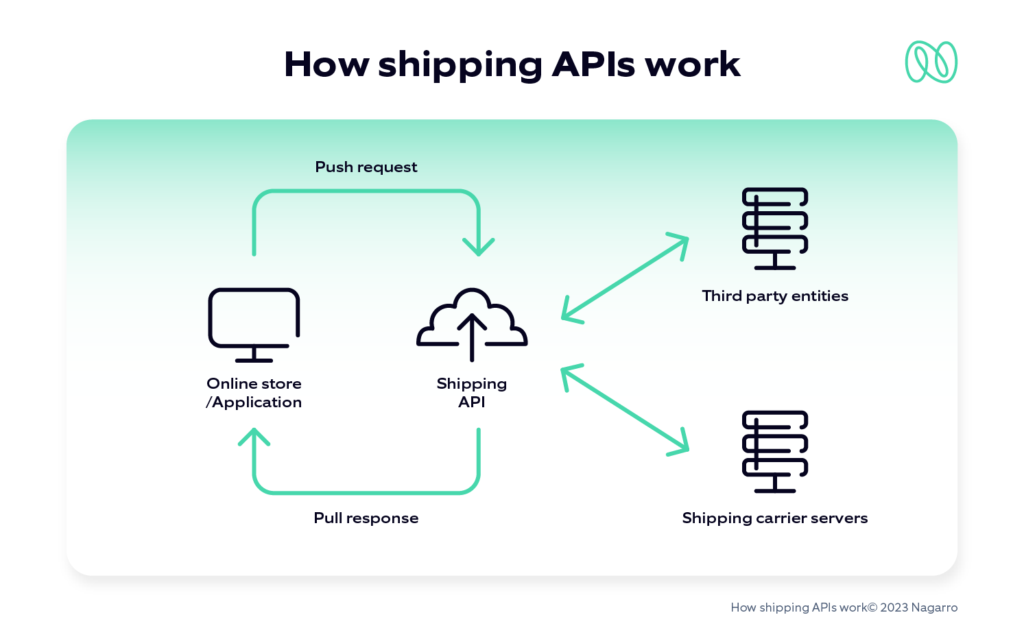
An API is an Application Programming Interface, and in simple terms, it’s a tool that allows two different bits of software to talk to each other. So, a shipping API is designed to allow your current ecommerce systems to connect directly to shipping software, without needing to log into a dashboard. The API and the dashboard are separate products. The API is used for integration and automation, while the dashboard is used by operations teams for day-to-day shipping management.
This is the big difference, a shipping API integrates with your current systems.
Instead of someone logging into a dashboard and choosing a carrier or service, your store or backend sends order details to the API the moment an order is created. The API then responds with everything needed to ship the order, such as available rates, different shipping services, a shipping label, tracking details, and any required customs information, and any other shipping information. All these things happen in the background, you don’t need to log into anything to make sure you are getting shipping information.
This approach is especially valuable when you already have good ecommerce systems, and you just need shipping to be consistent and at a good price. Once you have set the rules in the API, the same order should be shipped the same way every time, regardless of who’s working that day or how busy fulfillment gets. Once rules are defined, the API applies them automatically, removing guesswork and human error from the process.
Shipping APIs work best in systems where:
- Orders flow through a custom checkout, backend, or ecommerce platform, rather than marketplaces or pre-built platforms like Shopify.
- Shipments are routed between multiple warehouses or fulfilment partners
- Shipping logic needs to be enforced automatically, not decided manually
- Small fulfillment mistakes are already costing time, money, or customer trust
A useful way to think about the difference is this:
- Shipping management platforms are operational tools — they help people do shipping.
- Shipping APIs are infrastructure — they let your systems handle shipping for you.
Most growing bigger eCommerce brands eventually move in this direction, even if they start with a dashboard first. The shift usually happens when manual decisions become a bottleneck, not because the team wants more complexity, but because the business needs reliability at scale
What is a Shipping Management Platform/Software?
A shipping management platform is where most eCommerce brands begin.
Instead of building shipping into your systems, you or your team log into a dashboard, connect your stores, and manage fulfillment step by step. Orders sync in from your sales channels, you compare carrier rates, print labels, and handle tracking or returns from one central place. A human is still making the decisions, but the software makes those decisions easier and faster.
This approach works well when shipping volume is still manageable and your workflows aren’t too complex. You can see everything that’s happening, make adjustments on the fly, and stay in control without needing technical setup.
Shipping management platforms are a good fit when:
- You’re shipping lots of orders each day, but you don’t want to do manual shipping each time
- Your fulfilment rules are straightforward and don’t change often
- You want full visibility and control through a user interface
- You want to be able to track orders in a dashboard
- You don’t have developers involved in shipping yet
You’re shipping a lot of orders each day and want to batch labels and manage fulfillment from one place, without fully automating everything yet.
Most orders ship the same way, with simple rules that don’t change often, and the odd manual decision is still fine.
You like having a clear dashboard where you can quickly see order status, tracking, and returns without digging through systems.
Customer support or ops teams need an easy way to answer “where’s my order?” questions.
You don’t have developers involved in shipping yet, or you’d rather not rely on code changes for day-to-day fulfilment tweaks.
Most well-known shipping tools, including Shippo, ShipStation, Easyship, and Sendcloud. can all be used in this dashboard-first way. For many brands, this is more than enough at the early stages, and it’s often the foundation before moving toward more automated, API-driven workflows later on.
You Don’t Always Have to Choose One
Most modern tools now offer both a dashboard for the ops team and an API for developers.
This hybrid approach lets brands:
- Start simple
- Automate gradually
- Avoid rebuilding shipping from scratch
This is very useful for ecommerce brands that don’t want to completely change platforms in 12 months when they realise they’ve outgrown a system.
Do Shipping APIs Actually Differ that Much?
At a basic level, most modern shipping APIs can do the same core things: create labels, return rates, generate tracking numbers, and handle address validation and customs data. The real differences aren’t in what they can technically do, but in how they’re designed to be used.
Some APIs are built for developers who want full control and are happy building their own workflows, while others are designed to sit alongside a shipping management platform and handle automation without replacing existing processes. Quick Comparison Table
Shipping API | Best For | Strengths | Trade-Offs | Pricing Model |
Shippo | Small start up, all the way to growing and enterprise brands | Easy setup, strong docs, automation-friendly. 40+ carrier integrations, rate shopping in one API call | Built for automation without owning infrastructure complexity — less suited to teams who want to build fully custom logistics from scratch | Subscription-based, with API access included and pricing that scales with volume |
EasyPost | Brands with custom built website and backend | Extremely flexible, API first | No real dashboard by default | Usage-based (per shipment / API usage), plus internal development costs |
ShipStation API | High-volume enterprise operations | Deep automation + API access and automations | More complex, higher operational overhead | Subscription-based, API access tied to higher-tier plans |
Easyship API | International-first brands | Duties, taxes, landed cost handling | Domestic shipping not its strength | Subscription-based with volume limits and international-focused pricing |
Sendcloud API | EU & UK merchants | Strong regional carrier support | Europe-focused | Subscription-based, pricing varies by region and feature set |
Best Shipping APIs for eCommerce Brands
Below are the shipping APIs that consistently come up when brands move beyond basic fulfilment.
Shippo – Best Overall for Most eCommerce Brands
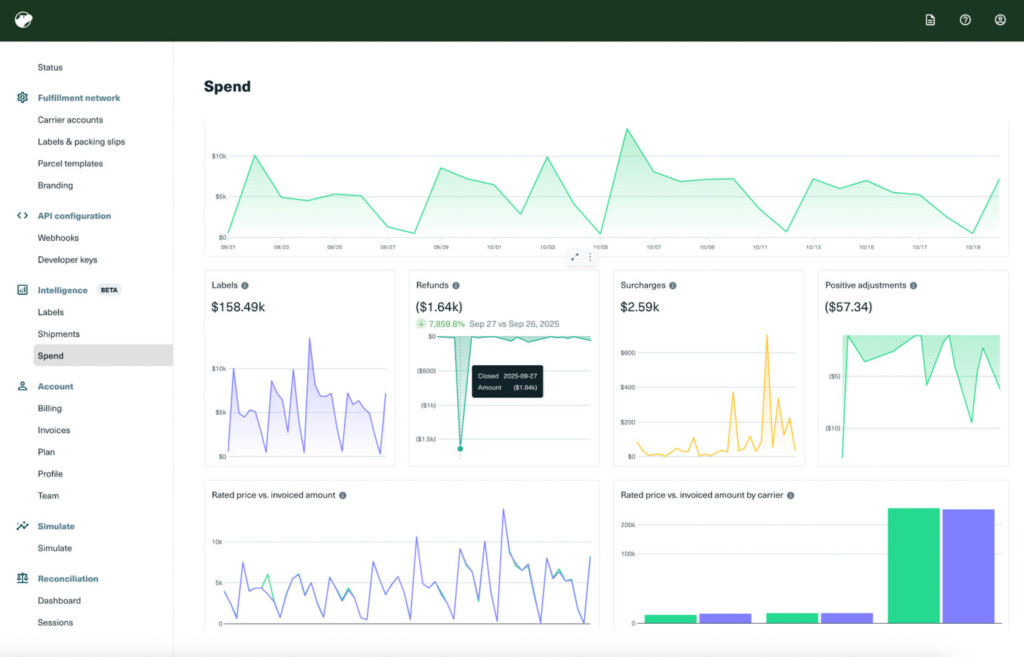
In my opinion, Shippo’s API is one of the easiest ways to move from manual shipping into automated workflows without overengineering everything.
My favourite thing about Shippo is its flexibility. For developers, the API is easy to use and there is great documentation. For Ops teams, the dashboard is perfect, and it is easy to create automations and integrations.
Shippo’s API is used for automation and integration. The web app/dashboard is used separately for operational shipping workflows like comparing rates, printing labels, and managing orders.
For example, if your website is custom built and you want to use the API, but you also sell on Amazon and you want to be able to integrate it, then Shippo allows you to use both. Plus, the operations team can create automations that make sense for the integrated platforms, and the website rules can be set in the API.
Shippo’s API handles:
- Rate comparisons across 40+ carriers
- Label generation
- Address validation
- Tracking updates
- International customs paperwork
- Allows you to batch print up to 100 labels at a time
All of this happens across 40+ carriers in a single API call — you’re not managing separate integrations per carrier.
Automations
For a typical DTC store, the automations on the web app might define logic like this:
- IF weight < 2 lbs THEN use USPS First Class
- IF destination is international THEN include customs automatically
- IF SKU = fragile THEN force UPS Ground
In the API, the same IF/THEN logic applies, but the logic is implemented directly in the code. This means you have more flexibility to set up complex automations that aren’t covered in the Shippo web app.
Once those rules are set, they’re applied every time, no guesswork, no manual checks.
Why Shippo Works Well
Shippo feels like an API designed for growing businesses, not just engineers. You get automation without needing to build a full logistics system from scratch.
EasyPost – Best for Developer-First Teams
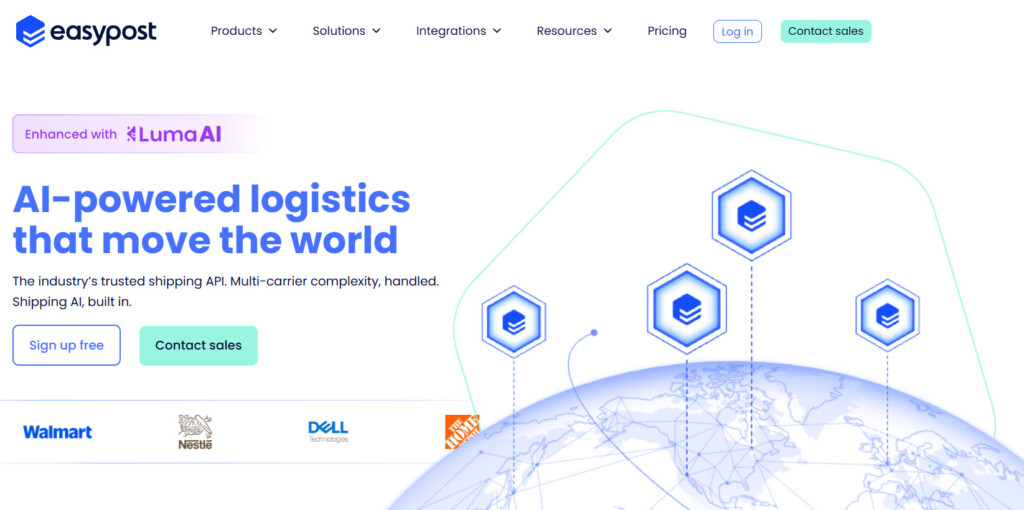
EasyPost is Very Much API-first.
There’s no real attempt to wrap it in a friendly, operational dashboard. Instead, EasyPost gives developers direct access to shipping infrastructure and lets them build exactly what they need on top of it. That makes it extremely flexible, but also means you’re responsible for how shipping actually works inside your business.
In practice, EasyPost is most commonly used by:
- Logistics or fulfilment platforms with custom workflows
- Businesses that have built their own ecommerce website, backend or order management system
The API itself is easy to use and well-documented. It covers the core building blocks of shipping, including:
- Label creation and tracking
- Address verification
- Shipping insurance
- Advanced carrier selection and routing logic
Because everything goes through the API, EasyPost fits neatly into fully custom systems where shipping needs to be tightly controlled or deeply embedded into the product.
Why EasyPost Works Well
EasyPost works well because it gives developers full control without forcing a predefined workflow or UI.
That flexibility is a big advantage for teams with strong technical resources, but it also means you’re responsible for building and maintaining everything yourself. Without dedicated developers owning shipping logic, EasyPost can quickly become hard to manage, which is why it’s best suited to custom-built platforms rather than growing eCommerce brands looking for quick automation.
ShipStation API – Good for Very High-Volume Operations

ShipStation’s API is best understood as an extension of its core platform rather than a standalone developer product.
Like Shippo, the real power comes from combining the API with ShipStation’s existing automation rules, warehouse logic, and multi-channel order management. For businesses already running their day-to-day shipping inside ShipStation, the API adds another layer of control rather than replacing the system.
It’s most useful for businesses that:
- Already rely on ShipStation operationally
- Ship high volumes on a daily basis
- Manage multiple warehouses, stores, or sales channels
Through the API, you can:
- Sync external systems like ERPs or WMS tools
- Push and pull order and shipment data
- Trigger fulfilment actions at scale
This makes it well suited to larger operations where shipping is tightly connected to inventory, picking, packing, and warehouse workflows.
Why ShipStation Works Well
ShipStation works well because it’s designed for operational complexity and can reliably handle high order volumes, advanced routing, and multi-warehouse fulfilment once fully configured. The trade-off is complexity: setup takes time, automations aren’t lightweight, and the API makes the most sense if you’re already committed to the ShipStation ecosystem. For brands looking for a flexible, standalone shipping API, it can feel like more platform than they actually need.
Easyship API – Best for International Shipping

EasyShip is a very popular choice for international shippers, but I think other tools, like Shippo and Shipstation now offer great international shipping too. So it feels a bit more outdated.
The API is again designed to work with teams who are using Easyship as a shipping management platform as well.
Its biggest strength is landed cost calculation, showing duties, taxes, and shipping fees upfront so customers aren’t hit with surprises at delivery.
This makes Easyship a strong option for:
- Cross-border DTC brands
- International checkout optimisation
- Reducing failed deliveries due to unpaid duties
That said, in my opinion: for many brands, Easyship feels slower and more expensive than alternatives. Automations are also lighter compared to Shippo or ShipStation.
Why Easyship Works Well
Easyship works well because it simplifies international shipping by handling duties, taxes, and landed costs upfront, which removes surprises for customers and reduces failed cross-border deliveries.
Sendcloud API — Best for Europe-Focused Brands
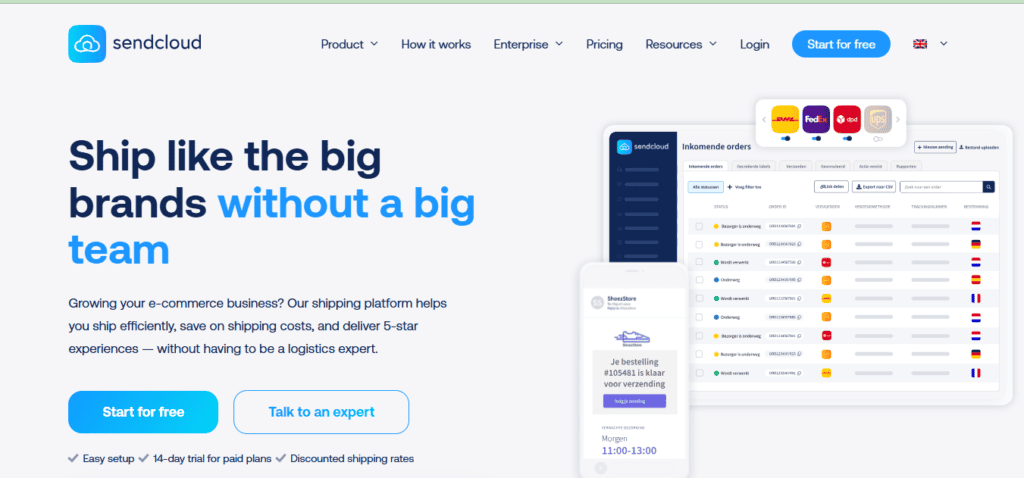
Sendcloud feels like it is very clearly built for Europe. It is good at helping with Europe’s complicated cross border VAT rules, and different warehouses being hosted in different countries.
If your brand ships primarily within the UK or EU, Sendcloud’s API handles regional carriers, VAT complexity, and cross-border European shipping better than most US-first tools.
It’s especially strong for:
- Local EU carriers
- Branded returns
- Checkout delivery options
Once you expand heavily into the US or other regions, most brands pair Sendcloud with another system.
Why Sendcloud Works Well
Sendcloud works well because it’s built specifically for UK and EU merchants, with strong local carrier coverage and tools that handle European cross-border shipping and VAT far better than most US-first platforms.
Scenarios for Different Ecommerce Brands
Your Situation | Best-Fit Shipping API | Why It Fits |
Growing eCommerce brand with limited dev resources | Shippo | Combines a strong API with a usable management platform, so you can automate shipping without building everything from scratch. |
Developer-heavy team building custom logistics | EasyPost | API-first and extremely flexible, ideal when you’re happy owning workflows, edge cases, and internal tooling. |
High-volume, warehouse-driven operation | Shippo or ShipStation | Shippo provides a unified API + platform, making it ideal for teams that want automation without heavy infrastructure buildout. ShipStation is a strong alternative for teams already operating inside its ecosystem. |
International-first DTC brand | Easyship, Shippo, Shipstation | Best suited to cross-border shipping where duties, taxes, and landed cost calculations matter most. |
UK or EU-focused merchant | Shippo, Sendcloud, Shipstation | Built specifically for European carriers and VAT complexity, which US-first APIs often struggle with. |
FAQs
What is the Best Shipping API for e-commerce Brands?
Shippo is the strongest option for most ecommerce brands. Its API is easy to integrate, connects to 40+ carriers, and has no monthly minimums — so teams can automate shipping without building everything from scratch.
What’s the Difference Between a Shipping API and a Shipping Management Platform?
A shipping API connects directly to your existing systems — your store, backend, or order management tool — and handles shipping automatically in the background. A shipping management platform is dashboard-based: your team logs in, compares rates, and prints labels manually. Most modern tools, including Shippo, offer both, which lets brands start with the dashboard and add API automation as they scale.
Does Shippo Have a Free Plan?
Yes. Shippo’s free plan includes rate comparison across carriers, up to 30 labels per month, and connections to 10+ stores including Shopify, WooCommerce, Etsy, and Amazon. No credit card is required to get started.
Final Thoughts
Shipping APIs are about making shipping become a worry free part of your business. The best APIs integrate with your current systems and improve your shipping workflow overall.
For most eCommerce brands in 2026, Shippo is still my favorite recommendation. It strikes the best balance between a great API and a really nice to use management platform, which means you can automate shipping without rebuilding your entire fulfillment backend.
If you want a pure, API-only solution and you have a strong technical team, EasyPost is a great choice. It offers a huge amount of flexibility and control, but assumes you’re happy owning the complexity that comes with it.
In the end, the best shipping API isn’t the most powerful one on paper, but the one that fits into your current system and improves it.